admin
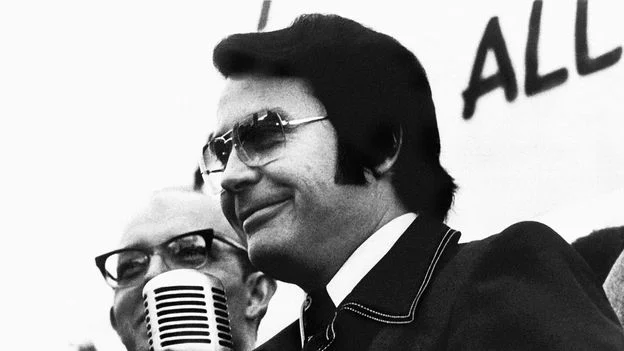
The events of November 18, 1978, remain etched in global history as one of the most profound tragedies of the 20th century, marking the largest loss of American civilian life in a single non-natural event until the terrorist attacks of September 11, 2001. In the remote jungle settlement of Jonestown, Guyana, more than 900 members of the Peoples Temple Agricultural Project lost their lives under the direction of their leader, Jim Jones. While the event is often colloquially referred to as a mass suicide, survivors and historians increasingly characterize the tragedy as a mass murder, citing the extreme psychological coercion, physical isolation, and the presence of armed guards that facilitated the carnage. The legacy of Jim Jones is a complex study of how a movement founded on principles of racial equality and social justice devolved into a paranoid autocracy, resulting in the deaths of 918 people, including over 300 children.
The Genesis of Peoples Temple and the Ideology of Jim Jones
James Warren Jones was born in 1931 in rural Indiana, raised in an environment of poverty and social isolation. His father was a disabled veteran of World War I, and his mother was a factory worker who believed her son was destined for greatness. From an early age, Jones displayed an intense interest in religion and social structures, often holding funerals for small animals and studying the works of Karl Marx, Joseph Stalin, and Mahatma Gandhi.
In 1955, Jones founded the "Wings of Deliverance" in Indianapolis, which would later become the Peoples Temple of the Disciples of Christ. Unlike many other churches of the era, the Peoples Temple was explicitly integrationist. At a time when racial segregation was the norm in American religious life, Jones actively recruited African American members and preached a "social gospel" that combined Christian Pentecostalism with socialist economic theory. The church provided extensive social services, including free meals, health clinics, and employment assistance, which garnered significant support from marginalized communities.
By the mid-1960s, Jones began to express growing paranoia regarding nuclear war and racial conflict in the United States. In 1965, he moved the congregation to Ukiah, California, after reading a magazine article that listed the area as one of the safest places to survive a nuclear holocaust. It was during this period that the group’s transition from a conventional religious movement to a high-control cult began to accelerate.
Political Ascendance and the Move to San Francisco
In the early 1970s, the Peoples Temple relocated its headquarters to San Francisco, where Jones expanded his influence into the highest echelons of California politics. He utilized his large, disciplined congregation as a powerful voting bloc, capable of mobilizing hundreds of volunteers for political campaigns at a moment’s notice. This political capital made Jones a sought-after ally for liberal politicians.
Jones was appointed to the San Francisco Housing Authority Commission by Mayor George Moscone, following the Temple’s significant efforts in Moscone’s narrow 1975 election victory. His influence extended beyond local politics; Jones met with Vice Presidential candidate Walter Mondale on his private jet and maintained correspondence with First Lady Rosalynn Carter. To the public, Jim Jones was a progressive humanitarian and a champion of the poor. However, behind the scenes, defectors began to report a different reality: one of public humiliations, physical beatings, and the systematic seizure of members’ financial assets.
The Guyana Exodus: Project Progress
As investigative journalists and "Concerned Relatives"—a group formed by former members and families of those still in the church—began to probe the Temple’s practices, Jones grew increasingly defensive. In 1977, following a devastating exposé in New West magazine, Jones and hundreds of his followers fled to a tract of land the church had leased from the Guyanese government.
The settlement, officially titled the Peoples Temple Agricultural Project but known as Jonestown, was marketed to followers as a "socialist paradise" and a "Promised Land" free from the racism and capitalism of the United States. In reality, the 3,800-acre compound was a labor camp. Members worked long hours in the tropical heat with limited food, while Jones’s voice was broadcast 24 hours a day over a loudspeaker system, delivering "news" that painted the United States as a fascist wasteland where African Americans were being rounded up into concentration camps.

Chronology of the Final Days: November 1978
The tension in Jonestown reached a breaking point in late 1978 when California Congressman Leo Ryan announced a fact-finding mission to investigate reports that people were being held against their will.
- November 14, 1978: Congressman Leo Ryan arrives in Georgetown, Guyana, accompanied by legal advisors, journalists from NBC and the San Francisco Chronicle, and members of the Concerned Relatives group.
- November 17, 1978: After initial resistance from Jones, the Ryan delegation is allowed to enter Jonestown. The evening is marked by a staged celebration, but several members clandestinely pass notes to the journalists expressing their desire to leave.
- November 18, 1978 (Afternoon): Ryan’s group prepares to depart with 15 defectors. As they wait at the Port Kaituma airstrip, Temple gunmen—known as the "Red Brigade"—open fire. Congressman Ryan, three journalists, and one defector are killed. Several others, including future Congresswoman Jackie Speier, are seriously wounded.
- November 18, 1978 (Evening): Back at the compound, Jones calls a final assembly at the pavilion. He informs the congregation that the "enemy" would soon arrive to torture them and their children in retaliation for the airstrip attack. He orders the commencement of "revolutionary suicide."
Supporting Data: Demographics and the Mechanics of Death
The scale of the Jonestown massacre is often obscured by the sensationalism of the "Kool-Aid" narrative. A demographic analysis of the victims reveals a heartbreaking profile of the community:
- Total Casualties: 918 individuals died in Guyana on November 18. This includes the five killed at the airstrip and four members who died at the Temple’s headquarters in Georgetown.
- Children: More than 300 of the victims were minors. In many cases, the children were the first to be administered the poison—a mixture of grape-flavored Flavor Aid (often misidentified as Kool-Aid), cyanide, Valium, and chloral hydrate—via syringes squirted into their throats.
- Seniors and Race: Approximately 70% of the Jonestown population was African American, many of whom were elderly women who had joined the church in the 1950s and 60s, drawn by the promise of racial dignity and communal care.
- Financial Assets: At the time of the collapse, the Peoples Temple held an estimated $26 million in various offshore accounts, much of it liquidated from the homes and social security checks of its members.
Official Responses and Global Reaction
The immediate aftermath of the massacre was a logistical nightmare. The Guyanese government, lacking the resources to handle nearly 1,000 bodies in a tropical climate, requested urgent assistance from the United States. The U.S. military launched "Operation Logan’s Bluff," involving hundreds of personnel to identify and transport the remains back to Dover Air Force Base in Delaware.
The U.S. State Department and the FBI faced intense scrutiny for their perceived failure to act on warnings from defectors. Congressional hearings were held to determine how a domestic religious group could move so many people and weapons across international borders without raising alarms. The Guyanese government, for its part, faced internal political fallout for granting Jones such a large, autonomous territory in the disputed Essequibo region.
Impact and Societal Implications
The Jonestown massacre profoundly altered the American cultural and psychological landscape. It gave rise to the idiom "drinking the Kool-Aid," a phrase that has since become a staple of the English language to describe blind obedience or the unquestioning acceptance of a dangerous idea. However, survivors and scholars often criticize the phrase for trivializing the systematic abuse and murder of the victims.
In the field of psychology, Jonestown remains a primary case study in "coercive persuasion" and "groupthink." It prompted a shift in how law enforcement and government agencies monitor high-control groups, leading to more robust frameworks for identifying cultic behavior before it escalates to violence.
Furthermore, the tragedy highlighted the vulnerabilities of the "Social Gospel" when combined with charismatic, unchecked leadership. Jim Jones successfully leveraged legitimate grievances regarding civil rights and economic inequality to build a shield against criticism. By the time his followers realized the "Promised Land" was a prison, the physical and psychological barriers to escape were insurmountable.
Today, the site of Jonestown has been reclaimed by the jungle, but the lessons of the Peoples Temple endure. The work of the Jonestown Institute and survivors like Laura Johnston Kohl and Deborah Layton continues to provide a platform for the voices of those who were lost, ensuring that the tragedy is remembered not just for how it ended, but for the human lives and aspirations that were consumed by it. The massacre stands as a stark warning about the dangers of absolute power and the fragility of the human psyche when isolated from the broader world.