admin
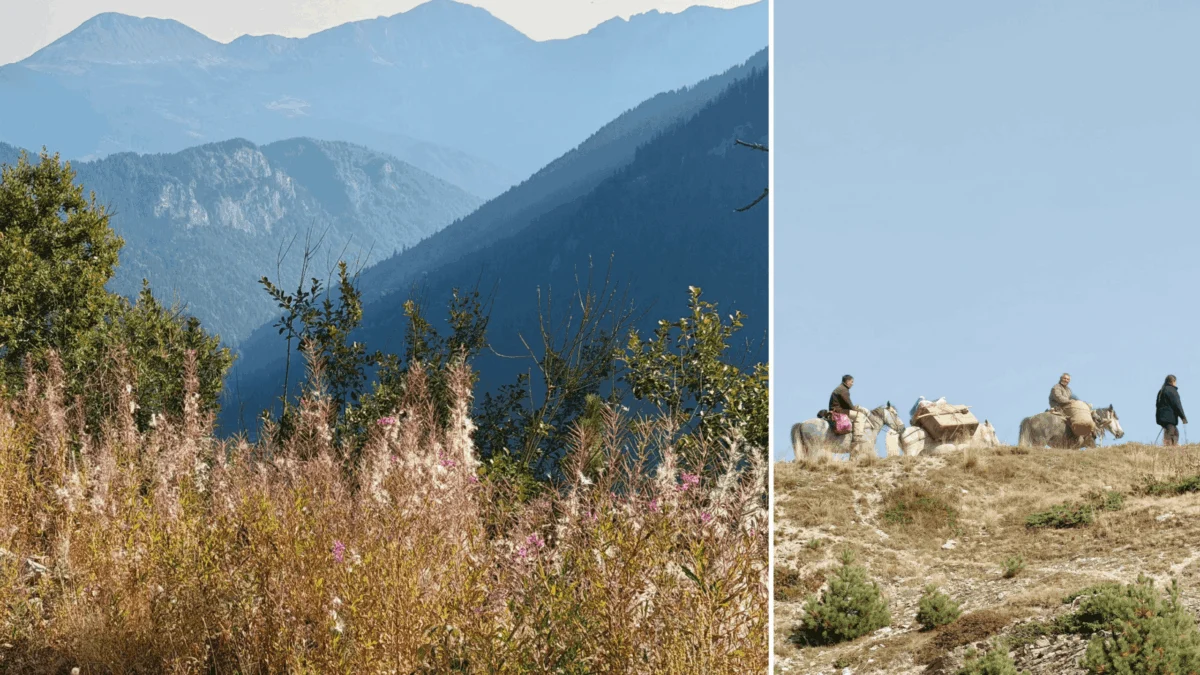
The gentle clang of cowbells outside a rustic wooden cabin in Dobërdol, a high mountain settlement in northern Albania, signals the start of a day unlike any other. At an elevation of 5,700 feet, the crisp morning air, slightly fogged on the cabin windowpanes, carries the sounds of life—five chestnut-colored cows grazing mere feet from the bedside, their bells and tails swaying in a rhythmic cadence. This idyllic awakening is the prelude to an immersion into the Peaks of the Balkans trek, a 119-mile circular trail weaving through the historically contested borderlands of Albania, Kosovo, and Montenegro, a region often referred to as the Accursed Mountains.

This remote mountain range, whose ominous name is attributed variously to folklore involving the devil, historical conflicts, or the sheer difficulty of its terrain, has become the stage for a remarkable tourism initiative. Conceived in the early 2010s as a cross-border peace and tourism project, the Peaks of the Balkans trail was designed with a profound purpose: to reconnect mountain communities fractured by war, foster economic livelihoods, and provide a compelling reason for residents to remain in or return to villages hollowed out by conflict and emigration. By all initial metrics, this endeavor has been a resounding success.
A Trail Reconnecting Communities and Economies
The impact of the Peaks of the Balkans trail is quantifiable and significant. A study published in late 2025 by the Journal of Outdoor Recreation and Tourism estimated that the trail now attracts approximately 43,000 hikers annually. This represents a substantial increase from pre-pandemic regional estimates of around 20,000 hikers, injecting an estimated €25 million (approximately $27.7 million USD) into the regional economies each year. This influx of tourism has revitalized communities, transforming family homes, shepherd settlements, and seasonal villages into guesthouses for trekkers.

However, this success also presents a new set of challenges. As the trail’s popularity grows, some of the very places it was intended to support are experiencing the strains of increased volume. Ricardo Fahrig of Zbulo, an Albania-based adventure travel company that has operated trips on the Peaks since the trail’s inception, highlights this dichotomy. "It’s not the number of travelers on the Peaks of the Balkans trail, but rather the distribution," Fahrig explains. "Some sections remain sparsely visited, while others, like Dobërdol, struggle with volume during a relatively short season." This season typically spans from June through September, with some hikers extending into early October.
The Journey Begins: From Bustling Dobërdol to Solitary Passes
The author’s own experience on the trail exemplifies this contrast. After a hearty breakfast of fried eggs, sausage, fresh sheep cheese, and a cucumber-and-tomato salad in the bustling, timber-framed breakfast room of a guesthouse in Dobërdol, the immediate departure onto the trail offers a swift transition from congestion to solitude. The dozen or so hikers who had shared the cozy room quickly disperse, flowing like a stream up the steep, green incline of the valley. Most continue towards Milishevc in Montenegro, the typical next stop.

However, the allure of quieter, less-trodden paths beckons some. Falling into step with Stef Van Dam, a seasoned Dutch thru-hiker encountered earlier on the trail, the author deviates from the main route. Their chosen detour leads towards the heart-shaped lake below Gjeravica, the highest peak in Kosovo. Van Dam, aiming to summit Gjeravica itself, refers to it as "the peak of the Peaks of the Balkans."
Crossing Invisible Borders: History and Geography Intertwined
The journey to the pass marking the Albania-Kosovo border is a testament to the region’s complex history and geography. At 1,600 feet of ascent, the pass offers a moment of respite and reflection. Here, the border is an invisible line, a mere suggestion on the landscape, yet it represents a boundary that has been a focal point of conflict, fortification, and geopolitical negotiation for over a century. The irony is palpable: two hikers, perhaps separated by mere feet, might be standing in different countries, a testament to the fluidity of the terrain and the historical weight of the unseen divide.

From this vantage point, a narrow dirt track winds along the contour line, traversing a treeless, boulder-strewn landscape. In the distance, the village of Junik in Kosovo appears as a scattering of rooftops, a destination for both hikers. Overhead, a golden eagle circles in the unblemished autumn sky, a silent sentinel of this wild expanse. "This is exactly what I came to this trail to find," Van Dam remarks, his words echoing the sentiment of many seeking an escape from the crowded trails of Europe. "I wanted something quiet, more remote than other trails in Europe. I’ve found it here." This sentiment resonates deeply, particularly for those who have experienced the more heavily trafficked routes like the Camino de Santiago.
The Heartbeat of the Mountains: Guesthouses and Renewed Communities
As the day progresses and the author parts ways with Van Dam, the journey continues deeper into Kosovo. The landscape unfolds into pastoral valleys dotted with traditional katuns—seasonal shepherd settlements composed of simple huts and stone-walled livestock pens. The arrival at Guest House Tofaj, a charming stone-and-wood construction, is met with a warm welcome. A plate of sugar cookies spelling out "wellcome" is presented by nine-year-old Renaja and her smiling mother and grandmother, embodying the spirit of hospitality deeply ingrained in the region.

This family, like many others, has only recently begun welcoming trekkers. Their excitement is palpable, a reflection of the revitalized sense of community and purpose tourism has brought. The concept of besa—an Albanian highland tradition that dictates a house belongs not only to its owner but also to God and the guest—is vividly brought to life. Ricardo Fahrig articulates this sentiment with the Albanian expression bukë, kripë, zemër (bread, salt, heart), emphasizing that while the material offerings may be simple, the welcome is what makes the experience memorable.
This sentiment is echoed by Blendi Lajqi of Konaku i Malsorit in Drelaj, Kosovo. His family fled the village during the 1998-1999 Kosovo War, their home burned by Yugoslav and Serbian forces. For two decades, the property remained dormant. The creation of the trail provided the impetus for his family and others to return and reinvest. The guesthouse itself holds a poignant history; the room now completely renovated for guests once served as a makeshift hospital for the Kosovo Liberation Army (KLA), where Lajqi’s mother and aunt cared for the wounded. Many hikers, Lajqi notes, arrive unaware of this history, but for those who delve deeper, the trail gains an added layer of significance. The guesthouses, he explains, are more than just accommodations; they are the heartbeat of the land, places where people from around the world can connect with local life and culture.

Navigating Success and Preserving Authenticity
The Valbona Valley in Albania, once primarily focused on subsistence farming, has also undergone a significant transformation. Skender Selimaj, co-owner of Hotel Rezidenca Quku i Valbones, recalls returning from the UK in the early 2000s to a valley that was largely untouched by modern tourism. In 2004, he and his brother opened Restaurant Rilindja (meaning "rebirth"), a venture whose success was uncertain at the time. Selimaj was instrumental in clearing passes and installing trail signs, laying the groundwork for what would become a major trekking route.
The single-day hike over Valbona Pass to Theth has become one of Albania’s most popular mountain routes, leading to increased visitor numbers. While this has brought economic benefits—farmers selling local produce at better prices, families earning new income, and children learning English from international visitors—it has also led to a loss of solitude. Selimaj observes, "Everywhere you go, you see somebody." He advocates for preserving the cleanliness and local character of Valbona, urging against large-scale outside development that could overshadow traditional stone houses and family-run businesses.

The Future of the Trail: Balancing Growth and Preservation
The challenge for the Peaks of the Balkans lies in balancing its burgeoning success with the preservation of its authentic character. Fahrig of Zbulo suggests that the solution is not necessarily to limit the number of trekkers, but to ensure a more even distribution. This involves encouraging hikers to explore less-visited sections of Kosovo, diverting some traffic to quieter alternatives, and promoting newer long-distance routes like the 225-mile High Scardus Trail.
In Kosovo, efforts are already underway to address this. Lajqi and other guesthouse owners are collaborating to create alternative routes that bypass paved sections while keeping villages connected to the trail network. "The best solution is not to completely change the original trail," Lajqi states, "but to offer more choices, preserving the connection between the villages while also giving hikers the kind of mountain experience they came for."

Conclusion: A Tapestry of Experiences
The 10-day journey concludes as the author approaches Theth, having traversed both the crowded and the solitary versions of the Peaks of the Balkans. The experience is a rich tapestry woven from stunning natural beauty, poignant history, and the enduring spirit of mountain communities. Even when GPS fails or trail markers disappear, the path is invariably found, often leading to shared meals and familiar faces—fellow trekkers met along the way, now gathered around a table in a guesthouse. The Accursed Mountains, with their besa, their borders, their beauty, and their etched stories, continue to offer a place where solitude and connection coexist, proving that wide-open spaces and quiet still hold profound value.
Planning Your Peaks of the Balkans Adventure
The complete Peaks of the Balkans circuit spans approximately 119 miles (192 km) across Albania, Kosovo, and Montenegro. Most hikers complete the trek in 10 to 13 days, with daily hiking typically involving 5 to 8 hours and covering 8 to 17 miles, often with significant elevation changes.
Key Considerations for Trekkers:
- Getting There: International flights typically arrive in Podgorica (Montenegro) or Tirana (Albania). From these airports, transfers via shuttle or 4×4 are necessary to reach trailheads such as Theth, Valbona, or Plav.
- Best Time to Go: The primary trekking season is from June to September, often extending into October. Late June to August offers the most reliable pass conditions, though it is also the busiest period. September is widely considered the ideal month for favorable hiking weather. Early June may still have lingering snow at higher altitudes, while October presents beautiful autumn colors but requires preparedness for colder nights and potential early snow. Higher altitude guesthouses typically close from November to April.
- Organized Tours vs. Independent Travel: Companies like Zbulo offer guided and self-guided trips that handle logistics such as cross-border permits, guesthouse reservations, meals, and luggage transfers. For independent trekkers, securing cross-border permits at least two weeks in advance is crucial.
- Accommodation: Options range from family-run guesthouses and homestays to mountain huts and small hotels. Expect simple, comfortable rooms, hearty home-cooked meals, and often packed lunches. Budget approximately $25-55 USD per person per night. Advance booking is highly recommended during the peak season, especially in popular locations like Dobërdol, Theth, and Valbona. Cash (Albanian lek or Euros in small denominations) is essential as card payments and ATMs are scarce. Many guesthouses can be booked directly via WhatsApp or through platforms like Booking.com. Camping is also an option in some areas.