admin
admin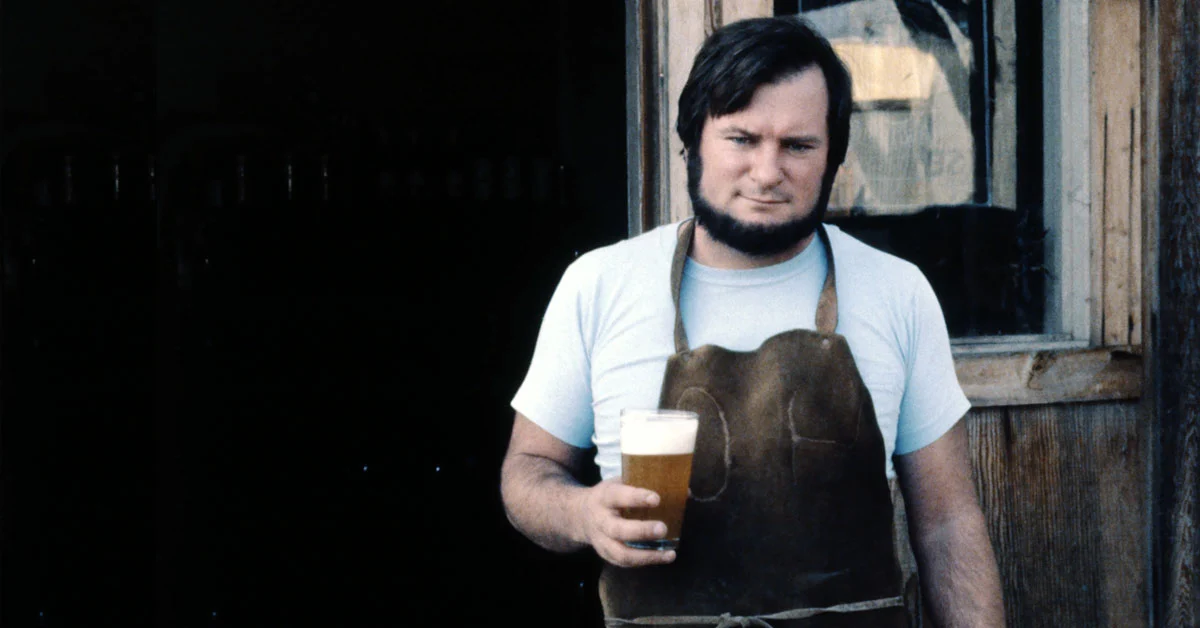
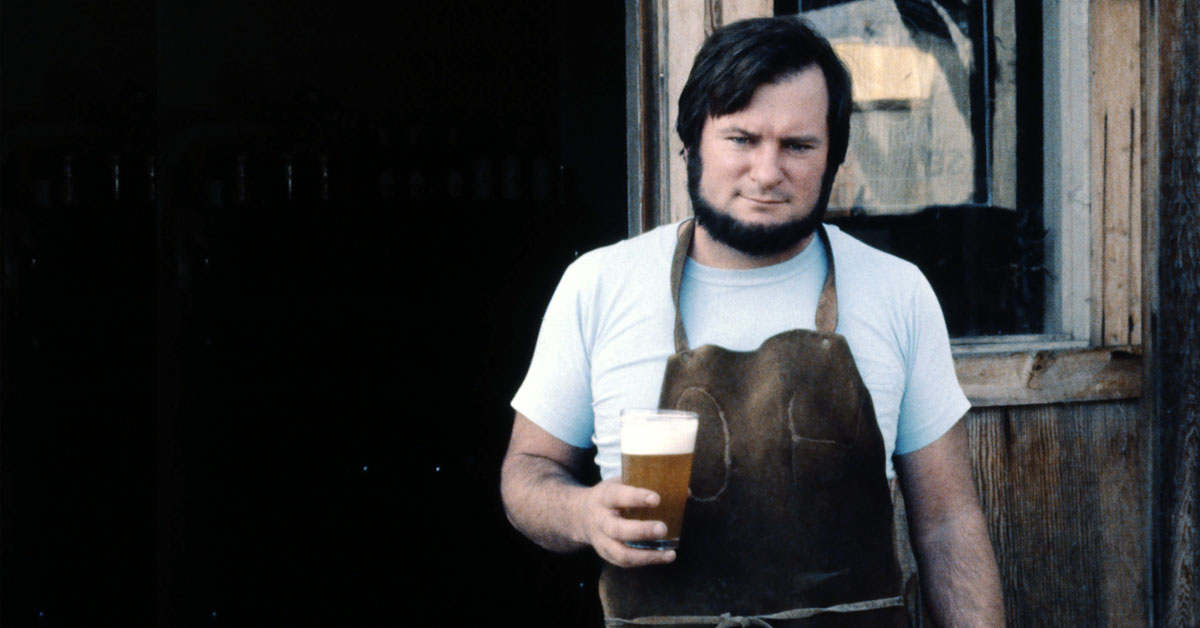
Jack McAuliffe, the visionary who founded the first modern microbrewery in the United States and paved the way for a global shift in brewing culture, died in July at the age of 80, leaving behind a legacy that transformed the American palate. While the names of multi-billion-dollar brewing conglomerates often dominate the headlines, it was McAuliffe’s modest, short-lived New Albion Brewing Company in Sonoma, California, that served as the architectural blueprint for the contemporary craft beer movement. By proving that a small-scale, independent brewery could produce flavorful, traditional ales in a market saturated by industrial light lagers, McAuliffe effectively ended the post-Prohibition era of brewing uniformity and birthed an industry that today boasts more than 9,000 establishments across the nation.
The Post-Prohibition Landscape and the Scottish Catalyst
To understand the magnitude of McAuliffe’s contribution, one must consider the state of American brewing in the mid-1970s. Following the repeal of Prohibition in 1933, the American beer market underwent a period of intense consolidation. Small local breweries were systematically acquired or driven out of business by larger entities capable of leveraging national distribution and massive advertising budgets. By the time McAuliffe returned from his military service, the industry was a virtual oligopoly dominated by brands like Anheuser-Busch, Miller, and Schlitz. The prevailing product was the American light lager—a highly carbonated, pale, and relatively flavorless beverage designed for mass-market appeal.
McAuliffe’s journey toward disruption began in the 1960s while he was serving as a technician in the United States Navy, stationed at a submarine base in Dunoon, Scotland. It was here that he was first exposed to the rich, complex world of British ales. Unlike the thin lagers of his homeland, the porters, stouts, and bitter ales of the United Kingdom offered a depth of flavor derived from diverse malt profiles and aromatic hops. This exposure ignited a passion for traditional brewing techniques that remained with him when he returned to California.
Upon his discharge, McAuliffe settled in Northern California and began homebrewing, a hobby that was technically illegal at the federal level until 1978. Working as an industrial mechanic, he applied his technical skills to his basement hobby, but his ambitions soon outgrew his personal consumption. He envisioned a commercial enterprise that could replicate the quality of the ales he had enjoyed in Scotland, a notion that was considered economically suicidal by the financial standards of the 1970s.
The Founding of New Albion Brewing Company
In 1976, McAuliffe took the definitive step from hobbyist to entrepreneur. Partnering with Jane Zimmerman and Suzy Stern, he pooled a meager investment of approximately $5,000—a sum that even in 1976 was considered insufficient for a commercial manufacturing start-up. The trio rented a dilapidated fruit-packing warehouse on the outskirts of Sonoma and set about building a brewery from the ground up.
The lack of capital forced McAuliffe to utilize his mechanical ingenuity. He did not purchase a ready-made brewing system from an industrial supplier; instead, he scavenged and repurposed equipment from other industries. He famously transformed stainless steel dairy tanks into fermentation vessels and used 55-gallon Coca-Cola syrup drums as part of his brewing process. This "adaptive reuse" of equipment became a hallmark of the early craft movement, demonstrating that the barriers to entry in the brewing world were not as insurmountable as the major players suggested.
New Albion Brewing Company officially began operations in 1976, producing three flagship beers: a Pale Ale, a Porter, and a Stout. These were "bottle-conditioned" beers, meaning they underwent a secondary fermentation in the bottle, a traditional method that was virtually unknown to the American consumer at the time.
Chronology of the New Albion Era and the Rise of Craft
The timeline of New Albion is brief in years but expansive in influence:
- 1976: New Albion Brewing Company is founded in Sonoma, California. It is recognized as the first "microbrewery" of the modern era, meaning a brewery that produces less than 15,000 barrels of beer per year.
- 1977: The first bottles of New Albion ale reach the market. Despite a lack of advertising, word of mouth among enthusiasts leads to a cult following.
- 1979: President Jimmy Carter signs H.R. 1337, which includes an amendment federally legalizing homebrewing for personal or family use. This legislation, heavily influenced by the groundswell of interest generated by pioneers like McAuliffe, provides the legal framework for the next generation of brewers.
- 1980: Ken Grossman, an early visitor to New Albion, founds Sierra Nevada Brewing Co. in Chico, California. He utilizes many of McAuliffe’s concepts, including the use of Cascade hops.
- 1982: Despite critical acclaim and high demand, New Albion Brewing Company ceases operations. The company struggled with a lack of capital, difficulty in securing traditional bank loans, and a distribution system that was hostile to small-scale producers.
- 1983: The equipment from New Albion is sold to the founders of the Hopland Brewery (later Mendocino Brewing Company), which becomes California’s first brewpub since Prohibition.
The Technical Innovation: The Cascade Hop
One of McAuliffe’s most enduring contributions to the flavor profile of American beer was his early adoption of the Cascade hop. Developed by the USDA-ARS breeding program at Oregon State University and released in 1971, the Cascade hop was initially rejected by major American brewers. The industrial giants found its floral, citrusy, and grapefruit-like qualities to be "too pungent" for their light lagers, which favored the milder, herbal notes of European noble hops.
McAuliffe, however, saw the Cascade hop as a way to give his Pale Ale a distinctly American identity. By using Cascade as a primary aromatic component, he created a flavor profile that would eventually define the "West Coast Style" of brewing. When Ken Grossman founded Sierra Nevada, he followed McAuliffe’s lead, making Cascade the star of the Sierra Nevada Pale Ale. Today, the Cascade hop is the most widely used hop in craft brewing, and its citrus-forward profile is the foundation upon which the modern IPA (India Pale Ale) craze was built.
Industry Impact and Supporting Data
The growth of the industry McAuliffe helped start is reflected in the dramatic shift in market statistics provided by the Brewers Association. In 1976, there were fewer than 50 brewing companies operating in the United States, and nearly all of them were producing essentially the same style of beer.
By the time of McAuliffe’s passing in 2024, the landscape had been utterly transformed:
- Total Breweries: Over 9,700 craft breweries currently operate in the U.S.
- Market Share: Craft beer accounts for approximately 13% of the total U.S. beer market by volume and nearly 25% by dollar value.
- Economic Impact: The craft brewing industry contributes more than $76 billion to the U.S. economy annually and supports more than 400,000 jobs.
Jim Koch, the founder of the Boston Beer Company and the creator of Samuel Adams Boston Lager, has frequently cited McAuliffe as the primary proof of concept for his own career. Koch noted that before McAuliffe, the idea of starting a brewery from scratch was considered a logistical and financial impossibility. "After him," Koch famously stated, "10,000 people have done it."
Official Responses and Reflections from the Industry
The news of McAuliffe’s passing prompted a wave of tributes from the titans of the brewing world, many of whom viewed him as a mentor or a spiritual forefather.
Ken Grossman of Sierra Nevada Brewing Co. reflected on his visits to the Sonoma warehouse in the late 1970s. "Jack showed us that it could be done," Grossman said. "He was a tinkerer and a genius who didn’t care about the corporate rules. He just wanted to make great beer." Grossman’s own success—Sierra Nevada is now one of the largest craft breweries in the world—is a direct evolution of the New Albion model.
Maureen Ogle, a prominent historian and author of Ambitious Brew, highlighted McAuliffe’s personality as a driving force behind his success. She described him as a "razor-sharp" individual who did not suffer fools and possessed a "wicked ability to build anything." According to Ogle, McAuliffe’s skepticism of the status quo and his independent spirit were exactly what the stagnant American beer market needed in the 1970s.
In 2013, Jim Koch and the Boston Beer Company collaborated with McAuliffe to re-release New Albion Ale for a limited run. The project was designed not as a profit-making venture, but as a tribute to McAuliffe’s role in the industry. The proceeds from the sale were given to McAuliffe, providing him with a degree of financial recognition that had eluded him during the original run of the brewery.
Broader Implications: The "Maker" Movement and Adaptive Reuse
The legacy of New Albion extends beyond the contents of a pint glass. McAuliffe’s approach to business—small-scale, artisanal, and locally focused—prefigured the broader "maker" movement and the modern preference for independent, transparent production.
Furthermore, his use of an old warehouse for a brewery set a precedent for the "adaptive reuse" of urban and rural industrial spaces. Today, thousands of craft breweries are located in repurposed factories, churches, and train stations, serving as anchors for neighborhood revitalization. This model of business has become a cornerstone of local economic development, turning neglected industrial zones into vibrant community hubs.
Conclusion: A Road Map for the Future
While New Albion Brewing Company only operated for six years, its impact is permanent. Jack McAuliffe provided the "road map" for the modern craft brewery, proving that a basement passion could be scaled into a viable profession through resourcefulness and a refusal to compromise on quality.
He challenged the notion that beer was a mere commodity, instead treating it as a culinary art form. His emphasis on impactful ingredients, such as the Cascade hop, and his dedication to traditional brewing styles, forced the entire industry to evolve. Even the major global brewers have been forced to respond to the movement he started, acquiring craft brands and diversifying their own portfolios to include more flavorful offerings.
As the brewing industry continues to face new challenges—ranging from changing consumer habits to supply chain fluctuations—the principles established by McAuliffe remain relevant. His story is a reminder that innovation often comes not from the boardrooms of established giants, but from the workshops of "American originals" who are willing to brew against the grain. To honor his memory, industry leaders suggest a simple gesture: supporting a local, independent brewery and recognizing the independence and craftsmanship that Jack McAuliffe first championed in a small warehouse in Sonoma nearly half a century ago.