admin
admin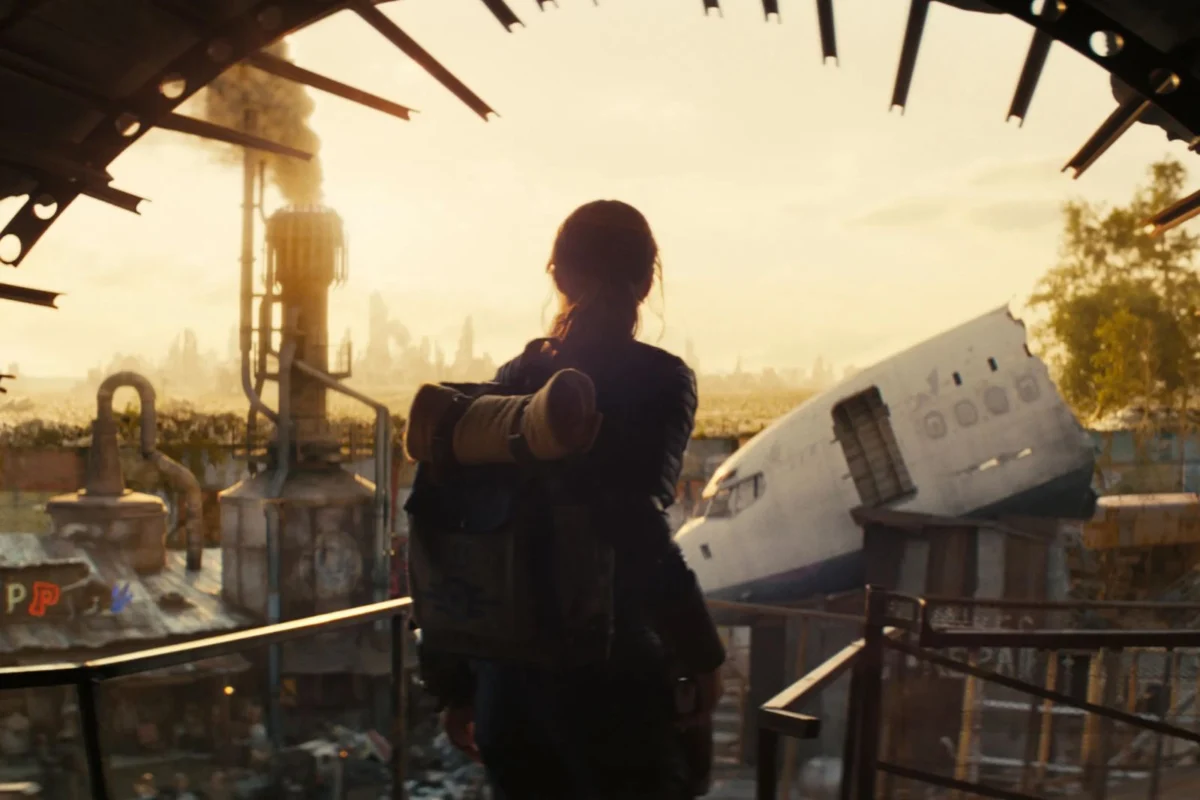
Television screens are currently saturated with diverse visions of home in a world reshaped by catastrophe, from subterranean bunkers and dilapidated farmhouses to fortified cities, mobile vehicles, and complex apartment complexes. Recent series, including AMC’s The Walking Dead, The CW’s The 100, Apple TV+’s Silo, HBO’s The Last of Us, Peacock’s Twisted Metal, Prime Video’s Fallout, and Hulu’s Paradise, collectively demonstrate a profound departure from traditional, sentimental notions of "home." The idyllic concepts of "live, laugh, love" or "home is where the heart is" are largely absent. Instead, the post-apocalyptic dwelling is consistently depicted as bleak, often temporary, and frequently oppressive, reflecting a world where survival trumps comfort and familiarity.
These on-screen habitats, whether the intricate bunkers of Silo and Fallout or the livable ruins of The Walking Dead, represent what can be described as the architecture of the Anthropocene. They are structures either built from scratch or ingeniously adapted in direct response to a societal collapse, typically one precipitated by humanity’s own hubris. In such a world, mere personal skill or sheer luck are insufficient for sustained existence; survival becomes fundamentally a question of sophisticated design, robust engineering, and strategic resource management.
The pervasive apocalypse narrative serves as a powerful proxy for contemporary reflection on pressing cultural, political, and environmental ailments. As the global climate crisis intensifies and a segment of the ultra-wealthy constructs elaborate, luxurious survival bunkers and remote refuges—seemingly convinced of their impending necessity—the post-apocalyptic homes presented in television series offer fictional yet poignant answers to increasingly urgent questions: How does one sustain life after a human-made global disaster? What materials possess the resilience to endure once humanity has severely impacted the planet? And can the fundamental concept of "home" truly persist at the literal or figurative end of the world?
The Enduring Allure of Apocalyptic Visions: A Historical Context
Humanity’s fascination with "end times" is not a modern phenomenon; it spans millennia. Ancient prophecies, particularly the biblical books of Daniel and Revelation, offered vivid visions of the last days, later elaborated by Protestant traditions with concepts like the Rapture and Tribulation. However, these early narratives typically offered no path for human survival; the end was absolute. With the advent of secularization, these biblical images of horsemen and monsters transformed into the "post-apocalypse," shifting focus from divine wrath to the existential question of humankind’s survival in an increasingly industrialized and self-destructive world.
Lorenzo DiTommaso, a professor at Concordia University and a distinguished scholar of apocalyptic literature, asserts in The Cambridge Companion to Apocalyptic Literature (2020) that the post-apocalypse genre "attained its first full expression with the Atomic Age in 1945." He argues that the core "driving mechanism" of apocalyptic entertainment became humanity’s newfound capacity for "cause death and destruction on a planetary scale" through nuclear weapons. This chilling realization that planetary doom could be self-inflicted fostered a pervasive sense of urgency, prompting nations to seriously consider survival strategies in the event of nuclear conflict. Switzerland, for instance, became renowned for its extensive construction of Cold War bunkers, designed to shelter its entire population.
In the United States, following the clandestine development of nuclear weapons through the Manhattan Project during World War II, the Federal Civil Defense Administration (FCDA) was established in 1951. Its mission was to prepare American citizens for survival in the aftermath of a nuclear fallout. The FCDA’s short films, like Survival Under Attack, were arguably some of the earliest forms of Atomic Age post-apocalyptic fiction, encouraging Americans to fortify their basements as makeshift fallout shelters. The message was clear: "preparation can be survival."
As the Cold War escalated, President John F. Kennedy publicly advocated for "fallout protection for every American as rapidly as possible" in a pivotal 1961 address. This presidential endorsement fueled a massive boom in the shelter construction industry throughout the 1960s. The federal government invested the modern equivalent of approximately $1.7 billion into building structures intended to protect citizens during a nuclear war. While precise figures remain elusive, estimates suggest that by 1965, around 200,000 such shelters had been constructed across the United States. These shelters, though presented as impregnable oases of safety, faced legitimate public questions regarding equitable access and their actual indestructibility.
The Evolution of the Post-Apocalyptic Narrative and Its Dwellings
The cultural imagination readily absorbed the concept of the fallout shelter, integrating it into a burgeoning mainstream appetite for post-apocalyptic entertainment. Novels within the genre witnessed a rapid increase in publication from the 1970s onwards, with film and television swiftly following suit. DiTommaso’s research indicates that over half of all "apocalyptic" novels, films, and other mass media produced since the late 19th century have appeared after 1995. This surge in interest persisted even as the Cold War anxieties diminished, signaling a broadening of "end of the world" scenarios. Today, the apocalypse can manifest as environmental collapse, pervasive political disorder, global pandemics, or even uncontrolled technological experimentation. Yet, despite this diversification of threats, the underground bunker, both in fiction and reality, has endured as the most common and iconic post-apocalyptic dwelling.
A Tale of Two Bunkers: Luxury vs. Utilitarian Survival
Contemporary television series offer starkly contrasting portrayals of bunker life, often reflecting real-world socio-economic divisions.
The Luxurious Refuge: Paradise and the Ultra-Rich
The upcoming series Paradise (2025-present) presents an elaborate, entirely self-contained subterranean society designed as a luxurious escape from a climate catastrophe-ravaged Earth. Built deep within the Colorado mountains by an enigmatic tech billionaire, this exclusive haven, part of the "Versailles protocol," is intended for a hand-selected elite: fellow billionaires, tech luminaries, influential politicians, and cultural figures. Its actual form is meticulously obscured by a sophisticated simulacrum of the dead planet above, complete with motorized ducks gliding on artificial ponds, ambient sounds of non-existent insects, and a generated sky. This elite bunker is a digital recreation of Earth, a "slop planet" where residents navigate the apocalypse with leisurely detachment rather than the grim struggle for survival.
This fictionalized opulence mirrors a growing real-world phenomenon where disaster preparedness and recovery are increasingly becoming luxury goods. Reports indicate that ultra-wealthy figures such as Mark Zuckerberg, Peter Thiel, Sam Altman, and even Kim Kardashian have invested in or are planning high-end doomsday compounds. These lavish refuges are equipped with designer kitchens, swimming pools, extensive wine cellars, and, crucially, private security forces. For those with sufficient capital, the prospect of planetary demise appears to be little more than a persistent annoyance, a problem that can be circumvented through exclusive, high-tech enclaves. This trend highlights a stark and widening global inequality, where the ability to survive catastrophic events is becoming directly proportional to one’s wealth, further exacerbating societal fissures in times of crisis.

The Utilitarian Enclave: Silo and Into the Night
In stark contrast, Apple TV+’s Silo (2023-present) depicts a self-sustaining world housing thousands of survivors of a mysterious world-ending event. This massive structure plunges deep underground, its 144 levels connected by a formidable spiral staircase. Visually, the silo is rendered in aging concrete, perpetually cast in dingy shadows, reflecting an aesthetic that is purely utilitarian and visibly decaying. Luxuries are scarce, and the focus is entirely on communal survival. Production designer Gavin Bocquet revealed that his team drew inspiration from "brutalist apartment blocks" reminiscent of Soviet Union-era architecture, emphasizing durability and function over comfort or aesthetic appeal.
The Belgian series Into the Night (2020), streaming on Netflix, further reinforces this grim portrayal of utilitarian bunkers. Its bleak, colorless subterranean facility, often shrouded in partial darkness and lit by flickering neon overhead lights, is under military control. This explicitly connects survival to an authoritarian regime, where personal expression and freedom are severely curtailed. Those who dare to escape its confines face the perilous task of eking out an existence under a poisoned sun. Both Paradise and Silo, despite their aesthetic differences, share a fundamental design imperative: to prevent movement both into and out of their confines. While bunkers might offer a means to ensure physical existence, fiction consistently implies that such survival often comes at the cost of personal expression and individual liberty.
The Architecture of Ruin: Adaptability and Resistance
Even when the fictional post-apocalyptic home is not buried underground, it frequently relies on concrete—modernity’s most durable material—for its structure.
Fortified Cities: The Last of Us
This is evident in Silo, and also in HBO’s critically acclaimed The Last of Us (2023-present). In this series, based on the 2013 video game, government-run quarantine zones are carved from concrete, and their architecture, much like their governance, is severe and oppressive. Here, home is a paradoxical entity: simultaneously a savior, offering protection from the infected world outside, and an enemy, enforcing draconian policies that stifle freedom. The series contrasts this life within walled cities with the risky endeavor of sheltering in traditional, crumbling homes—often dilapidated farmhouses—that remain perpetually vulnerable to the threats of a zombie-infested America. Living amidst the wreckage, the narrative suggests, is fraught with hardship but offers the potential for immeasurable freedom, provided one can survive. This fundamental choice is visually rendered in materials: dangerous freedom in the decaying ruins versus oppressive tyranny within the concrete walls.
Repurposed Scraps: Fallout
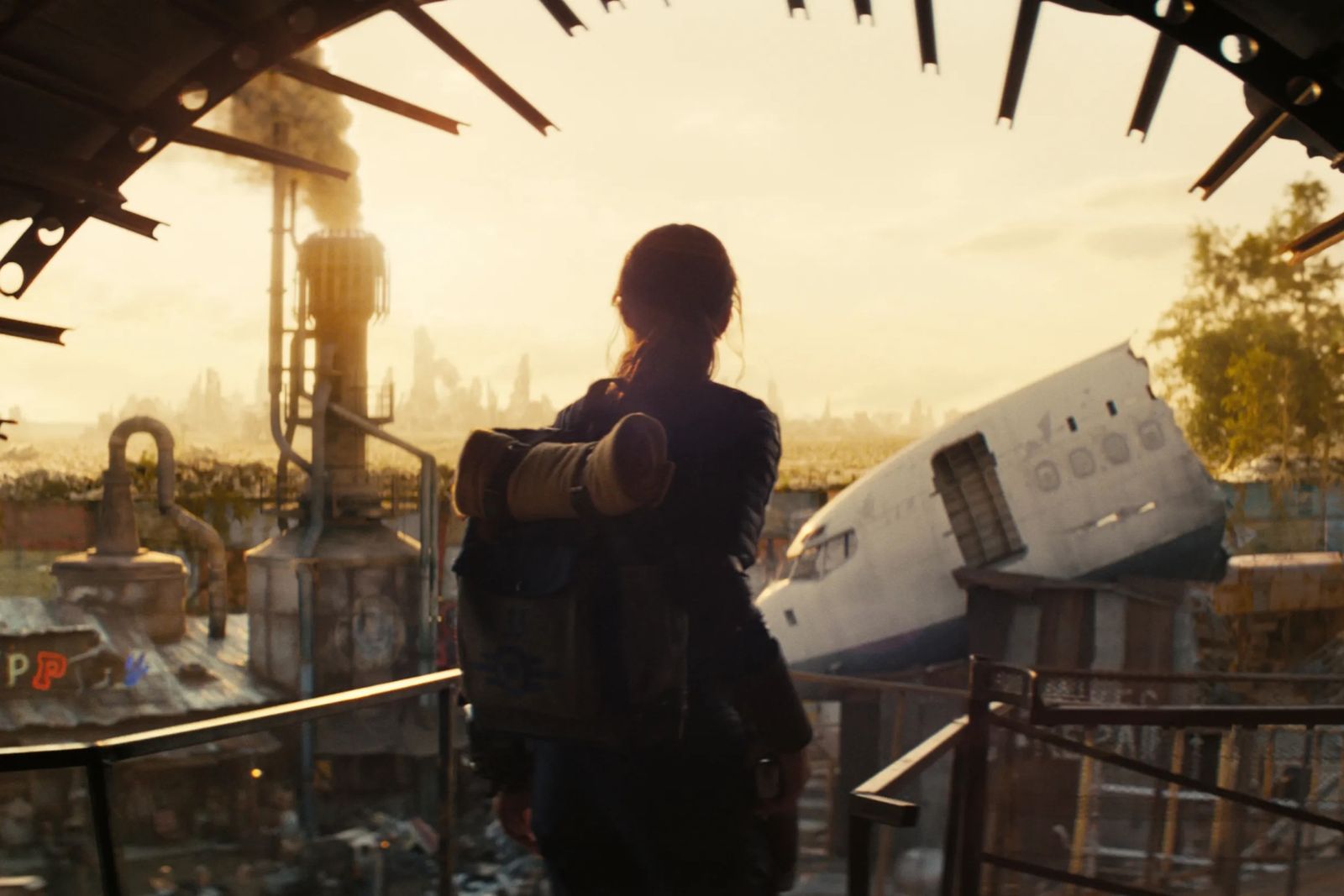
Fallout, another successful video game adaptation, powerfully leverages the contrast between a meticulously preserved dwelling and the ravaged exterior world. The fortunate few reside in retrofuturistic subterranean shelters, while the surface population wages war over meager scraps. The concrete-and-steel construction of the bunkers starkly contrasts with their mid-century modern interiors, adorned with warm natural woods, Sputnik chandeliers, and vibrant furnishings and wallpaper, firmly rooting the end of the world in the Atomic Age aesthetic. Above ground, hideously mutated survivors have learned to inhabit the ruins of Los Angeles, salvaging what remains of modernity to forge new, albeit precarious, living spaces. This juxtaposition highlights human ingenuity and resilience in adapting to extreme conditions, turning wreckage into shelter.
Beyond Fixed Abodes: The Nomadic Home
Some post-apocalyptic narratives entirely abandon the concept of a fixed dwelling, replacing it with nomadic mobility. Shows like Twisted Metal (2023-present), another video game adaptation, and HBO Max’s Station Eleven (2021-2022), based on the 2014 novel, present a radical redefinition of "home." Twisted Metal renders the traditional concept of home meaningless, replacing it with one of modernity’s most prolific productions: the automobile, repurposed and weaponized for survival on the open road. Station Eleven focuses on a traveling symphony and theater troupe, where home is less a physical place and more a collective of individuals and a shared purpose, emphasizing community and cultural preservation in motion. These narratives suggest that true survival might lie not in rebuilding permanent structures, but in embracing fluidity and adaptability.
A Cultural Mirror: Reflecting and Managing Contemporary Anxieties
In the relative safety of a television show, the consequences of humanity’s most pressing issues are transformed into fictions that entertain rather than realities to be confronted directly. Imagining the end of the world becomes a powerful exercise in managing collective anxieties. The bunkers, the repurposed ruins, and even the nomadic vehicles on screen offer tangible visualizations of how humanity might endure its most destructive impulses.
These fictional scenarios resonate deeply with current global concerns. The intensifying climate crisis, with its projections of rising sea levels, extreme weather events, and resource scarcity, is a constant backdrop. Geopolitical instability, characterized by regional conflicts and the specter of larger international confrontations, fuels fears of societal breakdown. Furthermore, the rapid advancements in artificial intelligence raise complex ethical questions about control, autonomy, and the potential for unintended catastrophic outcomes. The United Nations and numerous scientific bodies consistently publish reports outlining the dire consequences of inaction on these fronts, lending a grim realism to fictional apocalypses.
While the "answers" offered by post-apocalyptic entertainment—often bleak and challenging—are not inherently consoling, they are undeniably poignant as a pervasive sense of unease grows across societies. These narratives allow audiences to explore worst-case scenarios, to witness human resilience, and to consider the profound redefinition of fundamental concepts like "home" and "community" when faced with existential threats. Ultimately, the evolving depictions of home in post-apocalyptic media serve as a powerful cultural mirror, reflecting our deepest fears, our technological capabilities, and our enduring, albeit often desperate, hope for survival.