admin
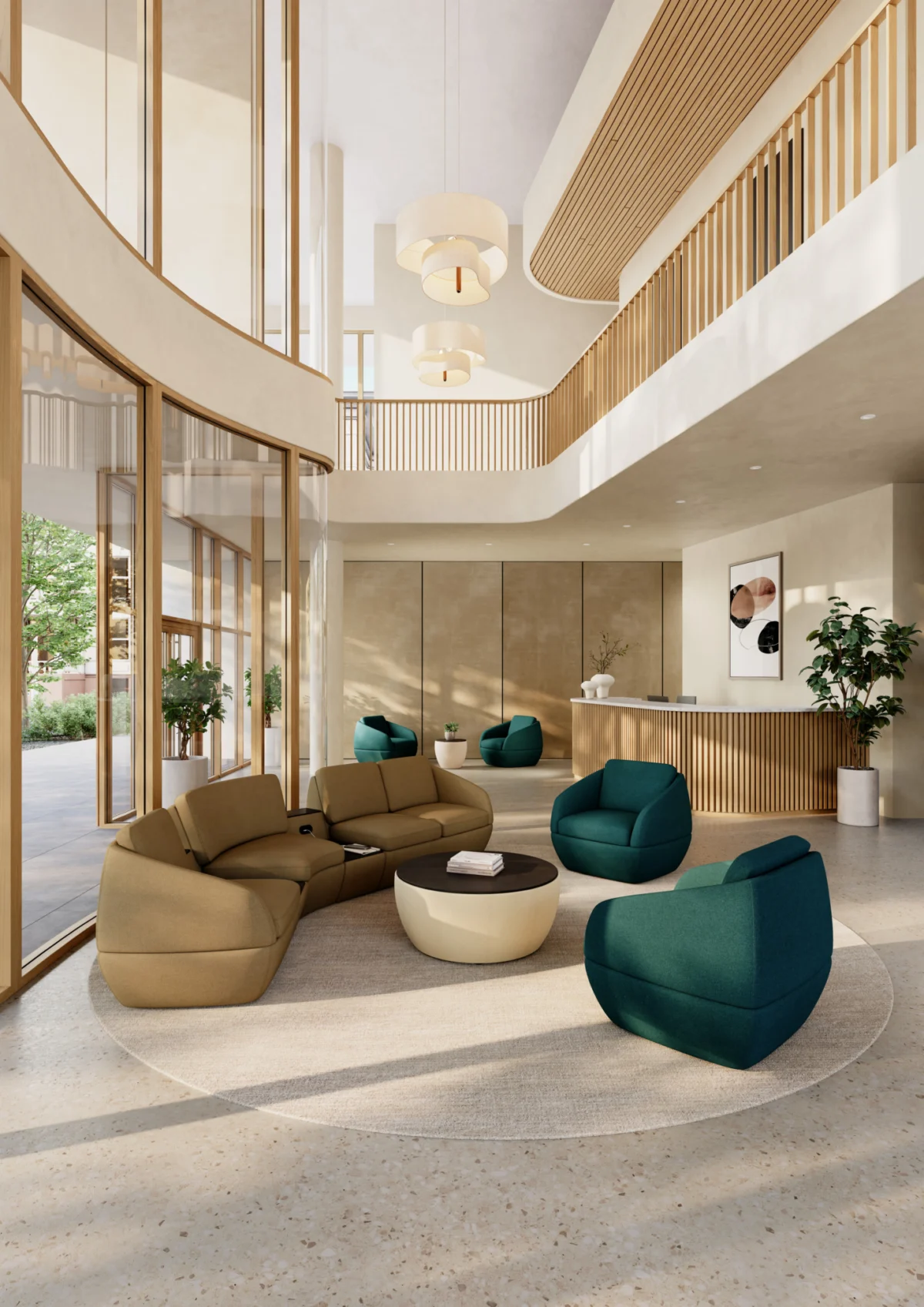
The traditional office landscape, once defined by rigid rows of cubicles and fixed mahogany desks, is undergoing a fundamental transformation driven by the rise of hybrid and remote work models. As employees return to physical offices, their expectations have shifted from mere utility to an environment that prioritizes comfort, flexibility, and multi-functional design. In response to this seismic shift in corporate culture, Arcadia has introduced the Almeya Collection, a comprehensive furniture series designed by Chris and Jon Panichella. This collection represents a departure from single-purpose seating, offering instead a modular ecosystem that adapts to the fluid needs of the modern professional. By blending the aesthetic warmth of residential furniture with the durability and functionality required for contract environments, the Almeya Collection addresses a critical gap in the contemporary "resimercial" design market.
The Genesis of Almeya: From Everyday Observation to Commercial Innovation
The development of the Almeya Collection began not in a boardroom, but with a casual observation of human behavior in a non-traditional setting. Designers Chris and Jon Panichella recount that the foundational idea for the series was sparked by the sight of a woman working from an inflatable raft at a beach. This moment of leisure-meets-labor captured the essence of modern productivity: the ability to transition seamlessly between states of relaxation and focused effort. On the raft, the subject could recline to read, then adjust her posture to engage in active work, all within a single, flexible vessel.
This observation served as the catalyst for the first concept sketches of Almeya. The Panichellas sought to translate that sense of effortless adaptability into a commercial furniture context. The goal was to create a "work island" that could support the unpredictable ways people now occupy space. This design philosophy acknowledges that the modern worker is no longer tethered to a single desk for eight hours a day; instead, they move between collaborative hubs, private focus zones, and social lounges. The Almeya Collection was engineered to facilitate these transitions without requiring the user to change their location.
A Comprehensive Product Ecosystem for Diverse Environments
The Almeya Collection is not merely a seating line but a holistic family of products designed to populate entire floor plans. The series includes modular units, standalone lounge chairs, work-lounge hybrids, benches, and occasional tables. Each piece is characterized by soft, organic forms that move away from the sharp angles of traditional office furniture, aiming instead to create an inviting atmosphere that reduces workplace stress.
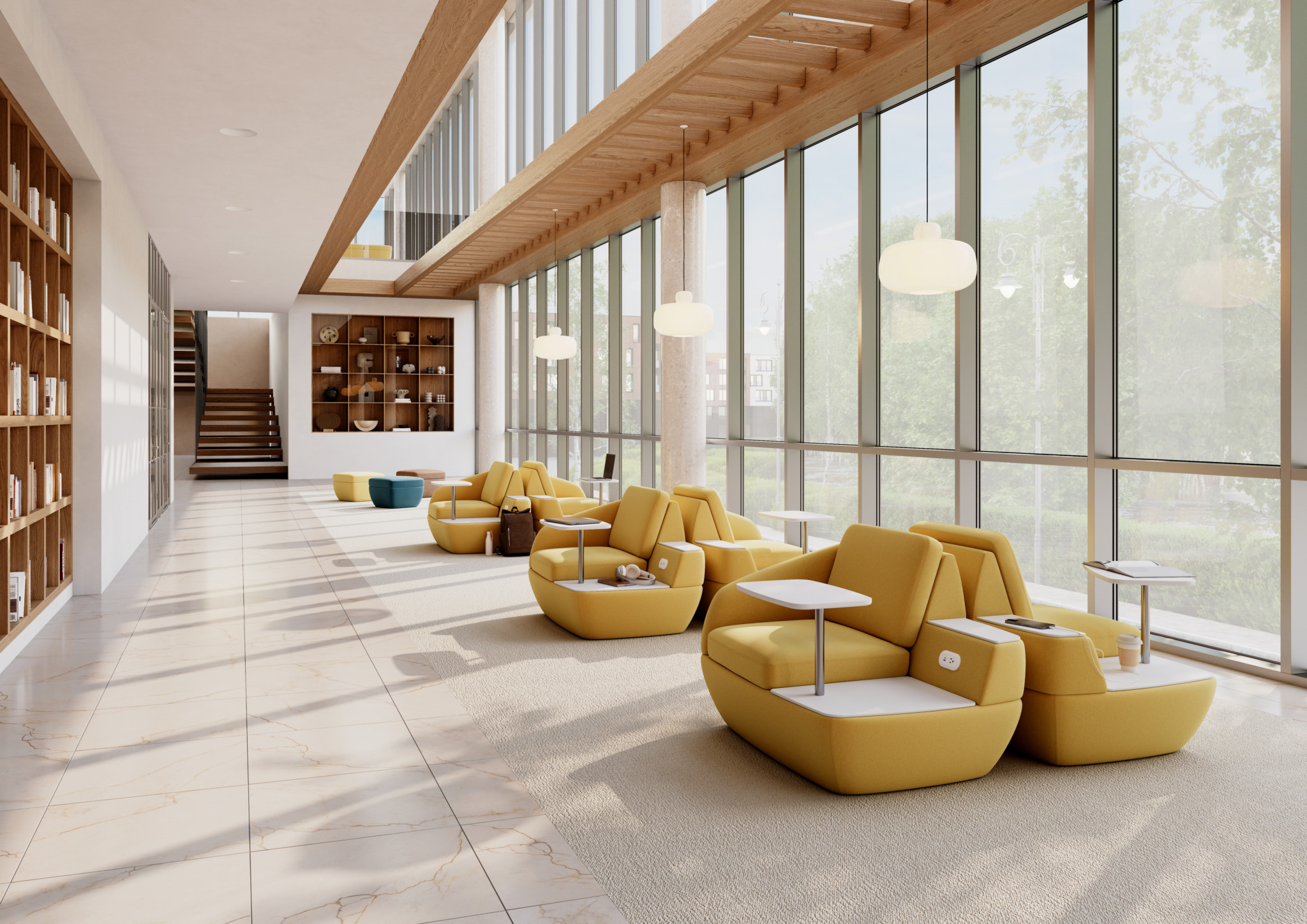
One of the cornerstone innovations of the collection is the integrated two-tiered side table system. Initially developed for a single lounge chair, this concept allows the furniture to function as a self-contained workstation. The two separate surfaces provide ample room for both a laptop and secondary items like a tablet, notebook, or coffee. To further enhance productivity, these units feature strategic power stations and optional rotating tablets, ensuring that digital connectivity is never compromised by the choice of a comfortable seat.
The modular nature of the collection allows interior designers to customize layouts based on the specific traffic patterns of a building. For instance, the swivel-base lounge chairs are designed for high-interaction zones, allowing users to easily turn toward a colleague for a spontaneous meeting or pivot away for privacy. Meanwhile, the modular benches can be configured to create natural pathways in expansive lobbies or transit corridors, guiding foot traffic while providing intermittent rest areas.
Data-Driven Shifts in Commercial Real Estate and Furniture Demand
The launch of the Almeya Collection comes at a time when the commercial real estate market is facing unprecedented pressure to provide "value-add" environments. According to recent industry reports from firms like JLL and Cushman & Wakefield, office occupancy rates in major metropolitan areas have stabilized at approximately 50% to 60% of pre-pandemic levels. However, the demand for "Class A" office space—properties that offer premium amenities and flexible layouts—remains high. This "flight to quality" means that companies are investing more heavily in high-end furniture and interior design to entice employees back to the office and to foster a culture of collaboration that cannot be replicated over video conferencing.
Supporting data suggests that modularity is no longer a luxury but a requirement for modern facility management. A 2023 survey by the International Interior Design Association (IIDA) found that 74% of workplace designers are prioritizing "adaptable furniture solutions" that can be reconfigured without the need for professional installation. The Almeya Collection aligns with this trend, offering components that can be rearranged as a company’s headcount or operational needs fluctuate.
Furthermore, the integration of technology into furniture—a key feature of Almeya—addresses the growing "power anxiety" in open-plan offices. As mobile devices become the primary tools of the workforce, the availability of accessible charging ports has become a top priority for 68% of office workers, according to a Leesman Index study on workplace experience.

Materiality and Technical Specifications
To ensure longevity in high-traffic commercial, healthcare, and educational settings, Arcadia has utilized a range of high-performance materials in the Almeya Collection. The occasional tables, which mirror the gentle curves of the seating, are available in multiple finishes including ash or walnut veneer for a natural look, or more durable options like laminate, Corian, and Fenix.
Fenix, a nanotech matte material, is particularly notable for its use in the collection. It is highly resistant to scratches, abrasions, and fingerprints, making it an ideal surface for shared workspaces where hygiene and maintenance are paramount. For the healthcare sector, the Panichellas included optional "clean-outs" between the seat and back of the chairs. This design feature prevents the accumulation of debris and allows for thorough disinfecting, meeting the stringent sanitary standards of medical facilities while maintaining a non-clinical, welcoming aesthetic.
The upholstery options for the series are equally diverse, allowing for "resimercial" styling that utilizes tactile fabrics that evoke the comfort of home. This blurring of lines between residential and contract design is a deliberate strategy to make the office feel like a destination rather than a requirement.
Industry Reactions and the Future of Workspace Design
Design critics and facility managers have noted that the Almeya Collection reflects a broader movement toward "hospitality-inspired" workspaces. By creating environments that look and feel like high-end hotel lobbies, corporations are attempting to improve employee retention and mental well-being. The organic shapes and warm materials of Almeya are seen as a direct counter-response to the "industrial" aesthetic that dominated the 2010s.
Industry analysts suggest that the success of such collections will depend on their ability to bridge the gap between aesthetics and technical utility. "The challenge for modern furniture manufacturers is to create pieces that look like they belong in a living room but perform like they belong in a high-intensity airport terminal," says Marcus Sterling, a commercial interiors consultant. "Arcadia’s focus on integrated power and modularity within a soft-form silhouette suggests they have cracked the code for the hybrid era."

As the corporate world continues to navigate the complexities of the post-pandemic landscape, the emphasis on "human-centric" design is expected to grow. The Almeya Collection serves as a benchmark for how designers can observe simple human behaviors—like working from a raft—and translate them into sophisticated solutions for the global workforce.
Broader Implications for the Contract Furniture Industry
The introduction of the Almeya Collection highlights a significant pivot for the contract furniture industry at large. Manufacturers are increasingly moving away from "fixed-asset" furniture toward "liquid-asset" furniture—pieces that can be moved, stored, or repurposed with ease. This flexibility is essential for businesses that are currently experimenting with different office footprints and lease structures.
Moreover, the focus on "work-lounge" furniture points to a change in the definition of productivity. The traditional belief that work only happens while sitting upright at a desk is being replaced by the understanding that creative breakthroughs and effective collaboration often occur in more relaxed settings. By providing the infrastructure for this "relaxed productivity," Arcadia is positioning itself as a leader in the next generation of office design.
In conclusion, the Arcadia Almeya Collection represents more than just a new line of seating; it is a physical manifestation of the changing relationship between people and their workspaces. Through the vision of Chris and Jon Panichella, the collection offers a versatile, tech-integrated, and aesthetically pleasing solution to the challenges of modern work. As organizations continue to seek ways to balance the needs of their remote and in-office employees, modular systems like Almeya will likely become the standard for the offices of the future, where the boundary between work and life is increasingly fluid and comfort is synonymous with performance.