admin
admin
In 1925, within the fertile soil of his Stellenbosch garden, Professor Abraham Perold, a visionary chemist who transitioned into a pioneering viticulturist, embarked on an experimental journey that would profoundly reshape South Africa’s winemaking landscape. He planted four seemingly unassuming seeds, little knowing that these nascent growths would burgeon into Pinotage, the nation’s distinctive red grape, now celebrated worldwide. This journey, however, was far from linear, marked by periods of obscurity, fervent criticism, and ultimately, a triumphant resurgence that cemented its place on the international stage.
A Visionary’s Genesis: The Birth of Pinotage
Professor Perold’s motivation for crossing two distinct grape varietals – Pinot Noir and Cinsault – stemmed from a clear understanding of the viticultural challenges prevalent in the Cape in the early 20th century. South Africa’s warm, often arid climate presented difficulties for many traditional European grapes. Pinot Noir, while highly prized for its elegance, complexity, and delicate aromatics, was notoriously finicky and difficult to cultivate, particularly in warmer climes. Its thin skin and susceptibility to disease made it a high-maintenance varietal. On the other hand, Cinsault, known locally at the time as Hermitage, was a hardy, robust, and prolific grape, widely planted across the Cape for its reliable yields and ability to withstand heat and drought. However, Cinsault wines often lacked the depth, structure, and aromatic sophistication desired for premium red wine production.
Perold’s genius lay in his foresight: he aimed to synthesize the best qualities of both parents. He sought the delicate finesse and aromatic complexity of Pinot Noir, combined with the resilience, vigor, and high-yielding nature of Cinsault. The result of this ambitious crossbreeding was a hybrid grape possessing a unique genetic profile, perfectly adapted to the South African terroir. The four seeds he planted were the culmination of this scientific endeavor, a testament to his belief in creating a grape that could truly thrive in the Cape’s specific environmental conditions and produce wines of both character and consistency.
The Narrow Escape: A Tale of Preservation
The fledgling existence of Pinotage almost ended prematurely. In 1928, Professor Perold accepted a new position at the KWV cooperative in Paarl, necessitating his departure from Stellenbosch. In his haste, the precious seedlings were left behind, seemingly forgotten in an overgrown garden. This oversight nearly led to their demise, as a clean-up crew, unaware of their scientific significance, prepared to clear the neglected plot.
Fortunately, fate intervened in the form of Charlie Niehaus, a young lecturer at the university. Possessing a keen eye and an understanding of viticultural experiments, Niehaus recognized the unique characteristics of the plants. His timely intervention saved the four seedlings from being uprooted and discarded, effectively preserving the future of South Africa’s signature grape. This pivotal moment underscores the fragility of agricultural innovation and the importance of vigilant observation.
Following Niehaus’s rescue, the responsibility for nurturing these unique vines fell to CJ Theron, Perold’s successor. Theron meticulously grafted the young vines onto rootstock, ensuring their continued growth and propagation. It was Theron and Niehaus who, recognizing the hybrid’s parentage, coined the name "Pinotage" – a portmanteau of Pinot and Hermitage. This naming not only acknowledged its genetic lineage but also symbolized its aspiration to combine the best attributes of both.
The first wine made from Pinotage grapes was produced in 1941 by CT de Waal at Elsenburg Agricultural College, marking a significant milestone in its development. Two years later, the first commercial vineyard of Pinotage was planted at Myrtle Grove, near Sir Lowry’s Pass, signaling the grape’s transition from an experimental curiosity to a viable commercial varietal. These foundational steps laid the groundwork for its eventual, albeit tumultuous, ascent.
From Ugly Duckling to National Treasure: A Rocky Ascent
Pinotage made its commercial debut in 1961, with the first bottles bearing its name released under the prestigious Lanzerac label. This initial success sparked a wave of optimism and led to increased plantings across the Cape winelands. However, this early enthusiasm proved fleeting. Throughout the 1970s and 1980s, Pinotage fell out of favor, and plantings significantly slumped. Several factors contributed to this decline, including challenges in managing the grape’s vigorous growth and, crucially, South Africa’s international isolation due to the apartheid regime.
The political sanctions imposed during apartheid effectively cut off South African wines from most international markets. This isolation not only hindered export opportunities but also limited exposure to evolving winemaking techniques and critical feedback. When export markets gradually reopened in the early 1990s, the initial reception of Pinotage by overseas critics was largely unfavorable. Many examples were poorly made, resulting in wines with harsh, volatile flavors. Tasting notes from this period frequently described undesirable characteristics, likening the wine to burnt rubber, nail polish remover, or paint, leading to a tarnished reputation that lingered for years. This perception painted Pinotage as an "ugly duckling" of the wine world, a grape with potential but often failing to deliver on it.
The Pinotage Renaissance: A Collaborative Revival
Despite the widespread criticism, a dedicated core of South African winemakers refused to abandon their unique grape. They recognized Pinotage’s inherent potential and committed themselves to understanding and mastering its intricacies. Beyers Truter of Kanonkop Estate emerged as one of the grape’s most passionate and influential champions. His unwavering dedication and pioneering efforts in refining Pinotage winemaking inspired a new generation of producers to follow suit.
This renaissance was characterized by a concerted effort to tame Pinotage’s "rougher edges." Winemakers began experimenting with gentler extraction techniques during fermentation, reducing the harsh tannins that had contributed to its negative image. More careful and judicious oak aging was employed, moving away from aggressive new oak that could overwhelm the wine’s fruit profile. The focus shifted towards showcasing the grape’s intrinsic dark fruit characteristics, often accompanied by subtle smoky or savory notes.
A significant development in this period was the increased appreciation for and utilization of the Cape’s old bush vines. These dry-farmed vines, often decades old, naturally yield smaller quantities of intensely flavored grapes, producing wines of remarkable depth, concentration, and finesse. Additionally, the emergence of the "coffee Pinotage" or "mocha Pinotage" style captivated a new audience. This style, often achieved through specific toast levels of oak barrels or a brief period of contact with coffee staves, accentuated notes of roasted coffee, dark chocolate, and spice, creating a commercially successful and approachable expression of the grape.
The collective efforts of these dedicated winemakers, coupled with ongoing research and development, began to yield significant results. Top Pinotages started earning glowing reviews and high scores from international critics. Prestigious accolades, such as Platinum medals at the Decanter World Wine Awards, were bestowed upon examples from regions like Swartland and Walker Bay, signaling a dramatic shift in perception. Pinotage was no longer just a national curiosity but a critically acclaimed varietal capable of producing world-class wines.
International Pinotage Day: A Global Celebration
The turnaround in Pinotage’s fortunes was further solidified by the establishment of the Pinotage Association in 1995. Founded by producers committed to elevating the grape’s profile and defending its reputation, the association played a crucial role in promoting quality, conducting research, and marketing Pinotage both domestically and internationally.
A key initiative championed by the Pinotage Association was the creation of International Pinotage Day, first celebrated on October 11, 2014. This annual global event, held on the second Saturday of October, serves as a focal point for celebrating the grape’s unique heritage and diverse expressions. The timing of the day is particularly symbolic: in South Africa, it falls in mid-spring, a season of warming weather and the beloved "braai" (barbecue) season moving into full swing. A smoky glass of Pinotage enjoyed beside an open fire has become a quintessential South African ritual, perfectly complementing the rich, savory flavors of grilled meats. In the Northern Hemisphere, the cooler October nights make Pinotage an equally appealing choice, pairing wonderfully with heartier autumnal dishes. International Pinotage Day has become a vital platform for educational initiatives, tastings, and promotional campaigns, uniting producers and consumers in a global appreciation for this remarkable grape.
Beyond the Cape: A Global Footprint
While Pinotage remains undeniably a South African success story – it is consistently among the country’s most planted red grapes, thriving particularly in Stellenbosch, Swartland, and Paarl – its passport has indeed been filling up. New Zealand was an early adopter, recognizing the grape’s potential. Today, small but significant plantings can be found in various wine regions across the globe. In the United States, growers in California, Oregon, and Virginia are experimenting with Pinotage, often producing unique, terroir-driven expressions. Brazil, with its burgeoning wine industry, Israel, and Zimbabwe also host small vineyards, showcasing the grape’s adaptability to diverse climates and soil types.
Wherever it puts down roots, Pinotage consistently exhibits its distinctive "calling cards": a rich tapestry of dark fruit flavors such as black cherry, plum, and mulberry, often accompanied by a characteristic whisper of smoke, earth, or savory spice. Its generous, full-bodied character, coupled with a typically firm tannic structure and vibrant acidity, makes it a versatile food-pairing wine. This global spread underscores Pinotage’s resilience and its growing appeal to winemakers and consumers seeking something beyond the traditional international varietals.
Pinotage in Blends: The Cape Blend Identity
Beyond its single varietal expressions, Pinotage plays a crucial role in the distinctive "Cape Blend." This uniquely South African wine style mandates that Pinotage constitute a significant, often majority, portion of the blend, typically paired with classic Bordeaux varieties such as Cabernet Sauvignon and Merlot. The Cape Blend is a testament to Pinotage’s versatility and its ability to integrate harmoniously with other grapes, contributing its characteristic fruit, spice, and structure while enhancing the overall complexity and depth of the wine. It represents another facet of South Africa’s innovative winemaking approach and its commitment to forging a distinct national identity in the global wine market.
Economic and Cultural Impact
Pinotage’s journey from an experimental cross to a national treasure has had a profound economic and cultural impact on South Africa. It has become a cornerstone of the country’s wine industry, contributing significantly to exports and tourism. The grape’s unique story and its connection to South African heritage resonate with consumers, positioning it as a powerful ambassador for the nation’s viticultural prowess. For many South Africans, Pinotage embodies a sense of national pride, a testament to innovation and perseverance against adversity. Its evolution mirrors the country’s own journey, from isolation to global recognition.
Exploring Diverse Expressions: A Glimpse at Award-Winning Pinotages
The quality and diversity of modern Pinotage wines are exemplified by recent accolades at prestigious competitions like the Decanter World Wine Awards. These awards highlight the spectrum of styles and regional nuances that define contemporary Pinotage.
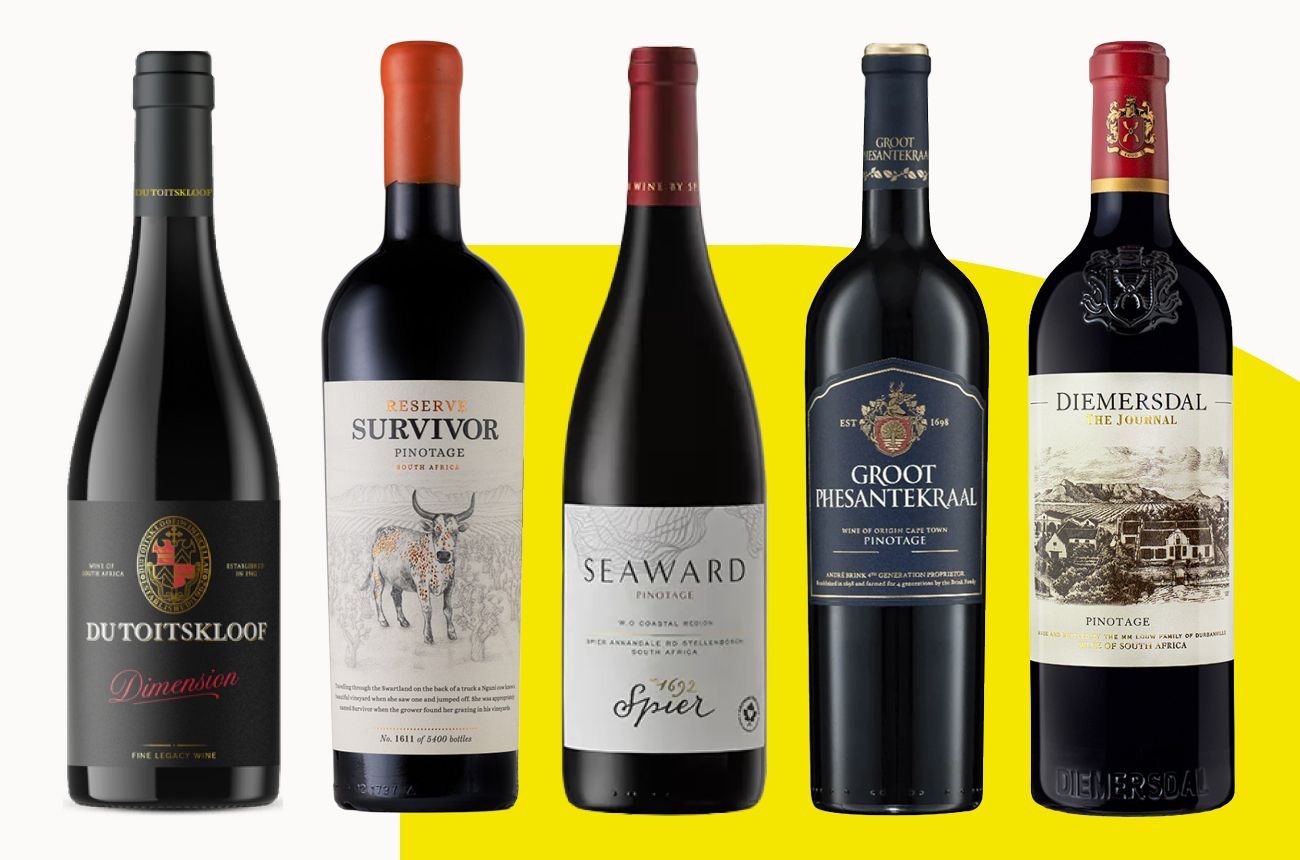
- Du Toitskloof, Granite Pinotage Swartland 2024: A Platinum winner with 97 points, this wine is celebrated for its authentic and honest expression. It showcases primary characters of wild berry, cherry, and spice, framed by a sandalwood structure and fine tannins. Its supple, approachable nature, complemented by a herbal top note, speaks to the elegance achieved in Swartland. (Alcohol 14.5%)
- Survivor, Reserve Pinotage, Swartland 2023: Awarded Silver with 94 points, this example offers alluring dark berry, black plum, and mocha aromas, lifted by smoked liquorice. It promises juicy fruit, expressive spice, and a layered finish, reflecting Swartland’s capacity for producing powerful yet balanced Pinotage. (Alc 14%)
- Spier, Seaward Pinotage, Coastal Region 2023: A Silver medalist at 93 points, this wine presents a more restrained profile with notes of pencil lead, potpourri, and dark berry, subtle spice, fine tannins, and elegant acidity, demonstrating the coastal region’s ability to craft refined expressions. (Alc 14.6%)
- Groot Phesantekraal, Pinotage, Cape Town 2024: Earning Silver with 92 points, this Pinotage is characterized by savory braai spice, purple fruit, and sage aromas, unfolding into juicy, tangy fruit, luxurious depth, and opulent concentration, embodying the grape’s quintessential South African character. (Alc 14.3%)
- Diemersdal, The Journal Pinotage, Durbanville, Cape Town 2023: This 92-point Silver winner showcases top notes of blackberry, bay leaf, and vanilla spice, leading into sweet fruit, dark chocolate richness, and a velvet texture, highlighting the complexity achievable from Durbanville’s unique terroir. (Alc 14.5%)
- Bellingham, The Bernard Series Bush Vine Pinotage, Coastal Region 2023: With 91 points and a Silver medal, this wine bursts with cherries and strawberries, framed by vanilla spice and scented oak. It offers dense fruit driven by focused, linear minerality, a testament to the quality derived from old bush vines. (Alc 14%)
- Cape Five, Reserve Pinotage, Coastal Region 2023: A 91-point Silver winner, this Pinotage reveals brooding violet, mulberry, and blueberry aromas wrapped in smoky oak, leading to juicy fruit, poised acidity, and seductive depth. (Alc 14.5%)
- Durbanville Hills, Collectors Reserve The Promenade Pinotage, Durbanville, Cape Town 2024: Also achieving Silver with 91 points, this wine features cocoa, coffee, and dark fruit aromas with a lemon-thyme lift, opening to concentrated fruit, juicy freshness, ripened tannins, and an elegant texture. (Alc 14.2%)
- Simonsig, Redhill Pinotage, Stellenbosch 2021: This 91-point Silver medalist offers delicate raspberry, blackcurrant, and cigarbox tones, with vanilla spice perfume over a supple texture, poised fruit, and refined structure, reflecting Stellenbosch’s classic approach. (Alc 14%)
- Marks & Spencer, Peacock Tail Pinotage, Swartland 2025: A 90-point Silver winner, this wine displays pretty hibiscus and creamy oak framing ripe dark fruit, while mulberry freshness and dusty tannins shape an opulent palate, showing the commercial appeal of well-made Swartland Pinotage. (Alc 13.5%)
These examples underscore the remarkable transformation of Pinotage, showcasing its capacity for elegance, complexity, and regional distinctiveness. From a challenging hybrid to a celebrated varietal, Pinotage’s narrative is a compelling testament to human ingenuity, perseverance, and a deep connection to the land. As International Pinotage Day approaches, it serves as the perfect invitation to explore the rich tapestry of flavors offered by this grape that, against all odds, refused to fade away, cementing its status as a true icon of the winemaking world.