Jia Lissa
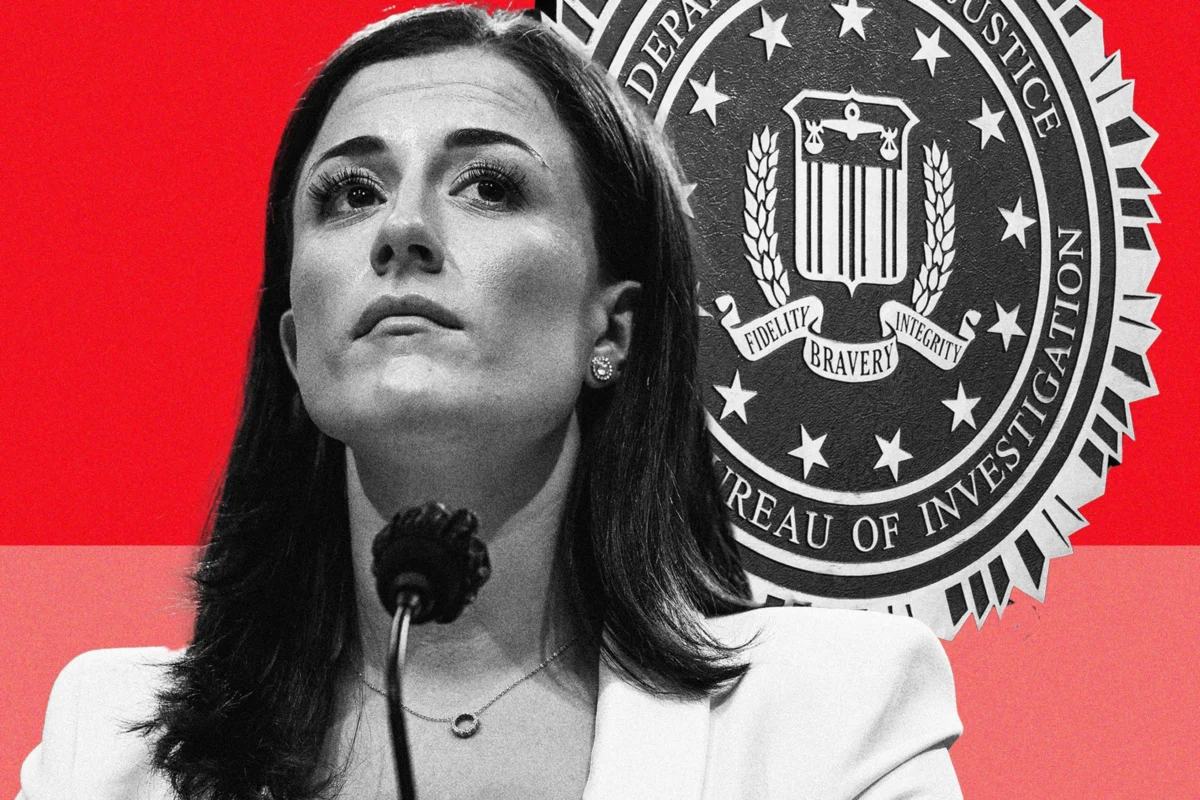
Federal prosecutors are actively considering bringing perjury and obstruction of justice charges against Cassidy Hutchinson, the former White House aide whose dramatic testimony four years ago significantly implicated then-President Donald Trump in the events of the January 6, 2021, Capitol riot. This development signals a serious intent by the Justice Department to pursue a criminal case against Hutchinson, a former special assistant to Trump White House chief of staff Mark Meadows, although an indictment from a federal grand jury in Washington is not anticipated until at least after the upcoming midterm elections, according to sources familiar with the ongoing matter.
Background: Cassidy Hutchinson’s Pivotal Role in the January 6 Investigation
The January 6, 2021, attack on the U.S. Capitol marked a watershed moment in American political history, as a mob of Trump supporters, incited by the former president’s repeated claims of a stolen election, stormed the legislative building in an attempt to prevent the certification of the 2020 presidential election results. In the aftermath, the House Select Committee to Investigate the January 6th Attack on the United States Capitol was formed to probe the causes, events, and responsibilities associated with the insurrection.
Cassidy Hutchinson emerged as a crucial witness for the committee, providing extensive testimony behind closed doors and, most notably, in a widely watched public hearing on June 28, 2022. Her testimony offered a rare glimpse into the chaotic and often volatile inner workings of the Trump White House during the critical days leading up to and on January 6th.
During her public appearance, Hutchinson recounted several explosive allegations that captivated the nation and deeply impacted the committee’s narrative. Among the most sensational claims were:
- Trump’s Knowledge of Armed Supporters: Hutchinson testified that President Trump was aware that many of his supporters gathered for his Ellipse rally on January 6th were armed with various weapons, including firearms, yet he still encouraged them to march to the Capitol. She quoted Trump as saying, "I don’t effing care that they have weapons. They’re not here to hurt me. Take the effing mags away. Let my people in. They can march to the Capitol from here." This statement, if true, suggested a conscious disregard for potential violence.
- The "Limo Incident": Perhaps the most dramatic moment of her testimony involved an alleged altercation inside the presidential limousine after Trump’s rally speech. Hutchinson recounted a secondhand account from then-Deputy Chief of Staff for Operations Tony Ornato, who claimed that Trump became irate upon being told by his Secret Service detail that he could not join his supporters at the Capitol. According to Hutchinson, Ornato described Trump lunging at the neck of his Secret Service agent, Robert Engel, and attempting to grab the steering wheel of the presidential vehicle.
- The Notecard Statement: Hutchinson also claimed to have personally penned a statement on a notecard for Trump to release during the riot, urging calm and calling for an end to the violence. She presented this as evidence of her efforts, and those of others, to encourage the president to de-escalate the situation.
Her testimony painted a vivid picture of a president seemingly unconcerned by the escalating violence and actively resistant to efforts to restore order, significantly bolstering the committee’s argument that Trump was directly responsible for the events of January 6th. The immediate aftermath of her testimony saw widespread media coverage, with many commentators hailing her as a courageous whistleblower.
The Allegations: Scrutiny and Contradictions
In recent months, however, federal prosecutors at the Justice Department have shifted their focus, meticulously scrutinizing Hutchinson’s various accounts. This renewed interest stems from significant discrepancies and a lack of corroboration for key elements of her testimony, according to two sources with knowledge of the investigation.
Central to the DOJ’s developing case are several points of contention:
- Lack of Corroboration by Special Counsel Jack Smith: The Special Counsel’s office, led by Jack Smith, which has been investigating various aspects of the January 6th events, including Trump’s actions, reportedly did not corroborate much of Hutchinson’s more sensational testimony. The Special Counsel’s extensive investigation involved interviews with numerous witnesses, including Secret Service personnel and other White House officials, and a review of vast amounts of documents and communications. The inability of Smith’s team to confirm key aspects of Hutchinson’s narrative has raised questions about the veracity of her statements.
- Secret Service Denials of the "Limo Incident": The alleged "limo incident" quickly became a focal point of skepticism. Both Tony Ornato and Robert Engel, the Secret Service agents directly involved, reportedly denied Hutchinson’s account of the altercation. These denials, made under oath, directly contradict a pivotal moment in her public testimony and undermine the credibility of her secondhand claim. For a perjury charge, proving that a statement was knowingly false and materially important to the investigation is crucial, and a direct denial from the alleged participants significantly complicates the prosecution’s task.
- Evolving Accounts and Inconsistencies: Prosecutors are reportedly comparing transcripts of Hutchinson’s multiple interviews with the House Select Committee against her subsequent testimony to Special Counsel Jack Smith’s team. The objective is to identify any material changes or inconsistencies in her accounts over time. Such discrepancies could form the basis of a perjury charge, as knowingly providing different material facts under oath to different investigative bodies can constitute a prosecutable offense. The legal standard for perjury requires proving that a witness intentionally made a false statement under oath regarding a material matter.
- The Notecard Dispute: Another key area of prosecutorial interest is Hutchinson’s claim that she authored a notecard with a proposed statement for President Trump during the riot. This claim has been directly disputed by Eric Herschmann, a former Trump White House counsel. Herschmann has publicly stated that he, not Hutchinson, penned the note in question, which called for peace and asked rioters to leave the Capitol. Such a direct contradiction from another high-ranking White House official further complicates Hutchinson’s credibility on a specific, verifiable detail.
Timeline of the Investigation and Referral
The journey leading to the Justice Department’s current consideration of charges against Cassidy Hutchinson has been circuitous and punctuated by political maneuvering:
- January 6, 2021: Capitol riot occurs.
- June 28, 2022: Cassidy Hutchinson delivers her high-profile public testimony to the House Select Committee.
- Late 2022: The House Select Committee concludes its investigation, issuing a final report. Shortly thereafter, Attorney General Merrick Garland appoints Special Counsel Jack Smith to oversee federal investigations into attempts to interfere with the peaceful transfer of power following the 2020 election, including aspects related to January 6th.
- 2023: Hutchinson publishes her memoir, "Enough," detailing her experiences within the Trump administration and her decision to testify. The book provides a personal account but also potentially locks her into certain versions of events.
- Recent Months (Specifically Reported as March 2026 in Original Article, Likely a Typo for Recent Past): The investigation into Hutchinson gained significant momentum and became a priority for the Department of Justice following a criminal referral from Representative Barry Loudermilk, a Republican from Georgia. Loudermilk has been a vocal critic of the January 6th Committee investigation, frequently questioning its impartiality and methods.
- Recently (Specifically Reported as April 2026 in Original Article, Likely a Typo for Recent Past): In an unorthodox procedural move, Loudermilk’s referral was assigned to the Civil Rights Division at the DOJ, rather than the U.S. Attorney for the District of Columbia or the Criminal Division, which typically handle public corruption and congressional perjury cases. This assignment has raised eyebrows, as the Civil Rights Division’s mandate is generally focused on cases with a nexus to civil rights violations.
The Political Undercurrents: Loudermilk’s Referral and DOJ Assignment
Representative Barry Loudermilk’s criminal referral of Cassidy Hutchinson is steeped in the broader political conflict surrounding the January 6th investigation. Loudermilk, who himself faced scrutiny from the January 6th Committee regarding his activities leading up to the riot, has consistently portrayed the committee’s work as a partisan witch hunt. His referral of Hutchinson, therefore, can be viewed as a counter-offensive, aimed at discrediting a key witness against former President Trump.
Adding another layer of complexity is the unusual assignment of this referral to the Justice Department’s Civil Rights Division. Under standard Justice Department guidelines, this division is primarily responsible for enforcing federal statutes prohibiting discrimination and protecting the civil rights of all Americans. Public corruption cases, including allegations of perjury before Congress, are typically handled by the Criminal Division or the U.S. Attorney’s Office in the relevant jurisdiction.
The Civil Rights Division is currently led by Harmeet Dhillon, a prominent figure in conservative legal circles and a staunch Trump loyalist. Dhillon has been a reliable advocate for the Trump administration’s prosecutorial agenda, and her appointment to lead the division was seen by some as a move to align the DOJ’s enforcement priorities with the political objectives of certain factions within the Republican party. The decision to assign a case involving a former White House aide’s congressional testimony to a division led by a figure so closely associated with Trump has fueled speculation about potential political influence on the prosecutorial process.
Further complicating Loudermilk’s efforts was an attempt by him to separately depose Hutchinson. This effort was reportedly blocked by House Speaker Mike Johnson, who expressed concerns that such a deposition could "surface damaging texts of a sexual nature between lawmakers and Hutchinson." This intervention suggests a desire to control potentially embarrassing information that could emerge from renewed congressional scrutiny of Hutchinson, irrespective of the perjury allegations.
Legal Hurdles and the High Bar for Perjury
Despite the Justice Department’s apparent intent to proceed, prosecuting perjury and obstruction of justice charges against a high-profile witness like Cassidy Hutchinson presents significant legal challenges. Legal experts, including some within the Justice Department, have expressed skepticism about the viability of such a case due to the high legal bar for successful prosecution.
Former U.S. Attorney Joyce Vance explains that to secure a conviction for perjury, prosecutors must prove several key elements beyond a reasonable doubt:
- False Statement: That Hutchinson made a statement that was objectively false.
- Under Oath: That the false statement was made under oath (e.g., during congressional testimony or sworn interviews).
- Knowingly False: That Hutchinson knew the statement was false at the time she made it. This is often the most difficult element to prove, as it requires demonstrating intent. A witness could genuinely misremember, misinterpret, or be mistaken without necessarily committing perjury.
- Materiality: That the false statement was material to the investigation, meaning it had the potential to influence the outcome or direction of the inquiry.
The distinction between a false statement and an honest mistake or a change in recollection is critical. Prosecutors would need to establish not just that her accounts changed or lacked corroboration, but that she intentionally fabricated or lied about material facts. The fact that some of her key claims were secondhand (like the limo incident) adds another layer of complexity, as proving she knowingly lied about a secondhand account could be more challenging than proving she lied about something she directly witnessed.
The internal skepticism within the DOJ regarding the viability of a criminal case underscores these legal complexities. While the Justice Department did not respond to requests for comment on the ongoing investigation, the quiet nature of the proceedings, and the anticipated delay until after the midterm elections, suggest a cautious approach.
Broader Implications and Political Context
The potential prosecution of Cassidy Hutchinson carries significant broader implications, extending beyond the legal fate of a single individual. This investigation is the latest example of the Justice Department’s involvement in politically charged cases, particularly those touching on the Trump administration and its aftermath.
Critics of the Justice Department, particularly those aligned with former President Trump, have frequently accused the agency of being politicized and of selectively pursuing cases against Trump’s perceived political adversaries. The original article notes that Trump himself reportedly fired former U.S. Attorney General Pam Bondi in April, partly due to concerns that she was moving too slowly to bring such politically sensitive cases. The current investigation into Hutchinson, initiated by a Trump-aligned congressman and assigned to a division led by a Trump loyalist, will undoubtedly be viewed through this highly politicized lens.
The outcome of this investigation could also have a chilling effect on future witnesses in high-stakes congressional inquiries. If a key witness like Hutchinson faces charges over alleged inconsistencies, it could deter others from coming forward with information, fearing similar scrutiny and potential legal jeopardy. Conversely, if the charges proceed and are proven, it could reinforce the importance of truthful testimony under oath, regardless of political pressures.
For Cassidy Hutchinson, now 29, who has kept a relatively low profile since publishing her memoir, "Enough," in 2023, these potential charges represent a dramatic shift from her previous role as a celebrated whistleblower. Neither Hutchinson nor her lawyer responded to requests for comment regarding the ongoing inquiry.
Ultimately, the Justice Department’s decision on whether to pursue an indictment against Cassidy Hutchinson will be a closely watched development, with profound implications for the legal landscape surrounding January 6th, the credibility of congressional testimony, and the ongoing debate about the politicization of justice in America. The intricate dance between legal precedent, political motivations, and the pursuit of truth will define this complex and evolving case.