Jia Lissa
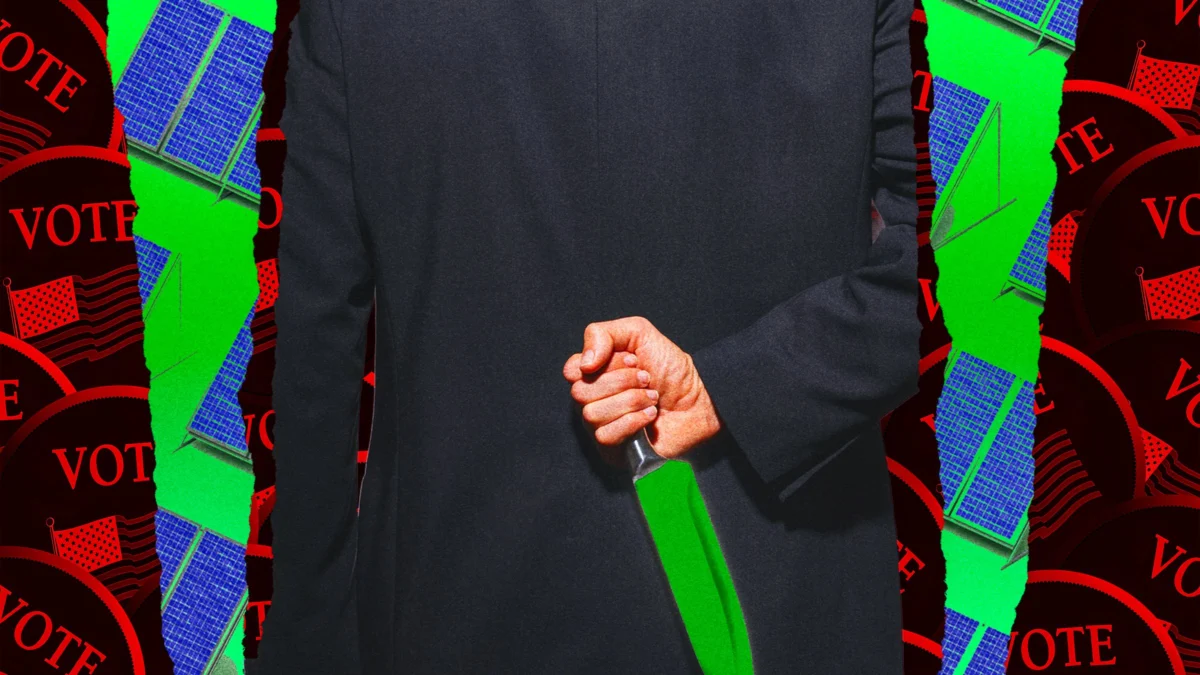
In a significant departure from traditional environmental advocacy, a political action committee (PAC) known as the Invest in Tomorrow Coalition has initiated a series of aggressive, often scandal-focused, attack ads targeting congressional candidates across the United States. This move marks a strategic shift for the pro-solar energy movement, which historically has relied on appeals to scientific consensus and environmental stewardship. Funded largely by crypto billionaire Chris Larsen and spearheaded by seasoned New York City political operatives, the PAC is injecting a new, combative approach into the energy policy debate just weeks before the November elections.
The Emergence of an Unconventional Green PAC
The Invest in Tomorrow Coalition is not your typical environmental group. While many green organizations focus on promoting clean energy through educational campaigns, policy lobbying, and endorsements based on climate platforms, this PAC has chosen a decidedly different path: "hardball politics." Chris Larsen, cofounder of the blockchain finance firm Ripple and a major financial backer of the coalition, openly articulated this strategy, stating, "Playing hardball politics, that’s what our opponents do, right, in oil and gas? And I just think the solar industry has been—I don’t know how to describe it—a little too nice."
Larsen’s sentiment reflects a growing impatience within certain segments of the renewable energy sector, which has long felt outmatched by the entrenched lobbying power and aggressive campaign tactics of the fossil fuel industry. The PAC’s leadership further underscores its strategic intent: Tom Matzzie, CEO of CleanChoice Energy, serves as executive chair, while cofounders include Peter Davidson, CEO of Aligned Climate Capital, and Michael Brune, former executive director of the Sierra Club – a mix of financial acumen, energy industry experience, and veteran environmental leadership. Federal election commission records show Larsen alone contributed $6 million of the initial $7 million raised by the PAC through August 31, providing substantial financial muscle for its audacious agenda.
A New Playbook: Targeting Opponents with Non-Policy Attacks
The Invest in Tomorrow Coalition’s primary tactic involves running ads that scrutinize candidates’ past controversies or perceived character flaws, often with little or no direct mention of solar energy or climate policy. This strategy aims to weaken opponents by making them electorally vulnerable on issues that resonate broadly with voters, irrespective of their stance on renewables.
One prominent example is the ongoing $1.5 million ad campaign in Colorado, which reminds voters of Republican Representative Lauren Boebert’s 2023 incident at a performance of the musical Beetlejuice, where she and her date were captured on camera engaged in inappropriate conduct. The ad’s narrator pointedly states, "If Lauren Boebert can’t be trusted in a room full of kids, then she can’t be trusted in the halls of Congress." This attack leverages a widely publicized personal controversy to cast doubt on her fitness for office, effectively sidestepping policy debates.
Similarly, the PAC is targeting Anthony Constantino, a Trumpist congressional candidate in upstate New York. Ads highlight that Constantino’s sticker-printing company was briefly used to produce stickers bearing the incendiary phrase, “Kill the Police.” This tactic seeks to associate the candidate with controversial content, potentially alienating voters concerned about public safety and law enforcement.
These tactics extend beyond current election cycles. The PAC allocated $5 million in the primaries to campaign against Republican incumbents. For instance, in South Carolina, ads labeled Representative Ralph Norman a "MAGA traitor." Tennessee’s Representative Andy Ogles was attacked with claims that "He doesn’t even bother going to work." Perhaps the most striking example was the campaign against Texas Representative Chip Roy, whom the PAC’s ads controversially linked to "powerful pedophiles" during his run for Texas attorney general. In Roy’s case, the Invest in Tomorrow Coalition spent almost $1.5 million, with most of the money channeled to ads on right-wing platforms like Truth Social and Rumble, and notably, the word "solar" was never mentioned.
Chris Coffey, chief executive of Tusk Strategies, which runs the PAC, succinctly articulated the strategic thinking behind this approach: "Don’t talk about renewables. Don’t talk about climate. Pick the best issue that we can pick. And in a Republican primary, we should savage this guy for not being MAGA enough." This indicates a calculated effort to exploit internal divisions within the Republican party or highlight perceived vulnerabilities that transcend the climate debate.
The Broader Impact and Implications for the Energy Landscape
The aggressive stance of the Invest in Tomorrow Coalition has ignited debate within the renewable energy community itself. Some of Larsen’s natural allies in the renewables field express concern that these tactics could alienate crucial decision-makers and potentially backfire, turning solar energy into an even more partisan issue. Russell Gold, executive vice president for strategic communications at T1 Energy, a domestic solar manufacturing company, warned, "We’ve been hard at work speaking to Republicans about why supporting solar and batteries helps with energy abundance and affordability. And we’ve been successful. If this [Invest in Tomorrow Coalition] becomes about going after Republicans and turns solar back into a partisan issue, that would be an epic blunder."
Conversely, supporters of the new strategy argue that such aggression is necessary to level the playing field. Steph Bosh, board chair of the Community Clean Energy Coalition, emphasized the need for a comprehensive approach: "As a broad renewable energy industry, we need to be loved, respected, and feared. We need to have a carrot, and we need to have a stick." This perspective suggests that while traditional advocacy remains important, a more robust and confrontational political presence is essential for the industry to assert its influence effectively.
The effectiveness of these tactics is also a subject of contention. While targeted candidates like Chip Roy dismissed the PAC’s spending as playing "zero role" in their races, local political consultants offered a different view. Chris Burger, a Republican consultant in Tennessee, commented on the impact of the pro-solar group’s intervention in Ogles’s primary, stating, "They were the difference maker. I don’t think Charlie [Hatcher, Ogles’s primary opponent] wins if the PAC doesn’t come in with $2 million." This suggests that even relatively modest spending, when strategically deployed to exploit existing vulnerabilities, can sway primary outcomes.
The Evolving Narrative: From Climate to National Security and AI
Beyond direct electoral intervention, the broader pro-solar movement is also adapting its messaging to resonate with a wider, more politically diverse audience. This includes a strategic pivot away from solely climate-centric arguments towards themes of national security, energy independence, and technological competitiveness – particularly in the context of the burgeoning demand for power from Artificial Intelligence (AI) data centers.
The Trump administration, historically hostile to renewables, has often characterized clean energy as an "intermittent" and unreliable power source, heavily dominated by China. Former President Trump has consistently promoted oil, gas, and coal production, while actively hindering renewable projects through bureaucratic obstacles, slashing subsidies, and even canceling offshore wind farm constructions with claims that they "cause cancer" and "kill all your birds."
However, a subtle shift appears to be occurring, particularly regarding solar energy. Richard Goldberg, a former member of the administration’s National Energy Dominance Council, noted to WIRED, "While wind is dead, solar is merely in the ICU." This nuanced view has created a small but significant opening for solar advocates to engage with the "America First" movement, especially amid spiking energy prices, global oil market volatility, and the insatiable power demands of AI data centers.
In February, the American Clean Power Association launched a campaign specifically aimed at this demographic. A poll commissioned from former Trump campaign manager Kellyanne Conway’s consulting company revealed that 75 percent of MAGA voters in key states supported expanding solar energy. This led to "paid media partnerships with podcasts like the Katie Miller Pod" (hosted by Katie Miller, former spokesperson and wife of Stephen Miller, a senior White House aide) and "advertorials and sponsorships with right-of-center publications." Katie Miller, once a consultant for Elon Musk, a renewable energy advocate, has since actively promoted solar on social media, emphasizing its role in national security and economic development rather than just environmental benefits.
This strategic reframing underscores a critical concern: China’s massive investment in renewables, particularly solar, has provided it with a distinct advantage in powering its rapidly expanding AI infrastructure. In the past year, China added an astounding 315 gigawatts of solar to its grid, approximately six times more than the United States added from all energy sources combined. This disparity presents a compelling "Trumpy argument" for renewable energy: the fear of losing the AI race to China.
American solar manufacturing companies are actively leveraging this national security narrative. T1 Energy, which positions itself as an "all-American solar manufacturing company," has enlisted powerful lobbying firms like Checkmate Government Relations (led by Donald Trump Jr.’s hunting buddy) and Tower Strategy (helmed by former CIA operations officer Rick De La Torre). Their message to the administration is clear: the issue isn’t with solar per se, but with Chinese solar. De La Torre posted on LinkedIn, "American-made, utility-scale solar is one of the few technologies that can be deployed at the speed and scale required" for data centers, warning that China "continues to flood markets, compress margins, and keep U.S. manufacturers on the defensive. Undercut. Outscale. Outlast." He urged Washington to treat solar manufacturing as a "strategic industry," akin to semiconductors and critical minerals.
These efforts appear to be yielding some traction. In August, the Trump administration imposed a new 15 percent tariff and price floors on foreign-made solar components, a move hailed by T1’s CEO as a victory for domestic supply chains. Furthermore, bipartisan permitting reform bills in Congress aim to streamline the process for solar providers to connect to the electric grid, indicating a potential softening of resistance to renewables among some Republicans.
The Future of Energy Advocacy
The Invest in Tomorrow Coalition’s aggressive tactics, combined with the broader strategic shift in messaging within the solar industry, signal a new era for environmental advocacy. The willingness to engage in "hardball" politics, target opponents on non-policy grounds, and reframe renewable energy as a national security imperative represents a pragmatic, albeit controversial, evolution.
While some lament the departure from traditional, consensus-driven approaches, others argue it’s a necessary response to the high-stakes political environment. The question remains whether this aggressive "stick" approach, coupled with the "carrot" of national security arguments, will ultimately be more effective in advancing solar energy, or if it risks alienating potential allies and further entrenching partisan divides. As James Carville, the Democratic pundit, pointedly asked, in response to the PAC’s $20 million commitment, "what the fuck do you think the carbon industry spends in a year?" The sheer scale of fossil fuel lobbying and campaign spending dwarfs even the most ambitious efforts of new green PACs, suggesting that even with a more aggressive stance, the renewable energy industry faces an uphill battle.
Larsen himself suggests a possible future where "You could be pro oil and gas and pro solar," indicating a potential long-term vision of energy coexistence rather than outright replacement. This pragmatic outlook, coupled with the PAC’s willingness to fight dirty, underscores the complex and evolving political landscape of energy in America. The coming election cycles will be a critical test for this new, more combative brand of solar advocacy, determining whether its unconventional strategies can genuinely reshape the nation’s energy future.