admin
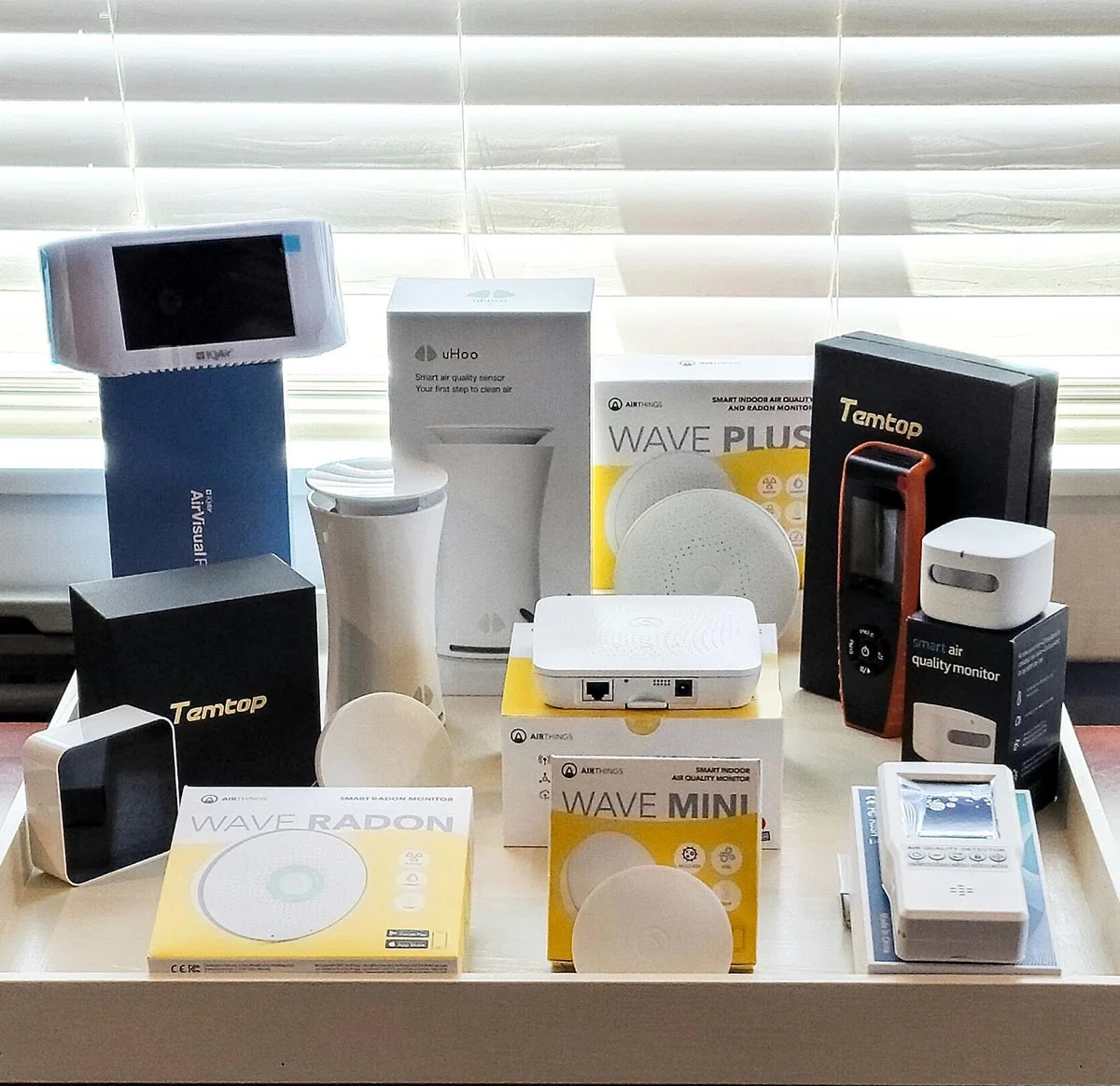
The invisible composition of indoor air has become a focal point of modern residential health, as contemporary construction techniques often prioritize energy efficiency and airtight seals over natural ventilation. According to data from the Environmental Protection Agency (EPA), indoor levels of pollutants may be two to five times—and occasionally more than 100 times—higher than outdoor levels. To address this growing concern, a comprehensive evaluation of the leading indoor air quality (IAQ) monitors was conducted to determine which devices provide the most reliable data for homeowners seeking to mitigate risks from volatile organic compounds (VOCs), particulate matter, radon, and carbon monoxide.
The Landscape of Indoor Environmental Hazards
Indoor air quality is influenced by a complex array of factors, ranging from building materials and household cleaning products to geographical location and occupant activity. The primary hazards detected by modern monitors include particulate matter (PM), specifically PM2.5 and PM10. These microscopic particles, often originating from cooking, tobacco smoke, or outdoor smog, are small enough to enter the lungs and even the bloodstream.
Furthermore, Volatile Organic Compounds (VOCs) represent a significant category of chemical pollutants. These gases are emitted by paints, varnishes, wax, and many cleaning, disinfecting, and cosmetic products. Short-term exposure can cause eye and respiratory tract irritation, while long-term exposure is linked to more severe chronic health conditions. Perhaps most dangerous are the odorless, colorless threats: carbon monoxide (CO), a byproduct of incomplete combustion, and radon, a naturally occurring radioactive gas that is the second leading cause of lung cancer in the United States.
Chronology and Methodology of the Testing Process
The selection process for the 2024 IAQ monitor lineup began with an extensive market analysis. Over 40 unique models were initially screened based on sensor variety, consumer feedback, and technical specifications. This field was narrowed to five primary contenders representing different price points and technological capabilities.
The testing phase was designed to simulate real-world environmental stressors within controlled parameters. Rather than relying solely on manufacturer claims, the evaluation team subjected the devices to a four-stage testing protocol:
- Chemical Saturation Test: Monitors were placed in a sealed environment and exposed to oil-based wood stains known to emit high levels of VOCs, including formaldehyde. The objective was to measure the "spike" response time and the accuracy of the subsequent air-clearing readings.
- Particulate Simulation: To test PM sensors, the team introduced airborne dust by agitating high-debris materials near the sensors. This allowed for the observation of how effectively the devices differentiated between various particle sizes (PM1, PM2.5, and PM10).
- Toxic Gas Verification: For monitors equipped with CO and CO2 sensors, tests were conducted in environments with controlled combustion (such as garages with vehicle exhaust) and concentrated smoke from organic matter.
- Long-term Radon Assessment: Given that radon levels fluctuate over time, monitors with radon sensors were deployed in a basement with a known, professionally verified radon presence. The devices were monitored over a seven-day period to compare their readings against industrial-grade equipment.
Analysis of Leading Consumer Models
The Airthings 292 Wave Mini: Efficiency in a Compact Format
The Airthings Wave Mini emerged as a highly effective entry-level solution, specifically for those concerned with chemical pollutants and mold risk. During the VOC exposure test, the Wave Mini demonstrated a significant and rapid spike in readings, confirming the sensitivity of its electrochemical sensors. While it lacks a digital screen, its "gesture-based" visual indicator—a color-coded light that activates with a hand wave—provides immediate feedback without the need for a smartphone interface. Its ability to track outdoor pollen levels via localized data integration makes it a valuable tool for allergy sufferers.
The Amazon Smart Air Quality Monitor: Value and Integration
Amazon’s entry into the IAQ market focuses on the "Smart Home" ecosystem. Testing revealed that while the device is budget-friendly, its sensors for PM2.5 and VOCs are remarkably responsive. In the dust agitation test, the PM2.5 reading spiked within five minutes and accurately tracked the settling of the dust over the following 20 minutes. Its lack of a comprehensive on-device display is offset by its deep integration with the Alexa app, though testers noted that older Echo Show models may experience connectivity hurdles.
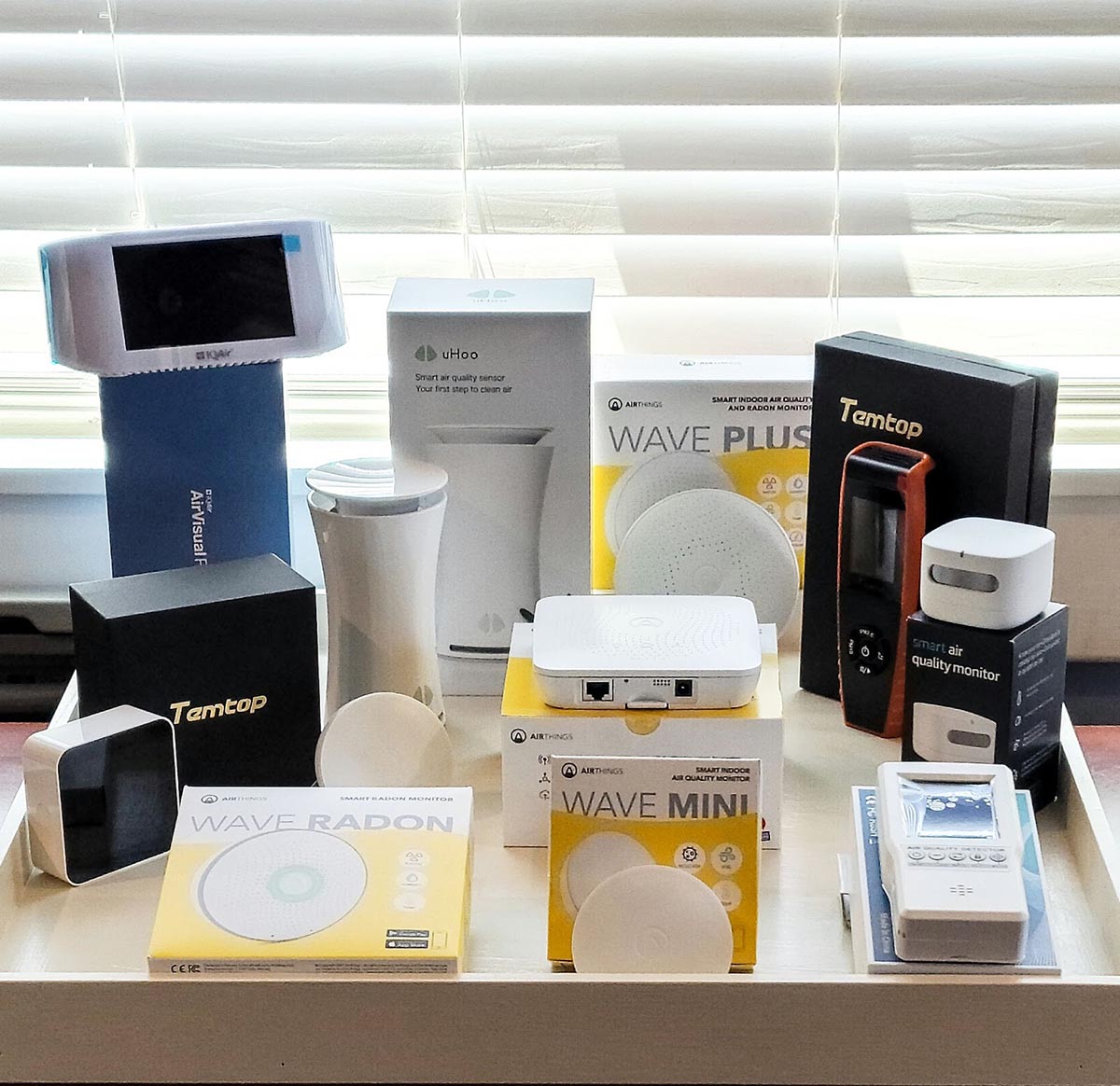
The Airthings 2950 Wave Plus: High-Tech Radon Detection
For households in high-radon geographic zones, the Wave Plus proved indispensable. In a side-by-side comparison with a professional radon detector in a residential basement, the Wave Plus mirrored the professional reading of 3.5 pCi/L with near-perfect accuracy. This device utilizes Bluetooth and IFTTT (If This, Then That) technology to bridge the gap between simple monitoring and smart-home automation, allowing it to trigger air purifiers or ventilation systems when thresholds are exceeded.
The IQAir AirVisual Pro: Medical-Grade Precision for Allergies
The AirVisual Pro stands out for its advanced laser-based PM sensors. In testing, it was the only consumer-grade device to effectively distinguish between PM1, PM2.5, and PM10 levels simultaneously. The team observed that while larger dust particles (PM10) settled quickly, the AirVisual Pro continued to detect ultrafine PM1 particles for an hour longer, highlighting a level of sensitivity crucial for individuals with severe respiratory conditions. Its large, high-resolution display provides the most comprehensive "at-a-glance" data of any model tested.
The Temtop P600: Portability for Professional and Temporary Use
The Temtop P600 is designed for mobility, featuring a rugged build and a dedicated kickstand. Its use of a Quantum Semiconductor International (QSI) laser diode provides professional-level particulate sensing. However, the testing revealed a trade-off: the high power consumption of the laser diode results in a shorter battery life, requiring daily recharging or a constant power tether. It is best suited for spot-checking different rooms or verifying air quality in rental properties.
Expert Insights and Industry Responses
Industry experts emphasize that monitoring is only the first step in a broader health strategy. Lisa Townley, Associate Director of Product Management at Carrier, notes that as the public becomes more aware of indoor environmental health, the demand for high-accuracy sensing has skyrocketed. "It’s imperative that people take steps to improve their living and working spaces, including the air they breathe," Townley stated. She highlighted that detecting particles down to 2.5 microns is the "gold standard" for home management of asthma and allergy triggers.
Furthermore, health organizations suggest that while consumer monitors are not 100% accurate—typically falling within a 70% to 85% accuracy range—they serve as a critical "early warning system." A representative from a major HVAC manufacturer noted that the integration of these monitors with modern air filtration systems can reduce household energy costs by only activating high-intensity filtration when pollutants are actually present, rather than running cycles on a blind timer.
Technical Comparison of Tested IAQ Monitors
| Feature | Airthings Wave Mini | Amazon Smart | Airthings Wave Plus | IQAir AirVisual Pro | Temtop P600 |
|---|---|---|---|---|---|
| Primary Sensors | VOC, Temp, Humidity | PM2.5, VOC, CO | Radon, VOC, CO2 | PM1, PM2.5, PM10, CO2 | PM2.5, PM10 |
| Connectivity | Bluetooth | Wi-Fi / Bluetooth | Bluetooth / IFTTT | Wi-Fi / IFTTT | None (Stand-alone) |
| Display | LED Indicator | LED Indicator | LED Indicator | 5-inch Color Screen | 2.4-inch LCD |
| Power Source | Battery | Corded | Battery | Corded/Rechargeable | Rechargeable |
Broader Implications for Residential Health
The proliferation of IAQ monitors represents a shift in how individuals perceive their homes. No longer seen as just a shelter, the home is increasingly viewed as a managed environment where air quality is as controllable as temperature or lighting.
The implications of this technology extend beyond simple comfort. For the estimated 25 million Americans living with asthma, real-time PM2.5 monitoring can prevent emergency room visits by signaling the need for increased ventilation before a crisis occurs. For homeowners in the "Radon Belt," these devices provide peace of mind that mitigation systems are functioning correctly, potentially preventing long-term health catastrophes.
As the technology matures, the next generation of IAQ monitors is expected to incorporate even more specialized sensors, such as those for Nitrogen Dioxide (NO2) and specific mold spores. For now, the current market leaders provide a robust defense against the invisible pollutants that define our indoor existence, proving that while we cannot always see the air we breathe, we can certainly know exactly what is in it.