admin
A monumental scientific endeavor, dubbed the "1,000 Farms Initiative," is providing robust, data-driven evidence that regenerative agriculture practices offer one of the most significant and readily available climate solutions globally. Spearheaded by entomologist Dr. Jonathan Lundgren, the project is systematically quantifying the multifaceted benefits of shifting away from conventional farming methods, with initial findings demonstrating remarkable increases in soil carbon storage, biodiversity, and overall farm health. Dr. Lundgren, reflecting on the scale and nature of the undertaking, recently described it in an online interview as "weird" and profoundly "grassroots science," underscoring its farmer-centric, bottom-up approach to environmental research.
Unveiling the "Grassroots Science": A Comprehensive Data Collection Effort
The genesis of the 1,000 Farms Initiative, originating roughly in the early 2020s, was born from a pressing need to move beyond anecdotal evidence and provide concrete scientific backing for the claims made by regenerative farmers. For years, producers adopting practices like no-till, cover cropping, diverse rotations, and integrated livestock have reported improved soil health, reduced input costs, and increased resilience. However, a comprehensive, system-wide quantification of these benefits at a broad scale remained elusive. Lundgren’s vision was to bridge this gap, transforming farmer observations into verifiable scientific data.
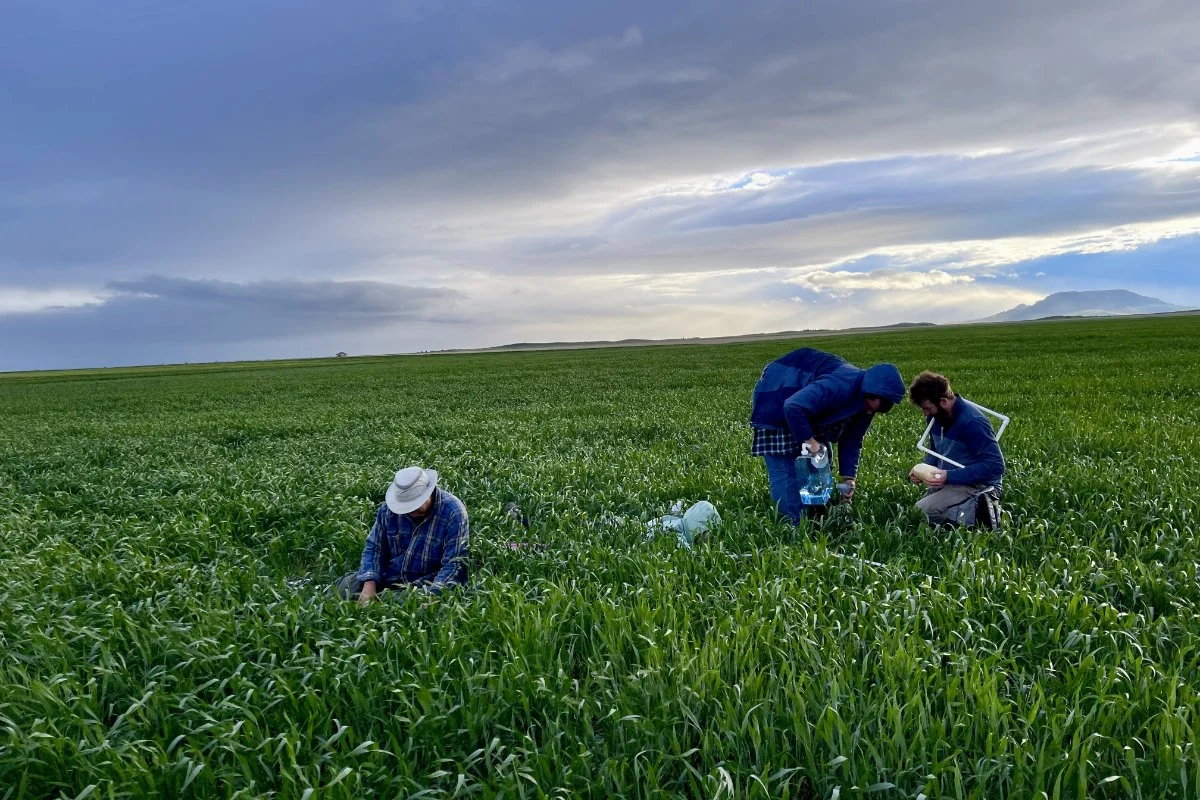
The initiative has expanded well beyond its namesake, deploying groups of approximately eight scientists to about 2,000 farms across diverse agricultural landscapes. This extensive network includes fields, pastures, and orchards, reflecting the varied nature of modern agriculture. At each operation, researchers meticulously collect an astonishing 500 different data types. This exhaustive data collection aims to capture a holistic picture of farm ecosystems, moving beyond single-factor analyses to understand the intricate interplay of regenerative outcomes. The parameters under investigation span an impressive array of indicators, from carbon capture and storage to biodiversity metrics, water infiltration rates, nutritional density of crops, food quality, agrichemical use, pollution levels, farmer wellness, and the economic viability of these systems.
Dr. Lundgren articulated the driving force behind this comprehensive approach: "The farmers were saying that they were achieving these remarkable outcomes, but we had to know whether this was real, whether this was scalable, whether this was transferable. The only way to do that is with a huge experiment. We had to study the entire system and all of the regenerative outcomes." This commitment to understanding the entire farm ecosystem rather than isolated components is a hallmark of the initiative, setting it apart from more reductionist scientific approaches.
The Flagship Findings: A Deep Dive into Soil Carbon
The first major scientific publication stemming from this ambitious project made a significant splash in August, with Dr. Lundgren’s team publishing a flagship paper in IOPscience. This seminal study compared outcomes on 200 large-scale farms, focusing specifically on conventional versus regenerative practices applied to staple row crops such as corn, soybeans, and wheat. Data for this initial analysis was collected during the 2022 and 2023 growing seasons, providing a contemporary snapshot of farm performance.
The findings presented in the paper are striking. Among the myriad outcomes measured, researchers reported that the most advanced regenerative farms studied exhibited nearly 40 percent more carbon stored in their soils compared to their conventionally managed counterparts. This figure represents a substantial increase in a critical natural resource and highlights soil’s often-underestimated capacity as a carbon sink.
Projecting these results onto a national scale, Dr. Lundgren concluded that if all field crop farms in the United States were to convert to these advanced regenerative systems, the country’s cropland soils could sequester an amount of carbon equivalent to 1.5 years of its annual greenhouse gas emissions. To put this into perspective, the U.S. typically emits around 6.3 gigatons of CO2 equivalent per year. This potential for carbon sequestration far surpasses the contributions of many other proposed climate solutions, positioning regenerative agriculture as a cornerstone of national climate strategy. Dr. Lundgren underscored this point at the Food Solutions Summit during Climate Week in New York City in September, stating unequivocally, "Life on farms is the answer to the climate crisis."
Challenging Conventional Wisdom: Beyond Carbon Saturation
The assertion that agricultural soils can sequester such vast quantities of carbon challenges a long-held perspective within some segments of the soil science community. A common argument posits that soil has a maximum capacity for carbon storage, implying that additional sequestration beyond a certain point is either negligible or unsustainable over the long term. Dr. Lundgren’s research directly addresses and refutes this notion.
"No, in these fields that we measured, we went 60 centimeters deep. That’s pretty deep. And we found that carbon levels were changing all the way down," Lundgren explained. This discovery suggests that carbon is not merely accumulating in the uppermost layers but is actively being integrated into deeper soil profiles, indicating a more profound and extensive sequestration mechanism than previously assumed. He surmised that this observation implies that the current estimates of the food system’s carbon capture potential might actually be an "underestimate."
Furthermore, Lundgren highlighted a transformative process at play: the active generation of new soil. "The other thing is: It builds on top of itself, such that organic matter and more life on farms ends up generating soil. Pretty profound. That’s how the prairies were made for crying out loud." This speaks to a dynamic, living soil system where increased organic matter and microbial activity contribute to the actual physical accretion of new topsoil, a process fundamental to historical ecological development, as seen in the deep, rich soils of grasslands. This concept fundamentally shifts the understanding of soil from a static medium to a dynamic, growing entity under regenerative management.

Another significant finding from the study pertains to inorganic carbon. Traditional soil science often asserts that inorganic carbon forms are primarily related to parent material (bedrock, limestone) and that land management has little to no effect on total inorganic carbon stocks. However, Lundgren’s research presented a different picture. "Our research shows very clearly that at depth, inorganic carbon was significantly greater in regenerative fields, and it was correlated with how much fungal biomass and invertebrate life was in the soil, suggesting that… it was soil that comes from life, versus soil that comes from parent material or bedrock." This finding suggests a biological pathway for inorganic carbon formation, further expanding the recognized mechanisms of carbon sequestration in regenerative systems.
A Farmer-Led Revolution: Democratizing Scientific Inquiry
A unique and defining characteristic of the 1,000 Farms Initiative is its deeply collaborative and farmer-centric approach to research. The selection of farms for the study did not follow a traditional top-down model but evolved into a self-organizing, grassroots movement.
The initiative initially engaged farmers through targeted email campaigns. Upon entering a new geographical area, the research team would foster relationships with a handful of early adopters. As word spread and farmers witnessed the scientific process firsthand, interest surged. "By the time we would leave a particular area, farmers were usually lining up to join the study," Lundgren noted. This enthusiasm was fueled by direct engagement: "The farmers were really engaged in the actual sample process, they were meeting the scientists, and it was just kind of this cool, uplifting event."
This initial engagement has since blossomed into a more autonomous model. Farmer groups across the country are now proactively self-organizing and approaching the Ecdysis Foundation, Lundgren’s organization, with requests for scientific validation. "They’re approaching us, like, ‘Hey, we’re trying this new thing with this group of farms. Would you mind coming out and helping us by putting some data behind it?’ And that’s exactly what this was always supposed to do," Lundgren elaborated. He reflected on this evolution as a "democratization of science," where the scientific agenda is increasingly shaped by the needs and innovations emerging directly from the agricultural community.
The Regenerative Blueprint: More Than Just Practices
While the study quantifies the outcomes of regenerative agriculture, Lundgren cautions against reducing it to a mere checklist of individual practices. The initiative utilizes a scoring system based on eight yes-or-no questions, covering common practices like tillage or cover cropping. However, Lundgren emphasizes that these are merely indicators. "If we make regenerative ag about individual practices, we’re dead in the water before we even get started." Instead, he clarifies, "What’s unique about these practice-based questions that we use for our scoring system is that they are indicators. They are proxies of a management philosophy." This philosophy centers on fostering ecological health, rebuilding soil, enhancing biodiversity, and minimizing external inputs—a holistic approach rather than a prescriptive set of actions.
Focus on Row Crops: Maximizing Impact
Given the diverse types of farms participating in the 1,000 Farms Initiative—including grazing systems, orchards, and various crop rotations—the decision to prioritize row crops for the first flagship study was strategic. Lundgren explained the rationale: "When we got 1,000 Farms started, the mentality was, ‘Let’s focus on row crops, because geographically, if we could turn row crops into fully regenerative systems, think of the geographic footprint and the implications that that could have.’"
Row crops dominate vast swathes of agricultural land globally, and their conventional management often entails significant environmental impacts, including soil erosion, nutrient runoff, and high reliance on synthetic inputs. Demonstrating the efficacy of regenerative practices in this sector therefore carries immense potential for large-scale environmental mitigation. The study’s finding that regenerative row cropping systems represent the "best climate solution currently available" without compromising farmer profitability or productivity is a powerful message for a sector often perceived as resistant to change due to economic pressures. Lundgren asserts that when compared to other technology-based climate solutions, such as large-scale carbon capture and storage technologies, the potential of regenerative agriculture "doesn’t even hold a candle to what our food system can do."
Broader Implications and Expert Reactions
The findings from the 1,000 Farms Initiative carry profound implications across environmental, economic, social, and policy spheres.
- Environmental Impact: Beyond carbon sequestration, the study implicitly supports broader environmental benefits. Increased soil organic matter improves water retention, reducing runoff and enhancing drought resilience. Reduced agrichemical use lessens pollution in waterways and protects pollinator populations. Enhanced biodiversity, a key focus of the research, contributes to more stable and resilient ecosystems both on and off the farm.
- Economic Viability: A critical aspect of the research is its focus on farmer economics. Lundgren’s assertion that "farmers don’t lose money or productivity" is vital for widespread adoption. Regenerative practices often lead to reduced input costs (fertilizers, pesticides, fuel) over time, improving profit margins and making farms more resilient to market fluctuations and climate shocks. This economic argument is crucial for convincing more farmers to transition.
- Policy Considerations: The robust data from this initiative provides a compelling basis for policymakers to incentivize and support regenerative agriculture. This could manifest in various ways, including:
- Agricultural Subsidies: Shifting subsidies from practices that degrade soil to those that regenerate it.
- Carbon Markets: Creating transparent and verifiable mechanisms for farmers to earn revenue from carbon sequestration.
- Research and Extension: Funding further research and expanding extension services to disseminate knowledge and best practices.
- Food Procurement: Encouraging government and institutional procurement of food from regenerative farms.
- While specific policy reactions are yet to be fully articulated, environmental advocacy groups are likely to champion these findings as a call to action for legislative change, while agricultural organizations may see them as an opportunity to empower their members.
- Scientific Community Response: While the first paper has made a significant impact, the scientific community typically responds to such groundbreaking claims with a call for replication and further peer review. Lundgren’s team plans to publish many more studies over the coming years, which will allow for deeper scrutiny and validation of their methodologies and findings. The novel claims, particularly regarding deep carbon sequestration and biological inorganic carbon formation, will undoubtedly stimulate further research and debate, pushing the boundaries of soil science.
The Path Forward: A Vision for a Regenerative Future
Dr. Lundgren’s work with the 1,000 Farms Initiative is more than just a scientific project; it’s a paradigm shift in how we view agriculture’s role in addressing global challenges. His concluding statement, "We don’t need to clear more land to feed humanity. We just need to use the land that we’ve got to grow food," encapsulates a powerful vision for a future where food production is not only sustainable but actively regenerative. By rigorously quantifying the benefits of these practices, the initiative is providing the critical evidence needed to accelerate the transition to a regenerative food system, offering tangible hope for mitigating climate change and fostering healthier ecosystems and communities worldwide. The ongoing flow of data and future publications from this project will undoubtedly continue to shape agricultural policy, scientific understanding, and the very future of our planet.