admin
admin
In March 2021, a collective of three Indigenous brewers known as the Indigenous Brew Crew (IBC) launched the "Celebrating Sisters" craft beer campaign. Designed to support Indigenous women across Canada, the initiative initially met with high anticipation within the craft beer community. However, the rollout catalyzed a profound national conversation regarding the historical and ongoing relationship between Indigenous peoples and alcohol—a relationship deeply scarred by colonial legislation, systemic trauma, and economic exclusion. While the campaign was intended as a celebration of identity and charity, it exposed a divide within Indigenous communities: one side viewing the embrace of the alcohol industry as a step toward economic sovereignty, and the other seeing it as a painful reminder of generational harm.
The controversy eventually led to the dissolution of the IBC later that year, but the silence that followed was temporary. Today, a growing number of First Nations, Métis, and Inuit entrepreneurs are navigating these "fraught waters," redefining what it means to be an Indigenous person in the Canadian brewing landscape. Their presence is not merely about production; it is a deliberate act of self-determination within an industry that was legally designed to exclude them for over a century.
A Chronology of Exclusion: The Legislative Roots of Trauma
To understand the current tension within the Indigenous brewing sector, one must examine the legal framework established by the Canadian government. The 1876 Indian Act served as the primary instrument of "cultural genocide," a term later codified by the 2015 Truth and Reconciliation Commission (TRC). Under this Act, the federal government exerted totalizing control over Indigenous lives, including their access to alcohol.
For decades, Indigenous people were legally prohibited from purchasing or consuming alcohol. In a particularly dehumanizing twist of nomenclature, non-alcoholic beer was frequently referred to as "Indian Beer" because it was the only fermented beverage Indigenous people were permitted to possess. These prohibitions were not merely social; they were economic. By excluding Indigenous people from the liquor trade, the state ensured that the profits of the burgeoning alcohol industry remained exclusively in the hands of settlers.
The timeline of this exclusion is extensive:
- 1876: The Indian Act formalizes prohibition for "Status Indians."
- 1950s–1970s: Gradual amendments to the Indian Act begin to allow Indigenous people to consume alcohol in public places, though many First Nations maintained community-led prohibition.
- 1985: Bill C-31 allows First Nations bands to control the sale and possession of intoxicants on their reserves.
- 2015: The TRC Report highlights the link between colonial trauma—specifically the residential school system—and substance abuse.
This history created a paradox. While the government enforced prohibition, it simultaneously oversaw systems—such as the residential school system and the "Sixties Scoop"—that inflicted the deep psychological wounds for which alcohol became a common, albeit destructive, coping mechanism. Consequently, for many Indigenous elders and community members, the sight of Indigenous branding on a beer can is not a sign of progress, but a trigger for the memory of colonial exploitation.
The Economic Landscape: Indigenous Sovereignty and Entrepreneurship
Despite this dark history, the contemporary Canadian economy is seeing a surge in Indigenous-led business. According to data from the National Aboriginal Capital Corporations Association (NACCA), Indigenous small businesses contribute billions to the Canadian GDP annually. Within this growth, the craft beer sector has emerged as a unique frontier for self-determination.

For entrepreneurs like Darnell Stager of Indigenous Tourism BC, the ability to enter the alcohol industry is a matter of basic human rights. Stager notes that the designation "Ward of the State," once found on Indian status cards, epitomizes the lack of agency Indigenous people have historically faced. Reclaiming the right to participate in any sector of the economy—including brewing—is viewed by many as an essential component of "Indigenous sovereignty."
Financial infrastructure has also begun to shift to support these ventures. Organizations like the Manitoba Métis Federation and Farm Credit Canada have provided the necessary capital for Indigenous entrepreneurs to bypass traditional banking hurdles, which have historically marginalized Indigenous applicants. This support has allowed for the rise of notable establishments that balance cultural pride with commercial success.
Profiles in Resilience: Redefining the Brewery Model
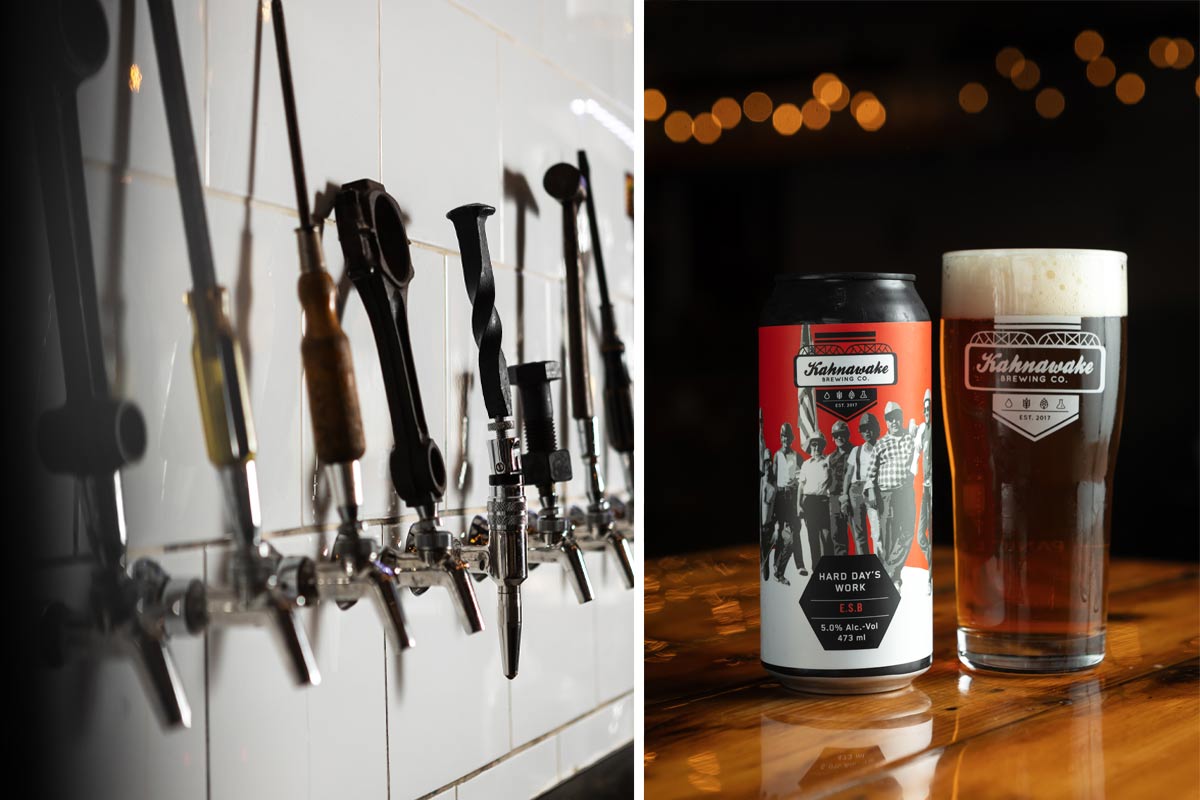
The current wave of Indigenous brewers is diverse, representing different nations and philosophies. In Quebec, the Kahnawake Brewing Company & Black Bridge Taproom stands as a landmark: it is the first openly Indigenous-owned craft brewery located on Indigenous land. Co-owned by Fred Leblanc, a former ironworker, the brewery draws on the history of Mohawk laborers who built the Saint-Laurent Railway Bridge. Their success is quantifiable; in 2024 and 2025, the brewery secured multiple medals at the Canada Beer Cup, proving that Indigenous-led breweries can compete at the highest levels of quality.
In British Columbia, Melanie MacInnes, a Métis woman and co-owner of Locality Brewing, represents the "farm-to-glass" movement. MacInnes initially struggled with the weight of her identity, hesitating to accept a nomination for Best Indigenous-Led Business. Her eventual acceptance marked a turning point, as she used the platform to advocate for the ethical use of land and the inclusion of Indigenous voices in the supply chain.
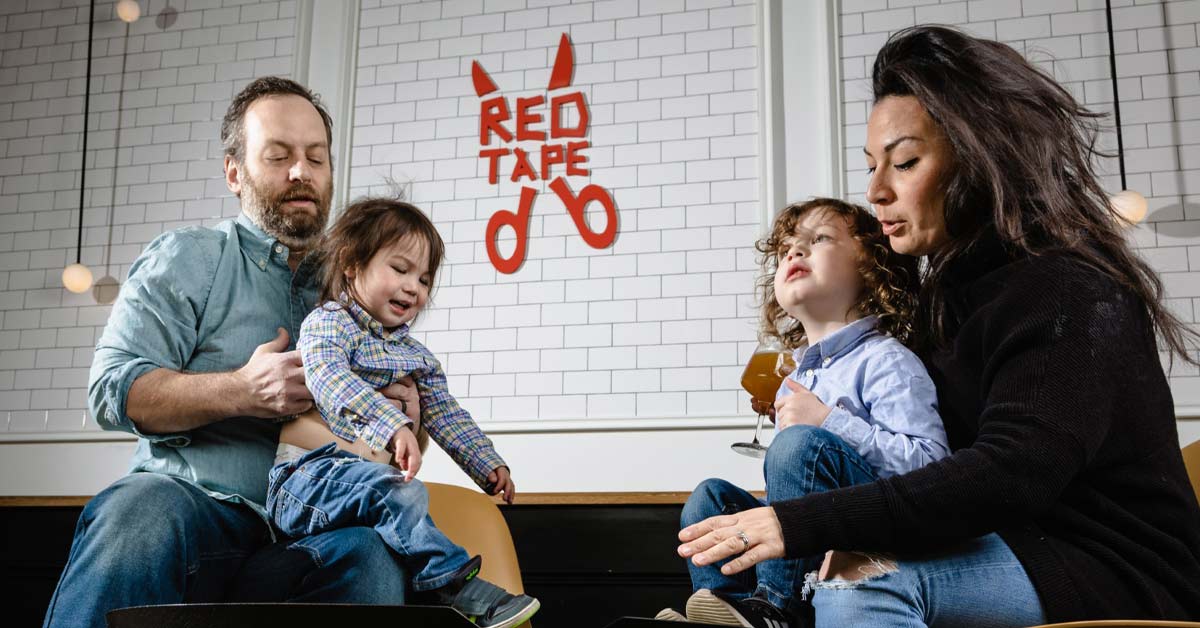
Similarly, in Toronto, Inuit brewer Sarabeth Holden of Red Tape Brewery utilizes her platform to incorporate northern traditions. Her bespoke beers often feature ingredients like orange pekoe tea—a staple in northern hunting and fishing trips—or Paunnat (dwarf fireweed). For Holden, brewing is a way to celebrate her heritage while maintaining a business that her family and community can take pride in, even those members who choose to abstain from alcohol.
The Cultural Debate: Harm Reduction vs. Economic Participation
The emergence of these businesses has not silenced the critics, nor should it, according to many in the industry. The controversy surrounding the "Celebrating Sisters" campaign and the artwork of Chief Lady Bird demonstrated that the community is still grappling with the "medicine vs. poison" duality of alcohol.
Professor Niigaan Sinclair, an Anishinaabe scholar, suggests that the path forward lies in the Anishinaabe teaching of "figuring out a relationship with all things." He acknowledges that while alcohol has been a "violent intrusion," it is made from natural elements. Sovereignty, Sinclair argues, does not mean the freedom to do whatever one wants; it comes with the responsibility to avoid causing harm to others.
This philosophy is reflected in how many Indigenous breweries operate. Matthew Sabourin of La Brasserie Nonsuch Brewing Co. in Winnipeg emphasizes that his business is about "celebrating moments and experiences," rather than mass consumption. By hosting events like the "Beer Bannock" experience, Nonsuch uses its space to educate patrons on Indigenous history and figures like Louis Riel, effectively turning a commercial space into a site of reconciliation and dialogue.

Broader Impact and the Future of Inclusion
The push for Indigenous inclusion in the craft beer industry is moving beyond the taproom and into the entire supply chain. Industry leaders are calling for more Indigenous representation in malt houses, hop farms, and distribution networks. This systemic shift is seen as the only way to move past "performative" inclusion.
Inez Cook, co-founder of the Indigenous restaurant Salmon n’ Bannock, advocates for a "people-first" approach to business. She suggests that non-Indigenous brewery owners who wish to be allies should start by introducing themselves to local tribal nations and acknowledging past failures. "Actions and changed behavior create reconciliation," Cook states, emphasizing that the industry must move beyond land acknowledgments and toward tangible partnerships.
The data suggests that the "Indigenous economy" will continue to expand. As more Indigenous people take up the mantle of brewing, they are not just making beer; they are dismantling a century of state-mandated exclusion. The goal for many is a future where an Indigenous person can be a brewer, a maltster, or a business owner without the weight of shame—where the industry respects the land, prioritizes people over profits, and acknowledges the complexity of its own history.
As the Canadian craft beer community faces its own economic challenges, the values championed by Indigenous brewers—kindness, respect for the land, and the courage to face difficult conversations—may offer a blueprint for the industry’s survival. The "silence" that once cloaked the issue of Indigenous people and alcohol is being replaced by a chorus of voices demanding a seat at the table, on their own terms.