admin
admin
The landscape of the Canadian craft beer industry is undergoing a profound transformation as Indigenous entrepreneurs reclaim a space historically defined by exclusion, trauma, and legislative control. In March 2021, a pivotal moment arrived when the Indigenous Brew Crew (IBC), a trio of Indigenous brewers, launched the "Celebrating Sisters" campaign. This national initiative sought to support Indigenous women through the medium of craft beer, but its reception highlighted a deep-seated cultural divide. While many celebrated the visibility and representation, others expressed anguish, pointing to the devastating legacy of alcohol in Indigenous communities. This tension serves as the backdrop for a broader movement toward Indigenous sovereignty in the beverage sector, where brewers are balancing the pursuit of economic self-determination with the responsibility of addressing intergenerational harm.
A Legacy of Legislative Exclusion and Trauma
To understand the current friction within the industry, one must examine the historical framework established by the Canadian government. The Indian Act of 1876 was the cornerstone of a series of laws designed to control nearly every aspect of Indigenous life, from identity and land use to governance. Central to this control was the prohibition of alcohol. For decades, Indigenous people were legally barred from purchasing, consuming, or manufacturing alcohol. In many instances, the only legal option available was a non-alcoholic substitute often derogatorily referred to as "Indian Beer."
The Truth and Reconciliation Commission of Canada (TRC) in 2015 characterized these systemic efforts as "cultural genocide." While the government enforced prohibition, it simultaneously allowed settlers to use alcohol as a tool to disrupt traditional Indigenous trading systems, fostering a cycle of dependency. This cycle was exacerbated by the trauma of the residential school system and the "Sixties Scoop," where Indigenous children were forcibly removed from their families. For many, alcohol became a coping mechanism for the psychological wounds inflicted by the state.
Legislative shifts between the 1950s and 1980s eventually granted Indigenous people the same legal rights to alcohol as other Canadians, but the scars of the previous century remain. Today, the debate over Indigenous participation in the alcohol industry is split between those who view prohibition as a necessary tool for harm reduction and those who see the ownership of breweries as a vital expression of sovereignty.
The 2021 Catalyst: The "Celebrating Sisters" Controversy
The 2021 "Celebrating Sisters" campaign brought these long-simmering tensions to the forefront of the digital age. The project featured a beer label designed by Anishinaabe artist Chief Lady Bird, depicting a blackbird against a woodland backdrop. While the artwork was widely praised for its beauty, the campaign’s association with alcohol triggered a wave of backlash from those who felt the industry was inherently predatory toward Indigenous people.
The controversy led to a rare public dialogue about the ethics of Indigenous-led alcohol businesses. Chief Lady Bird and the IBC acknowledged the difficulty of reconciling the industry with the history of exploitation. The eventual dissolution of the IBC months later underscored the volatility of the issue. However, the silence that followed did not signify an end to Indigenous involvement in the sector; rather, it marked a transition toward more localized, community-focused initiatives.
Profiles in Sovereignty: Indigenous-Led Success Stories
Despite the historical baggage, a growing number of Indigenous brewers are finding success by integrating traditional values with modern business practices. These entrepreneurs argue that their presence in the industry is not just about commerce, but about representation and the ethical use of the land.

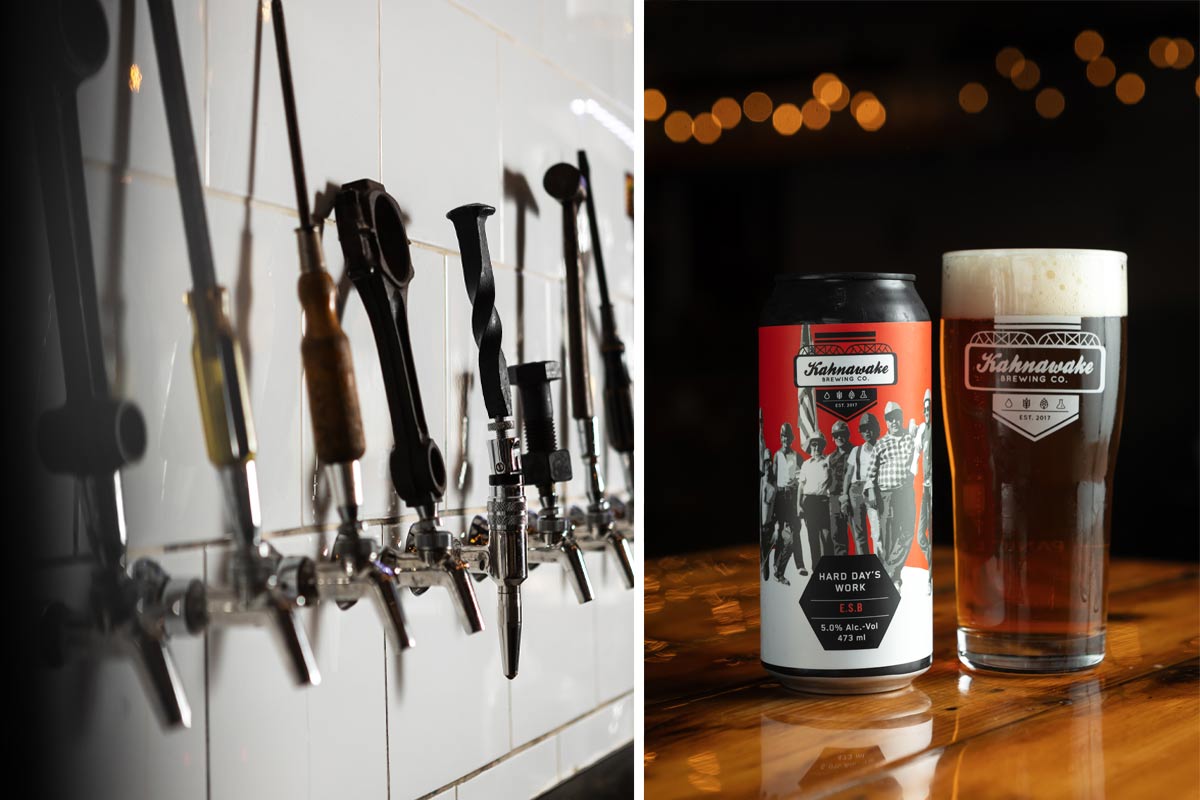
In Quebec, the Kahnawake Brewing Company & Black Bridge Taproom holds the distinction of being the first openly Indigenous-owned craft brewery located on Indigenous land. Co-owner Fred Leblanc, a former ironworker, drew inspiration from the local Mohawk ironworkers who helped build the Saint-Laurent Railway Bridge in 1900. The brewery has achieved significant critical acclaim, securing multiple medals at the 2024 and 2025 Canada Beer Cups. Leblanc’s mission is to create a space that is "not just for Natives but for everyone," effectively using the brewery as a bridge between cultures.
In British Columbia, Melanie MacInnes, a Métis woman and co-owner of Locality Brewing, initially struggled with the weight of her identity in the business world. After winning the 2022 BC Food & Beverage Award for Best Indigenous-Led Business, MacInnes embraced her role, viewing her family’s land as a place for gathering and growth. Her approach emphasizes the "fabric of the country" being represented in every business sector, arguing that cultural diversity enriches the craft beer community.
In Winnipeg, Matthew Sabourin of La Brasserie Nonsuch Brewing Co. has focused on creating a cultural experience rather than just a product. The brewery’s "Beer Bannock" sessions allow customers to learn about Indigenous history and the significance of Louis Riel while engaging in traditional food preparation. Sabourin emphasizes that the goal is to celebrate moments and community rather than volume of consumption.
Diversity Across the Supply Chain
Indigenous inclusion in the beer industry extends beyond ownership into the broader supply chain. Jason Tremblay, the Métis head brewer at Toronto’s Two Loons Brewing, highlights the importance of the "entrepreneurial spirit" that allowed Métis families to survive historical land thefts. Tremblay, who identifies as white-passing, acknowledges the privilege that allows him to navigate the industry without the discrimination faced by his First Nations peers. He advocates for increased Indigenous visibility in malt warehouses, hop supply, and distribution.

Similarly, Inuit brewer Sarabeth Holden, co-owner of Red Tape Brewery in Toronto, uses her platform to incorporate northern ingredients, such as orange pekoe tea and dwarf fireweed (Paunnat). While Holden has faced challenges as a woman in a male-dominated industry—sometimes being overlooked by tradespeople—she reports overwhelming support from her community, including those who do not consume alcohol themselves.
Economic Reconciliation and Support Systems
The growth of Indigenous-owned breweries is supported by an emerging infrastructure of Indigenous-oriented financial and promotional organizations. The Manitoba Métis Federation and Farm Credit Canada have been instrumental in providing the capital and resources necessary for Indigenous entrepreneurs to compete in a crowded market.
Darnell Stager of Indigenous Tourism BC views the movement as a direct challenge to the "ward of the state" status historically imposed on Indigenous people. Stager argues that antagonism toward Indigenous brewers is often a remnant of economic gatekeeping designed to suppress sovereignty. According to Stager, self-determination must include the right to participate in any legal industry, provided it is done with a sense of responsibility to the community.
Analysis of Implications: Sovereignty vs. Responsibility
The path forward for the Canadian craft beer industry involves a delicate balance of what Anishinaabe professor Niigaan Sinclair calls a "relationship with all things." Sinclair notes that while alcohol has been a "violent intrusion," beer itself is derived from natural elements. He argues that sovereignty does not grant an individual the right to do whatever they want; rather, it carries a profound responsibility to avoid causing harm to others.

For non-Indigenous brewery owners, the path toward reconciliation involves more than just land acknowledgments. Inez Cook, co-founder of Vancouver’s Salmon n’ Bannock and a member of the Nuxalk Nation, suggests that businesses should proactively introduce themselves to local tribal nations. "Indigenous people do business with people, not with businesses," Cook notes. She emphasizes that changed behavior and sincere apologies for past exclusions are the foundations of true reconciliation.
Conclusion
The emergence of Indigenous brewers in Canada is not a monolith but a diverse spectrum of experiences, intentions, and cultural expressions. From the use of traditional ingredients like spruce tips and alfalfa in Nadine Jopson’s "Askî Oci" saison to the community-centric taprooms of Kahnawake and Locality, these businesses are redefining what it means to be a "craft" producer.
As the industry faces broader economic challenges, the values championed by Indigenous brewers—kindness, respect for the land, and prioritizing people over profits—offer a potential roadmap for sustainability. The silence that once cloaked the issue of Indigenous participation in the alcohol industry has been broken, replaced by a complex, ongoing conversation about how to honor a painful past while building a self-determined future. The success of these entrepreneurs suggests that the industry’s survival may depend on its ability to listen to these voices and integrate their perspectives into the core of Canadian craft beer culture.