admin
In March 2021, a pioneering collective of three Indigenous brewers, known as the Indigenous Brew Crew (IBC), launched the “Celebrating Sisters” campaign. This nationwide craft beer initiative was designed to raise awareness and financial support for Indigenous women across Canada. While the project initially sparked significant enthusiasm among craft beer enthusiasts and advocates for Indigenous representation, it quickly became a lightning rod for a profound and painful national conversation. The campaign’s trajectory, from its hopeful inception to the eventual dissolution of the IBC, underscores the deep-seated complexities of reconciling a burgeoning craft industry with the historical trauma of alcohol-related exploitation in Indigenous communities.
The Intersection of Culture and Controversy
The “Celebrating Sisters” campaign featured a centerpiece collaboration with Anishinaabe artist Chief Lady Bird, who designed a striking label depicting a blackbird with its wings outstretched against a woodland sky. The artwork, meant to symbolize resilience and community, was met with a polarized response. While many praised the visibility and the aesthetic beauty of the project, a significant number of Indigenous voices on social media expressed anguish. The criticisms were rooted in the historical reality that alcohol has been used as a tool of colonization and a catalyst for generational trauma within First Nations, Métis, and Inuit families.
Chief Lady Bird addressed the backlash directly, maintaining an open dialogue with critics to explain her intentions while acknowledging the validity of their pain. Despite these efforts at mediation, the fundamental tension between Indigenous identity and the alcohol industry remained unresolved. Within months of the campaign’s launch, the Indigenous Brew Crew disbanded, and the project faded from the public eye. However, the silence that followed did not signify an end to Indigenous participation in the industry; rather, it marked a transition toward a more nuanced, self-determined presence of Indigenous brewers across the Canadian landscape.
A Chronology of Exclusion and Legislation
To understand the current friction within the industry, it is necessary to examine the legislative history of alcohol in Canada. The Indian Act of 1876 served as the primary mechanism for the Canadian government’s control over Indigenous lives. Under this act and its subsequent amendments, Indigenous people were legally classified as “wards of the state,” a status that stripped them of basic rights, including the right to purchase or consume alcohol.
For decades, the Canadian government enforced strict prohibition on Indigenous populations while settlers utilized alcohol as a predatory tool in trading systems. This created a paradoxical environment where alcohol was both a forbidden substance and a weapon used to disrupt traditional Indigenous governance and social structures. During this era, non-alcoholic beverages were often disparagingly referred to as “Indian Beer,” a term that highlighted the legal exclusion of Indigenous people from the social and economic benefits of the brewing industry.
The 2015 Truth and Reconciliation Commission (TRC) report characterized these policies as part of a broader “cultural genocide.” The forced removal of children to residential schools and the subsequent “Sixties Scoop” inflicted deep psychological wounds, leading many to use alcohol as a coping mechanism for trauma. While provincial and federal laws began to shift between the 1950s and 1980s, allowing Indigenous people access to liquor stores and licensed establishments, the legacy of dependency and the stigma of the “drunken Indian” stereotype persisted.
The Rise of Indigenous Entrepreneurship and Self-Determination
In the modern era, a new generation of Indigenous entrepreneurs is reclaiming the brewing process as an act of economic sovereignty. Darnell Stager of Indigenous Tourism BC argues that the historical antagonism toward Indigenous brewers is a vestige of economic gatekeeping. He posits that true self-determination requires that Indigenous people have the freedom to participate in any industry they choose, including those with complicated histories.

This sentiment is echoed by Matthew Sabourin, co-owner of La Brasserie Nonsuch Brewing Co. in Winnipeg. While Sabourin initially faced hesitation from the Métis business community, that skepticism shifted as the brewery demonstrated its commitment to quality and cultural storytelling. Nonsuch’s “Beer Bannock” experience allows patrons to pair traditional unleavened bread with craft beer while engaging in discussions about Indigenous history under a mural of Louis Riel. For Sabourin, the focus is not on mass consumption but on celebrating shared experiences and high-quality craftsmanship.
Profiles in Resilience: Indigenous-Owned Breweries
Across Canada, several breweries are leading the way in integrating Indigenous heritage with modern brewing techniques:
Kahnawake Brewing Company (Quebec)
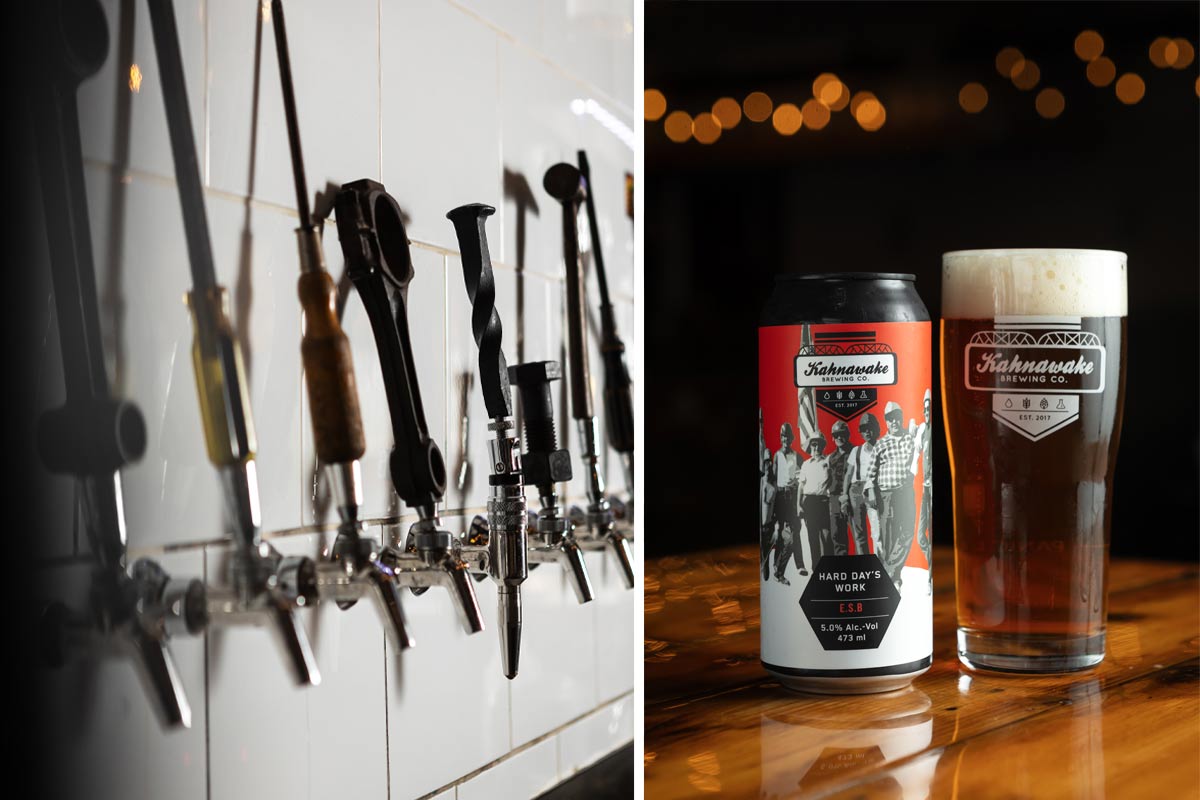
Located on Mohawk territory, Kahnawake Brewing Company is recognized as Canada’s first openly Indigenous-owned craft brewery situated on Indigenous land. Co-owner Fred Leblanc, a former ironworker, draws on the history of the Saint-Laurent Railway Bridge—the “black bridge”—built by Mohawk laborers and French workers in 1900. The brewery has achieved critical acclaim, securing multiple medals at the 2024 and 2025 Canada Beer Cups, proving that Indigenous-led ventures can compete at the highest levels of the industry.
Locality Brewing (British Columbia)
Melanie MacInnes, a Métis woman and co-owner of Locality Brewing in Langley, exemplifies the internal struggle many Indigenous brewers face regarding visibility. MacInnes initially hesitated to accept a nomination for Best Indigenous-Led Business at the 2022 BC Food & Beverage Awards, fearing the responsibility of representing her culture in a fraught industry. Upon winning, she realized that her pride in her Métis identity allowed her to connect more deeply with her community and her land.

Red Tape Brewery (Ontario)
In Toronto, Inuit brewer Sarabeth Holden operates Red Tape Brewery, specializing in bespoke beers. Holden’s work often incorporates ingredients that pay homage to her northern roots, such as her Paunnat (dwarf fireweed) Saison and an amber ale brewed with orange pekoe tea—a staple of hunting and fishing trips in the Arctic. Despite facing occasional gender and racial biases within the broader industry, Holden reports overwhelming support from her family and community, including those who do not consume alcohol themselves.
Economic Impact and Financial Infrastructure
The growth of Indigenous brewing is supported by a burgeoning network of financial and social infrastructure. Organizations like the Manitoba Métis Federation and Farm Credit Canada have provided essential support for Indigenous entrepreneurs navigating the capital-intensive brewing sector.
Data from Indigenous Tourism BC and other regional bodies suggest that Indigenous-owned businesses contribute significantly to the Canadian economy, with a growing emphasis on "authenticity" and "land-based" production. For many Indigenous brewers, success is measured not just in hectoliters produced, but in the ability to create jobs within their communities and to source ingredients from other Indigenous suppliers. Inez Cook, co-founder of Vancouver’s Salmon n’ Bannock restaurant, prioritizes Indigenous partners like Locality Brewing to ensure that the economic benefits of the hospitality industry remain within the community.
Defining the "Indigenous" in Craft Beer
The question of what constitutes an “Indigenous beer” remains a subject of creative exploration. For some, it is the use of traditional ingredients like spruce tips, alfalfa, or wild berries. For others, it is the adherence to ethical land-use practices and the involvement of Indigenous people at every stage of the supply chain—from malt houses to hop farms.

Nadine Jopson, a member of the Cree Nation and founder of Heartberry Soda, previously co-founded Another Beer Co. (ABC) in British Columbia. She developed the “Askî Oci” saison, a beer that used its label to explicitly address the relationship between Indigenous people and alcohol. The label stated that healing that relationship begins with the people themselves, honoring both those who partake and those who abstain. This perspective frames brewing not as a promotion of alcohol, but as a reclaiming of the ingredients provided by the earth.
The Path Toward Reconciliation in the Industry
As the Canadian craft beer industry faces a period of economic fluctuation and social reckoning, the voices of Indigenous brewers offer a potential roadmap for a more inclusive future. Professor Niigaan Sinclair, an Anishinaabe scholar, suggests that the path forward involves establishing a healthy relationship with all things, including those that have historically caused harm. He notes that while alcohol has been a "violent intrusion," beer is ultimately derived from natural elements that have medicinal and ceremonial histories.
The consensus among Indigenous industry leaders is that reconciliation requires more than just symbolic gestures or land acknowledgments. It requires:
- Active Representation: Increasing Indigenous visibility in ownership, production, and supply chains.
- Community Engagement: Brewery owners are encouraged to introduce themselves to local tribal nations and build personal relationships based on respect rather than purely transactional business.
- Space for Dialogue: Avoiding silence on difficult issues and allowing for the coexistence of brewing and harm reduction efforts.
The evolution of the Indigenous craft beer movement in Canada is a testament to the resilience of a people who have navigated a century of prohibition and systemic exclusion. By prioritizing people over profits and respecting the complex history of the land, these brewers are not only shaping the future of Canadian beer but are also asserting their right to economic and cultural sovereignty. The industry’s ability to listen to these voices may ultimately determine its success in a modern, diverse marketplace.