admin
admin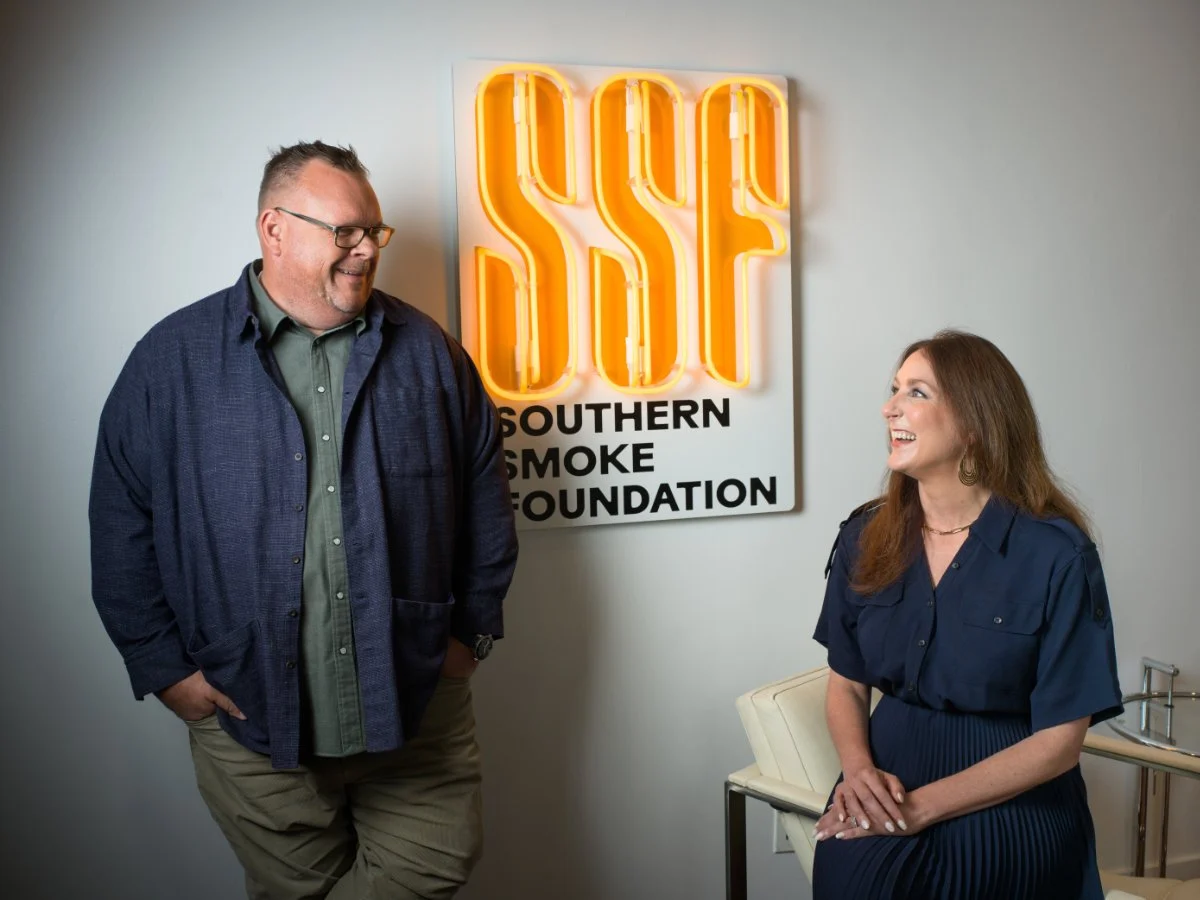
In an industry often characterized by passion and tireless dedication, the stark reality for many food system workers is a precarious existence, a vulnerability vividly underscored by unforeseen crises. The Southern Smoke Foundation, co-founded by James Beard Award-winning Chef Chris Shepherd and public relations professional Lindsey Brown, has emerged as a crucial safety net, providing immediate financial relief and proactive mental health support to those who serve the nation’s tables. Their innovative approach addresses not just the catastrophic events, but also the everyday hardships that can push already struggling individuals into insurmountable debt and despair.
The Urgent Need for Immediate Aid
The foundation’s genesis in emergency relief highlights a critical gap in traditional support systems. Lindsey Brown articulated this disparity, observing, "We did our due diligence to figure out where this money was going, and what we found is that it’s all going to infrastructure and probably not going to be spent for another two or three years. But the dishwashers that were literally standing on their roofs and had to be rescued from floods, they need it now." This sentiment captures the urgency and directness that defines Southern Smoke’s mission, contrasting sharply with the often slow-moving mechanisms of public aid following widespread disasters. For workers in the food and beverage industry, many of whom operate on thin margins with minimal savings, a crisis—whether a natural disaster, a medical emergency, or a simple car repair—can instantly become a life-altering catastrophe.
From Personal Crisis to Industry-Wide Support: The Foundation’s Evolution
The Southern Smoke Foundation’s journey began in 2015, not with a broad industry focus, but with a deeply personal motivation. Chef Chris Shepherd, renowned for his culinary prowess and his role as Food and Wine’s "Editor in Chef," partnered with Brown to establish the organization to raise funds for multiple sclerosis research after a close friend received a diagnosis. This initial philanthropic endeavor laid the groundwork for an organization built on empathy and community support.
However, the devastating impact of Hurricane Harvey in 2017 necessitated a dramatic pivot. As floodwaters engulfed Houston and surrounding areas, the vulnerability of food and beverage workers became agonizingly clear. Many lost homes, livelihoods, and essential means of transportation, often with no insurance or savings to fall back on. Witnessing this widespread suffering, Southern Smoke transformed its mission, redirecting its efforts towards emergency relief for these affected workers. This shift proved prescient, revealing an immense, unmet need within an industry vital to the economy but often overlooked in terms of worker welfare.
The Emergency Relief Fund: A Lifeline in Crisis
Since its reorientation in 2017, the foundation’s Emergency Relief Fund has disbursed an astonishing $16.8 million in grants. These funds have reached food system workers grappling with a spectrum of crises, including medical emergencies, personal hardships, and other unforeseen adversities. The average grant amount of $3,500, while seemingly modest in the face of significant challenges, can be the critical difference between recovery and ruin for a worker earning, for instance, the median hourly wage for food preparation and serving related occupations, which stood at approximately $15.00 in May 2022, according to the U.S. Bureau of Labor Statistics. For many, this translates to an annual income barely above the poverty line, leaving no room for unexpected expenses.
Brown highlighted the insidious nature of these financial pressures, noting that health and medical expenses now constitute the overwhelming majority of Emergency Relief Fund applications. This trend mirrors broader national challenges, where inadequate healthcare access and skyrocketing medical costs disproportionately affect low-wage workers. Many applicants, she observed, only reach out after a "waterfall" of crises—a sick child, job loss, a car accident—when they are completely overwhelmed. Southern Smoke endeavors to intervene earlier, emphasizing that "an unforeseen crisis can be something as small as a flat tire that you can’t afford. You don’t have to have a massive catastrophic event to reach out to us." This message aims to destigmatize seeking help for common, yet financially crippling, incidents.
Proactive Mental Health Support: The "Behind You" Program
Recognizing that financial hardship often intertwines with mental health struggles, Southern Smoke pivoted once more during the COVID-19 pandemic. The unprecedented stress of the pandemic—job insecurity, health risks, increased workload for those still employed, and widespread isolation—exacerbated pre-existing mental health challenges within the food service sector. Studies have consistently shown higher rates of anxiety, depression, and substance abuse among service industry workers compared to the general population, often linked to demanding work environments, low pay, and lack of benefits.
In response, the foundation launched the "Behind You" program in 2020, offering free mental health counseling to food and beverage workers through partnerships with universities. This initiative provides 20 no-cost counseling sessions, with the option for participants to continue support on a sliding scale. Chef Shepherd articulated the program’s proactive philosophy: "How do we fix things before we have to pay for them?" This forward-thinking approach aims to build resilience and provide coping mechanisms before individuals reach a breaking point, distinguishing it from reactive crisis intervention.
Since its inception, "Behind You" has provided over 12,400 no-cost counseling sessions across 12 states and Washington, D.C. The program recently expanded its reach to Colorado and North Carolina, with pilot programs slated for Kentucky and Pennsylvania by the end of the year. The primary reasons individuals seek support through "Behind You" underscore the pervasive challenges faced by the industry: anxiety and depression, work-related burnout, relationship issues, trauma, and substance abuse. This comprehensive support system garnered national recognition, with the Southern Smoke Foundation receiving a prestigious James Beard Foundation Impact Award in June for its vital work.

Understanding the Vulnerabilities: Voices from the Industry
The foundation’s co-founders offer firsthand insights into the systemic vulnerabilities plaguing food system workers, drawn from their own experiences and observations.
Chef Chris Shepherd’s Journey: Shepherd’s narrative is a stark illustration of the financial tightrope walked by many in the industry. "I was a broke-ass cook," he recalled, detailing his first job as a dishwasher in Tulsa, Oklahoma, earning $4.25 an hour. His career progression, while eventually leading to acclaim, was marked by periods of extreme financial strain. Even as a sous chef in Houston, his first salaried position paid only $17,000 a year. "I thought I was doing great," he reflected, before describing a subsequent job at $8 an hour where he had to borrow money for gas and subsist solely on food from work. A flat tire, a common and relatively minor mishap, became a major crisis. "Luckily, I had my parents in Houston at the time, so they helped me out here and there, but a lot of people don’t have that structure." This lack of a personal safety net, he emphasized, is endemic: "If anything happens, there’s no safety net. Nobody’s stacking cash in their bank accounts." His story echoes the reality for countless entry-level and even mid-career culinary professionals who, despite their dedication, struggle to build financial stability.
Lindsey Brown’s Perspective: From her vantage point as a restaurant public relations professional, Brown witnessed the inherent generosity of the industry firsthand. "At so many restaurants, they are the first people to step up when anything is happening—raising money for an employee who is sick, feeding people on the front lines of any sort of natural disaster." Yet, a critical question lingered: "All of my clients were constantly doing charity events, but who takes care of them?" This observation crystallized the need for an organization like Southern Smoke, dedicated solely to supporting the very people who so readily support others. Brown’s insights also shed light on the cumulative impact of crises. "A lot of people don’t come to us until it’s the second or third crisis, where it literally becomes a waterfall," she explained, emphasizing the importance of early intervention for even seemingly minor financial setbacks.
Reaching the Unreached: Expanding the Safety Net
Despite its significant achievements, Southern Smoke acknowledges that vast segments of the food system workforce remain unaware of its services. Lindsey Brown highlighted the ongoing challenge of awareness, particularly within large corporate chains. "We fund everyone in the industry, not just independent restaurants," she asserted. "When we get applications from workers at Waffle House, McDonald’s, or Chilis, we’d feel like we’ve really broken through." This underscores the demographic challenge of reaching hourly wage earners in large-scale operations, who often face similar or even greater precarity than their independent restaurant counterparts, yet may lack access to information about external support.
The foundation also aims to expand its reach beyond traditional restaurant settings. Brown noted the relative absence of applications from the wine industry—specifically vineyard workers, bottling line staff, and tasting room employees. Similarly, she expressed a desire to grow awareness among "farmers or fishermen or cattlemen, the whole grower industry." Chef Shepherd echoed this, pointing to specific geographic and cultural communities within cities, such as Vietnamese restaurants in Houston, and rural areas, like bottling line workers in Kentucky, as underserved populations. These workers, often in physically demanding roles and sometimes within immigrant communities, face unique barriers to accessing information and support, including language differences and limited digital access.
Strategic Expansion and Partnership Model
Expanding the "Behind You" program into new states, as it recently did in Colorado and North Carolina, is a methodical process. Brown outlined two primary requirements: "One is an interested university with a clinical psychology or social work program. It helps if they are a member of the Association of Psychology Training Clinics (APTC)." This strategic partnership model ensures a consistent and high standard of care across different states. By collaborating with universities, Southern Smoke leverages existing academic infrastructure and clinical expertise, providing a level of reliability that would be challenging to guarantee in a fragmented private practice system. This institutional backing not only lends credibility but also helps to streamline the delivery of critical mental health services to a dispersed workforce.
Broader Implications and Future Outlook
The Southern Smoke Foundation’s work goes beyond providing individual grants and counseling sessions; it shines a spotlight on systemic issues within the food service industry. Their efforts highlight the urgent need for a more robust social safety net for essential workers, many of whom are underpaid, lack benefits, and are one unexpected expense away from financial ruin. The foundation’s model demonstrates the power of targeted, community-driven philanthropy to address these gaps where governmental or corporate structures often fall short.
Industry observers and labor advocates have frequently pointed to the inherent instability of food service work, exacerbated by high turnover rates, unpredictable hours, and a culture that often undervalues front-line staff. Southern Smoke’s proactive mental health initiative, in particular, offers a progressive model for fostering resilience and well-being, recognizing that a healthy workforce is fundamental to a thriving industry.
As the foundation continues to expand its reach and refine its programs, its impact extends beyond the immediate relief it provides. It serves as an advocate for change, raising awareness about the precarious lives of those who feed us, and pushing for a future where a flat tire or a medical emergency doesn’t automatically mean financial devastation for a dedicated food system worker. The journey of the Southern Smoke Foundation from a personal cause to a nationally recognized pillar of industry support is a testament to the power of empathy, adaptability, and unwavering commitment to those who need it most.