admin
admin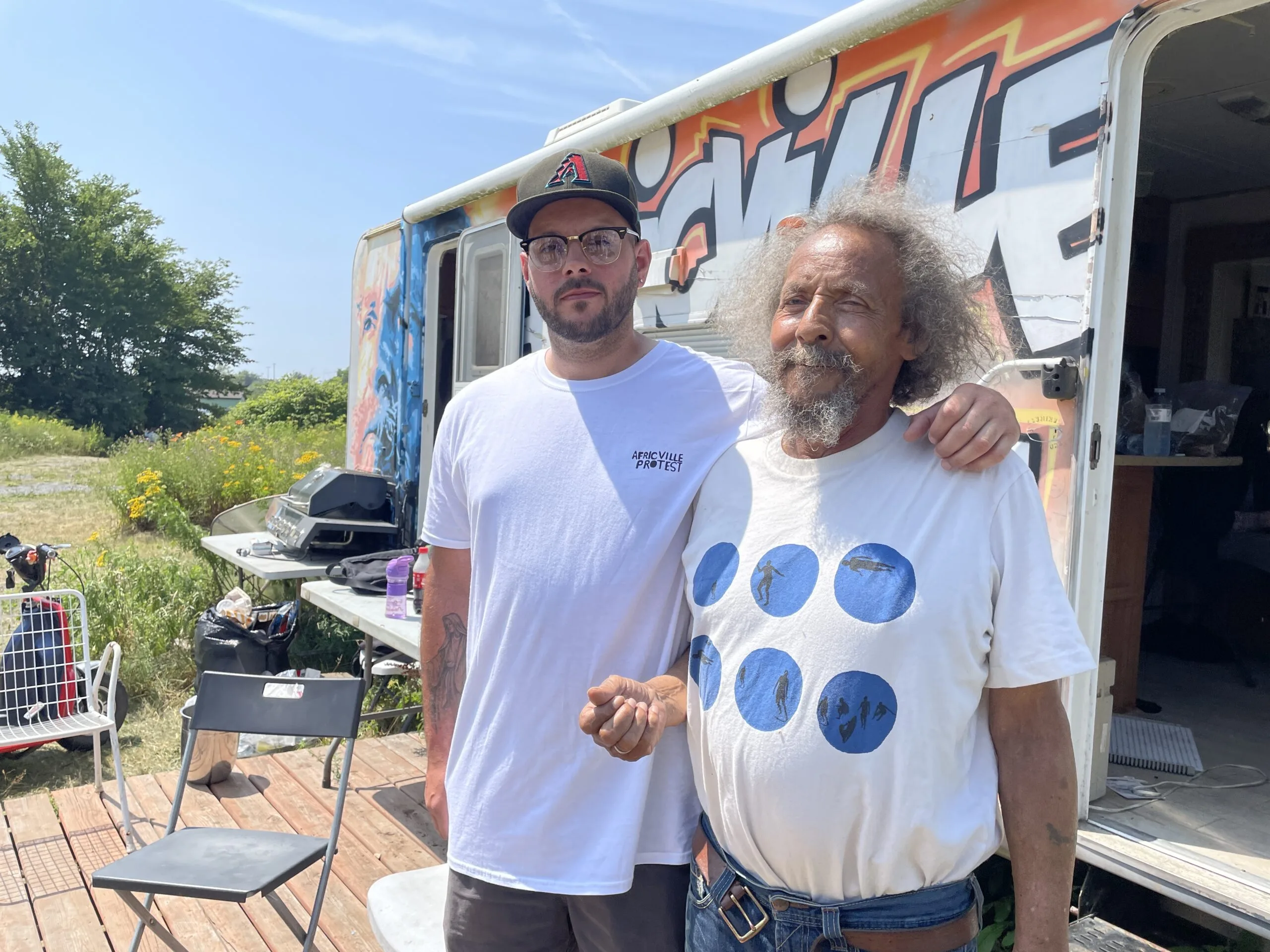
Halifax, Nova Scotia – More than a hundred mourners, including family, friends, and community members, gathered in Halifax on Friday, March 13, 2026, to pay their final respects and celebrate the profound life of Eddie Carvery, the iconic Africville activist whose decades-long protest became a powerful symbol of resilience and the enduring fight for justice. The funeral service, held at the historic New Horizon Baptist Church, honoured the 79-year-old Carvery, who passed away in February after a period of declining health, marking the end of an extraordinary life dedicated to ensuring the memory and legacy of Africville would never be forgotten.
The Genesis of a Protest: Africville’s Eradication and Carvery’s Resolve
Eddie Carvery became a national figure, synonymous with the former site of Africville, a once-thriving, self-sufficient Black community that was systematically razed by the City of Halifax in the late 1960s under the guise of urban renewal. Established in the mid-19th century by formerly enslaved people and Black loyalists, Africville was a vibrant, tight-knit village nestled on the shores of the Bedford Basin, home to approximately 400 residents across some 80 families. It boasted its own church (Seaview African United Baptist Church), school, post office, and store, forming a robust social and spiritual centre for its inhabitants. Despite its vitality, the community was consistently denied essential municipal services like running water, sewage systems, and paved roads, even as industrial developments and a dump encroached upon its borders.
Beginning in 1964 and continuing until 1970, the City of Halifax embarked on a controversial "urban renewal" program that resulted in the forced expropriation and demolition of Africville homes. Residents were relocated, often to substandard housing in predominantly white areas, disrupting social networks and causing deep psychological trauma. Houses were bulldozed, sometimes with residents still inside, and compensation was often inadequate, leaving many feeling betrayed and dispossessed. The destruction of Africville stands as one of Canada’s most egregious examples of systemic racism and municipal negligence, leaving an indelible scar on the nation’s history.

It was against this backdrop of profound injustice that Eddie Carvery embarked on what would become Canada’s longest recorded protest. In 1970, just as the last vestiges of Africville were being erased, Carvery, a former resident, returned to the waterfront land. He established a solitary protest camp, initially a tent, later evolving into a series of trailers, declaring his unwavering commitment to remain until the city acknowledged its wrongdoing, provided adequate reparations, and initiated a public inquiry into the demolition. His presence was a constant, living monument to a community that city officials had tried to erase.
Five Decades of Unwavering Vigilance: The Enduring Symbolism of Carvery’s Camp
For more than 56 years, Eddie Carvery maintained his protest camp on the desolate, windswept land that was once his home. His mission never wavered: to preserve Africville’s history, demand justice for its former residents, and ensure that the community’s story of resilience and dispossession would never fade into obscurity. Through harsh Nova Scotian winters, countless political changes, and numerous attempts by municipal officials to relocate him, Carvery remained steadfast. He endured isolation, health challenges, and the constant threat of eviction, transforming his humble camp into a powerful symbol of defiance against systemic injustice.
His protest was not merely a physical presence; it was a moral beacon. Carvery’s solitary stand drew national and international attention to the plight of Africville, forcing a dialogue about land rights, racial discrimination, and the responsibilities of government. He became an impromptu historian and storyteller, sharing the rich history of Africville with visitors who sought him out, educating a new generation about the injustices committed against his community. His grandson, Eddie Carvery III, eloquently captured his grandfather’s essence, stating, "He was on the front lines since 1970, fighting for his people, not only for remembrance, but to come back to our land." This sentiment underscores the deep connection Carvery felt to the land and the ancestral struggle for repossession and recognition.
The longevity of his protest is unparalleled in Canadian history, making him a unique figure in the annals of civil rights activism. His physical presence on the land served as a continuous reminder of the broken promises and unaddressed grievances, a human counter-narrative to the official silence and bureaucratic attempts to move on. He exemplified the power of persistent, peaceful resistance in the face of overwhelming odds.

A Community’s Tribute: Funeral Service Reflects a Legacy of Activism
The funeral service at New Horizon Baptist Church, a cornerstone of Halifax’s Black community, was a poignant testament to Carvery’s impact. The pews were filled with family members, many of whom had deep roots in Africville, alongside community leaders, activists, and ordinary citizens who had been touched by Carvery’s unwavering spirit. The atmosphere was one of solemn reflection mixed with a celebration of a life lived with purpose and conviction.
Reverend Grace Skeir of New Horizon Baptist Church delivered a moving eulogy, emphasizing Carvery’s dedication to historical preservation. "That’s what Eddie was fighting for," Skeir affirmed, "He wanted people to know that Africville was a vibrant community." Her words resonated with many in attendance, who understood that Carvery’s protest was not just about land, but about the reclamation of identity and narrative. He fought to replace the official narrative of Africville as a "slum" with the truth of a thriving, self-sufficient Black community that was unjustly destroyed.
Irvine Carvery, Eddie’s brother and a prominent figure in the Africville Genealogy Society, spoke of the galvanizing effect his brother’s passing would have. "I think with Eddie’s passing, people are going to become even more galvanised to achieve what he set out to do," he predicted. This sentiment highlights the idea that while Eddie Carvery’s physical presence is gone, his spirit and the cause he championed will continue to inspire and mobilize. His fight was never a solitary one in principle, but a collective struggle for justice that he embodied.
Beyond his role as an activist, family members lovingly remembered Carvery as a devoted father, grandfather, and uncle. They shared anecdotes of his personal warmth and the strength of his character, emphasizing that his public persona as a tireless advocate was deeply rooted in his personal commitment to his family and community. These personal reflections painted a picture of a complex man whose activism stemmed from a profound sense of love and loyalty.

Africville’s Enduring Struggle and Steps Toward Reconciliation
Eddie Carvery’s decades-long vigil played an undeniable role in keeping the Africville story alive and ensuring it remained a pressing issue for the City of Halifax and the broader Canadian public. His unwavering presence served as a constant reminder that the injustices of the past had not been fully resolved.
The City of Halifax, under Mayor Peter Kelly, formally apologized for the destruction of Africville on February 24, 2010. This apology acknowledged the city’s "terrible mistake" and the "unjustified and discriminatory" actions that led to the community’s eradication. As part of this reconciliation effort, the city returned the Africville land to its people and committed significant funding to the Africville Heritage Trust, an organization dedicated to preserving the community’s legacy. A replica of the Seaview African United Baptist Church was constructed on the original site, now part of the Africville Park, serving as a museum and cultural centre.
While these steps were significant, for many, including Eddie Carvery, the apology and subsequent actions, while welcome, did not fully address the systemic injustice or provide adequate reparations for all former residents and their descendants. Carvery continued his protest, maintaining his demand for a public inquiry and comprehensive reparations, arguing that true reconciliation required a deeper reckoning with the historical trauma and its ongoing impacts. His continued presence after 2010 underscored the view that an apology, while important, was only a beginning, and that substantive justice remained elusive.
The Legacy Carried Forward: A Future for Africville’s Advocacy

Eddie Carvery’s passing marks the end of an era, but not the end of the fight. His family has unequivocally stated their intention to carry on his work, advocating for the Africville community and its enduring legacy. This commitment ensures that the flame of activism he ignited will continue to burn brightly. The Africville Genealogy Society and the Africville Heritage Trust, alongside other community organizations, are poised to build upon his tireless efforts, ensuring that the historical narrative is accurately preserved and that the lessons learned from Africville inform future policies on urban development, land rights, and racial justice.
Carvery’s life offers powerful lessons about the importance of individual courage in challenging systemic injustice, the resilience of community spirit, and the long, arduous path toward reconciliation. His protest transcended a local grievance; it became a national symbol of the struggles faced by Black communities across Canada and a reminder that historical injustices, if not fully addressed, continue to cast long shadows.
As Canada grapples with its history of racial discrimination and seeks to advance reconciliation with Indigenous peoples and other marginalized communities, the story of Eddie Carvery and Africville serves as a crucial touchstone. His unwavering commitment to truth and justice will undoubtedly inspire future generations of activists and advocates, solidifying his place not only in Nova Scotian history but in the broader narrative of Canadian civil rights. His vigil may have ended, but its profound impact on the collective consciousness of a nation will continue to resonate, urging all to remember, to learn, and to strive for a more equitable future.