admin
admin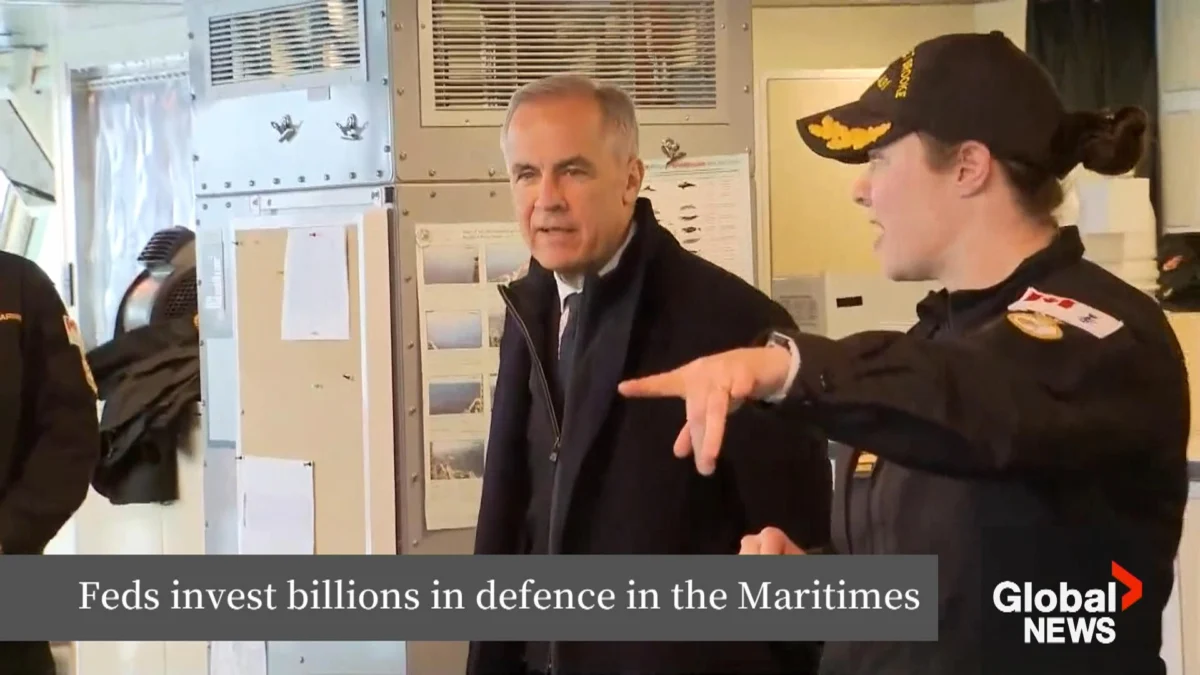
Prime Minister Mark Carney, speaking from the deck of a Canadian navy warship anchored in the historic Halifax Harbour, announced a substantial commitment of $3 billion in new infrastructure and defence spending designated for Nova Scotia and New Brunswick. This significant investment marks a pivotal moment for Canada’s defence policy, coming as the nation officially confirms it has reached the crucial benchmark of spending approximately two percent of its Gross Domestic Product (GDP) on national defence—a long-standing and often challenging commitment to the NATO alliance. The Prime Minister’s address, delivered on Thursday, March 26, 2026, also reiterated an ambitious pledge made in June to further escalate this investment, targeting an allocation of five percent of annual GDP to defence by 2035, signaling a profound shift in Canada’s military and economic priorities.
The immediate $3 billion injection is strategically allocated to bolster Canada’s military presence and operational capabilities in the Atlantic provinces, which serve as critical gateways for national defence and international operations. Nova Scotia is slated to receive more than $2 billion of this funding, earmarked for comprehensive modernization of existing infrastructure, a significant expansion of training facilities, and the construction of new support structures essential for accommodating future warships and advanced aircraft. Concurrently, New Brunswick will see an investment exceeding $1 billion, dedicated to enhancing the vast and strategically important Gagetown Range and Training Area, a cornerstone of the Canadian Army’s readiness. These regional investments are presented as foundational elements of a broader, decade-long defence strategy that will see Canada dedicate a staggering half-a-trillion dollars towards upgrading its military capabilities, including the procurement of next-generation submarines, aircraft, drones, sophisticated sensors, and cutting-edge radar systems.
The Maritimes: A Strategic Hub for National Defence
The choice of the Maritimes as the focal point for this initial wave of investment underscores the region’s enduring strategic importance to Canada’s defence and security architecture. Halifax, with its deep-water port and long history as a naval base, is the primary home of the Royal Canadian Navy’s Atlantic fleet and a critical hub for shipbuilding and maintenance. CFB Gagetown in New Brunswick, one of the largest military training areas in the Commonwealth, provides unparalleled space for land forces to conduct large-scale exercises.
Nova Scotia’s Naval & Air Modernization
The over $2 billion directed towards Nova Scotia is expected to catalyze a transformation of its defence infrastructure. This includes significant upgrades to facilities at Canadian Forces Base (CFB) Halifax, which supports a wide array of naval operations and fleet sustainment. New jetties and dry docks may be constructed or modernized to accommodate the next generation of Canadian warships, including the Canadian Surface Combatants currently under development as part of the National Shipbuilding Strategy. The investment will also support the expansion of maintenance facilities for advanced naval systems and communication technologies crucial for maritime domain awareness.
Furthermore, the funding will address the infrastructure needs for new aircraft. While the specifics were not detailed, this could involve upgrades at CFB Greenwood, a key base for maritime patrol aircraft, or other airfields across the province to support future acquisitions such as advanced fighter jets or sophisticated surveillance drones. Enhanced training facilities will play a vital role in preparing personnel to operate these complex new platforms, ensuring Canada’s forces remain at the forefront of naval and air capabilities. The economic ripple effect is anticipated to be substantial, generating thousands of jobs in construction, engineering, and support services across the province.

Fortifying New Brunswick’s Land Forces
New Brunswick’s allocation of more than $1 billion will primarily focus on the Gagetown Range and Training Area. This vast expanse is critical for land force training, allowing for live-fire exercises, vehicle maneuvers, and tactical simulations that are essential for maintaining the operational readiness of the Canadian Army. The improvements will likely include modernization of firing ranges to accommodate new weapon systems, upgrading existing barracks and support infrastructure for troops, and investing in advanced simulation technologies to enhance training realism and efficiency. The expansion of training areas may also involve improved road networks within the base, enhanced communication systems, and environmental management initiatives to ensure sustainable use of the extensive land. This investment ensures that Canadian soldiers have access to world-class training environments, preparing them for a diverse range of domestic and international missions.
A Pivotal Shift in Canada’s Defence Posture
Prime Minister Carney’s announcement underscores a dramatic shift in Canada’s approach to defence spending, moving from a long period of often-criticized underinvestment to an assertive commitment to significantly boost military capabilities. The confirmation of reaching the two percent GDP target for defence spending is particularly noteworthy, marking a successful culmination of efforts that have spanned multiple government terms and faced considerable economic and political headwinds.
The NATO Imperative: A Decade-Long Pursuit
The two percent GDP defence spending target was initially agreed upon by NATO member states at the 2014 Wales Summit, a direct response to rising global security concerns, particularly following Russia’s annexation of Crimea. For years, Canada, like many other NATO allies, struggled to meet this benchmark, consistently spending below the target, often hovering between 1.0% and 1.4% of its GDP on defence. This discrepancy frequently drew criticism from the United States and other key allies, who emphasized the importance of burden-sharing within the alliance.
Prime Minister Carney highlighted that his government had previously committed $63 billion to initiatives aimed at reaching this two percent target, a testament to a sustained effort over several years. This involved increased procurement, personnel enhancements, and operational investments. Reaching this target now, amidst heightened geopolitical tensions including the ongoing conflict in Ukraine and increasing competition in the Indo-Pacific, sends a strong signal of Canada’s renewed dedication to collective security and its role within NATO. The Prime Minister framed this as a necessary response to a more complex and volatile global security landscape, emphasizing that a strong defence is integral to Canada’s sovereignty and its ability to contribute meaningfully to international stability.
The Road to Half-a-Trillion: Future Capabilities
The ambitious pledge to increase defence spending to five percent of annual GDP by 2035, and the commitment of half-a-trillion dollars over the next decade, outlines a comprehensive modernization plan for the Canadian Armed Forces (CAF). This long-term vision encompasses a wide array of advanced military hardware and systems:
- Submarines: The investment will likely pave the way for the acquisition of new, advanced submarines, crucial for Arctic sovereignty, surveillance, and undersea warfare capabilities. These could be conventional or potentially nuclear-powered, depending on strategic reviews, replacing the aging Victoria-class submarines.
- Aircraft: This category likely includes new fighter jets (such as the F-35s that Canada has committed to acquiring), advanced maritime patrol aircraft, transport planes, and potentially a new generation of trainers. The goal is to ensure air superiority, provide robust support for ground forces, and enhance long-range surveillance.
- Drones (Unmanned Aerial Systems – UAS): Investment in drones will expand Canada’s intelligence, surveillance, and reconnaissance (ISR) capabilities, both domestically and abroad. This could include both armed and unarmed systems for various operational theatres, from Arctic monitoring to supporting peacekeeping missions.
- Sensors and Radar Systems: Critical for maintaining situational awareness, especially in Canada’s vast landmass and maritime territories. This includes upgrading North American Aerospace Defense Command (NORAD) systems, enhancing naval radar capabilities, and developing advanced sensor networks for Arctic surveillance and climate monitoring. These systems are integral to detecting and tracking threats, from ballistic missiles to illicit activities.
- Cyber Defence: While not explicitly listed, such a comprehensive defence overhaul would undoubtedly include significant investments in cyber defence capabilities, protecting critical infrastructure and military networks from sophisticated digital threats.
Reactions and Endorsements
The Prime Minister’s announcement has elicited a range of responses from various stakeholders, reflecting both the strategic importance and the financial magnitude of the proposed investments.

Political Leaders Applaud Regional Impact
Provincial premiers in Nova Scotia and New Brunswick were quick to express their appreciation for the significant federal investment. Premier of Nova Scotia, [Hypothetical Name], stated, "This multi-billion dollar investment is not just about strengthening our national defence; it’s a massive economic engine for Nova Scotia. It means thousands of good jobs, new opportunities for local businesses, and a renewed sense of purpose for our skilled workforce. We welcome this commitment wholeheartedly." Similarly, the Premier of New Brunswick, [Hypothetical Name], commented, "The improvements to CFB Gagetown are vital for our military personnel and for the economic stability of our region. This funding will ensure New Brunswick remains a cornerstone of Canada’s land forces training and a significant contributor to national security."
NATO Welcomes Renewed Canadian Commitment
Internationally, the announcement was met with approval from NATO headquarters. A spokesperson for the NATO Secretary-General, [Hypothetical Name], issued a statement welcoming Canada’s achievement of the two percent GDP target. "Canada’s commitment to reaching and now surpassing the two percent defence spending guideline is a testament to its unwavering dedication to the Alliance," the statement read. "In an increasingly unpredictable world, every ally’s contribution to collective security is more crucial than ever. We look forward to Canada’s continued leadership and enhanced capabilities within NATO."
Industry Poised for Growth
Canadian defence contractors and shipbuilding companies have also voiced optimism. Representatives from Halifax Shipyard, a key player in Canada’s National Shipbuilding Strategy, indicated that the additional funding would further stabilize long-term employment and foster innovation within the domestic defence industry. "This sustained investment provides the certainty we need to continue building world-class ships for the Royal Canadian Navy and to invest in the next generation of Canadian shipbuilders," said [Hypothetical Industry Spokesperson]. Technology firms specializing in sensors, radar, and cybersecurity are also anticipating significant opportunities from the half-a-trillion dollar procurement plan.
Economic Engine and Job Creation
Beyond the immediate defence implications, the substantial investment is projected to be a powerful economic stimulant for Canada, particularly in the Maritimes. The construction and modernization projects in Nova Scotia and New Brunswick alone are expected to create thousands of direct and indirect jobs in engineering, construction, skilled trades, logistics, and various support services. The long-term procurement strategy, encompassing new submarines, aircraft, and advanced systems, will sustain high-value manufacturing and technology jobs across the country for decades.
The defence industry often acts as an innovation driver, fostering advancements in materials science, artificial intelligence, robotics, and cybersecurity that can have dual-use applications in the civilian sector. This sustained investment could position Canada as a leader in specific defence technologies, attracting foreign investment and skilled talent. The economic impact extends to local businesses, from hospitality services supporting military personnel and contractors to suppliers providing goods and services to the bases.
Strategic Implications and Future Challenges
The strategic implications of Prime Minister Carney’s announcement are far-reaching, solidifying Canada’s position within NATO and enhancing its capacity to project power and protect its interests globally.

Reinforcing Global Standing and Arctic Sovereignty
By meeting and committing to exceed the NATO two percent target, Canada reasserts its commitment to its allies and strengthens its voice on the international stage. This enhanced capability will allow Canada to contribute more effectively to multilateral operations, whether in peacekeeping, disaster relief, or combat missions. Domestically, the investment in new submarines, surveillance aircraft, and radar systems is particularly critical for asserting Canada’s sovereignty over its vast Arctic territories. As the Arctic becomes increasingly accessible and strategically important, these assets will be vital for monitoring activity, conducting scientific research, and responding to environmental or security challenges in the region.
Navigating Implementation and Innovation
While the ambition is clear, the implementation of such a massive defence spending plan will present its own set of challenges. Historically, large-scale defence procurements have been prone to delays, cost overruns, and complex technological integration issues. The government will need to ensure robust oversight, transparent procurement processes, and effective project management to deliver these capabilities on time and within budget. Attracting and retaining the skilled labour force required for these projects, from engineers to technicians and military personnel, will also be a critical factor. Furthermore, staying abreast of rapidly evolving military technologies will require continuous investment in research and development and a flexible acquisition strategy.
Historical Context of Defence Spending
Canada’s defence spending has historically fluctuated, often reflecting global geopolitical shifts and domestic economic priorities. Following the Cold War, there was a significant reduction in military expenditure, a trend seen across many Western nations. However, the post-9/11 era, coupled with increased demands for contributions to international missions in Afghanistan and elsewhere, began to reverse this trend. The 2014 NATO summit provided a new impetus, but actual increases have been gradual. This latest announcement under Prime Minister Carney represents one of the most substantial and sustained commitments to defence in recent Canadian history, positioning the nation for a robust and proactive role in global security for the coming decades.
In conclusion, Prime Minister Mark Carney’s announcement of a $3 billion immediate investment in the Maritimes, coupled with a half-a-trillion-dollar commitment over the next decade and a pledge to reach five percent of GDP on defence by 2035, signifies a landmark moment for Canada. It reflects a strategic response to a changing global landscape, a renewed dedication to international alliances, and a significant boost to regional economies. The successful execution of this ambitious plan will redefine Canada’s defence capabilities and its standing as a responsible global actor well into the mid-21st century.