admin
admin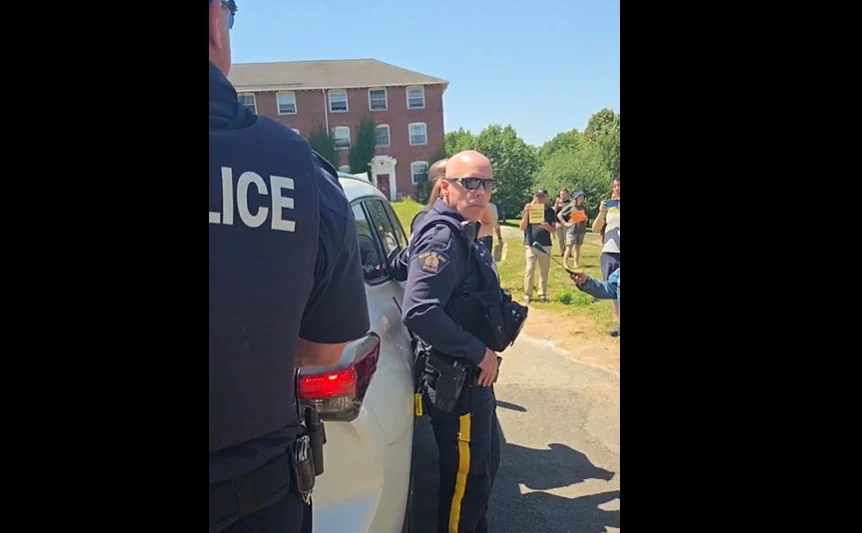
Nova Scotia’s political landscape was stirred on July 15 when a protest at Acadia University in Wolfville escalated into an incident that Premier Tim Houston’s office described as his vehicle being "swarmed by rioters." The Royal Canadian Mounted Police (RCMP) have since taken action, laying charges against a 19-year-old man in connection with the contentious event, bringing to the forefront critical discussions about freedom of expression, public safety, and the boundaries of dissent in a democratic society. The charges, which include intimidation of a Justice System Participant, two counts of Intimidation, and Mischief Under $5,000, underscore the seriousness with which authorities are treating the incident, even as the narrative surrounding the events of that day remains contested by those who participated in the demonstration.
Chronology of a Contentious Day: From Dialogue to Disruption
The events of July 15 unfolded in the picturesque town of Wolfville, a community often celebrated for its vibrant academic atmosphere and engaged citizenry. Premier Tim Houston had travelled to Acadia University to address the Annapolis Valley Chamber of Commerce, an engagement typical for a provincial leader seeking to connect with business communities and articulate government policies. The address was part of a broader series of provincial outreach efforts aimed at highlighting the government’s agenda and fostering economic development across Nova Scotia.
However, outside the venue, a different narrative was taking shape. A diverse coalition of protesters had gathered, mobilizing to voice their profound discontent with several policies and decisions made by Premier Houston’s Progressive Conservative government. This demonstration was not spontaneous but rather the culmination of growing public frustration over a range of issues that had been simmering for months.
Among the primary grievances cited by protesters were recent budget cuts impacting the arts sector. The provincial budget, unveiled earlier in the year, had seen reductions in funding for various cultural programs and organizations, sparking widespread concern among artists, performers, and cultural institutions who argued these cuts would diminish Nova Scotia’s vibrant cultural scene and negatively impact the livelihoods of many creative professionals. The arts community, already struggling with the economic repercussions of the pandemic, viewed these cuts as a direct threat to their sustainability and the province’s cultural identity.
Simultaneously, the specter of impending library closures loomed large, particularly in rural communities. Plans to consolidate or reduce services in several regional libraries had drawn sharp criticism from educators, parents, and community advocates who emphasized the vital role these institutions play in literacy, community engagement, and access to information, especially for vulnerable populations. The potential loss of these vital community hubs fueled a passionate defense from local residents.

Environmental issues also formed a significant part of the protest’s agenda. Nova Scotia, a province rich in natural beauty and resources, has long been a battleground for environmental activism. Protesters raised concerns about the government’s approach to resource management, particularly regarding forestry practices, potential mining projects, and the overall pace of climate action. Groups like the Ecology Action Centre, a prominent environmental advocacy organization, had been vocal in their critique of specific government policies perceived as undermining ecological sustainability and failing to adequately address the climate crisis. Michelle Paul, a protester quoted later, explicitly mentioned concerns about "impacts he proposes to the lands and the waters, mining," indicating a focus on specific resource development debates.
Further amplifying the dissent were concerns pertaining to Indigenous rights. Nova Scotia has a complex history with its Indigenous Mi’kmaq population, marked by ongoing discussions and disputes over treaty rights, land claims, and resource co-management. Protesters, including Indigenous community members and their allies, highlighted perceived shortcomings in the government’s commitment to reconciliation and the protection of Indigenous sovereignty and traditional territories. These issues are deeply rooted in historical injustices and continue to be a significant point of advocacy and contention in the province.
Initially, the protest on July 15 was largely peaceful, a common feature of demonstrations where citizens gather to exercise their democratic right to voice opposition. Participants engaged in chanting, displaying signs, and distributing information, aiming to draw public and media attention to their concerns. However, as Premier Houston concluded his address and prepared to depart, the atmosphere outside the venue reportedly shifted.
According to a statement issued by the Premier’s office later that day, an "extreme faction amongst a group of protesters turned the event violent." The statement alleged that as the Premier’s vehicle, along with those of his staff, attempted to leave, they were "swarmed by rioters, preventing them from leaving." It further claimed that these individuals "blocked them in, were pushing law enforcement, climbing onto the car the Premier was in and smashed the windshield with the Premier in the car." This account painted a stark picture of a chaotic and dangerous encounter, leading to immediate condemnation from government officials and a swift police investigation. The image of a damaged vehicle with the Premier inside quickly became a focal point of the subsequent public discourse.
The Official Response and Contested Narratives
In the immediate aftermath, the Premier’s office issued a strongly worded statement, using terms like "rioters" and "criminals" to describe those involved in the alleged escalation. This language, while reflecting the government’s perception of the severity of the incident, immediately became a point of contention and a lightning rod for debate.
Michelle Paul, one of the participants at the rally, directly challenged the government’s characterization. Speaking to Global News on July 16, Paul asserted, "We’re not rioters, we’re not criminals. And in fact… we are not protesters. We are protectors." This distinction highlighted a fundamental difference in how the event was perceived from within the protest movement versus the official government narrative. Paul emphasized that the vast majority of the rally had been peaceful, a collective effort by diverse groups to make their voices heard on critical provincial issues. "And what happened was not anything that we even considered would happen. Because leading up to all that, it was all kumbaya. It was peaceful," she stated, suggesting that the damaging incident was an isolated act that did not represent the broader intent or conduct of the protest.

The Ecology Action Centre, which had actively promoted the rally on its social media channels, also weighed in. While reaffirming its commitment to encouraging the provincial government to "listen to the voice of the people," the organization made it clear that it "cannot condone illegal activity." This position reflects the delicate balance many advocacy groups attempt to strike: supporting the right to protest while distancing themselves from any actions that cross the line into illegality or violence, thereby preserving their credibility and focus on policy advocacy.
The RCMP, consistent with their mandate, provided a statement outlining the legal parameters of public demonstrations. In a news release issued on the Monday following the incident, police affirmed that people "have a protected right to lawfully, peacefully, and safely assemble." However, this right is not absolute, and the statement continued by asserting that those who "unlawfully interfere with or threaten the safety of any person or property will be held accountable." This clarification served as a reminder that while freedom of expression is a cornerstone of Canadian democracy, it operates within the bounds of the law, and actions deemed unlawful will be met with legal consequences.
Legal Action and Broader Implications
The police investigation quickly led to an arrest. On July 17, two days after the incident, a 19-year-old man was taken into custody. He was subsequently charged with several offenses, notably intimidation of a Justice System Participant, two counts of Intimidation, and Mischief Under $5,000. The charge of intimidation of a Justice System Participant is particularly significant, as it can carry severe penalties and is typically applied when there is an attempt to obstruct or interfere with the administration of justice. The police also clarified that this individual was distinct from another person who had been arrested at the scene of the protest but was later released without charges, indicating the complexity of identifying specific individuals and actions within a dynamic crowd.
The accused had his first court appearance at Kentville Provincial Court and remains in custody pending a future court appearance. This legal process will now unfold, with the court tasked with evaluating the evidence and determining culpability based on the charges laid. The outcome of this case will undoubtedly be closely watched by various stakeholders, including political observers, legal professionals, and those involved in protest movements.
The incident and the subsequent charges have ignited a broader public debate in Nova Scotia, touching upon several critical themes:
1. The Nature of Political Discourse and Polarization: The stark contrast between the Premier’s office’s depiction of "rioters" and protesters’ self-identification as "protectors" highlights a growing polarization in political discourse. This incident exemplifies the challenges of constructive dialogue when trust between government and segments of the citizenry appears strained. The language used by both sides can either de-escalate or exacerbate tensions, and in this instance, it seems to have deepened the divide.

2. Balancing Freedom of Protest with Public Safety and Security: The core of the debate often revolves around where the line is drawn between legitimate protest and unlawful interference. While the right to protest is enshrined in the Canadian Charter of Rights and Freedoms, it is not an absolute right and must be balanced against public order, safety, and the protection of property. This event forces a reconsideration of security protocols for public officials at events and the responsibilities of organizers and participants in ensuring demonstrations remain peaceful and lawful.
3. The Role of Social Media in Mobilization and Narrative Control: Social media played a significant role in both mobilizing the protest and shaping the narrative post-incident. Advocacy groups used platforms to promote the rally, while the Premier’s office used its channels to convey its version of events. The rapid dissemination of information, often without full context, can contribute to the entrenchment of differing viewpoints and make it challenging for the public to discern an objective account.
4. Implications for Future Protests and Government Engagement: This incident may have several long-term implications. For protest movements, it could lead to increased scrutiny from law enforcement and potentially stricter enforcement of regulations regarding public assemblies. For the government, it might prompt a review of how it engages with dissenting voices and manages public events involving the Premier. There could be a chilling effect on future demonstrations, or conversely, a hardening of resolve among activists who feel their voices are not being heard through conventional channels.
5. Legal Precedents and Accountability: The legal proceedings against the accused will set an important precedent for how similar incidents are handled in Nova Scotia. The specific charges, particularly intimidation of a Justice System Participant, reflect a serious view of the alleged actions. The outcome will underscore the legal consequences for individuals who cross the line from lawful protest to actions deemed criminal, reinforcing the principle that while dissent is protected, unlawful behaviour is not.
The Wolfville protest, and the subsequent charges, serve as a potent reminder of the complexities inherent in modern political activism. As Nova Scotia grapples with pressing social, economic, and environmental issues, the incident underscores the ongoing tension between governmental authority and citizen advocacy, and the critical need for all parties to navigate these interactions with respect for both democratic rights and the rule of law. The legal process will continue, but the broader societal dialogue ignited by this event will likely resonate throughout the province for the foreseeable future.