admin
admin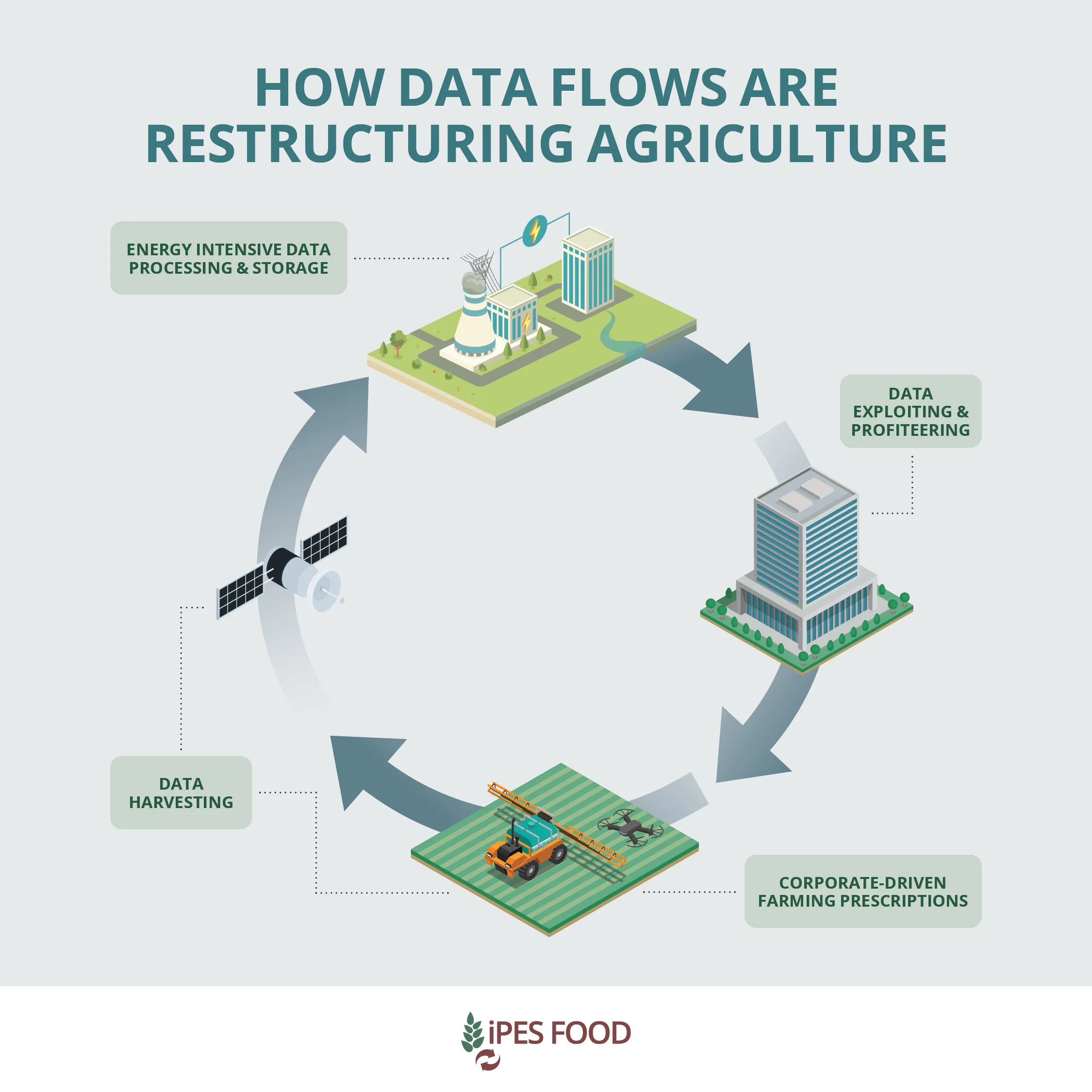
The burgeoning field of precision agriculture, driven by artificial intelligence, promises a revolution in farming efficiency and yield optimization, but a growing undercurrent of concern suggests that farmers, while embracing these innovations, may be inadvertently signing away their rights to control their valuable operational data and share in the future profits derived from it. This tension between technological advancement and data sovereignty is rapidly becoming one of the most critical issues facing the global agricultural sector, with profound implications for food security, rural economies, and the very structure of farming itself.
The Allure of AI in Agriculture: A New Era of Efficiency
Modern agriculture stands at a crossroads, grappling with the imperative to feed a growing global population—projected to reach nearly 10 billion by 2050—amidst the escalating challenges of climate change, resource scarcity, and evolving consumer demands. In this context, precision agriculture, often augmented by artificial intelligence (AI) and machine learning (ML), has emerged as a beacon of hope. These sophisticated tools gather unprecedented volumes of data from every conceivable point within a farm’s ecosystem: GPS coordinates from autonomous tractors, precise seeding rates from planters, targeted pesticide volumes from sprayers, granular moisture readings from an array of soil probes, and real-time yield estimates from advanced combines.
This raw data, once siloed or inaccessible, is now fed into powerful AI algorithms that detect patterns, predict outcomes, and generate actionable insights. Leading agricultural technology (ag-tech) companies such as Bayer (with its Climate FieldView platform), John Deere (Operations Center), Corteva Agriscience, and Trimble are at the forefront of this digital transformation. Their services weave together individual farm data with external feeds, including high-resolution satellite imagery, localized weather station readings, and historical market trends. Farmers can access intuitive dashboards on their smartphones or computers, receiving comprehensive overviews of field conditions, emerging trends, and tailored recommendations for optimizing practices—from nutrient management and irrigation schedules to pest control and harvest timing. The allure is undeniable: ads for these AI-powered services consistently promise to "empower" farmers to "harness" their data, "make better decisions," boost yields, and unearth significant efficiencies, ultimately leading to increased profitability and a more sustainable use of resources.
The adoption rate reflects this promise. In the United States, the U.S. Government Accountability Office reported that approximately 27 percent of farms and ranches are already utilizing these tools. Globally, market analysts project a robust double-digit growth trajectory for the precision farming market, anticipating it to swell to as much as $27 billion worldwide by 2030. This expansion is further fueled by various tailwinds, including incentives bundled into legislative efforts like the latest draft of the U.S. farm bill, which often seek to promote sustainable practices and technological adoption.
Farmers on the Front Lines: A Deep Dive into Data Dilemmas
Andrew Nelson, a self-described "tech-forward" fifth-generation farmer operating across 7,500 acres near Garfield, Washington, exemplifies the modern agriculturalist embracing these advancements. Cultivating a diverse range of crops including wheat, canola, lentils, garbanzos, and green peas, Nelson integrates popular precision agriculture services, feeding his spraying data to Bayer Climate FieldView for chemical application recommendations and allowing John Deere Operations Center to collect data from his machinery for performance insights. Yet, even a progressive farmer like Nelson harbors significant reservations. "I’ve read the terms and conditions," Nelson states, acknowledging the complexity of the digital agreements. "But giving some of that information to the person that I’m having to buy a three-quarter of a million-dollar machine from just doesn’t sit quite right." This sentiment encapsulates a core tension: farmers are often dependent on these very companies for essential, high-cost equipment, creating an imbalance in the data-sharing relationship.
This unease is not isolated. Rebekka Siemens, an almond grower in California, has actively resisted sales pitches for expensive "smart" irrigation systems, citing a profound lack of privacy. "On the one hand, it’s attractive that the reporting can be integrated or exported for reporting purposes easily," Siemens explains. "On the other hand, it could harm you . . . . It feels exposing, the lack of privacy. We don’t know who’s doing what with it." For Siemens, the perceived benefit of streamlined reporting is outweighed by the palpable anxiety of surrendering control over sensitive operational data to unknown entities. She articulates a growing fear among farmers: "It’s essentially like we’re being charged to use the service and then the company is making even more money off of us by selling our data."
While individual "small data" from modest plots might seem inconsequential, corporations recognize the immense value in aggregated pools of information. Training sophisticated AI systems on data captured from thousands of farms creates a proprietary knowledge base—a digital gold mine—that raises fundamental questions about intellectual property rights and equitable profit sharing. Who truly owns the insights derived from collective farmer data, and who should benefit from its monetization?
The Murky Waters of Ownership and Contractual Realities
Ag-tech companies frequently assert that farmers retain ownership of their data. Brian Leake, a spokesperson for Bayer, emphatically states, "Farmers own their own data—full stop," highlighting that Climate FieldView has been certified by the auditing nonprofit Ag Data Transparent since 2021. This certification aims to provide clarity and assurance regarding data privacy practices, indicating that companies adhere to certain principles, such as transparency about data collection and usage. Leake further emphasizes, "They can choose to share their data with others and request that their individual farm data is deleted."

However, watchdog groups and farmer advocacy organizations caution that the intricate legalese embedded within standard click-to-sign contracts often heavily favors the businesses. A 10,000-word software license agreement can contain subtle clauses with significant implications. For instance, a contract might explicitly prevent a tech company from selling raw, identifiable data to a third party, yet simultaneously grant a business partner broad rights to exploit and share anonymized or aggregated pools of data. This distinction is crucial: while individual farm data might not be directly sold, the synthesized insights derived from thousands of farms—the very "gold mine" Siemens alluded to—can be leveraged for significant commercial gain, such as developing new products, refining algorithms, or informing market strategies, without direct compensation or explicit consent from the originating farmers.
Further complicating matters is the "gray zone" of data storage. Ag-tech providers typically store their vast datasets with major cloud service providers like Amazon Web Services (AWS), Microsoft Azure, and Google Cloud. This introduces additional layers of agreements and potential vulnerabilities, raising questions about data security, jurisdiction, and the ultimate control over these bits and bytes.
Industry Growth, Market Concentration, and Existential Fears
The rapid expansion of the ag-tech industry, projected to reach multi-billion-dollar valuations, has ignited a fervent debate about its broader societal and economic implications. While 70 percent of precision ag-tech users globally are large operators, the slower adoption by smaller farms highlights a potential widening of the digital divide in agriculture. The fear among small-scale farmers and sustainability advocates is that this explosive growth will inevitably lead to increased market concentration, allowing dominant companies to leverage their unparalleled data insights to sell more products and services, corner markets, or even exert undue influence that threatens the livelihoods of independent farmers.
Advocates raise red flags about the perceived "marriage" between Big Tech—companies whose core business models often revolve around monetizing user data—and Big Ag, which has historically been criticized for industrializing agriculture and contributing to the decline of family farms. The potential confluence of these powerful sectors raises a multitude of fears:
- Product Push: What if the primary purpose of collecting this vast trove of data isn’t solely to assist farmers, but rather to identify opportunities to sell more proprietary products and services, creating a dependency cycle?
- Data Vulnerability: What happens to sensitive farm data if a promising ag-tech startup folds, is acquired, or experiences a data breach? Who then assumes responsibility for its protection?
- National Security: Could sophisticated agricultural intelligence, if compromised, be exploited by malicious foreign actors to disrupt critical food systems, potentially leading to widespread instability?
- Regulatory Backlash: Could historical data on fertilizer or pesticide use, meticulously logged by AI systems, eventually be used by governments to penalize farms for environmental pollution, even if regulations change retrospectively?
- Market Manipulation: What if aggregated farm data falls into the hands of hedge funds, commodity traders, or real estate investors who could use it to manipulate commodity markets, drive down land prices, or facilitate the further concentration of land ownership, pushing out smaller operations?
Elizabeth Vaughan, senior manager of the Small-Farm Tech Hub at the Community Alliance with Family Farmers (CAFF), encapsulates these existential worries. "Is Amazon going to be our food producer 50 years from now, or Microsoft—or are we still going to have small farmers that provide for their local communities, grow culturally relevant crops, and have resilient community food systems?" she asks, pointing to a future where the traditional farmer’s role could be significantly diminished or redefined by corporate giants.
A notable incident in February 2020 underscored these anxieties when Bayer abruptly dropped a planned partnership with Tillable, a startup often dubbed an "Airbnb for farmland." The partnership, announced just four months prior, drew intense scrutiny after Tillable allegedly sent unsolicited cash rental offers to farm owners. Farmers quickly accused Tillable of leveraging farm yield data, ostensibly gleaned from Bayer’s Climate FieldView platform, to craft its competitive bids. While Bayer steadfastly denied establishing any backend data-sharing with Tillable, the controversy served as a stark warning about the potential for data misuse and the critical importance of maintaining farmer trust.
The Slow March of Regulation and the Rise of State Action
The rapid pace of innovation in AI and machine learning has consistently outstripped the capacity of federal regulations to keep pace. In the United States, tech companies have actively lobbied against legislative proposals they argue would stifle innovation, contributing to a regulatory vacuum. A significant example occurred in July 2025, when members of Congress overwhelmingly voted to remove a proposal from the "One Big Beautiful Bill Act" that would have imposed a decade-long moratorium on states enacting new laws regulating AI. This decision, while intended to prevent a patchwork of state-level regulations from hindering national innovation, effectively left the door open for continued uncertainty regarding AI governance.
In the absence of comprehensive federal action, individual states are beginning to step into the void. Nebraska, a state deeply rooted in agriculture, has emerged as a trailblazer with its "Agriculture Data Privacy Act" (LB525). This landmark bill, which debuted in 2025 and has since been refined, is considered the first of its kind globally to explicitly claim privacy rights for business data. Reed Freeman, a partner with ArentFox Schiff specializing in data privacy and security, notes that the latest version of LB525 would specifically bar third-party companies from monetizing farm data without the explicit permission of the farmer. If enacted, this legislation could set a significant precedent, extending beyond agriculture to have broad business implications. "This is saying there’s value in non-personal data, and . . . the guy who generated it is the guy who should wrest the value out of it," Freeman explains, underscoring the potential for a paradigm shift in how business data is valued and controlled.
Cultivating Alternatives: Empowering Farmers with Open-Source Solutions
Recognizing the limitations of corporate offerings and the slow pace of regulation, a growing movement of coders, farmers, and educators are actively developing alternative digital tools designed to empower small-scale farmers to benefit from data-driven insights without relinquishing control of their information to large tech companies.

Ben Craker, a farmer growing corn, soybeans, wheat, and hay in central Wisconsin, serves as president of the Ag Data Coalition, a non-profit organization dedicated to farmer data sovereignty. "It’s important for you to control this data, but there’s no value in it if you just put it on a hard drive on your desk and never do anything with it," Craker emphasizes. The Coalition provides a platform that allows farmers to retain, share, or restrict access to their farm data, critically enabling them to choose to share anonymized data with universities for research purposes, fostering agricultural innovation that serves public good rather than corporate profit.
Beyond this, open-source initiatives are gaining traction. Farmers and researchers at the University of British Columbia collaborated to create LiteFarm software, an open-source tool designed to assist farmers with crop planning and tracking tasks. Being open-source, LiteFarm offers transparency, flexibility, and community-driven development, ensuring that the software’s evolution aligns with farmers’ needs and values rather than commercial imperatives. Andrew Nelson, the Washington grower, is also contributing to this landscape of alternatives with "Ag Answers," a low-cost service he is developing. Ag Answers aims to leverage AI-based text chats to help farmers gain insights from their fields, streamline USDA form completion, and even suggest proactive equipment maintenance, all while prioritizing farmer control over their data.
Beyond the Data: A Holistic Critique from Sustainable Agriculture Advocates
For advocates of sustainable farming practices, the discussion extends beyond mere data sovereignty to a more fundamental critique of the very philosophy underpinning much of current ag-tech. They argue that many existing tools are ill-suited for small-scale, diversified farms, primarily because they are engineered to maximize yields of monoculture crops, often at the expense of crucial ecological considerations like soil health and climate resilience.
Furthermore, there is significant skepticism regarding the ag-tech industry’s claim that precision agriculture is inherently environmentally beneficial, a way to decrease the use of fossil-fuel-heavy pesticides and fertilizers. This skepticism is bolstered by recent findings, such as a report from the HEAL Food Alliance, which indicates that the use of fertilizers and pesticides has, in fact, climbed in tandem with the rise of precision agriculture, challenging the narrative of environmental improvement.
Jessica Chiartas, a soil scientist and board president for RegenScore—a tool designed to collect data on regenerative farming practices—voices a concern that digital technologies, while offering data, risk disconnecting farmers from the land itself. "The best way to manage your farm is to be out there on the ground, looking, smelling," she asserts, emphasizing the irreplaceable value of direct observation and intuitive knowledge passed down through generations.
Nettie Wiebe, a professor, farmer, and long-time farm activist in Saskatchewan, contributed to a February report by the International Panel of Experts on Sustainable Food Systems (IPES) that boldly challenged the "false promise" of digital agriculture. Wiebe argues that industrial agriculture, with its emphasis on mechanical innovation and data points, operates on a reductionist view of the natural world. "Those of us who farm in a small-scale way, we know that actually it’s [about] the interrelationship between various organic elements that make up the natural world," she states, advocating for a holistic understanding that transcends mere quantitative analysis.
The Future of Food: A Balancing Act
The unfolding narrative of precision agriculture and data ownership is a complex tapestry woven with threads of technological promise, economic opportunity, privacy concerns, and profound philosophical questions about the future of food production. While AI-driven insights undeniably offer powerful tools to address global food challenges, the manner in which these tools are developed, deployed, and governed will determine whether they truly empower farmers or inadvertently consolidate power within the hands of a few dominant corporations.
The implications are far-reaching, touching upon issues of food security, environmental sustainability, economic equity in rural communities, and the preservation of traditional farming knowledge. Moving forward, the agricultural sector will require robust policy frameworks that prioritize farmer data sovereignty, transparent contractual agreements that are easily understood and genuinely fair, and continued investment in farmer-centric, open-source alternatives. The delicate balance between harnessing technological innovation for the common good and safeguarding the autonomy and livelihoods of those who feed the world will ultimately shape the future of our global food systems for generations to come.