admin
The opening of Palazzo Sogni in the heart of Florence marks a significant milestone in the city’s luxury hospitality sector, representing a sophisticated synthesis of 16th-century architectural heritage and 21st-century interior design. Located just steps from the Santa Maria del Fiore Cathedral, the 30-room boutique hotel occupies a structure that was once an integral part of the historic Palazzo Testa. The project, led by designers Elena and Giulia Sella of the Milan-based firm Design by Gemini, serves as a case study in the "couture design" approach, where every element—from the structural restoration to the bespoke furniture—is conceived to honor the building’s Renaissance soul while providing a modern, "dreamlike" guest experience.
The transformation of the palazzo involved an extensive conservation effort aimed at reconciling the rigid requirements of historical preservation with the functional demands of a high-end hotel. By removing centuries of over-painting and neglect, the design team revealed hidden frescoes and architectural details that now dictate the aesthetic narrative of the property. The result is a venue that avoids the clichéd tropes of traditional Florentine hospitality, opting instead for a vibrant, texture-rich environment that positions contemporary craftsmanship alongside the works of Renaissance masters.
A Historical Chronology: From Palazzo Testa to Palazzo Sogni
The building’s lineage is deeply intertwined with the aristocratic history of Florence. To understand the significance of the current renovation, one must look at the chronological evolution of the site:

- 16th Century: Construction begins on what would become part of Palazzo Testa. The project was commissioned by the Martelli family, one of Florence’s most influential clans, known for their patronage of the arts and close ties to the Medici.
- Late Renaissance Period: The monumental nymphaeum is added to the courtyard. Featuring a stone fountain, the work is traditionally attributed to Baccio Bandinelli, a contemporary and rival of Michelangelo.
- 18th and 19th Centuries: The interior undergoes several decorative updates. Notable artists such as Luigi Catani and Antonio Marini are commissioned to paint the ceilings and walls, introducing Neoclassical and Romantic motifs that remain visible today.
- 20th Century: Like many urban palazzos, the building transitioned through various uses, leading to the fragmentation of its internal spaces and the layering of industrial-grade paint over historic artworks.
- 2022–2024: The Sella sisters and their team begin a comprehensive two-year restoration and redesign project. This period involved meticulous work by local restorers to stabilize original lime-based wall finishes and uncover ceiling frescoes.
- Late 2024: Palazzo Sogni officially opens to the public, rebranding the historic site as a premier destination for design-focused travelers.
The Restoration Process: Unveiling Hidden Artistry
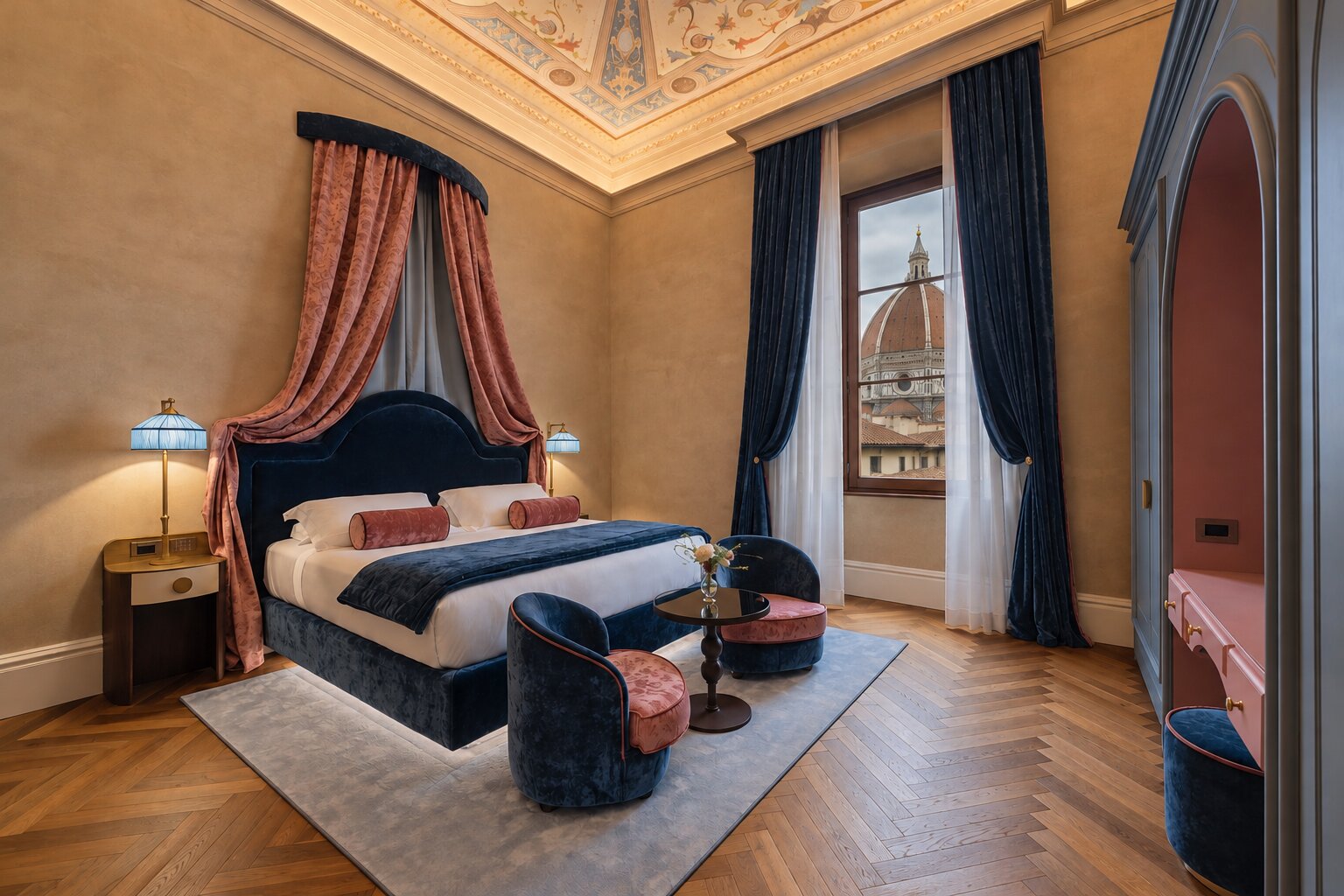
The conservation of Palazzo Sogni was not merely a cosmetic endeavor but a technical rescue mission. The designers prioritized the "soul of the palazzo," which required a delicate balance between restoration and intervention. One of the most critical phases of the project involved the removal of multiple layers of paint that had obscured the original 18th-century decorations. This process revealed intricate zodiac motifs, cherubs, and floral scrolling that had been lost to time.
Rather than treating these frescoes as static museum pieces, Design by Gemini integrated them into the living environment of the hotel. For instance, the color palettes of individual guest rooms were derived directly from the pigments found in the frescoes above the beds. This ensures a visual continuity that feels organic rather than imposed.
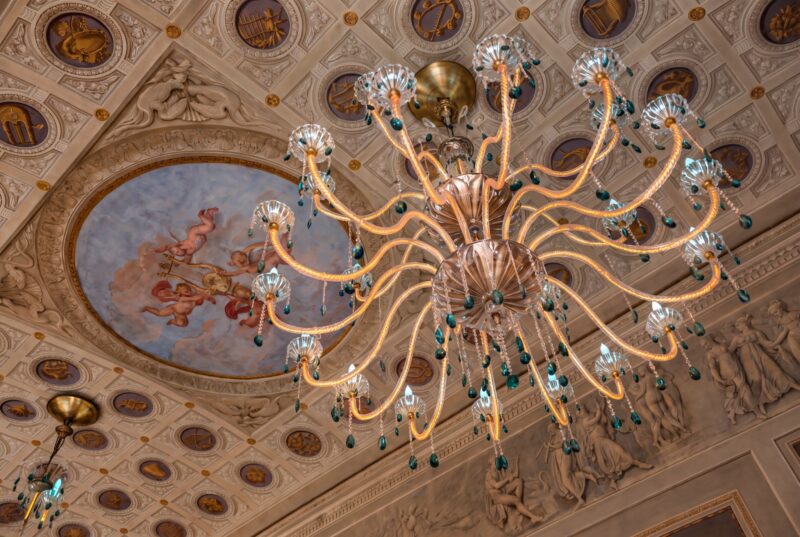
The flooring also played a vital role in the restoration. The designers chose to recreate the building’s original marble checkerboard pattern, using high-quality stone that echoes the grand entrances of the Renaissance era. By maintaining these traditional foundations, the designers earned the creative freedom to introduce more radical contemporary elements, such as integrated architectural lighting that casts a soft glow upward to highlight the historic ceilings without the need for intrusive hanging fixtures in every space.
A Bespoke Interior Identity: The "Couture Design" Philosophy
Central to the identity of Palazzo Sogni is the rejection of mass-produced furniture. Elena and Giulia Sella developed what they term a "couture design collection," wherein every piece of furniture was designed specifically for the hotel and manufactured by local artisans. This approach ensures that the interior identity of the hotel is unique to its specific location.
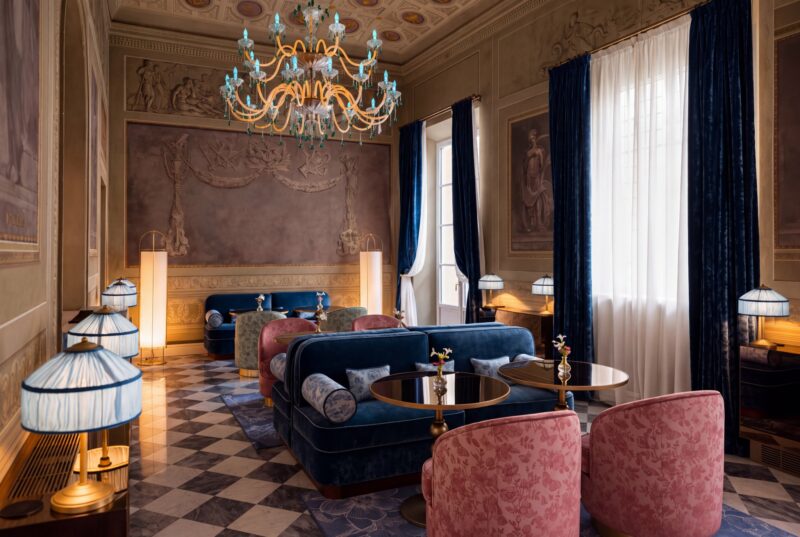
The material palette is characterized by richness and texture. The designers utilized:
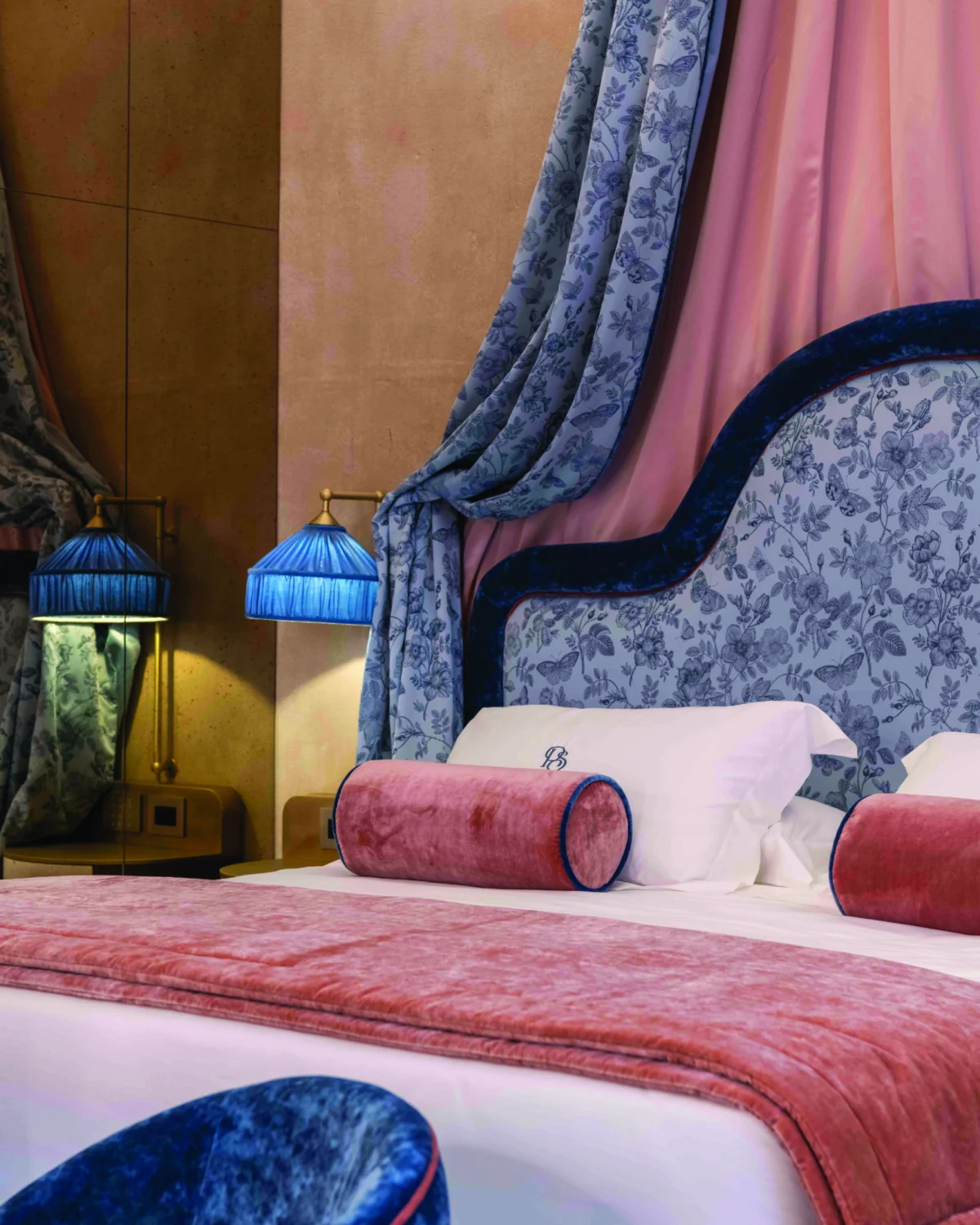
- Iridescent Velvets: Used for upholstery to provide depth and movement under changing light conditions.
- Aged Amber Mirrors: These are used in elevators, bathrooms, and as architectural accents. The amber tint provides a warmth that standard silver mirrors lack, while the reflective surfaces help to visually expand the historic rooms, which often feature high ceilings but thick, substantial walls.
- Silk-Based Jacquards: A signature "Floral Butterfly" pattern was developed in collaboration with Alessandro Bini, a renowned textile company in the Florence area. The fabric is produced on specialized looms to create a tactile relief effect, appearing on everything from bed canopies to the interiors of custom wardrobes.
This focus on local production is a strategic economic choice as much as an aesthetic one. By partnering with workshops in and around Florence, Palazzo Sogni supports the region’s traditional craftsmanship sector, which has faced increasing pressure from globalized manufacturing.

Architectural Highlights: The Nymphaeum and Secret Garden
Perhaps the most striking feature of the property is the "Secret Garden," which houses the historic nymphaeum. In Italian Renaissance architecture, a nymphaeum was a monument consecrated to nymphs, often serving as a cool, shaded retreat centered around a water feature. The nymphaeum at Palazzo Sogni, with its Bandinelli-attributed fountain, remains the property’s strongest architectural anchor.
The designers created a visual axis that begins at the hotel’s entrance and draws the eye directly through the building to the fountain. The surrounding garden has been updated with contemporary seating and lighting that frames the stone structure without distracting from its historical gravitas. This space serves as the heart of the hotel’s public life, providing a transition between the urban density of Florence and the private sanctuary of the guest rooms.

The Culinary and Social Landscape
The public spaces of Palazzo Sogni are designed to offer a variety of atmospheres, each reflecting a different facet of the building’s history:
- Segreto Restaurant: This venue pairs botanical design references with views of the courtyard. The name, meaning "Secret," reflects the tucked-away nature of the dining room. The tableware here is a custom collaboration with Ginori 1735, the legendary Italian porcelain manufactory. They reinterpreted their "Antico Doccia" collection in the hotel’s signature powder blue, incorporating the butterfly and floral motifs found in the hotel’s textiles.
- La Sala della Musica: This grand salon preserves the atmosphere of a historic gathering place. It features some of the most elaborate frescoes in the building and is furnished with a mix of contemporary armchairs and sculptural tables, designed to facilitate conversation.
- Sotto le Stelle Rooftop: Translated as "Under the Stars," this terrace offers a rare vantage point over the city’s terracotta rooftops, with a direct view of the Duomo’s dome. It represents the "open-air" component of the dreaming theme, contrasting with the enclosed, intimate nature of the lower floors.
Playful Modernity: The "Press for Champagne" Button
Despite the weight of its history, Palazzo Sogni incorporates moments of contemporary whimsy. The most notable of these is the "Press for Champagne" button found in guest rooms. These brass buttons are a nod to the "playful sense of discovery" that the Sella sisters wanted to instill in the project. While the architecture speaks to the past, these features remind guests that they are in a modern luxury environment designed for enjoyment and ease.

This intersection of the "sacred" (historic art) and the "profane" (modern luxury convenience) defines the current trend in European boutique hospitality. Travelers in the ultra-luxury segment increasingly seek experiences that feel authentic to the destination but are not burdened by the somberness often associated with historic museums.
Broader Impact and Market Analysis
The launch of Palazzo Sogni comes at a time when Florence is experiencing a surge in high-end tourism. According to data from the Tuscany Region’s tourism observatory, demand for five-star and boutique accommodations has outpaced traditional mid-range hotels over the last three years. Investors are increasingly looking at historic palazzos as prime opportunities for redevelopment, provided they can navigate Italy’s stringent building regulations.

The success of Palazzo Sogni suggests several key takeaways for the future of urban luxury design:
- Hyper-Localization: Guests value products that cannot be found elsewhere. The collaboration with local brands like Ginori 1735 and Alessandro Bini creates a "sense of place" that global chains struggle to replicate.
- Adaptive Reuse as Conservation: By turning Palazzo Testa into a functional hotel, the developers have ensured the long-term maintenance of frescoes and structures that might otherwise have fallen into disrepair.
- The Rise of the "Designer-Maker": The role of the interior designer is shifting toward that of a curator and product designer. The Sella sisters’ decision to create a bespoke furniture line specifically for this project reflects a move away from "catalog decorating."
In conclusion, Palazzo Sogni stands as a testament to the enduring relevance of Florentine craftsmanship. By treating the 16th-century architecture not as a limitation but as a foundation for innovation, Elena and Giulia Sella have created a space that honors the past while firmly embracing the future of design. The hotel does not merely house guests; it immerses them in a curated narrative of Italian art, history, and contemporary elegance.