admin
admin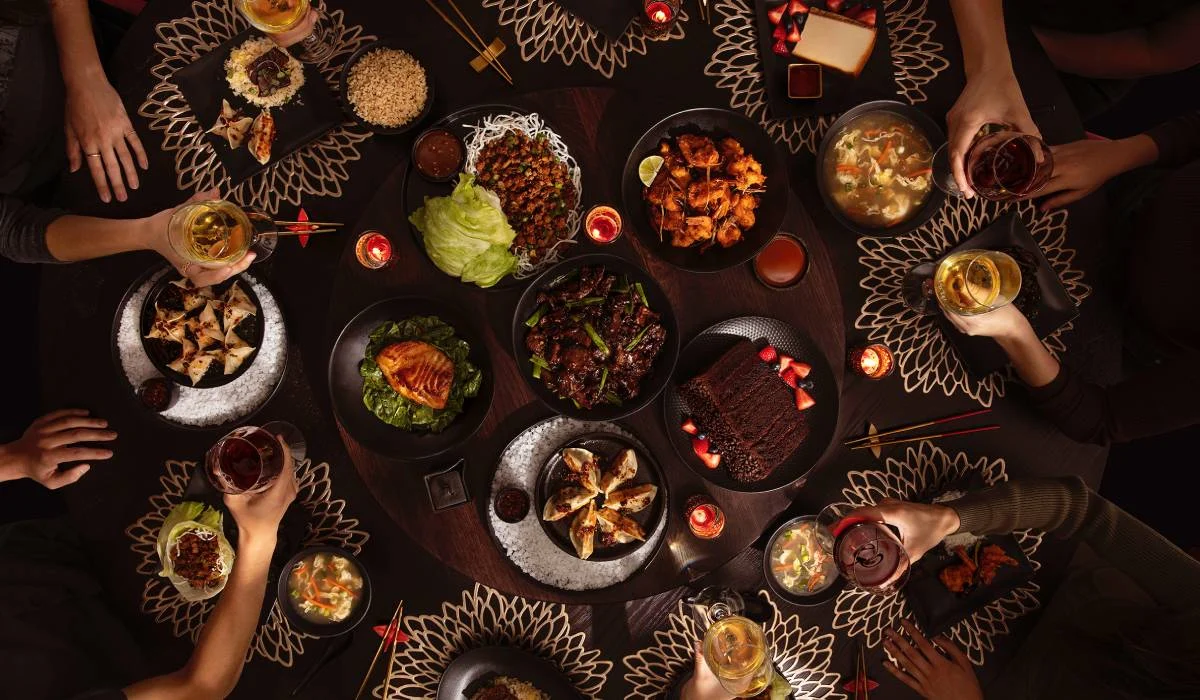
The casual dining landscape has long been defined by a select few icons that managed to scale high-quality, "polished" service across global markets. Among these, P.F. Chang’s China Bistro has historically occupied a unique position, bridging the gap between traditional sit-down service and a specialized culinary niche—Asian-inspired wok cooking—that few competitors have successfully replicated at scale. After a period of executive turnover and ownership transitions that left the brand searching for its core identity, P.F. Chang’s is currently undergoing a significant operational and financial transformation. Under the leadership of CEO Jim Mazany, who assumed the role in late 2025, the brand has reported a dramatic surge in both sales and foot traffic, signaling what leadership describes as a shift from a "comeback story" to a "growth story."
A Leadership Mandate Rooted in Hospitality Heritage
Jim Mazany’s appointment as CEO marked the end of a volatile period for the P.F. Chang’s executive suite. With a career spanning more than three decades in the polished casual sector, Mazany brought a pedigree that included tenures at Carlson Restaurants Worldwide (TGI Fridays), Applebee’s, and Joe’s Crab Shack. His most recent role prior to P.F. Chang’s was with SPB Hospitality, a multi-concept operator. Mazany’s arrival followed a rapid succession of leaders: he succeeded Brad Hill, who had transitioned from the COO/CFO role for a brief tenure. Before Hill, the brand was led by former Panera Bread executive Eduardo Luz, interim CEO Rohit Manocha, and Damon Adamolekun, who departed in 2023 to lead Red Lobster.
This period of transition coincided with a shift in ownership. In 2019, private equity firms Paulson & Co. and TriArtisan Capital Partners acquired the chain for approximately $700 million from Centerbridge Partners LP. The latter had previously purchased the brand for $1.1 billion in 2012. Analysts suggest that the fluctuations in valuation and leadership contributed to a "brand drift," where the chain’s original sense of urgency and culinary theater began to wane. Mazany’s primary objective upon taking the helm was to re-instill a "belief system" within the organization, focusing on the principle that the guest experience cannot exceed the employee experience.

Financial Trajectory and Market Re-Positioning
The financial metrics following the second quarter of the current fiscal year indicate that the internal cultural shift is translating into market share. When Mazany took over, P.F. Chang’s average-unit volumes (AUVs) hovered around $4.2 million, with total revenue just under the $1 billion mark. By the end of Q2, the brand reported same-store sales growth of 7.7 percent, bolstered by a significant 6.8 percent increase in traffic. This performance is particularly notable in a broader casual dining sector that has struggled with declining traffic due to inflationary pressures on consumer spending.
Perhaps the most telling metric of the brand’s revitalization is its relative performance against its peers. According to internal data and industry benchmarks, P.F. Chang’s rose from 22nd to 3rd in sales and traffic rankings within its specific competitive set. Leadership has set an aggressive long-term goal of reaching $6 million in AUV per restaurant. Currently, the brand is on track to reach between $4.6 million and $4.7 million by the end of the year.
The "Theatrical" Culinary Strategy
Central to the brand’s resurgence is a return to experiential dining, a strategy designed to differentiate P.F. Chang’s from the rise of fast-casual and delivery-centric models. Mazany has emphasized that value in the modern dining market is not merely about the lowest price point, but about the "exchange for the dollars spent" through unique, memorable moments.
To achieve this, the brand has leaned heavily into "theatrical" presentations:

- The Sushi Boat: Launched as part of the "Summer in Tokyo" menu, this item is served with dry ice, creating a "cloud" effect that moves through the dining room, designed to capture social media attention and create a shared experience among diners.
- Tableside Service: New menu items, such as dumplings and specific rolls, now feature tableside sauce pours or smoke finishes, such as the Smoking Kung Pao Dragon Roll.
- Barbell Pricing: While focusing on premium experiences, the brand implemented a "barbell ladder" strategy. This includes $13.99 Lunch and $16.99 Dinner Specials alongside high-end offerings like the $89.99 five-course "Sizzle. Share. Celebrate." experience.
This strategy proved highly effective during peak holiday periods. P.F. Chang’s reported that Valentine’s Day was the busiest in the company’s history, with 173 of its 200 U.S. locations setting individual sales records. Mother’s Day followed as the second-busiest day on record.
Technological Integration and Operational Efficiency
While the front-of-house focuses on theater, the back-of-house has undergone a technological overhaul under Chief Technology Officer Chris Patten. Patten, a five-year veteran of the company, has been tasked with integrating artificial intelligence and advanced analytics into the brand’s daily operations.
Unlike many industry players using technology to reduce headcount, Mazany asserts that P.F. Chang’s is using AI to augment human productivity. Key areas of technological focus include:
- Predictive Analytics: Improving labor deployment and scheduling to ensure peak efficiency during high-traffic periods.
- Procurement and Ordering: Streamlining the supply chain to manage food costs more effectively without compromising on the quality of fresh ingredients required for wok cooking.
- Digital Engagement: Leveraging data to find customers "where they are," which has resulted in over 250 million marketing impressions this year.
This technological push is supported by a revamped marketing department led by CMO Holly Smith. Smith, who has a 15-year professional history with Mazany, was brought in to "widen the funnel" and re-establish the brand’s cultural relevance across multiple digital and social channels.

Global Expansion and Diversification
P.F. Chang’s currently operates a diverse business model that extends far beyond its 200 domestic full-service restaurants. The brand’s global footprint includes more than 100 international locations managed by 25 franchise partners, generating approximately $300 million in annual revenue. Additionally, the brand maintains a robust presence in non-traditional venues, such as airports, and a flourishing Consumer Packaged Goods (CPG) business.
In partnership with ConAgra Brands, P.F. Chang’s-branded frozen meals and sauces are sold in approximately 50,000 retail locations, contributing $220 million to the brand’s ecosystem annually. Despite this broad reach, Mazany has expressed a disciplined approach to future physical expansion. The current five-year plan outlines the opening of 40 new U.S. stores and 50 to 75 international locations. Mazany emphasizes that the brand must "earn the right to scale" through consistent execution at existing locations before aggressively chasing unit growth.
Corporate Responsibility and the "Spirit of the Zodiac"
As the business stabilizes and returns to profitability, leadership has turned its attention to long-term philanthropic initiatives. Coinciding with the upcoming 2026 "Year of the Horse" in the Chinese zodiac, P.F. Chang’s has launched a partnership with the Starlight Children’s Foundation.
The "Spirit of the Zodiac" campaign is designed as an annual giving initiative. The inaugural phase, "Year of the First Horse: Spirit of Strength," features "Bao," a plushie based on the brand’s iconic horse logo. For every Bao purchased by a customer, the company donates an identical plushie to children in hospitals across the U.S., with a goal of raising up to $1 million for pediatric care. This initiative is accompanied by a children’s book authored by Jenny Liao, further cementing the brand’s effort to connect with families and community values.

Industry Analysis: The Path Ahead
The recovery of P.F. Chang’s serves as a case study in the importance of brand heritage within the casual dining sector. In an era where many chains have attempted to simplify menus to the point of homogenization, P.F. Chang’s has found success by doubling down on the complexities of its original premise: fresh, wok-fired Asian cuisine served in an upscale environment.
However, challenges remain. The "polished casual" segment is highly susceptible to fluctuations in discretionary income. While the brand’s "barbell" pricing strategy provides a buffer, sustained growth will depend on its ability to maintain the high labor standards required for its "theatrical" service model in a tight labor market. Furthermore, as the brand approaches its AUV goal of $6 million, it will face stiff competition from other high-performing casual icons like The Cheesecake Factory and Darden Restaurants’ portfolio.
For now, the data suggests that Mazany’s "PRIDE" philosophy—Passion, Respect, Integrity, Discipline, and Execution—is resonating. By stripping away operational "shackles" and leaning into culinary differentiation, P.F. Chang’s has positioned itself not just as a survivor of the casual dining shakeout, but as a leader in the segment’s next evolution. As Mazany concludes, "P.F. Chang’s is back," and the industry will be watching closely to see if this momentum can be sustained through its ambitious five-year expansion plan.