admin
admin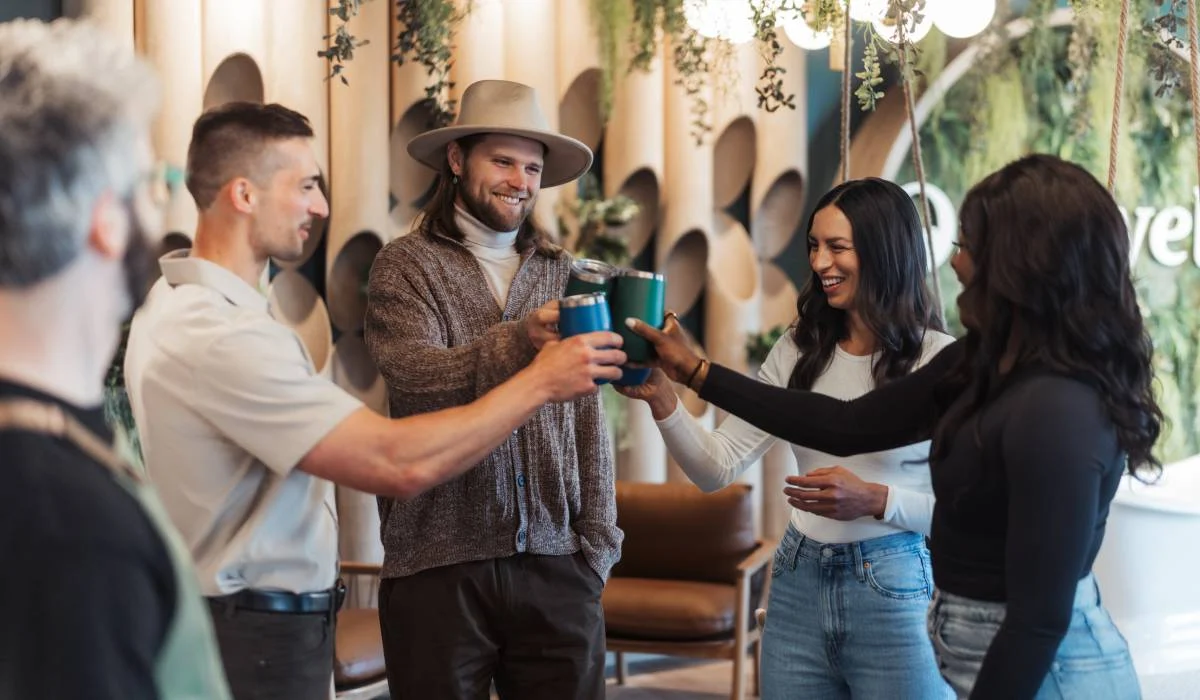
The traditional boundaries between the beverage industry and the wellness sector are blurring as Oakwell Beer Spa, a Denver-based hospitality concept, scales a business model designed to capitalize on the "experience economy." Founded by Jessica and Damien Zouaoui, the brand utilizes a "social day spa" framework that pairs private hydrotherapy suites with a craft beer and wine taproom. By focusing on high-margin appointments, streamlined operations, and a demographic shift toward mindful consumption, Oakwell is positioning itself as a premier franchising opportunity within a hospitality landscape that is increasingly moving away from alcohol-centric entertainment.
The Genesis of a Social Wellness Concept
The origins of Oakwell Beer Spa can be traced back to a rainy afternoon in Zakopane, Poland, where Jessica and Damien Zouaoui, two former corporate professionals from New York, discovered their first beer spa. Having recently resigned from their roles in human resources and sales-marketing respectively, the couple had embarked on an indefinite global tour with the specific goal of identifying a scalable business idea that had not yet been fully realized in the American market.
During their travels through 25 countries, the Zouaouis conducted informal market research on global spa cultures. They observed the communal nature of Japanese onsens, the multi-generational accessibility of South Korean jjimjilbangs, and the therapeutic traditions of wine spas in France and Spain. This international exposure led to a critical realization: the American spa model was often viewed as a solitary, expensive, and female-skewing luxury service. In contrast, international wellness traditions were frequently social, inclusive, and integrated into daily life.
The Zouaouis landed in Denver, Colorado, in January 2019, choosing the city for its robust craft beer culture and health-conscious population. Despite the challenges posed by the global pandemic, the first Oakwell Beer Spa opened in February 2021. The immediate success of the flagship location—which remained fully booked from 8 a.m. to 11 p.m. shortly after launch—validated the couple’s hypothesis that consumers were seeking novel, experience-based reasons to leave their homes.
Operational Innovation and the High-Margin Model
For prospective franchisees, the primary appeal of the Oakwell model lies in its operational efficiency and the avoidance of common hospitality pain points. Unlike traditional full-service spas or restaurants, Oakwell does not require highly specialized labor or complex kitchen infrastructure.
The business operates around a small number of high-value appointments. With average tickets running approximately $300 and a capacity for roughly 27 appointments per day, the revenue per square foot is significantly higher than that of a standard taproom. Furthermore, the staffing model is simplified; the company employs "beer therapists" who primarily handle guest check-ins, room turnover, and beverage service. By eliminating the need for licensed massage therapists or estheticians, the model avoids the recruitment and retention challenges that plague the broader wellness industry.
From a facilities standpoint, the lack of a commercial kitchen is a major advantage. There are no hood systems to maintain, no grease traps to clean, and no complex health inspections related to hot food preparation. The food program is limited to high-quality, pre-packaged charcuterie and chocolates, while the beverage program relies on a 10-tap self-pour wall. This self-service technology reduces labor costs and allows guests to sample products at their own pace, further enhancing the social atmosphere.
The Guest Experience: From Taproom to Suite
The Oakwell experience begins in a taproom designed to evoke the aesthetic of a boutique hotel lobby rather than a traditional industrial brewery. The space features plush velvet furniture, greenery, and a custom-curated sensory environment including specific scents and a soundtrack of Bossa Nova and French pop.
Upon arrival, guests are directed to the self-pour wall, which features a rotating selection of local beers, ciders, wines, and "Spa Sidekick," a signature cucumber-lemon gose developed in collaboration with Denver’s Spice Trade Brewery. This "spa beer" serves as a bridge between the beverage and wellness components of the visit.
The core of the service takes place in private spa suites. Each suite is equipped with an infrared sauna, a rain shower, and a hydrotherapy tub. The bathwater is infused with beer ingredients—hops, malt, and medicinal herbs—selected for their antioxidant and skin-soothing properties. Guests have 90 minutes to cycle through the amenities, with room service available via a call bell. The experience concludes in a relaxation room featuring zero-gravity massage chairs, ensuring a high-touch, premium feel throughout the duration of the visit.
Data-Driven Shifts in Consumer Behavior
The success of Oakwell Beer Spa coincides with a significant shift in how younger generations, particularly Gen Z and Millennials, approach alcohol. Data from various market research firms indicates that younger consumers are drinking less than previous generations, but they are more willing to spend on premium, "Instagrammable" experiences.
In the Oakwell model, alcohol is an "ancillary enhancement" rather than the primary focus. Guests average approximately two pints per visit, and the facility enforces a 7 percent ABV cap on its beer offerings. This approach aligns with the "sober-curious" and "moderate drinking" movements. Jessica Zouaoui notes that for the modern consumer, drinking is no longer the sole reason for going out; it is a ritualistic part of a larger experience.
This shift is also reflected in the types of beverages guests prefer. Oakwell’s internal data shows that while craft beer enthusiasts might favor complex, high-IBU (International Bitterness Units) IPAs or traditional German lagers, spa guests gravitate toward lighter, fruit-forward, and playful offerings, such as orange creamsicle ales or tart goses. This insight has allowed Oakwell to refine its beverage program to better serve its specific clientele.
Strategic Partnerships and Industry Reaction
The craft beer industry has reacted positively to Oakwell’s presence, viewing it as a "prestige account" that offers unique brand awareness. Brian Wesler, sales operations director for Wilding Brands—which represents major Colorado names like Denver Beer Co. and Great Divide Brewing Co.—emphasizes that Oakwell provides a memorable environment for discovery.
"It’s just not as easy as rolling up the garage doors and having beer flowing anymore," Wesler said, acknowledging the saturation of the taproom market. He notes that partners like Oakwell provide a reason for people to "keep hanging out," transforming a simple transaction into a lasting brand connection.
Karl Wolf of Diebolt Brewing echoes this sentiment, suggesting that in a crowded market where consumers face "a 300-foot wall of beer" at retail stores, the authenticity of an experience is what creates value. He argues that Oakwell’s ability to provide a unique, shareable story is more valuable than traditional volume-based accounts in the current economic climate.
Chronology of Oakwell Beer Spa’s Development
- 2017–2018: Jessica and Damien Zouaoui resign from corporate roles in New York and begin a 25-country research trip.
- Late 2017: The couple visits a beer spa in Zakopane, Poland, identifying the concept as a potential business model for the U.S.
- January 2019: The Zouaouis arrive in Denver, Colorado, to begin site selection and secure financing.
- 2019–2020: The founders self-perform much of the initial construction for the flagship location to manage costs.
- February 2021: Oakwell Beer Spa opens its first location in Denver during the COVID-19 pandemic.
- 2023: The company opens a second location in Highlands Ranch, Colorado, serving as the "polished prototype" for future franchises.
- 2024 and Beyond: Oakwell begins active recruitment for franchisees in new markets, including Kansas City, as part of a national expansion strategy.
Broader Impact and Future Outlook
Oakwell Beer Spa represents a broader trend in the hospitality industry: the move toward "competitive socializing" and "wellness-tainment." By decoupling beer from the "bar crawl" mentality and reattaching it to the wellness sector, the brand has created a defensible niche that appeals to a wide variety of demographics, including couples, tourist groups, and corporate teams.
The implications for the craft beer industry are profound. As taproom growth slows and competition for shelf space intensifies, breweries must find new ways to reach consumers. Oakwell’s success suggests that the future of craft beer may lie in non-traditional venues where the liquid is part of a curated lifestyle experience.
As Oakwell moves into its franchising phase, its ability to maintain the "high-touch" hospitality feel while scaling the streamlined operational model will be the ultimate test of its longevity. However, with a business plan that addresses current labor shortages, high consumer demand for experiences, and a shifting cultural relationship with alcohol, Oakwell Beer Spa is positioned as a significant disruptor in both the wellness and beverage sectors.