Jia Lissa
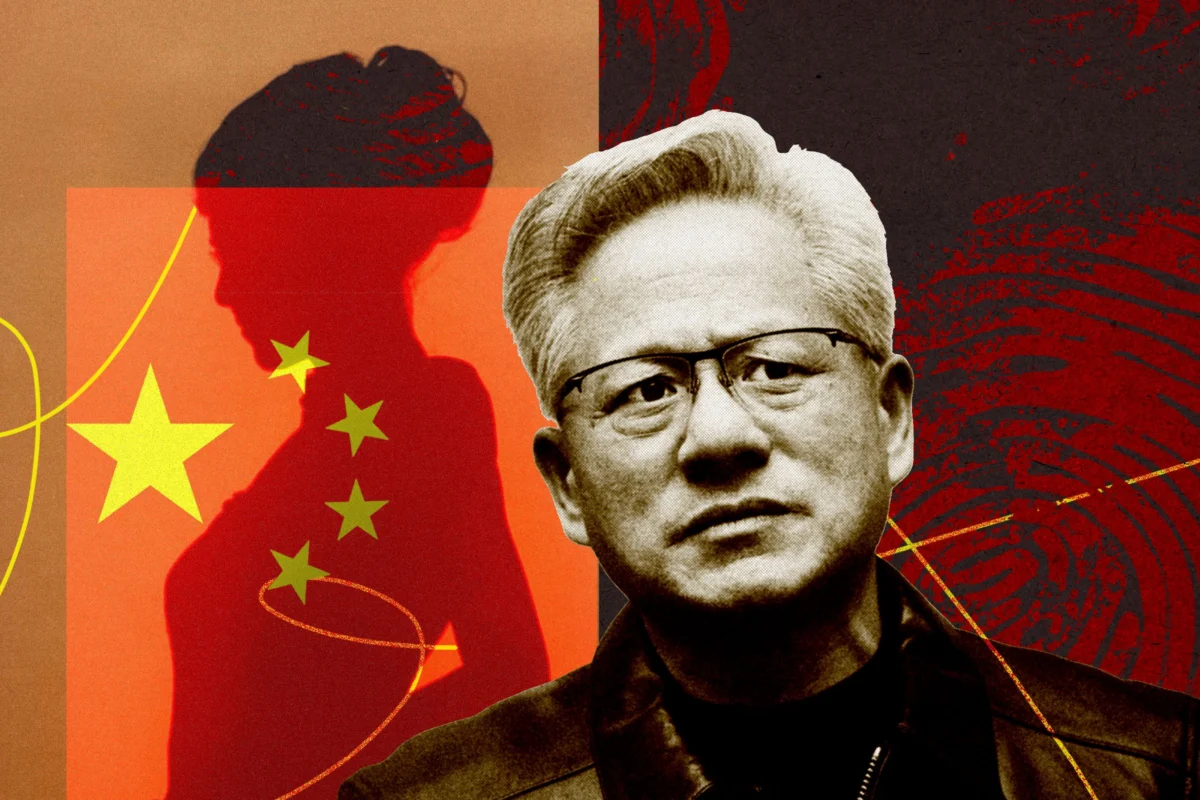
The halls of government, military, and intelligence agencies resonate with a specific counterintelligence mantra during briefings: "If she’s a 10 and you’re a 5, she’s a spy!" This stark warning, succinctly articulated by the US Army’s Counterintelligence Command as "10 + 5 = honeytrap," underscores a fundamental principle: extraordinary romantic interest from an exceptionally attractive individual towards someone of ordinary standing often signals ulterior motives. While this axiom typically targets individuals in sensitive government positions, its implications have now reached the highest echelons of corporate America, specifically ensnaring Jensen Huang, the enigmatic CEO of Nvidia, a company at the very epicenter of the 21st century’s most profound technological and geopolitical shifts.
Jensen Huang, a centibillionaire and the visionary leader of Nvidia, hardly leads an "ordinary existence." His company stands as a titan in the semiconductor industry, crucial for the burgeoning artificial intelligence sector and a key player in the escalating technological rivalry between global superpowers. Given Nvidia’s strategic importance, it is undeniably a prime target for foreign intelligence agencies seeking to gain an advantage. This context makes the revelations of a stock-shaking scandal, blending allegations of infidelity, international espionage, high-level political influence within the Trump administration, and the multi-trillion-dollar AI industry, all the more astonishing and concerning.
The Unfolding Scandal: A Detailed Account
The saga began to unravel just before Halloween, when a meticulously reported story in The New York Times, bearing six bylines, first brought to light allegations that Huang was the target of a sophisticated Chinese spy plot. According to these reports, sometime between 2024 and 2025, Huang allegedly engaged in an affair with Alice Huang (no relation), a former executive at Megaspeed, a Singapore-based cloud provider. US intelligence agencies, gravely concerned, subsequently warned top US officials that they believed Alice Huang was an asset of Chinese intelligence.
Nvidia’s board of directors swiftly launched its own internal investigation into the matter. While the board has, to date, stated it has "no reason to believe that either national security or Nvidia secrets were compromised," this preliminary assessment offers little comfort to those monitoring the situation, as the potential ramifications extend far beyond direct data theft. The mere existence of such a relationship, particularly with an alleged foreign intelligence asset, raises profound questions about corporate governance, national security vulnerabilities, and the integrity of critical supply chains.
China has vehemently denied the allegations. A spokesperson for the Chinese foreign ministry, addressing the accusations on a Monday, dismissed the narrative of "so-called Chinese spies" as "entirely based on groundless speculation—it’s nothing more than slander and smearing." Similarly, Megaspeed, the company where Alice Huang previously served as an executive, issued a statement via LinkedIn on Monday, asserting that US authorities had found "no evidence of any violations concerning the illicit transfer of chips or any illegal activities."
Despite these denials, reports from The New York Times and the Financial Times suggest that US intelligence officials maintain their assessment: Alice Huang, also known as Huang Le, was indeed reporting to China’s Ministry of State Security (MSS) intelligence agency. It is important to clarify that while she is believed to be an "asset"—an outsider who aids an intelligence agency, sometimes for compensation, sometimes out of ideological alignment—there is no indication that she was a formal "employee" or "officer" of Chinese intelligence. Her background as a one-time Chinese state journalist could have provided a cover or facilitated connections, making her a potentially valuable asset for intelligence gathering.
Chronology of Events
The intricate timeline of this scandal reveals a slow-burning intelligence operation and its eventual public eruption:
- Circa 2010s: Jensen Huang reportedly established a connection with Kang Weigh, Alice Huang’s husband. This early relationship could have laid groundwork for later interactions.
- 2024: Public reports began linking Jensen Huang to the Megaspeed executive, Alice Huang, signaling the start of their alleged affair.
- Between 2024 and 2025: The alleged affair between Jensen Huang and Alice Huang commenced, placing a key US tech executive in a potentially compromised position.
- 2025: Jensen Huang reportedly hired Risa Heller’s crisis communications firm, known for its expertise in managing public sex scandals. This move suggests an awareness of impending public relations challenges.
- 2025: US government-requested audit of Megaspeed revealed that the company could not account for approximately 50,000 Nvidia chips it had purchased, raising early alarms about potential diversion to unauthorized entities, possibly Chinese intelligence.
- May [2026]: Secretary of State Marco Rubio reportedly briefed then-President Donald Trump on concerns regarding Jensen Huang’s potentially compromising relationship, just before Huang joined Trump on Air Force One for a trip to China. This classified memo warned officials about the intelligence threat.
- Earlier this year [2026]: President Trump’s Air Force One made an unscheduled stop in Alaska to pick up Jensen Huang, who then joined a delegation of tech leaders, including Elon Musk and Tim Cook, en route to Beijing. This underscored Huang’s close relationship with the administration.
- Just before Halloween [2026]: The New York Times broke the story, bringing the allegations of the Chinese spy plot to public attention and sending shockwaves through the tech and political worlds.
- Monday [November 8, 2026]:
- China’s Foreign Ministry publicly denied the allegations, calling them "groundless speculation."
- Megaspeed issued a statement via LinkedIn, asserting no evidence of illicit chip transfers.
- Donald Trump held a press conference, denying prior knowledge of Alice Huang’s alleged espionage, stating, "I didn’t hear about it then, but a lot of people have heard about it, and Jensen totally denies that."
- WIRED reported on Jensen Huang’s hiring of a crisis communications firm in 2025.
- Tuesday [November 9, 2026]: The New York Times further reported on Marco Rubio’s May briefing to President Trump, directly contradicting Trump’s Monday denials of prior knowledge.
- Past Month [leading up to Nov 2026]: Nvidia’s stock plummeted by a quarter, reflecting investor anxiety and the tangible impact of the unfolding scandal.
The Geopolitical Chessboard: US-China Tech Rivalry
This scandal unfolds against a backdrop of intense geopolitical competition, particularly in the realm of advanced technology. China has explicitly elevated economic espionage to a core pillar of its economic and military development strategy. Over the years, Beijing has been accused of stealing designs for a wide array of critical technologies, ranging from US fighter jets to solar panels and even commercial paint recipes. This systemic approach underscores China’s determination to achieve technological parity and, eventually, supremacy.
"Honeypots" or "honey traps"—the strategic deployment of an alluring operative to seduce or cultivate a relationship with a key target—are a well-established and infamous tactic in the intelligence playbook. French officials, for instance, have been warning about Chinese honeypots since at least 2011, citing cases such as a pharmaceutical researcher who was seduced and subsequently blackmailed by a Chinese spy operation.
Silicon Valley, as the undisputed global hub of technological innovation and a burgeoning center of political and economic power, has become a primary focus for Chinese intelligence operations. Past incidents include the case of Fang Fang, a Chinese national who spent years cultivating relationships with Bay Area politicians, including then-US Representative Eric Swalwell, though no charges were ever brought against her. US business executives traveling to China have become accustomed to stringent security protocols, including leaving their regular phones and computers at home and using "burner" devices to prevent the installation of spyware or malware. The threat is so pervasive that in 2012, then-Defense Secretary Leon Panetta and his team were advised to shower in the dark during a trip to China, fearing hotel rooms might be bugged. More recently, the US government explicitly banned personnel working in China and Hong Kong from engaging in romantic or sexual relationships with Chinese citizens due to the heightened threat of honeypots. Furthermore, US officials, in conjunction with Five Eyes allies, have warned about China’s increasingly sophisticated "LinkedIn espionage," utilizing the business networking site to recruit and cultivate relationships with unsuspecting executives.
Alice Huang’s former employer, Megaspeed, plays a significant role in this geopolitical drama. The company is a major player in cloud services across the Pacific region, specializing in the advanced computer chips that are the very heart of Nvidia’s business. The Biden administration had previously implemented sharp restrictions on the export of cutting-edge chips globally, aiming to slow China’s advancements in AI. However, Jensen Huang had successfully lobbied the Trump administration to loosen these very restrictions. This confluence of Huang’s alleged affair, his company’s critical technology, Megaspeed’s role as a customer, and the relaxation of export controls creates a potent cocktail of national security concerns.
Adding to these concerns, reports have circulated for at least a year that the US government was worried Megaspeed was diverting chips to Chinese intelligence agencies. This allegation carries massive consequences for the global AI race, potentially undermining US efforts to maintain a technological lead. Bloomberg recently reported that Megaspeed’s subsidiaries have purchased billions of dollars worth of Nvidia chips. Furthermore, an audit requested by the US government last year reportedly found that Megaspeed initially could not account for some 50,000 chips it had purchased, a significant red flag pointing to potential illicit transfers.
Political Dimensions: The Trump Administration’s Involvement
The scandal also casts a long shadow over the Trump administration, raising serious questions about the extent of official knowledge and action regarding the intelligence threat. Jensen Huang and President Trump had developed a uniquely close professional relationship. Huang had met with Trump multiple times, actively pushing for the relaxation of Biden-era export controls, which Trump had indeed repeatedly relaxed. This close relationship was further evidenced by Huang’s reported $25 million donation to Trump’s ballroom project. Earlier this year, in a striking display of proximity, Trump’s Air Force One made a special stop in Alaska to pick up Huang, who then joined the presidential delegation, including other tech titans like Elon Musk and Tim Cook, en route to Beijing. Huang also attended a White House state dinner for Chinese President Xi Jinping and Trump, and Trump, in turn, awarded him a National Medal of Science earlier this fall.
Given this history, Trump’s public denial on Monday—"I didn’t hear about it then, but a lot of people have heard about it, and Jensen totally denies that"—was immediately met with skepticism, especially after he recounted asking Huang directly if he knew Alice Huang was a spy, to which Huang reportedly replied, "I had no idea that she was a spy." However, this denial was quickly contradicted by The New York Times, which reported the very next day that then-Secretary of State Marco Rubio had indeed briefed Trump in May, specifically warning about Jensen Huang’s potentially compromising relationship.
The veracity of Trump’s claims will undoubtedly face intense scrutiny, particularly from the newly Democratic Congress, which is likely to invoke the famous Watergate maxim: "What did the president know and when did he know it?" The timeline shows Jensen Huang had been publicly linked to the Megaspeed executive since at least 2024. The implications that Trump knew about a potential counterintelligence threat involving a key US tech leader and a major US chip customer, yet did nothing for a year, would constitute one of the most significant counterintelligence failures of the past decade.
Corporate Fallout and Reputational Damage
For Nvidia, the consequences are already severe. Shareholders have enjoyed an unprecedented ride, with Nvidia’s stock soaring by approximately 600 percent over the past five years, propelling it to become the world’s second-most valuable company. However, in the past month alone, the stock has plummeted by a quarter, wiping billions off its market capitalization. This immediate financial fallout is likely just the beginning, as lawsuits, including those initiated by its own shareholders, are reportedly looming. These lawsuits could center on allegations of breach of fiduciary duty, failure to disclose material risks, or misleading investors regarding the company’s security posture and the integrity of its relationships.
Jensen Huang now finds himself in an unenviable and deeply awkward position. His reputation as AI’s foremost evangelist and a visionary leader at the frontier of technological innovation is severely tarnished. The questions surrounding his involvement are stark: Was he merely naive or an "idiot," blissfully unaware that his paramour might have been a foreign intelligence asset? Was he "reckless" with his own reputation, his fiduciary responsibility to Nvidia, and, by extension, the technological security of the United States? Or, most disturbingly, was he a "witting accomplice" in undermining US national security, perhaps motivated by business interests, political influence, or personal entanglements?
Corporate America’s tolerance for CEO misbehavior, particularly involving inappropriate relationships and ethical lapses, has dramatically shrunk in recent years. Numerous high-profile CEOs from diverse sectors, including Nestlé, Kohl’s, BP, NBCUniversal, and Norfolk Southern, have either resigned or been forced out due to inappropriate relationships that violated company standards. If Nvidia were any other company and Jensen Huang any other CEO, the known facts of this scandal would likely be sufficient to demand his immediate resignation or removal. The sheer scale of Nvidia’s importance and Huang’s personal stature might, for now, insulate him from such immediate consequences, but the pressure is mounting.
Future Outlook and Lingering Questions
The scandal guarantees a turbulent period for all parties involved. The newly Democratic Congress is poised to launch aggressive inquiries, demanding answers from the Trump administration: When were top officials, including the President, fully briefed about this intelligence threat? What specific communications, if any, were made to Nvidia or its CEO? And critically, should US intelligence agencies have taken more decisive action to prevent Alice Huang from gaining access to Nvidia and its CEO?
Historically, honeypot scandals have led to severe consequences, including prison sentences. A former adviser was arrested just last year in a similar plot, and while acquitted of economic espionage, he was convicted for making false statements to investigators, highlighting the gravity of such investigations.
This unfolding drama represents a critical test for US national security, corporate governance, and the delicate balance of power in the global technology landscape. The implications for Nvidia, the broader AI industry, and US-China relations are profound and far-reaching. As November progresses, it remains unclear if this will be the biggest scandal of the month, but its significance in revealing the complex and dangerous intersections of technology, power, and espionage is undeniable. The questions raised by the alleged affair between Jensen Huang and a suspected Chinese intelligence asset will continue to reverberate, demanding transparency, accountability, and a reassessment of how vital national assets are protected in an era of relentless geopolitical competition.