Jia Lissa
Just one week removed from Election Day, Washington is already bracing for a tumultuous political landscape, with two high-profile sagas dominating the capital’s attention. Defense Secretary Pete Hegseth is now firmly in the crosshairs of a Democratic-led impeachment push, while House Republicans are moving aggressively to investigate Nvidia CEO Jensen Huang’s alleged links to a Chinese spy. These developments signal an immediate and intense period of legislative oversight and political confrontation as the incoming Congress prepares to convene.
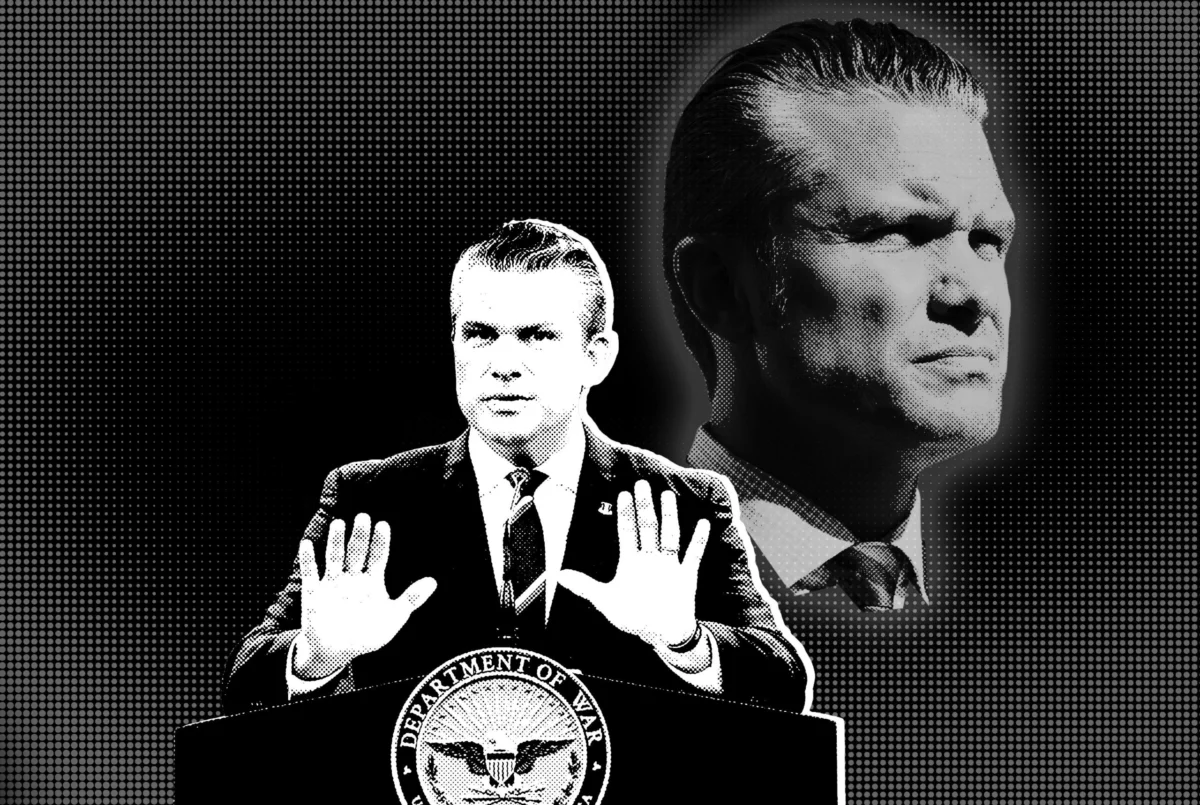
The Gathering Storm for Secretary Hegseth
Secretary of Defense Pete Hegseth finds himself navigating a different kind of war – a political one that threatens to define the remainder of his tenure. Administration officials, speaking to Inner Loop, concede that they anticipated a barrage of investigations from the new Congress. Now, they believe Hegseth is poised to become the Democrats’ paramount target, with plans already underway to construct an impeachment case designed to be "as airtight as possible."
"Hegseth is now a passenger in whatever comes next," remarked one source close to President Donald Trump, highlighting the perilous position the Defense Secretary now occupies. "And all the outcomes are potentially damaging."
House Democratic aides have confirmed to Inner Loop that an impeachment inquiry against Hegseth is highly probable. Crucially, Democrats are reportedly strategizing to narrow the scope of charges against him, focusing on issues that have also drawn criticism from Senate Republicans. This calculated approach aims to garner crucial bipartisan support, essential for any impeachment effort to succeed beyond the House.
Impeachment Looms Amidst Controversial Tenure
Hegseth’s time at the helm of the Defense Department has been marked by significant controversy and a series of actions that have deeply divided Washington. A staunch advocate for the deeply unpopular and costly Iran war, his tenure has been characterized by a relentless effort to reshape internal departmental processes. These reforms have included the controversial firing of numerous flag officers and the blocking of promotions based on criteria that critics argue disproportionately affected women and people of color within the military ranks.
Beyond internal restructuring, Hegseth has also been linked to several high-profile incidents that have raised national security and ethical concerns. Among these is "Signalgate," a notorious incident involving the accidental transmission of sensitive war plans, which ignited a firestorm over operational security within the Pentagon. Additionally, he has overseen controversial military strikes against purported drug traffickers in the Caribbean and Pacific Ocean, actions that some have characterized as "extrajudicial killings" and have raised questions about their legality and congressional authorization.
A Chronology of Conflict and Legislative Maneuvers
The path to Hegseth’s current predicament has been building over time. Just last night, House Republicans successfully tabled an impeachment effort initiated by Representative Thomas Massie (R-Kentucky). Massie’s articles of impeachment levied serious accusations against Hegseth, including waging the Iran war without explicit congressional approval and directing "extrajudicial killings." While Massie’s attempt was ultimately blocked, the sentiment it represents signals a growing bipartisan appetite for accountability.
Following the failure of Massie’s resolution, House Democratic leader Hakeem Jeffries indicated that discussions regarding Hegseth’s future were already on the agenda. "We’ll have that conversation at the appropriate time," Jeffries told reporters, confirming consultations with key Democratic figures: Adam Smith, soon to chair the Armed Services Committee, and Jamie Raskin, the incoming chair of the Judiciary Committee. This underscores the seriousness and strategic planning behind the Democrats’ impending actions.
Hegseth, for his part, has shown no signs of backing down. In a televised appearance at the Pentagon earlier this week, he publicly defended the Iran war and Vice President JD Vance’s role in it, stating, "I agree with what the president said, when he said, ‘Hey, if I had to do this all over again, would we do it again? Absolutely.’" This defiant stance suggests that any impeachment proceedings will be met with fierce resistance.
Bipartisan Concerns and Shifting Senate Dynamics
The Democratic strategy to narrow the charges against Hegseth is a direct response to the complex political arithmetic required for conviction in the Senate. Historically, impeachment trials of cabinet secretaries are exceedingly rare, and securing the necessary two-thirds majority (67 votes) for removal is an uphill battle, especially in a politically polarized environment. However, the unique circumstances surrounding Hegseth’s tenure offer a potential pathway for bipartisan cooperation.
Several of the issues that form the basis of Democratic complaints have previously been voiced by Republicans. Senator Roger Wicker, for instance, the current chair of the Senate Armed Services Committee, has openly criticized Hegseth’s cuts to flag officer positions. Wicker even reportedly threatened to block a Trump nominee at one point unless the Pentagon provided requested documents, indicating a willingness to challenge the Secretary.
The recent midterm elections have dramatically reshaped the Senate landscape, providing a crucial advantage to Democrats. With Democrats set to take control of the Senate next year, the option for the Republican majority leader to simply dismiss all charges—as might have been considered with Massie’s "overly broad" articles—is now off the table. This shift significantly increases the stakes for Hegseth.
While some of Hegseth’s most vocal Republican detractors are departing Congress at year-end—including Senators Susan Collins (Maine), Thom Tillis (North Carolina), and Bill Cassidy (Louisiana), who lost reelection, and Senators Joni Ernst (Iowa) and Mitch McConnell (Kentucky), who are stepping down—a core group of Republican senators remains publicly critical of his performance. This group includes Senator Wicker, Senator Mike Rounds (South Dakota), Senator Rand Paul (Kentucky), Senator Lisa Murkowski (Alaska), and Senator Todd Young (Indiana). Their continued dissatisfaction brings Democrats closer to the elusive 67-vote threshold required for conviction, making the Democratic impeachment inquiry’s focus on specific, bipartisan-appealing issues even more critical.
The Iran War and DoD Reforms: A Legacy Under Fire
The "deeply unpopular and costly Iran war" stands as a central pillar of the criticism leveled against Secretary Hegseth. While specific details of the conflict are often classified, its unpopularity likely stems from concerns over military expenditures, potential loss of American lives, the destabilization of a volatile region, and the perception of a lack of clear strategic objectives. A war waged without broad public or congressional consensus often garners significant political opposition, irrespective of its tactical successes.
Beyond foreign policy, Hegseth’s internal reforms at the Department of Defense have sparked widespread discontent. Accusations of "upending various internal processes" suggest a disregard for established protocols and institutional wisdom, potentially leading to organizational chaos and diminished morale. The allegations of firing generals and blocking promotions using criteria that "disproportionately affected women and people of color" point to serious concerns about diversity, equity, and inclusion within the military’s leadership structure, undermining efforts to build a more representative fighting force. These actions, if proven, could constitute abuses of power and undermine military readiness.
"Signalgate," while not explicitly detailed in its nature, involved the accidental transmission of war plans. Such a security lapse is a grave concern, potentially compromising national security, endangering personnel, and revealing sensitive strategic information to adversaries. It points to systemic failures in information handling and security protocols under Hegseth’s leadership.
Finally, the accusation of directing "extrajudicial killings" through military strikes against purported drug traffickers in the Caribbean and Pacific Ocean is perhaps the most serious. Such actions, bypassing traditional legal frameworks and potentially lacking explicit congressional authorization, raise profound questions about due process, international law, and the scope of presidential and defense secretary authority. These are precisely the types of charges that could resonate across the political spectrum, appealing to both constitutional conservatives and civil liberties advocates.
Nvidia, National Security, and the China Conundrum
Parallel to the unfolding drama surrounding the Defense Secretary, another critical national security issue is rapidly escalating on Capitol Hill. House Republicans are poised to launch an extensive investigation into Nvidia CEO Jensen Huang’s interactions with Alice Huang, an alleged Chinese spy and former tech executive (who is not related to the CEO). This probe places Congress on a direct collision course with President Trump, who has publicly defended Jensen Huang, the head of the world’s most valuable chip company.
Espionage Allegations Rock Tech Giant
The allegations against Alice Huang are serious, painting a picture of sophisticated state-sponsored espionage aimed at America’s technological crown jewels. According to revelations from The New York Times, Secretary of State Marco Rubio had previously drafted a memo for President Trump, warning that classified intelligence suggested Alice Huang, an executive at Megaspeed, had been recruited by China’s top intelligence agency, the Ministry of State Security (MSS). China has vehemently denied these espionage allegations, consistent with its typical posture on such matters.
The involvement of Nvidia, a titan in the semiconductor industry, elevates this probe to a matter of paramount national security. Nvidia’s advanced graphics processing units (GPUs) are not only critical for gaming and everyday computing but are also indispensable for cutting-edge artificial intelligence, high-performance computing, and military applications. Any compromise of its technology, intellectual property, or strategic direction could have profound implications for U.S. economic competitiveness and defense capabilities.
Congressional Pushback and Executive Branch Divide
The congressional push for an independent investigation gained momentum after a "Gang of Eight" briefing on Monday. This secretive group, comprising the top leaders from both parties in the House and Senate, along with the chairs and ranking members of the intelligence committees, receives highly classified intelligence updates. Officials, including Director of National Intelligence Jay Clayton and CIA Director John Ratcliffe, provided only broad outlines of the intelligence concerning Jensen Huang’s interactions. Lawmakers present at the briefing expressed deep dissatisfaction, noting a lack of clear answers regarding why Jensen Huang was not provided a defensive briefing and whether his initial exclusion from Trump’s trip to China this year was a direct result of the perceived national security risk.
The perceived stonewalling or insufficient detail from intelligence officials has only fueled Congress’s determination to act. On Tuesday, Brian Mast, chairman of the House Foreign Affairs Committee, announced his openness to issuing a subpoena to compel Jensen Huang’s testimony behind closed doors. This comes after an initial request sent last week by Mast, alongside Rick Crawford, chair of the House Intelligence Committee, and John Moolenaar, chair of the China select subcommittee, for Huang to appear before their respective panels later this month. The congressional leadership’s united front on this issue signals a significant legislative commitment to uncovering the truth, even if it means clashing with the executive branch.
The Strategic Stakes of Semiconductor Supremacy
The investigation into Jensen Huang’s interactions underscores the critical importance of semiconductor technology in the ongoing geopolitical competition between the United States and China. Both nations view chip manufacturing and design as vital for economic growth, technological leadership, and national defense. Allegations of Chinese espionage targeting a leading U.S. chip company like Nvidia strike at the heart of America’s technological sovereignty.
A successful Chinese espionage operation could grant Beijing access to proprietary designs, manufacturing processes, or strategic roadmaps, allowing it to accelerate its own technological development while undermining U.S. advantages. The broader implications extend to supply chain security, economic competitiveness, and the integrity of sensitive research and development. The public’s confidence in the security of critical U.S. industries and the government’s ability to protect them is also at stake. The outcome of this congressional inquiry will undoubtedly shape future U.S. policy regarding tech engagement with China and strengthen (or weaken) measures to counter industrial espionage.
A Congress Poised for Confrontation
As the new Congress prepares to take its seats, the twin specters of Secretary Hegseth’s potential impeachment and the Nvidia espionage probe highlight a period of intense scrutiny and political maneuvering. These are not merely isolated incidents but rather symptomatic of broader challenges facing the nation: accountability for executive actions, the integrity of national security, and the fierce global competition for technological dominance. The coming months promise to be a crucible for both the executive and legislative branches, testing their constitutional powers and their ability to navigate complex domestic and international crises. The outcome of these high-stakes battles will undoubtedly shape the political landscape for years to come.