admin
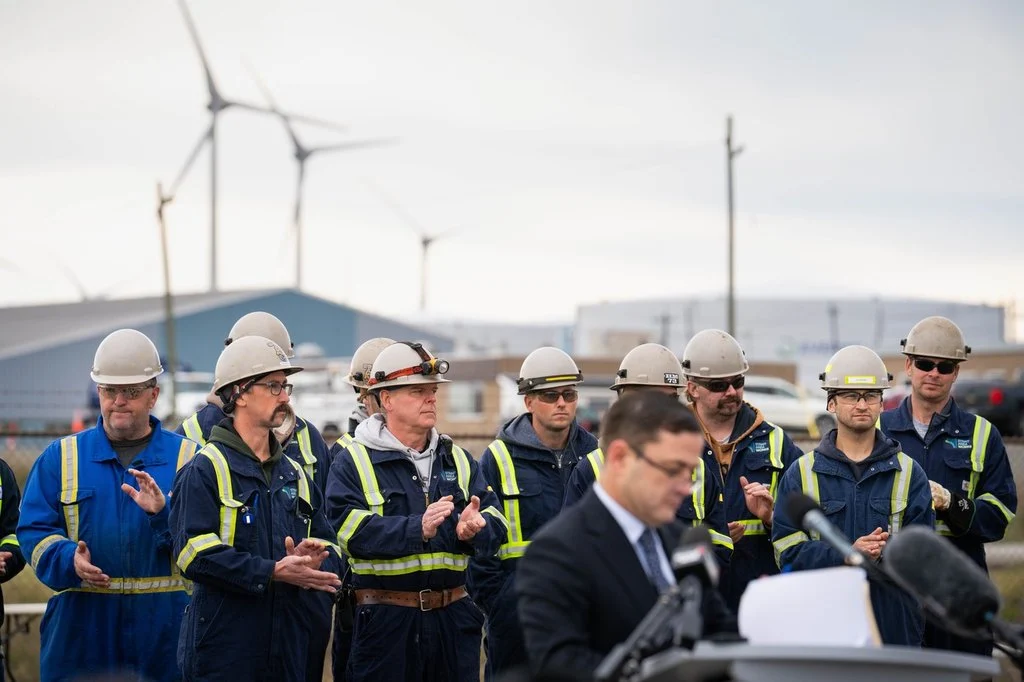
A proposed artificial intelligence data center in Point Tupper, Nova Scotia, slated to be Anthropic’s first Canadian facility, has rapidly become a flashpoint for debate, pitting the promise of significant economic investment and high-paying jobs against profound skepticism over long-term community benefits and environmental strain. Announced by EverWind, a company originally focused on green hydrogen, the 18,600-square-meter facility aims to house a massive computing infrastructure for the American AI firm, drawing immediate and widespread public opposition, including a Change.org petition that has garnered over 18,000 signatures in less than a week. The project, touted as the largest private investment in provincial history, thrusts Nova Scotia into a burgeoning national discussion about the true cost and benefits of hosting the resource-intensive AI industry.
Even from over 200 kilometers away in Dartmouth, N.S., retired military veteran Michael McCluskey has emerged as a vocal critic, articulating a sentiment shared by many Nova Scotians. For McCluskey, the Anthropic data center represents a familiar pattern: the province’s historical pursuit of ambitious, large-scale economic development projects that frequently fall short of their lofty promises. His concern is rooted in the fear that if Anthropic, a company with significant reported losses and an unproven business model, were to withdraw, the specialized site would be rendered useless, leaving Nova Scotia "holding the bag" without the anticipated economic uplift. "They don’t put (data centres) anywhere that’s prospering," McCluskey stated in an interview, questioning the rationale behind locating such facilities in "disadvantaged, economically desperate areas," implying a strategy by tech giants to leverage regions with lower land costs, potentially more amenable regulatory environments, and abundant, often subsidized, power.
The Proponents’ Vision: EverWind and Anthropic’s Strategic Alliance
EverWind’s Strategic Pivot and Investment
The Point Tupper data center is spearheaded by EverWind, a company that initially captured headlines with its ambitious plans for a wind-powered green hydrogen plant at its Cape Breton marine terminal. The data center, scheduled for completion by late 2027, marks a significant, albeit complementary, shift in strategy. EverWind intends to lease the massive facility to San Francisco-based Anthropic for a 20-year term, under financial terms that remain undisclosed. Company CEO Trent Vichie frames the data center as "the biggest private investment in provincial history," asserting its role as a crucial anchor for strengthening the existing community and generating substantial economic spinoffs, from increased restaurant patronage to heightened local business activity. EverWind has also clarified that while its hydrogen project remains active, the data center provides a major industrial use for its renewable energy portfolio and infrastructure, allowing for continued investment momentum in wind and transmission while the international hydrogen market matures. "The data centre helps maintain investment momentum in wind, transmission and shared infrastructure that can also support hydrogen and ammonia over time," the company stated via email, emphasizing that these investments are complementary but not mutually dependent. Vichie further highlighted the immediate local impact, noting that "more than 20 Nova Scotian contractors" were already engaged on the site, underlining the project’s capacity to multiply direct benefits across the region.
Anthropic’s Global AI Ambition
For Anthropic, a prominent American AI company, the move into Nova Scotia underscores its aggressive global expansion strategy. The company cites Canada as the sixth-largest worldwide user of its Claude AI model, making it a logical location for its first Canadian data center. Anthropic, established as a public benefit corporation by CEO Dario Amodei and five co-founders, aims to balance financial goals with social impact. The firm has committed to setting aside five percent of its shares to a public benefit fund and has reportedly invested US$200 million into researching the societal impacts of AI technology, particularly on the labor market.
Despite these commitments, Anthropic faces significant financial challenges, reporting losses exceeding US$80 billion in the first half of 2026, a sharp increase from US$13 billion in the first half of 2025. The company is reportedly planning an initial public offering (IPO) as early as November, which could value it at an astounding US$1.5 trillion. Anthropic has communicated to investors that an estimated US$518 billion investment in AI infrastructure over the next decade is critical, viewing computing power as the primary constraint on AI development and anticipating future demand for AI systems to far outstrip available supply. This perspective frames the Nova Scotia facility as a vital component in its ambitious long-term strategy to meet the burgeoning demands of the AI sector.

The Broader Canadian Context: A National Data Center Boom
Unprecedented Growth and Resource Demands
Nova Scotia’s proposal is not an isolated incident but rather a microcosm of a much larger phenomenon sweeping across Canada. The country has become a prime target for massive AI corporations seeking to establish vast computing capacities, drawn by available land, potentially cooler climates for natural cooling, and, crucially, access to abundant electricity and water. This "data center gold rush" has ignited intense debate in communities nationwide, as detailed in a recent report from York University. The report highlights an alarming trajectory: Canada’s existing 194 data centers already draw a combined 1.6 gigawatts of electricity. However, an staggering 22.7 gigawatts—more than 14 times the current capacity—are either under construction or in the announcement phase across an additional 213 sites. This rapid expansion signifies a fundamental shift in Canada’s energy landscape, driven by the insatiable demands of artificial intelligence.
Scale and Consumption
The scale of these new proposals dwarfs existing infrastructure. While current data centers average about 11 megawatts in capacity and occupy roughly 0.05 square kilometers (equivalent to about six Canadian football fields), the new proposals average a staggering 122 megawatts, sprawling across more than eight square kilometers—nearly 1,000 football fields. To put this into perspective, York researchers estimate that a single 122-megawatt operation would consume as much electricity annually as 49,000 to 78,000 Canadian homes. EverWind’s Point Tupper facility is planned to begin with a 95-megawatt capacity in its first phase, with an ambitious expansion to 325 megawatts by mid-2028, further underscoring the immense energy footprint of these developments. Beyond electricity, these facilities require vast quantities of water for cooling, often drawing from local municipal supplies or natural bodies, a factor that is increasingly scrutinised in an era of climate change and water scarcity concerns across many Canadian regions. The reliance on liquid cooling, while efficient, necessitates a stable and often considerable water supply, potentially impacting local ecosystems and competing with other vital uses.
Economic Benefits: Promises and Skepticism
Job Creation and Wages
Proponents, including EverWind, emphasize the significant employment opportunities. The company projects 2,000 jobs during the construction phase, followed by 215 permanent operational positions once the data center and its supporting four wind farms are complete. These permanent roles are advertised with highly competitive salaries, ranging from $135,000 to $185,000 annually, split between the data center’s technical staff and the wind farm operators. Sean Mullin of the University of Toronto’s Munk School of Global Affairs and Public Policy supports this view, arguing that even a few hundred high-paying jobs can be transformative for smaller communities, alongside the broader benefit of increased national compute capacity. "We’d rather have that economic activity here than somewhere else," Mullin stated, emphasizing the strategic advantage of hosting such infrastructure domestically. Nova Scotia MP Kody Blois echoed this sentiment at the project’s announcement, stressing the importance of these "really important jobs right here in the region" for families and communities, aligning with Ottawa’s broader strategy to capitalize on the AI-driven global economic transformation. He underscored the federal government’s commitment to seizing the opportunities presented by the evolving AI landscape.
The "Boom and Bust" Cycle Critique
However, tech critic and author Paris Marx, based in Newfoundland and Labrador, offers a starkly different outlook. Drawing from his extensive research detailed in "Hyperscale: The Ambition and Excess of Big Tech’s Data Empires," Marx contends that the long-term benefits of data centers to host communities are frequently overstated, particularly when weighed against the significant costs. He points to a global trend where "the costs to communities are higher than first projected," and "the benefits just aren’t there to the degree that we expect." A primary point of contention revolves around job creation: "There are not a lot of jobs that are associated with data centres beyond the construction phase," Marx explains. While construction provides a temporary boom, the operational phase of a hyperscale data center is highly automated and requires a relatively small, highly specialized workforce, often drawing talent from outside the immediate community rather than creating broad local employment. This raises concerns about a "boom and bust" cycle, where communities experience a temporary economic surge during construction, only to face a limited, specialized job market afterward, potentially leaving them vulnerable if the anchor tenant like Anthropic were to depart or scale down operations. Marx also remains skeptical about the overall economic model, questioning "whether something like this will even be necessary, or if a client like Anthropic will actually show up" in the long term, given the volatile nature of the AI market.
Environmental and Infrastructure Implications
Energy Grid Strain and Renewable Energy Claims
The immense power demands of AI data centers raise critical questions about energy infrastructure and environmental sustainability. While EverWind plans to power its facility with four new wind farms, the integration of such a large load into Nova Scotia’s grid, and the interim power sources during construction or periods of low wind, warrant closer scrutiny. Critics question whether the promised renewable energy will truly be "additional" capacity or if it will simply displace other users on the grid, potentially necessitating continued reliance on fossil fuel sources for base load power. The sheer volume of electricity required, equivalent to tens of thousands of homes, places significant stress on provincial grids, often requiring costly upgrades to transmission and distribution infrastructure, the burden of which can fall on taxpayers or general ratepayers. This raises concerns about energy security, grid stability, and the overall carbon footprint of the project, even with dedicated renewable sources, if those sources would have otherwise supplied other users or allowed for the decommissioning of fossil fuel plants.
Water Consumption and Local Impact
Beyond electricity, water consumption for cooling is another significant environmental concern. Data centers, especially those not utilizing advanced dry-cooling technologies, can consume millions of liters of water annually. While EverWind has not specified its cooling methods, traditional evaporative cooling towers, common in such large facilities, can be incredibly water-intensive. This demand can strain local water supplies, particularly in regions that may already be experiencing water stress due to climate change or competing industrial, agricultural, and residential needs. The implications for local ecosystems and communities, especially during drought conditions, are substantial and require thorough environmental impact assessments. Communities in other jurisdictions have seen their water tables significantly impacted by data center operations, leading to heightened public awareness and opposition to new proposals.

Chronology of the Proposal
The public discourse and development around the Point Tupper data center have unfolded rapidly:
- Pre-2024: EverWind focuses primarily on its green hydrogen project, developing infrastructure and engaging in international market discussions for hydrogen export. The data center concept likely begins to form internally as a strategic complement or alternative.
- Early 2024: Anthropic identifies Canada, and potentially Nova Scotia, as a key location for its first Canadian data center, driven by the country’s high usage of its Claude AI model and potential for energy access.
- Last Friday (Specific date not provided, but implied as recent): EverWind officially announces the proposed 18,600-square-meter data center in Point Tupper, with Anthropic confirmed as the anchor tenant. Nova Scotia MP Kody Blois issues supportive statements, highlighting the economic benefits.
- Days Following Announcement: A Change.org petition opposing the project is launched by concerned citizens, rapidly accumulating signatures.
- Within a Week of Announcement: Michael McCluskey, a retired military veteran from Dartmouth, among other vocal opponents, adds his name to the petition and shares his skepticism with media outlets, raising concerns about the project’s long-term viability and impact on the province. The petition surpasses 18,000 signatures, demonstrating swift and widespread public engagement.
- Late 2027: Projected completion of the initial 95-megawatt data center phase by EverWind.
- Mid-2028: Planned expansion to a 325-megawatt capacity, significantly increasing the facility’s power demands.
- As early as November (Current Year): Anthropic’s potential Initial Public Offering (IPO), a critical financial milestone that could significantly impact its investment capacity and market perception.
- 20-Year Lease: The agreed-upon term for Anthropic’s lease with EverWind, indicating a long-term commitment, subject to the company’s financial stability and market dynamics.
Future Outlook and Market Questions
Anthropic’s Business Model and Market Volatility
The financial health and long-term viability of AI companies like Anthropic are central to the debate. With reported losses in the tens of billions of dollars and a speculative IPO valuation, questions arise about the sustainability of their business model. Paris Marx remains "skeptical about whether AI companies have a good business model" and "whether something like this will even be necessary, or if a client like Anthropic will actually show up" in the long run. The AI sector is characterized by rapid technological advancements and intense competition, making long-term projections inherently uncertain. Should the market shift, or Anthropic’s financial performance not meet expectations, the long-term commitment to a vast data center in a relatively remote location could become precarious, potentially leaving EverWind and Nova Scotia with a substantial, underutilized asset. The "public benefit corporation" designation, while laudable, does not insulate the company from market pressures or financial risks, as demonstrated by its significant reported losses.
Government’s Role and Public Trust
The provincial and federal governments’ eagerness to attract AI investment is palpable, driven by a desire to participate in the global AI economy and create high-tech jobs. However, this enthusiasm must be balanced against public concerns regarding transparency, environmental responsibility, and genuine, sustainable economic development. The rapid formation of opposition suggests a need for more robust public consultation, clearer communication about projected impacts, and potentially more stringent regulatory frameworks for such resource-intensive projects. Building public trust will be crucial for the success of any major infrastructure project, especially one that carries significant environmental and economic uncertainties. The lessons from past industrial projects in Nova Scotia, which often promised prosperity but delivered mixed results, weigh heavily on public perception. A comprehensive and transparent assessment of the long-term environmental, social, and economic costs and benefits, beyond initial job creation figures, will be essential for the project to gain broader acceptance and ensure sustainable development for the region.
The proposed Anthropic data center in Point Tupper stands at the nexus of Nova Scotia’s economic aspirations and a growing public awareness of the environmental and social implications of the AI boom. While proponents envision a future of high-tech jobs and significant investment, critics recall past industrial disappointments and raise alarms about energy consumption, water usage, and the true long-term benefits to local communities. As Canada grapples with the unprecedented demand for AI infrastructure, the Point Tupper project serves as a critical test case, illuminating the complex challenges and profound questions that arise when global technological ambition meets local community concerns. The path forward will undoubtedly require careful navigation, robust dialogue, and a comprehensive assessment of both the immediate gains and the enduring costs.