admin
admin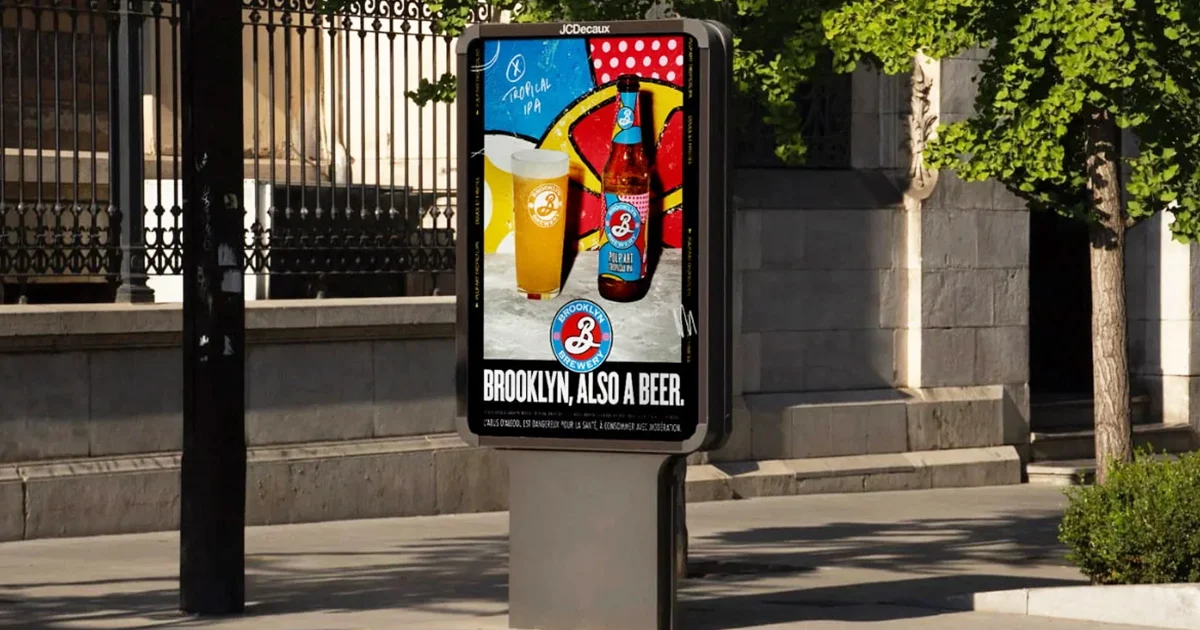
The marketing of American craft beer is often defined by a lifestyle-oriented aesthetic: images of friends gathered around a beach bonfire, weekend barbecues in sun-drenched backyards, or urban rollerskating sessions that culminate in a celebratory round of cold cans. For Brooklyn Brewery, these vibrant scenes, captured by photographer Roberto Chamorro, are central to their brand identity in the United States. However, when those same products cross the Atlantic to the French market, the visual narrative shifts dramatically. In France, an advertisement for the same Brooklyn Brewery pint appears on a sterile concrete surface, stripped of human interaction and joy, accompanied by a mandatory legal warning: “Alcohol abuse is bad for your health.” This stark contrast is not a creative choice, but a legal necessity dictated by the 1991 Évin Law, one of the most stringent alcohol and tobacco advertising regulations in the world.
As American craft breweries seek to expand their footprint in international markets, they face a labyrinth of disparate regulations, economic fluctuations, and cultural nuances. While the domestic US market remains the primary focus for most of the country’s 9,000+ craft breweries, a growing segment is looking toward Europe—specifically the United Kingdom, Sweden, and the Netherlands—as essential frontiers for growth. Navigating this expansion requires more than just high-quality liquid; it demands a sophisticated understanding of international law, trade diplomacy, and localized consumer psychology.
The Regulatory Framework: From the Évin Law to Nordic Monopolies
The primary hurdle for American exporters is the lack of regulatory uniformity across European borders. In France, the Évin Law (Loi Évin) remains the gold standard for restrictive alcohol marketing. Established in 1991 to combat public health issues, the law strictly prohibits any association between alcohol and pleasure, youth, sport, or physical activity. Adverts are limited to factual descriptions of the product: its origin, its composition, and its production method. For an American brand built on "cool" and "community," this requires a complete deconstruction of their marketing strategy.
Failure to comply with these regulations can result in crippling fines. Larger entities like Brooklyn Brewery often mitigate this risk by partnering with local distributors—in this case, Brasseries Kronenbourg, owned by the Carlsberg Group—who possess the legal expertise to navigate the French market. Smaller breweries, however, must often rely on third-party export management firms like New York-based Crafted Exports to ensure their labels and campaigns do not trigger legal action.
In Northern Europe, the challenges shift from marketing restrictions to retail monopolies. Sweden, Norway, and Finland operate government-owned alcoholic beverage retailers. In Sweden, this entity is Systembolaget. To be stocked on their shelves, breweries must enter a rigorous "tender" process, which categorizes beers by style and subjects them to blind taste tests. The Swedish system is famously indifferent to marketing budgets; it prioritizes liquid quality and compliance. Labels in Sweden are strictly monitored; any imagery connecting alcohol to weapons, sexuality, or hazardous activities—such as a character on a label holding a knife—must be removed before the product can be legally sold.

The Economic Reality of Exporting: Pricing and Margins
Despite the prestige of being an international brand, the financial reality of exporting is often a game of thin margins. According to 2022 data, the United Kingdom (7.3%), Sweden (7.1%), and the Netherlands (5.2%) are the top European destinations for US craft beer. However, reaching these consumers is an expensive endeavor.
Qurban Walia, co-founder of Crafted Exports, notes that the strength of the U.S. dollar against the Euro and the British Pound frequently creates a pricing disadvantage. "Usually breweries sell at a lower price for international markets to try and offset the price of additional shipping costs, increased taxes, and then the currency," Walia explains. For many breweries, this means accepting a lower profit margin per unit compared to domestic sales just to remain competitive on European shelves.
Chris Smith, co-founder of The Virginia Beer Company, echoes this sentiment. His brewery, based in Williamsburg, Virginia, exports to several European nations but must carefully calibrate its pricing. "If we sold our beers at our U.S. pricing, no one would buy it," Smith says. The "shelf price" in London or Amsterdam includes international freight, cold-chain logistics, import duties, and local value-added tax (VAT), which can easily double the cost to the consumer if the brewery does not discount its wholesale price.
A Chronology of the Export Surge and Recent Headwinds
The journey of American craft beer into Europe has followed a distinct timeline:
- The Early 2000s: Initial "pioneer" exports from larger craft brands like Sierra Nevada and Boston Beer Company introduced the European palate to the aggressive hopping of the American West Coast IPA.
- 1991 – Present: The Évin Law in France establishes a permanent barrier for lifestyle-based advertising, forcing US brands to adopt "clinical" marketing styles.
- 2018 – 2021: Trade tensions between the US and the EU lead to retaliatory tariffs on various goods, including some alcoholic beverages, creating a period of extreme uncertainty for exporters.
- 2022: Post-pandemic recovery sees a surge in export volumes, with the UK and Scandinavia emerging as the most stable and quality-focused markets.
- 2023: Strategic shifts occur as breweries like Colorado-based Outer Range open physical outposts in Europe (specifically the French Alps) to bypass export hurdles and build direct brand equity.
- 2025 and Beyond: New labeling requirements in Ireland (mandating health risk warnings by 2026) and potential shifts in US trade policy suggest a new era of regulatory complexity.
The Paradox of Compliance: Domestic vs. International
One of the most surprising revelations for American brewers is that selling beer in Europe can occasionally be simpler than selling it in a neighboring US state. The United States operates under a "Three-Tier System" (producer, distributor, retailer) that is regulated at the state level. For a brewery in Virginia to sell beer in Maryland or New York, they must navigate a maze of state-specific registrations, brand filings, and tax requirements.
In contrast, once a beer is cleared for import into a European country, the administrative burden often falls on the importer. "It’s easier for us to sell beer in France in so many ways, which is kind of ridiculous," says Chris Smith. This administrative ease, however, is balanced by the necessity of physical label compliance. Whether it is the mandatory pregnancy warning pictogram in France or the upcoming health warnings in Ireland, breweries must often apply custom stickers or print specific can designs for small-batch international orders.

Consumer Tastes: The Haze Craze and the Lager Barrier
While the regulatory environment varies, consumer tastes across the Atlantic are becoming increasingly homogenized. The "Hazy IPA" (New England IPA), barrel-aged stouts, and fruited sours that dominate American taprooms are equally popular in the United Kingdom and the Netherlands.
However, a significant barrier remains for one of the fastest-growing trends in the US: craft lagers. Europe has a centuries-old lager heritage, particularly in Germany and the Czech Republic, where high-quality local pilsners are available at very low prices. For an American brewery to ship a lager across the ocean and sell it at a premium price is often a losing proposition. "When people think about the U.S., they’re really looking for IPAs," Walia observes. The American "brand" in the global beer market is synonymous with innovation and bold flavors, rather than the traditional styles that Europe has already perfected.
Geopolitical Implications and Future Outlook
The future of American craft beer in Europe is currently shadowed by geopolitical uncertainty. The memory of the "trade wars" during the late 2010s remains fresh for many brewers. Tariffs can be applied almost overnight as retaliatory measures in unrelated disputes (such as those involving steel or aerospace subsidies), making long-term international contracts risky.
Furthermore, the rise of local European craft scenes—particularly in France, Italy, and Spain—means that American brewers are no longer the only source of high-quality IPAs. As French breweries improve their technique, the "premium" that consumers are willing to pay for an imported American can is shrinking.
To combat this, exporters are shifting toward experiential marketing. In 2025, Crafted Exports organized a "road show" to the United Kingdom, bringing American brewers to meet consumers directly. The goal is to move beyond the liquid and sell the story of American craft, fostering a deeper connection that can survive price fluctuations and regulatory shifts.
Ultimately, the success of the American "export experiment" depends on a brewery’s ability to be a "chameleon." They must be a lifestyle brand in the US, a clinical and compliant producer in France, a quality-first competitor in Sweden, and a cost-conscious wholesaler in the UK. For those who can master this balancing act, the European market offers not just a source of revenue, but a prestigious platform on the world stage of brewing.