admin
admin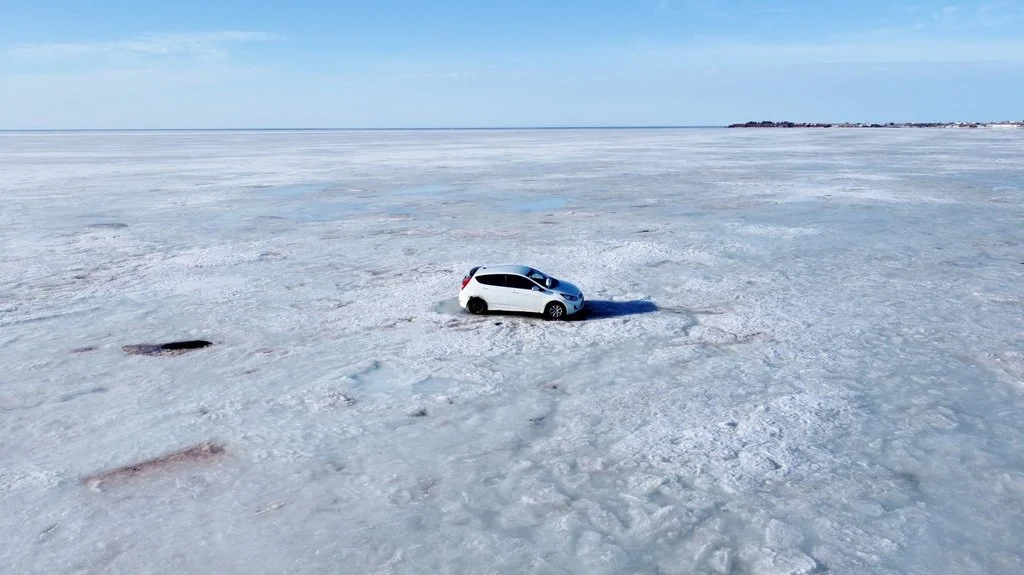
On March 16, 2026, details emerged regarding a highly coordinated, multi-agency operation that successfully retrieved a white Hyundai Accent sedan abandoned on the treacherous ice of the Northumberland Strait, approximately three kilometres offshore from River John, Nova Scotia. The incident, which began with the vehicle’s abandonment on March 5, culminated in a complex recovery effort on Sunday, March 15, involving provincial and federal departments alongside local emergency services, underscoring the inherent dangers of traversing frozen waterways and the significant resources required to mitigate such incidents.
The Initial Abandonment and Discovery
The saga of the stranded Hyundai Accent began on Thursday, March 5, when the vehicle was discovered by local residents, seemingly stuck and subsequently abandoned on the vast expanse of ice covering a section of the Northumberland Strait near River John. The precise circumstances leading to the vehicle’s initial venture onto the frozen body of water remain somewhat speculative, though local authorities, including Terry Heighton, chief of the Pictou County Fire Department, suggested it was likely the result of "local troublemakers" venturing onto the ice. Despite the clear public safety and environmental concerns raised by the presence of an unattended vehicle on the ice, an email from the Royal Canadian Mounted Police (RCMP) confirmed that their preliminary investigation found no evidence of criminal activity involved in the situation. This distinction is crucial, as it often dictates the legal framework for cost recovery and potential charges.
The Northumberland Strait, a waterway separating mainland Nova Scotia from Prince Edward Island, is known for its dynamic ice conditions during winter months. While locals often use the frozen surface for recreational activities such as ice fishing or snowmobiling, the unpredictability of sea ice, influenced by tides, currents, and fluctuating temperatures, makes vehicular travel exceptionally risky. The fact that the vehicle was approximately three kilometres from shore indicates a significant, and potentially reckless, journey onto the ice.
A Growing Concern: Environmental and Safety Risks
For nearly ten days, the abandoned Hyundai served as a stark, white anomaly against the grey and white canvas of the frozen Strait, drawing the attention and concern of the community. Beyond the visual blight, the primary worries centered on environmental contamination and public safety. An abandoned vehicle carries numerous hazardous fluids, including gasoline, diesel, engine oil, transmission fluid, brake fluid, and antifreeze. Should the ice shift, crack, or melt rapidly, these contaminants could leak into the marine environment, posing a direct threat to local marine life, including various fish species, seals, and migratory birds that frequent the Strait. Furthermore, the vehicle itself presented a navigation hazard should it become free-floating, and its presence could inadvertently encourage others to attempt similar dangerous exploits on the ice.
Local authorities were quick to recognize the escalating risks. The Pictou County Fire Department, under Chief Heighton’s leadership, began coordinating with relevant provincial and federal bodies to assess the situation and formulate a safe retrieval plan. This inter-agency collaboration is standard protocol for incidents involving environmental hazards and complex logistical challenges beyond the scope of a single department.
The Complex Retrieval Operation: Planning and Execution
The retrieval operation, which unfolded on Sunday, March 15, was a testament to meticulous planning and adaptive execution, showcasing the capabilities and collaboration of multiple government and emergency organizations. Key players included the federal Department of Fisheries and Oceans (DFO), the provincial Department of Natural Resources (DNR), and the Pictou County Fire Department.
Phase 1: Assessment and Initial Strategy

Prior to the recovery attempt, critical preparatory steps were undertaken. The provincial Department of Natural Resources played a pivotal role in assessing the ice conditions. Their teams, equipped with specialized tools, conducted thorough thickness tests at various points around the vehicle and along potential access routes. Ice thickness is the primary determinant for safely supporting human and vehicular weight. While general guidelines suggest at least 10-12 inches of clear, solid ice for light passenger vehicles, dynamic sea ice can have vastly different load-bearing capacities depending on its formation, age, and underlying currents. This meticulous assessment was crucial for the safety of the retrieval crews.
With the ice deemed sufficiently stable for personnel, the initial plan involved utilizing a helicopter. The strategy was to fly fire department members to the stranded car, where they would then strip the vehicle of non-essential components to lighten its load. The intention was for the helicopter to then lift the stripped chassis and fly it back to shore. This approach was considered due to the significant distance from shore (three kilometres) and the potential difficulties of towing a heavy object over uneven ice. Helicopter lifts, while expensive, offer unparalleled access and speed in remote or challenging terrain.
Phase 2: Adapting to Unforeseen Challenges
Upon arrival at the scene, the retrieval team quickly encountered a significant hurdle: the car, even partially stripped, proved to be too heavy for a safe helicopter lift. Modern passenger vehicles, even compact models like the Hyundai Accent, typically weigh between 1,100 to 1,300 kilograms (2,400 to 2,800 pounds). While specialized heavy-lift helicopters exist, the available aircraft, likely a utility or observation helicopter providing transport, was not equipped for such a payload, especially considering the added complexities of maneuvering over ice and the inherent risks of sling-load operations. Chief Heighton confirmed that this realization necessitated an immediate shift in strategy.
Phase 3: The Snowmobile Tow – A Testament to Ingenuity
With the helicopter lift deemed impractical, the team pivoted to an alternative, more grounded approach. The revised plan involved using two snowmobiles to tow the car back to shore. This method, while seemingly less sophisticated, required considerable expertise and coordination. The crew first had to prepare the vehicle for towing. To reduce friction and make the tow more manageable, they ingeniously flipped the car onto its roof. This presented a smoother, flatter surface for sliding across the ice, distributing the weight more evenly and reducing the likelihood of the car digging into softer ice or getting snagged on irregularities.
Connecting robust towing lines to the inverted vehicle, the two snowmobiles then embarked on the arduous three-kilometre journey back to land. Snowmobiles, designed for navigating snow and ice, provided the necessary traction and maneuverability. The process would have been slow and deliberate, with constant communication between the snowmobile operators and ground support to monitor ice conditions, prevent the car from veering off course, and ensure the safety of everyone involved. The successful execution of this improvised plan highlights the adaptability and resourcefulness of the emergency responders.
Statements and Reactions from Involved Parties
Pictou County Fire Department Chief Terry Heighton:
"It was quite an operation," Chief Heighton remarked following the successful retrieval. "We’re just relieved to have it off the ice. It posed both an environmental risk and a public safety concern. We coordinated closely with Fisheries and Natural Resources, and their expertise was invaluable in assessing the ice and providing logistical support. The helicopter was a great asset for getting our members out there quickly, but when it became clear a lift wasn’t feasible, we had to think on our feet. Flipping it and towing it with snowmobiles was a bit unconventional, but it worked. It just goes to show you the kind of challenges we face out here." Heighton also reiterated the belief that the car was left by individuals who got stuck, emphasizing the need for greater public awareness regarding ice safety.
Royal Canadian Mounted Police (RCMP):
While the RCMP confirmed no criminality was involved, their initial assessment would have been crucial in determining the nature of the incident. An RCMP spokesperson might have added, "Our role initially was to assess if any criminal acts had occurred and to ensure public safety in the vicinity. Once it was determined to be a situation of an abandoned vehicle, the focus shifted to environmental and safety concerns, leading to the multi-agency retrieval. We always advise the public to exercise extreme caution on frozen bodies of water."
Department of Natural Resources (DNR) Official (inferred):
A representative from the DNR would likely highlight their critical role in ice assessment. "Our teams are trained to evaluate ice stability, which is paramount in operations like this. The Northumberland Strait’s ice can be highly unpredictable. Our measurements ensured that the retrieval teams could operate with the greatest possible safety. Environmental protection is also a key mandate, and preventing potential contamination from the vehicle was a priority."

Department of Fisheries and Oceans (DFO) Official (inferred):
From an environmental perspective, a DFO spokesperson might state, "The presence of an abandoned vehicle on marine ice presents a clear risk of fuel and fluid leakage, which can be detrimental to marine ecosystems. DFO provided guidance on potential environmental impacts and collaborated with other agencies to ensure the retrieval was conducted in a manner that minimized any further disturbance to the Strait’s delicate environment."
Broader Implications and Lessons Learned
The River John incident serves as a salient reminder of several critical issues:
1. The Perils of Ice Travel: The Northumberland Strait, while appearing solid in winter, is a dynamic environment. Driving vehicles onto sea ice is inherently dangerous and strongly discouraged by authorities unless under strictly controlled and monitored conditions. Ice thickness can vary dramatically over short distances, and cracks can form rapidly due to tidal action or temperature fluctuations. This incident underscores the necessity of heeding warnings and understanding the immense risks involved.
2. Environmental Stewardship: The swift action to remove the vehicle was crucial in preventing a potential environmental disaster. Fuel and other automotive fluids can have long-lasting, damaging effects on marine flora and fauna. The cost of environmental remediation after a spill often far exceeds the cost of preventive measures or prompt retrieval. This incident highlights the importance of rapid response protocols for environmental protection.
3. Inter-Agency Cooperation: The successful retrieval was a prime example of effective inter-agency cooperation. The combined expertise and resources of local fire services, provincial natural resources, and federal fisheries departments were essential. Such collaboration is vital for addressing complex incidents that span multiple jurisdictions and require diverse skill sets. Without this integrated approach, the operation would have been far more difficult, prolonged, and potentially dangerous.
4. Resource Allocation and Cost: While the exact costs of this specific operation were not disclosed, multi-agency responses involving helicopters, specialized personnel, and equipment are substantial. These costs are often borne by taxpayers, highlighting the broader societal impact of irresponsible actions. In cases where criminality is not established, cost recovery from the responsible party can be challenging, though municipalities may have bylaws allowing for such recovery for nuisance or environmental infractions. This incident may prompt discussions on mechanisms for cost recovery for such incidents.
5. Public Education and Prevention: This event will undoubtedly be used as a case study for public education campaigns on ice safety. Local authorities may increase signage or public service announcements, particularly in areas known for ice activities, to deter future incidents. Emphasizing personal responsibility and the severe consequences of venturing onto unsafe ice is paramount.
In conclusion, the retrieval of the Hyundai Accent from the Northumberland Strait ice was more than just removing a stuck car; it was a demonstration of complex logistical problem-solving, environmental responsibility, and the indispensable value of inter-agency collaboration in responding to unforeseen challenges. As winter continues to hold Nova Scotia in its grip, the incident near River John serves as a potent reminder for all to exercise extreme caution and respect the inherent dangers of nature’s frozen landscapes.