admin
admin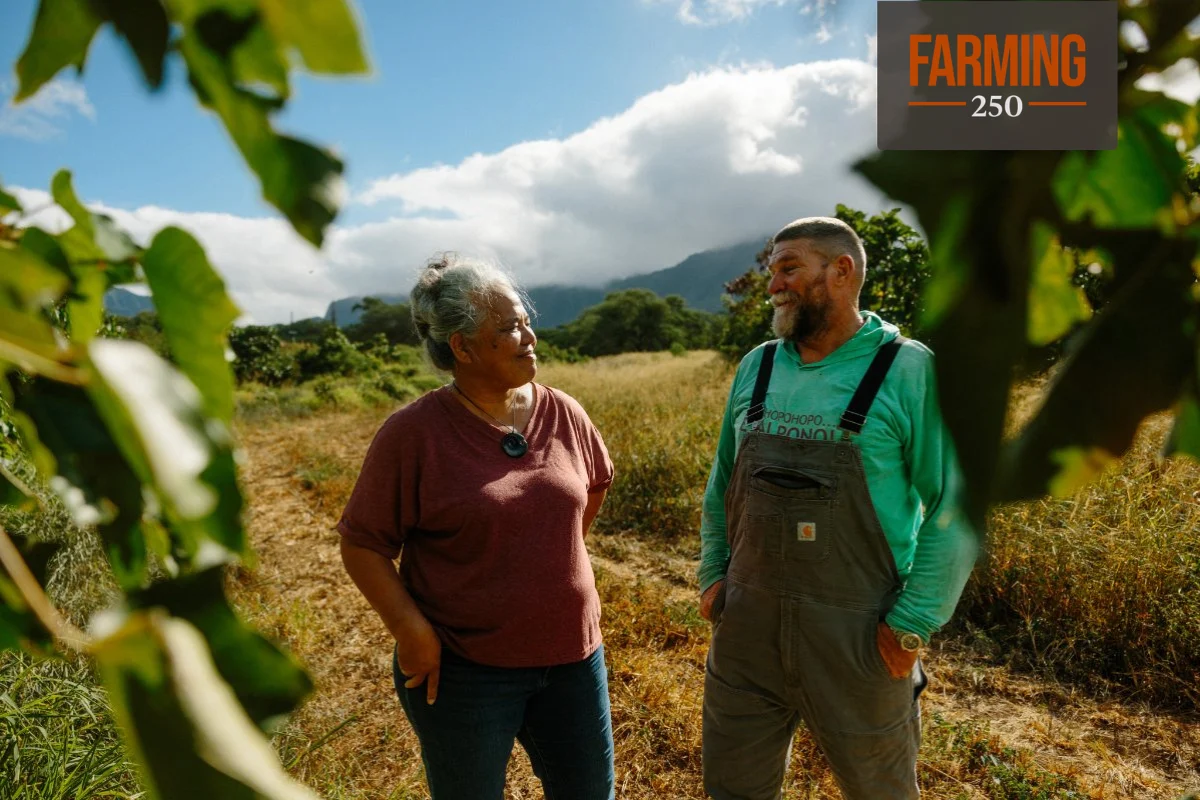
In the verdant Lualualei Valley on Oahu, Hawaiʻi, MAʻO Organic Farms stands as a beacon of community resilience, youth empowerment, and sustainable agriculture, deeply rooted in the ecological wisdom of pre-contact Hawaiians. The organization, co-founded by Kukui Maunakea-Forth and Gary Maunakea-Forth, has pioneered an innovative model that intertwines rigorous academic support with hands-on agricultural training, offering young people a transformative pathway to higher education and meaningful careers while simultaneously addressing critical issues of food security and land stewardship. From its inception, the vision for MAʻO was clear: to create an institution that would challenge young individuals to actively solve community problems, providing them with the necessary support to pursue college degrees and subsequently offering them employment on the farm itself. This holistic approach ensures that the investment in youth development is not merely academic but translates directly into practical skills and sustainable livelihoods, fostering a new generation of leaders committed to their land and community.
The pivotal role of young people has been a defining characteristic of MAʻO Organic Farms since its very first iteration. The founders quickly recognized that while youth are eager to embrace "kuleana"—a profound Hawaiian concept encompassing responsibility, privilege, and stewardship—they do so on their own terms. This understanding has shaped the farm’s operational philosophy, moving away from monoculture practices that might deter interest and towards a diversified farming model. Young farmers at MAʻO express a clear preference for cultivating a variety of products, a method that not only promotes ecological health but also sustains their engagement and curiosity. Crucially, they thrive in an environment where they can work alongside their peers, fostering a dynamic of peer-to-peer mentoring that complements the guidance from seasoned mentors. This collaborative spirit underscores MAʻO’s belief that while traditional mentorship is vital, the shared experiences and mutual support among young people are equally powerful drivers of growth and learning. The farm thus becomes more than just a place of work; it transforms into a living classroom and a vibrant community hub where leadership is cultivated through shared labor and collective responsibility.

The Genesis of a Vision: Responding to Community Needs
MAʻO Organic Farms was established in 2001, born out of a profound understanding of the challenges facing the Waiʻanae Coast, a predominantly Native Hawaiian community grappling with high rates of poverty, unemployment, and food insecurity. The founders, Kukui and Gary Maunakea-Forth, envisioned a solution that would be both economically viable and culturally resonant. They recognized that the degradation of local food systems and the disconnection of youth from traditional land practices contributed significantly to the community’s struggles. The idea was to create an organization that could bridge these gaps, offering not just jobs but a comprehensive ecosystem of support for young people to thrive. By linking farm work with college readiness and enrollment, MAʻO aimed to break cycles of intergenerational poverty and empower youth to become agents of change within their own community. The Lualualei Valley, with its fertile soils and historical significance, provided the ideal backdrop for this ambitious undertaking, albeit requiring substantial investment and labor to bring the land back to its productive potential.
From the outset, involving young people in every facet of the farm’s development was non-negotiable. This hands-on, immersive approach meant teaching them everything from operating heavy equipment for land preparation to mastering the intricacies of composting and organic cultivation. This practical education is paired with an unwavering commitment to deeply embedded Hawaiian values. At the heart of MAʻO’s philosophy is the concept of "aloha ʻāina," which translates to the love of land, or more specifically, the profound love for the land that sustains us. This is not merely an abstract ideal but a spiritual and intensely practical term that guides every decision made on the farm. It emphasizes a reciprocal relationship with the earth, where caring for the land is synonymous with caring for oneself and one’s community. This ethos permeates daily conversations and practices, fostering a deep respect for the environment and an understanding that "the land is the leader," dictating the rhythms and requirements of sustainable cultivation.
A Legacy of Land Management: Inspired by Ancient Hawaiians
The foundational inspiration for MAʻO Organic Farms stems from the extraordinary achievements of pre-contact Hawaiians, who, by the 1500s, had developed sophisticated systems that allowed them to grow 100 percent of their food. This self-sufficiency was not accidental but the result of meticulously engineered agricultural systems and a profound set of values and practices designed to ensure long-term ecological balance and food security. Central to this achievement was the "ahupuaʻa" system, a unique and highly effective method of land management.

An ahupuaʻa was typically a pie-shaped land division extending from the mountain (mauka) to the sea (makai), encompassing a complete watershed. This triangulation of mountains, a water source (streams, rivers), and the ocean provided a diverse range of resources and microclimates. Hawaiian communities meticulously understood their watersheds, recognizing that deforestation in the uplands (mauka) would inevitably lead to erosion, loss of nutrients, and degradation of agricultural lands downslope. This holistic understanding prevented unsustainable practices, ensuring the continuous flow of clean water and vital nutrients throughout the entire system. Taro (kalo), sweet potatoes, breadfruit, and other staples were cultivated in ingenious terraced fields and complex irrigation systems, while fishponds (loko iʻa) along the coast provided protein, all managed within a framework of sustainable harvesting and resource allocation. The ahupuaʻa system was a testament to advanced ecological knowledge and a deep, inherent commitment to "aloha ʻāina," demonstrating a level of sustainability that modern societies are only now beginning to rediscover and value.
The decline of these intricate systems followed Western contact, as traditional land tenure was replaced by private ownership, and the focus shifted to a plantation economy producing export crops like sugar and pineapple. This historical disruption led to Hawaiʻi’s increasing dependence on imported food, a vulnerability that MAʻO Organic Farms actively seeks to reverse by re-establishing local food production rooted in ancestral wisdom.
Chronology of Growth and Impact at MAʻO Organic Farms
2001: Founding and Initial Vision
MAʻO Organic Farms is established by Kukui and Gary Maunakea-Forth in the Lualualei Valley, Waiʻanae, Oahu. The initial vision focuses on youth development, academic support, and sustainable agriculture as interconnected solutions to community challenges. The early years are dedicated to rehabilitating neglected land and building foundational infrastructure.

Early 2000s: Development of the Youth Leadership Training Program
The farm launches its earn-and-learn model, integrating paid agricultural work with college preparatory classes and tuition support. This program is designed to challenge young people with real-world problems while providing the resources for higher education. Initial participants help transform the land, learning skills in heavy equipment operation, composting, and organic farming.
Mid-2000s: Expansion and Community Engagement
MAʻO expands its cultivated acreage and diversifies its crop production, increasing its capacity to supply fresh, organic produce to local markets, restaurants, and community programs. The farm solidifies its reputation as a vital community resource, contributing to the local food economy and providing healthy food options in an area often considered a food desert.
2010s: Formalizing Academic Pathways and Youth Success
The partnership with the University of Hawaiʻi – West Oahu strengthens, allowing youth to earn college credits while working on the farm. MAʻO’s program becomes a proven pipeline for college enrollment, with a significant percentage of participants successfully matriculating into higher education. Peer-to-peer mentoring becomes a cornerstone of the youth development model, fostering collective leadership.

Late 2010s – Present: Embracing Regenerative Agriculture and Broader Influence
MAʻO deepens its commitment to regenerative agriculture, focusing on practices that improve soil health, enhance biodiversity, and sequester carbon. The farm becomes a leading voice in the sustainable agriculture movement in Hawaiʻi and beyond, demonstrating how traditional wisdom can inform modern ecological practices. Its model is recognized nationally for its integrated approach to youth empowerment, cultural revitalization, and environmental stewardship.
Supporting Data and Tangible Impact
MAʻO Organic Farms has achieved remarkable success in its dual mission. Over two decades, the organization has supported hundreds of young people, with a significant proportion successfully enrolling in and graduating from college. Many alumni return to the Waiʻanae Coast, bringing their education and experience to contribute to their community, often in fields related to agriculture, education, or environmental stewardship. The farm has cultivated an environment where over 500 youth have gone on to pursue higher education, a testament to the program’s effectiveness in breaking down barriers to academic success.
Agriculturally, MAʻO cultivates more than 20 acres of diverse organic crops, including popular staples like lettuce, kale, collards, tomatoes, and various fruit trees. This produce is distributed through multiple channels:

- Community Supported Agriculture (CSA) shares: Providing fresh, healthy food directly to local families.
- Farmers’ Markets: Offering accessible organic produce to a wider public.
- Local Restaurants and Institutions: Supplying high-quality ingredients, fostering local economic linkages.
- Food Bank Partnerships: Addressing food insecurity by donating produce to those in need.
The farm’s commitment to regenerative agriculture has yielded tangible environmental benefits. Through practices such as composting, cover cropping, and minimal tillage, MAʻO has significantly improved soil organic matter, enhanced water retention, and reduced the need for external inputs. This approach not only makes the farm more resilient to climate change but also serves as a living laboratory for sustainable land management in tropical environments. MAʻO’s economic impact extends beyond direct employment, contributing to a more robust local food economy and inspiring other agricultural ventures across the islands.
Voices from the Valley: Leadership and Commitment
Kukui Maunakea-Forth, co-founder and Executive Director, often articulates the profound sense of "kuleana" that guides their work. "We’ve realized that they’re willing to take up this kuleana, this responsibility, but only on certain terms," she states, referring to the youth. "Like they don’t want to farm one product—that would just chase them away. They want to farm with other young people. We really believed in the goal of mentoring young people, but not forgetting that there is peer-to-peer mentoring that’s possible." Her insights highlight the importance of listening to and empowering the youth, allowing their preferences and collaborative spirit to shape the farm’s operational model. This adaptive leadership ensures that the program remains relevant and engaging for its young participants.
Gary Maunakea-Forth, co-founder and Director of ʻĀina development, emphasizes the spiritual and practical connection to the land. "On the farm, you’ll hear young people, and all of us, talk about aloha ʻāina, which is the love of land, or the love of the land which feeds us. It’s a very spiritual term, and it’s a very applicable term." He frequently draws parallels between MAʻO’s practices and those of pre-contact Hawaiians, particularly the "ahupuaʻa" system. "We were inspired by the work of pre-contact Hawaiians, who actually grew 100 percent of their food: both the structure, the engineered systems to grow food, and the values and practices they had to back that up." His perspective underscores the profound historical and cultural roots of their agricultural philosophy, positioning MAʻO not just as a farm, but as a custodian of ancient wisdom for modern times.

The commitment from the youth themselves is palpable. Their active participation in learning complex skills, from operating heavy machinery to understanding soil science, demonstrates a deep investment in their future and the health of their land. Their collective voice, channeled through the founders, reveals a desire for diversity, collaboration, and a holistic engagement with farming—qualities that MAʻO has consciously cultivated. Local educators and community leaders often commend MAʻO for providing a unique learning environment that bridges academic theory with practical application, offering an invaluable alternative for youth who may not thrive in traditional classroom settings. They see MAʻO as a critical institution for developing future leaders and ensuring the perpetuation of Hawaiian cultural practices.
Broader Impact and Implications: A Model for the Future
MAʻO Organic Farms has emerged as a compelling model for sustainable development, offering valuable lessons for communities grappling with similar challenges globally. Its integrated approach—combining youth development, cultural revitalization, food sovereignty, and regenerative agriculture—demonstrates that these seemingly disparate goals can be mutually reinforcing.
Cultural Revitalization: By grounding its practices in "aloha ʻāina" and the "ahupuaʻa" system, MAʻO is not just growing food; it is actively revitalizing Hawaiian culture and traditional ecological knowledge. This reconnection helps young people forge a stronger identity and a deeper appreciation for their heritage, countering the historical alienation from land and cultural practices.

Food Sovereignty and Security: In a state heavily reliant on imported food, MAʻO plays a crucial role in building Hawaiʻi’s food sovereignty. By demonstrating the viability of local, organic food production, it contributes to reducing the islands’ vulnerability to global supply chain disruptions and makes healthy food more accessible to local communities. The farm’s production capacity and distribution network are vital components of a resilient local food system.
Regenerative Agriculture Leadership: MAʻO is at the forefront of the regenerative agriculture movement in Hawaiʻi. Its commitment to practices that improve soil health, sequester carbon, and enhance biodiversity offers a tangible pathway toward climate resilience and sustainable land stewardship. The farm serves as an educational hub, inspiring other farmers and policymakers to adopt more environmentally friendly methods. As the founders note, regenerative agriculture requires not just capital and equipment, but "exposure to it or some education about it. And you need a commitment to it." This commitment is evident in MAʻO’s daily operations and long-term vision.
Youth Leadership Development: Perhaps the most profound implication of MAʻO’s work is its ability to cultivate leadership. The organization instills in young people a sense of purpose, agency, and responsibility, demonstrating that "when we talk about the connection between young people and the land, that connection is leadership." These young leaders are not just future farmers but future educators, entrepreneurs, and community organizers who will continue to shape a more sustainable and equitable Hawaiʻi. The MAʻO model provides a blueprint for how experiential learning, cultural immersion, and strong community support can empower youth to lead the charge in addressing complex societal and environmental challenges. As the farm continues to grow and evolve, its impact reverberates far beyond the Lualualei Valley, offering hope and practical solutions for a more sustainable future.