admin
admin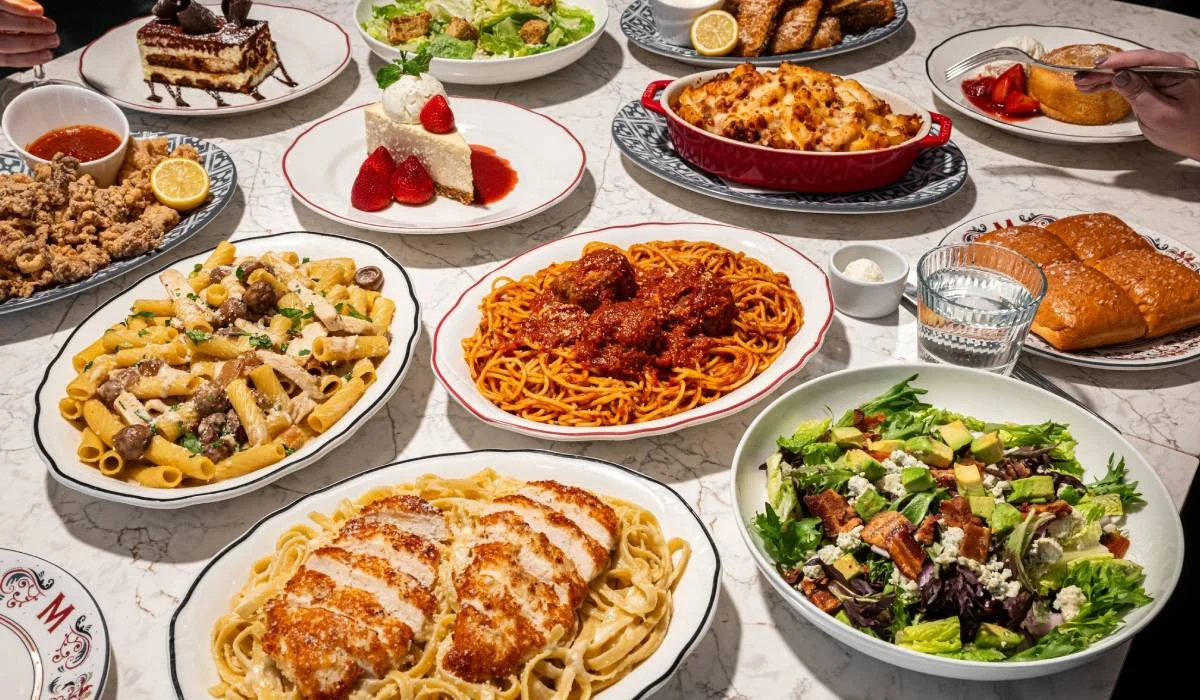
Brinker International has officially launched a comprehensive revitalization plan for Maggiano’s Little Italy, anchored by a significant increase in portion sizes and a renewed focus on the brand’s heritage of abundant, scratch-made Italian-American cuisine. The 48-unit restaurant chain announced on Wednesday that it is implementing a 20 percent increase in pasta volume across several of its most popular dishes, including Chicken Fettuccine Alfredo and Spaghetti & Meatballs. This strategic shift also includes larger servings of core proteins such as chicken, meatballs, and shrimp, all offered without an increase in price to the consumer. This move represents the first major tactical execution of the "Back to Maggiano’s" framework, a multi-year initiative designed to stabilize the brand’s traffic and recapture its identity as a premier destination for generous, high-quality dining.
The decision to increase portions is a direct response to shifting consumer expectations in a post-inflationary environment where value is increasingly defined not just by price, but by the perceived abundance of the experience. By bolstering the physical volume of the food on the plate, Maggiano’s aims to reinforce its competitive advantage in the casual dining sector. Chef Anthony Amoroso, Vice President of Innovation and Growth for Maggiano’s, emphasized that the brand is returning to its foundational principles. He noted that the essence of Italian-American dining is a "generous spirit," and that the goal of the current menu overhaul is to ensure every guest leaves the restaurant feeling satisfied, often with enough food remaining for a subsequent meal.
The Evolution of the Back to Maggiano’s Strategy
The "Back to Maggiano’s" initiative was first introduced by Brinker International leadership in 2023 as a holistic approach to fixing operational and brand-positioning inconsistencies. The framework is not limited to menu changes; it encompasses a complete overhaul of the guest experience. Key pillars of the strategy include improved service speed, a modernized labor model, the simplification of kitchen operations, and the elimination of non-essential testing that previously distracted from core execution. Furthermore, the company has committed to a schedule of restaurant repairs and reimaging projects to ensure the physical atmosphere aligns with the premium nature of the food.
Central to this strategy is the concept of "menu abundance." In an industry where many competitors have turned to "shrinkflation"—reducing portion sizes or ingredient quality to maintain margins—Maggiano’s is moving in the opposite direction. Management believes that by providing 20 percent more pasta and increasing protein portions, they can drive higher guest loyalty and frequency. This "abundance" strategy is intended to differentiate Maggiano’s from both fast-casual competitors and other full-service Italian chains that may have trimmed their offerings in recent years.
Quantitative Enhancements to the Core Menu and Family Style Platform
In addition to the changes made to individual entrées, Maggiano’s has significantly expanded its "Family Style" dining platform. This signature offering is a cornerstone of the brand’s identity, designed for groups of four or more. The platform has been bolstered with 15 additional menu options, including classic staples such as Baked Ziti, Eggplant Parmesan, Four Cheese Ravioli, and Chicken Piccata. Priced at $44 per person, the Family Style menu provides a structured yet expansive meal comprising two appetizers, four entrées, and three desserts.
The expansion of the Family Style menu is a strategic attempt to capture more large-group bookings and celebratory dining occasions, which have historically been a strength for the brand. Brinker CEO Kevin Hochman described the new family-style spread as a tribute to traditional Italian hospitality, likening the experience to a meal prepared by a "Nonna" who continues to serve plates until guests are full, while still providing leftovers to take home. This focus on "take-home value" is a critical component of the Maggiano’s value proposition, effectively reducing the "cost per meal" for the consumer when the leftovers are factored into the total price.
Financial Performance and Market Headwinds
The strategic pivot comes at a critical time for Maggiano’s, which has faced significant headwinds in recent fiscal quarters. During Brinker International’s fiscal second quarter, Maggiano’s reported a same-store sales decline of 2.4 percent. While this was a notable improvement from the 6.4 percent decrease seen in the first quarter, the underlying data revealed ongoing challenges in guest retention. The sales figures were supported by a 6 percent increase in pricing and a 0.4 percent positive shift in the menu mix, but these gains were largely offset by an 8.8 percent decline in guest traffic.
Despite the traffic slump, CEO Kevin Hochman informed investors during a Q2 earnings call that the results had exceeded internal expectations for the first time in several periods. However, the road to recovery remains steep. The brand has projected that same-store sales will likely remain in the negative mid-single-digit range through the latter half of fiscal 2026. The current menu enhancements are designed to break this cycle of declining traffic by improving the "price-to-value" perception among core diners. Management acknowledges that the brand had lost its "North Star," drifting away from the over-the-top portions and consistent service that originally defined its success.
Leadership Realignment and the Chili’s Influence
To spearhead the brand’s turnaround, Brinker International is leveraging the expertise of the leadership team that successfully revitalized its sister concept, Chili’s Grill & Bar. Chili’s has seen a dramatic resurgence in recent quarters, driven by viral social media campaigns and a simplified, value-driven menu. Earlier this month, George Felix, who previously served as the Chief Marketing Officer for Chili’s, was promoted to oversee marketing for both Chili’s and Maggiano’s.
Felix’s mandate at Maggiano’s is to clarify the brand’s positioning and improve the execution of its marketing messages. The goal is to replicate the "Chili’s playbook"—a combination of aggressive value messaging, operational simplification, and high-impact advertising. By centralizing marketing leadership under Felix, Brinker hopes to apply the same data-driven rigor to Maggiano’s that helped Chili’s regain market share in the crowded casual dining landscape. The promotion of Felix suggests a shift toward more aggressive and modern marketing tactics for the Italian chain, moving away from traditional methods to engage a younger, more diverse demographic.
Operational Efficiency and the Path to Consistency
A significant part of the "Back to Maggiano’s" framework involves behind-the-scenes operational changes. For the kitchen to successfully handle 20 percent larger portions without increasing ticket times or labor costs, the brand has had to simplify its internal processes. This includes a "new labor model" that optimizes staffing levels based on peak traffic periods and the elimination of complex menu items that were difficult to prepare consistently.
Hochman has been vocal about the need to get out of the way of restaurant teammates, allowing them to focus on the basics: hot food, consistent quality, and welcoming service. The brand is moving away from being a "chain restaurant" in feel, striving instead for the atmosphere of a local, scratch-kitchen Italian eatery. By reducing the number of operational "tests" and distractions, Maggiano’s is betting that its staff can execute the new, larger portions with higher precision, thereby reducing waste and improving the overall guest experience.
Broader Implications for the Casual Dining Sector
The move by Maggiano’s reflects a broader trend in the casual dining industry, where legacy brands are struggling to maintain relevance amid rising costs and changing consumer habits. The decision to increase portions without raising prices is a calculated risk; while it may compress margins in the short term, the long-term goal is to reclaim traffic and market share. If successful, this strategy could serve as a blueprint for other struggling mid-scale brands looking to differentiate themselves from the "fast-casual" segment.
Industry analysts suggest that the "value" wars are entering a new phase. While the previous decade was defined by deep discounting and "2 for $20" style deals, the current era is defined by "perceived abundance." Consumers who are dining out less frequently are looking for "worth-it" experiences. By providing massive portions that guarantee leftovers, Maggiano’s is effectively offering a multi-meal solution, which resonates strongly with budget-conscious families.
As Maggiano’s enters the second half of its fiscal year, the success of these changes will be measured by whether the 8.8 percent traffic decline can be reversed. With a new marketing lead, a simplified operational structure, and plates that are physically heavier and more protein-rich, the brand is fully committed to its "Back to Maggiano’s" philosophy. The coming months will determine if the "Nonna-style" approach to abundance can restore the 33-year-old brand to its former position as a leader in the Italian-American dining space.