admin
admin
In the lush Lualualei Valley on Oahu, Hawaiʻi, MAʻO Organic Farms stands as a beacon of sustainable agriculture and youth empowerment, meticulously weaving together ancient Hawaiian land stewardship principles with modern regenerative farming practices. This innovative organization, co-founded by Kukui Maunakea-Forth, Executive Director, and Gary Maunakea-Forth, Director of ʻĀina Development, has cultivated not only organic produce but also a new generation of leaders committed to community and environmental resilience. From its inception, MAʻO envisioned an enterprise that would challenge young people to address critical community issues, support their educational aspirations through college, and provide meaningful employment on the farm, making youth engagement central to every facet of its operation.
Roots of Resilience: The Genesis of MAʻO Organic Farms

MAʻO Organic Farms was established in 2001, born from a profound recognition of pressing challenges facing the Waiʻanae Coast, a predominantly Native Hawaiian community grappling with high rates of poverty, limited access to healthy food, and insufficient opportunities for its youth. The Maunakea-Forths observed a cycle of disengagement and vulnerability among young people, coupled with an alarming reliance on imported food for Hawaii, which imports an estimated 85-90% of its food supply. This dependence not only creates economic leakage but also poses significant food security risks, particularly in the event of supply chain disruptions. The founders’ vision was to interrupt these cycles by creating a vibrant, living classroom where ecological health and human development were inextricably linked.
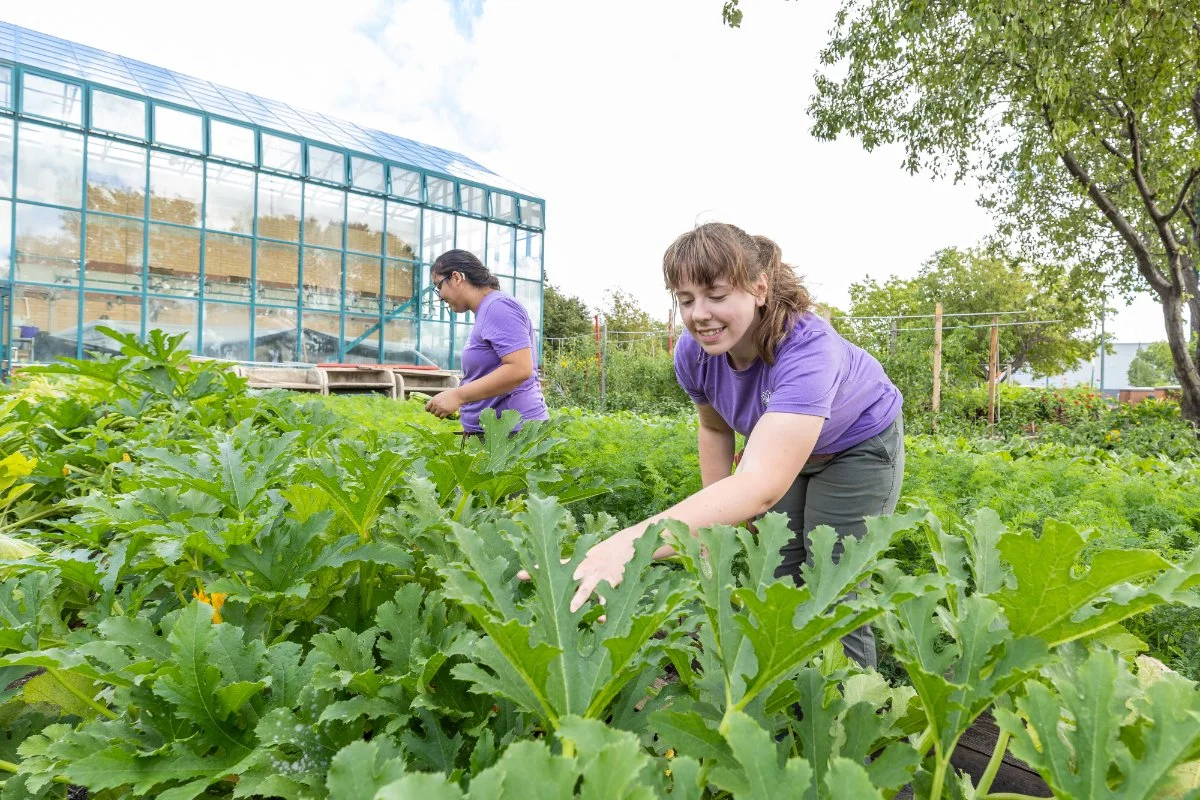
The initial steps involved acquiring and revitalizing neglected land, a process that inherently required significant investment and labor. Rather than viewing this as a mere agricultural endeavor, MAʻO framed it as an opportunity for holistic community development. A crucial decision made early on was to involve young people in every aspect of the farm’s operations, from soil preparation and planting to harvesting, marketing, and heavy equipment operation. This hands-on, experiential learning model was designed to instill practical skills, foster a strong work ethic, and cultivate a deep sense of ownership and responsibility, or "kuleana," among participants. The founders observed that young people were indeed willing to embrace this responsibility, but on their own terms – preferring diverse agricultural products over monoculture and thriving in environments that encouraged peer-to-peer mentoring alongside traditional adult guidance.
Nurturing Future Leaders: MAʻO’s Youth Development Model

At the heart of MAʻO’s mission is its comprehensive youth leadership development program. This unique "earn-and-learn" model offers participants not just employment, but also college tuition support and mentorship. Through a rigorous curriculum that integrates academic learning with practical farm work, MAʻO aims to prepare young adults for higher education and meaningful careers, whether in agriculture or other fields. Participants typically begin in the Youth Leadership Training Program, where they gain foundational knowledge in organic farming, business management, and leadership. Upon successful completion, many transition to paid internships while pursuing associate’s or bachelor’s degrees, often at institutions like the University of Hawaiʻi – West Oʻahu or Leeward Community College, with MAʻO providing scholarships and ongoing academic support.
This integrated approach has yielded demonstrable results. While specific detailed statistics vary year by year, MAʻO’s programs consistently show high rates of college enrollment and persistence among its alumni. The program targets youth from the Waiʻanae Coast, a region where educational attainment and economic opportunities have historically lagged behind state averages. By providing a structured pathway to higher education and stable employment, MAʻO acts as a powerful catalyst for social mobility. Alumni frequently credit the farm with instilling discipline, critical thinking skills, and a profound connection to their cultural heritage. "MAʻO gave me a purpose and showed me how my hands could feed my community and fuel my future," one hypothetical participant might express, echoing sentiments commonly heard from actual program graduates. "It wasn’t just about growing food; it was about growing myself."
Anchored in Aloha ʻĀina: Ancient Hawaiian Wisdom Meets Modern Farming

A foundational principle guiding MAʻO Organic Farms is "Aloha ʻĀina," a profound Hawaiian concept that transcends a simple "love of land." Aloha ʻĀina embodies a deep, spiritual reverence for the land that sustains life, recognizing it as an ancestral provider and a living entity to be cherished and protected. It implies a reciprocal relationship of care, stewardship, and responsibility for the health and well-being of the environment, understanding that the land’s vitality is directly linked to the community’s vitality. This term is not merely a slogan at MAʻO; it is a daily practice, a guiding philosophy that shapes every decision, from planting schedules to water management.
The farm consciously draws inspiration from the sophisticated agricultural systems of pre-contact Hawaiians, who, by the 1500s, had developed methods capable of producing 100 percent of their food locally. These systems were not only structurally engineered marvels but were also underpinned by a robust set of values and practices that ensured long-term sustainability. Pre-contact Hawaiian society achieved remarkable self-sufficiency, cultivating diverse crops like taro, sweet potatoes, and breadfruit, and managing complex aquaculture systems, all without external inputs. This historical precedent serves as a powerful reminder that food sovereignty and ecological balance are achievable, and MAʻO seeks to revive and adapt these ancient lessons for contemporary challenges.
The Ahupuaʻa Legacy: A Blueprint for Sustainable Living

Central to the pre-contact Hawaiian agricultural genius was the "ahupuaʻa" system of land management. This unique system involved dividing the land into wedge-shaped parcels that typically extended from the mountain (mauka) to the sea (makai), encompassing a complete watershed. Each ahupuaʻa included a mountain section, forests, agricultural lands, a stream or water source, and a coastal fishing ground. This holistic approach recognized the interconnectedness of all natural resources within a specific geographic unit.
Hawaiians managed their ahupuaʻa with incredible detail and foresight. They understood, for instance, that deforestation of the mauka regions would have detrimental effects downslope, leading to soil erosion, reduced nutrient flow, and compromised water quality. Therefore, they carefully managed their upland forests, recognizing them as vital sources of water, timber, and medicinal plants, as well as crucial protectors of the watershed. This meticulous attention to ecological balance allowed communities to thrive for centuries, ensuring a sustainable supply of food, water, and other resources.
MAʻO Organic Farms integrates the spirit of the ahupuaʻa system by emphasizing responsible watershed management and fostering an understanding of ecological relationships among its participants. Although the farm operates within a modern land tenure system, its practices reflect the wisdom of managing resources from ridge to reef. By teaching young people about composting, soil health, and water conservation, MAʻO encourages them to think like their ancestors, understanding that every action on the land has broader implications for the entire ecosystem. This cultural grounding provides a powerful context for modern regenerative agriculture, demonstrating that sustainable practices are not new inventions but rather rediscoveries of time-tested wisdom.

Cultivating Change: Regenerative Agriculture in Practice
The concept of regenerative agriculture is a burgeoning movement globally, and it forms the cornerstone of MAʻO’s farming philosophy. Unlike conventional agriculture, which often depletes soil and relies on synthetic inputs, regenerative practices aim to improve soil health, enhance biodiversity, sequester carbon, and improve water cycles. For MAʻO, this means going beyond simply organic farming; it involves actively healing and enriching the land. Practices include extensive composting, cover cropping, minimal tillage, and diversifying crops to build robust ecosystems.
The founders emphasize that successful regenerative agriculture requires more than just capital and equipment. It necessitates two critical components: exposure and education, coupled with unwavering commitment. MAʻO provides both. Young farmers learn hands-on how to create nutrient-rich compost, how to build healthy soil teeming with microbial life, and how to manage pests naturally. They witness firsthand the transformation of depleted land into vibrant, productive ecosystems. This education fosters a deep understanding of ecological principles and a commitment to practices that actively restore, rather than merely sustain, the environment. The land, in essence, becomes a teacher, guiding the farmers in how it wishes to be treated, embodying values of respect and reciprocity.

Quantifying Impact: Data and Growth
MAʻO Organic Farms’ impact extends beyond its immediate vicinity. Annually, the farm produces a significant volume of certified organic fruits and vegetables, including popular items like lettuce, kale, tomatoes, and various tropical fruits. This produce is distributed through multiple channels, including local farmers’ markets, community-supported agriculture (CSA) shares, direct sales to restaurants and hotels, and partnerships with local grocery stores. By strengthening local food systems, MAʻO directly addresses Hawaii’s food security challenges, providing fresh, healthy, and culturally relevant food options to the community, many of whom live in designated food deserts.
While specific annual figures fluctuate, MAʻO has consistently employed dozens of youth annually, many of whom continue to college. The farm has been instrumental in placing numerous graduates into higher education programs, with a significant percentage pursuing degrees related to agriculture, environmental science, or community development. The economic ripple effect extends to local suppliers and businesses, further contributing to the Waiʻanae Coast’s economic vitality. Studies on similar farm-to-school or farm-to-community initiatives have shown that every dollar invested in local food systems can generate up to three times that amount in local economic activity, underscoring MAʻO’s broader economic contribution. Furthermore, by adopting regenerative practices, MAʻO contributes to climate resilience, demonstrating viable pathways for agriculture to mitigate climate change through carbon sequestration in healthy soils.

Voices from the Field: Perspectives on Transformation
The true measure of MAʻO’s success is often reflected in the voices of its participants and community members. Hypothetical statements from youth often highlight a newfound sense of purpose and belonging. "Before MAʻO, I didn’t see a clear path for myself," a program alumnus might reflect. "Now, I understand the importance of stewardship, not just for the land, but for my community and my own future. I’m pursuing a degree in sustainable agriculture, and I plan to bring these lessons back home." Community leaders frequently laud MAʻO as a vital institution. "MAʻO is more than just a farm; it’s a living classroom and a cultural anchor," a local elder might comment. "They’re raising leaders who understand that the health of our land and the well-being of our people are one and the same." Agricultural experts recognize MAʻO’s model as exemplary. "MAʻO demonstrates that regenerative agriculture can be economically viable and socially transformative," an agronomist specializing in tropical climates might observe. "Their integration of indigenous knowledge with modern science offers a powerful blueprint for food systems globally."
A Blueprint for the Future: Broader Implications and Legacy

MAʻO Organic Farms stands as a powerful testament to the potential of integrating cultural wisdom, youth development, and sustainable agriculture. Its model offers crucial implications for global challenges in food security, climate change, and youth engagement. By demonstrating the efficacy of a holistic approach that nurtures both the land and its people, MAʻO provides a replicable framework for communities worldwide facing similar socio-economic and environmental dilemmas.
The farm’s emphasis on leadership through connection to the land underscores a fundamental truth: empowering young people with the skills and values to care for their environment is an investment in the future. As the global population grows and climate pressures intensify, the lessons from MAʻO—lessons of aloha ʻāina, ahupuaʻa stewardship, and regenerative practices—become increasingly relevant. MAʻO Organic Farms is not just growing food; it is cultivating a legacy of resilience, cultural revitalization, and self-sufficiency, ensuring that both the land and the next generation in Hawaiʻi continue to thrive.