admin
Lasse Peder Nielsen stands as a pivotal figure in Copenhagen’s illustrious gastronomic landscape, a sommelier and general manager whose expertise has significantly shaped the acclaimed two-Michelin-starred restaurant, Koan. With a career spanning over 15 years, Nielsen has cultivated a distinctive approach to hospitality, harmoniously blending Nordic precision with a contemporary Asian culinary vision, a philosophy that has become a hallmark of Koan’s success. His journey through some of Scandinavia’s most celebrated establishments, including 108, Barr, and Hotel Saxkjøbing, has forged a deep understanding of fine dining and an unwavering commitment to exceptional wine service.
Nielsen’s career trajectory is a testament to his innate curiosity and dedication to the world of wine. His professional life began in Copenhagen at the tender age of 18, where he quickly distinguished himself through an unusual level of interest in hospitality and, more specifically, wine. This early passion caught the attention of Henrik Laszlo, the owner of his first restaurant job, who recognized a budding talent beyond the typical newcomer. Laszlo’s mentorship proved to be a pivotal moment, fostering Nielsen’s burgeoning expertise. One evening, following a demanding service, Nielsen’s persistent questions about wine and Champagne prompted a remarkable gesture from Laszlo. He presented two bottles that would forever etch themselves into Nielsen’s memory: Dom Pérignon 1996 and Salon 1996.
This impromptu tasting was Nielsen’s inaugural encounter with these iconic Champagnes, especially from an exceptional vintage that was highly lauded by critics. The 1996 vintage for Champagne is particularly renowned for its rare combination of ripeness and acidity, producing wines with remarkable concentration, structure, and aging potential. Dom Pérignon, Moët & Chandon’s prestige cuvée, is celebrated for its elegant complexity, often exhibiting notes of brioche, toasted nuts, and citrus, evolving into deeper, more nuanced flavors with age. Salon, on the other hand, is a singular expression of Blanc de Blancs Champagne, produced only in the finest vintages from a single grand cru vineyard in Le Mesnil-sur-Oger. It is known for its intense minerality, razor-sharp acidity, and incredible longevity, requiring significant cellar aging to reveal its full splendor. Tasting these masterpieces side-by-side, particularly at such a formative stage, was a profound experience that irrevocably “hooked” Nielsen. This experience solidified his commitment to the wine industry, leading him to remain at that restaurant for five years, ultimately taking charge of its operations and curating its wine list. This early immersion in high-calibre wines, guided by an insightful mentor, laid the foundation for his future success and his discerning palate.
In his professional capacity, Nielsen’s wine preferences reflect a blend of classic appreciation and a keen eye for emerging quality. When it comes to everyday enjoyment, German Rieslings are his steadfast choice. He particularly champions producers like Peter Jakob Kühn, whose biodynamic estate in the Rheingau region is lauded for crafting dry (trocken) Rieslings that express profound minerality and purity. German Riesling, often misunderstood as solely sweet, encompasses a vast spectrum of styles from bone-dry to lusciously sweet, offering unparalleled versatility with food and exceptional ageability. Kühn’s dedication to natural winemaking and expressing the unique Rheingau terroir aligns well with a sommelier’s appreciation for authenticity and quality. This choice underscores Nielsen’s preference for wines that offer intellectual stimulation alongside immediate pleasure.
Conversely, Nielsen holds a strong conviction regarding the sourcing of his wines, a stance that might seem "snobbish" to some, but is rooted in professional standards. He candidly admits that he hasn’t purchased wine from a Danish supermarket in at least a decade. This isn’t merely a personal quirk but reflects the reality of a professional sommelier who prioritizes quality, provenance, and the unique offerings found through specialized importers and direct producer relationships. Supermarket selections, while convenient, often cater to mass appeal and may lack the diversity, specific vintages, or artisanal quality that a fine dining establishment demands. For Nielsen, wine is an integral component of the culinary experience, necessitating careful curation from trusted sources.
The intricacies of the wine world also bring certain "pet hates" to the fore for Nielsen. He expresses strong disapproval for wines that are "faulty but are justified by them being ‘natural’." This critique touches upon a contentious debate within the wine industry. While the natural wine movement champions minimal intervention, organic/biodynamic farming, and indigenous yeasts, some interpretations can lead to wines with significant flaws (e.g., volatile acidity, Brettanomyces, oxidation) that are sometimes excused under the banner of "naturalness." Nielsen’s stance highlights the importance of quality control and the belief that "natural" should not be a blanket justification for flaws that detract from the wine’s intrinsic character and enjoyment. For a sommelier, the primary goal is to present a wine that is clean, expressive, and enjoyable, regardless of its production philosophy.
When contemplating his "death row food and wine pairing," Nielsen opts for an undisputed classic of luxury and decadence: Château d’Yquem paired with terrine de foie gras, apricot jam, and toasted brioche. Château d’Yquem, the sole Premier Cru Supérieur of Sauternes, is globally revered for its exquisite sweet wines produced from noble rot-affected Sémillon and Sauvignon Blanc grapes. These wines are legendary for their complexity, intense concentration, vibrant acidity, and extraordinary longevity, often displaying notes of honey, apricot, orange marmalade, and spice. The richness of foie gras finds a perfect counterpoint in Yquem’s sweetness and acidity, while the apricot jam echoes the wine’s fruit profile, and toasted brioche provides a textural and aromatic bridge. This pairing is a testament to timeless elegance and indulgence, embodying the pinnacle of gastronomic pleasure.
At Koan, Nielsen orchestrates pairings that are as innovative as the restaurant’s culinary philosophy. He highlights a current favourite: a dish of gamasot rice with cured squid, Danish fjord shrimps, trout roe, preserved citrus, and toasted beech nuts, expertly matched with Stella Mary, a Danish sparkling wine. This pairing exemplifies Koan’s Nordic-Asian fusion, where the umami and textural complexity of the seafood and rice dish are elevated by the crisp acidity and delicate bubbles of the sparkling wine. Stella Mary is produced by Helle and Jacob Stokkebye, pioneers in the burgeoning Danish wine industry, utilizing Pinot Noir grapes cultivated on the island of Fyn, approximately 150km west of Copenhagen. The rise of quality Danish sparkling wine is a fascinating development, driven by climate change extending the growing season and dedicated vintners adapting viticultural practices to suit the cool climate. Pinot Noir, with its inherent acidity and delicate fruit, proves to be an excellent candidate for sparkling wine production in these cooler regions, offering a fresh, vibrant, and surprising local alternative to traditional Champagne.
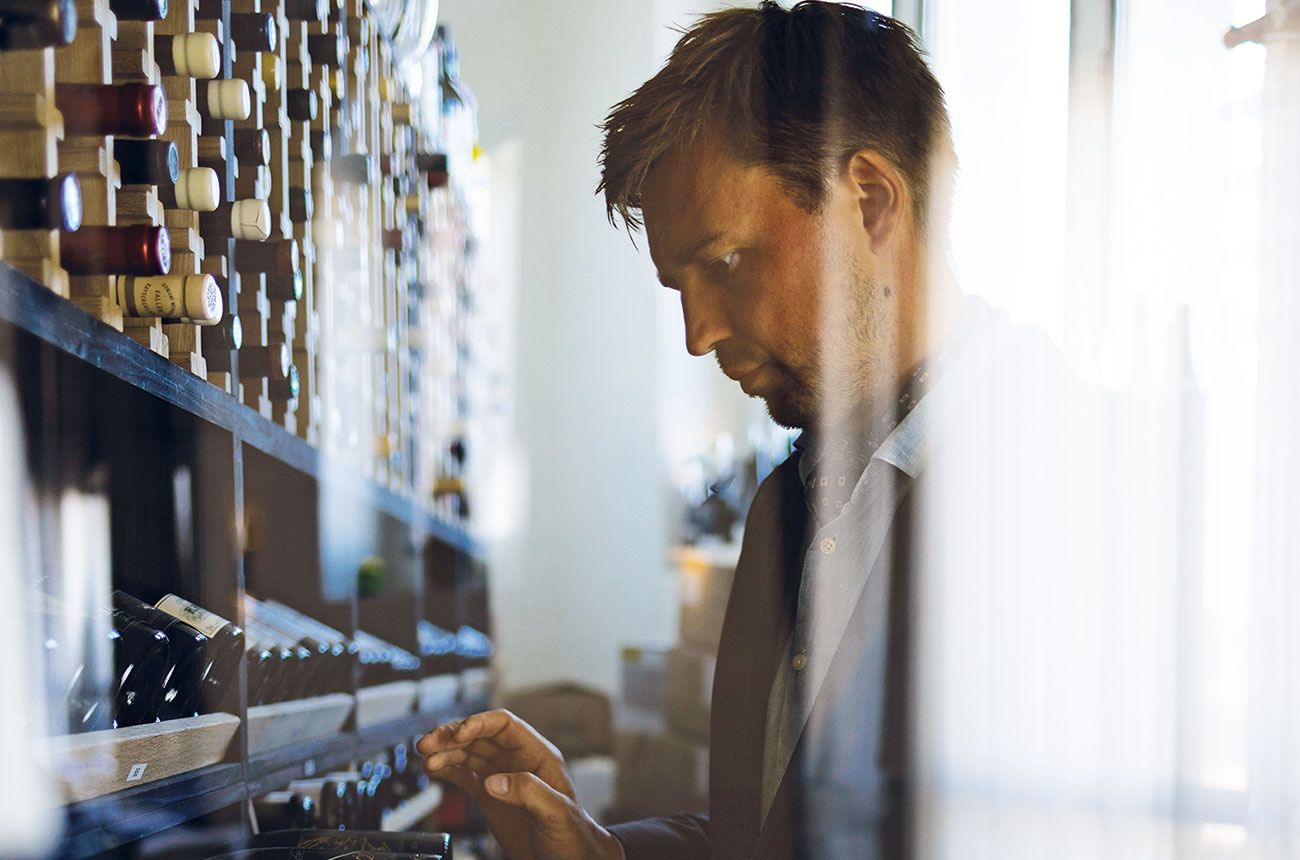
His after-work routine reveals a refreshingly simple palate despite his sophisticated profession. Nielsen describes himself as "a simple man," finding solace in "a slice or two of rye bread with whatever cold cut or cheese I have in the fridge," invariably accompanied by "a glass of whichever leftover Champagne is available from the restaurant." This pragmatic approach speaks to a sommelier’s commitment to minimizing waste while still indulging in the finest. Rye bread, a staple of Nordic cuisine, provides a hearty base, while the Champagne, always a symbol of celebration and refinement, offers a luxurious end to a demanding day.
Among the treasures on Koan’s wine list, Nielsen takes particular pride in offering Krug Clos du Mesnil by the glass. Krug, one of Champagne’s most prestigious houses, is synonymous with uncompromising quality and meticulous craftsmanship. Clos du Mesnil is their ultra-exclusive Blanc de Blancs (100% Chardonnay) Champagne sourced from a tiny, walled vineyard in Le Mesnil-sur-Oger. It is renowned for its extraordinary purity, intensity, and mineral complexity, commanding a premium price. Serving such an iconic and rare Champagne by the glass is a bold statement, reflecting Koan’s commitment to unparalleled luxury and allowing guests a unique opportunity to experience one of the world’s most coveted wines without committing to an entire bottle. This gesture underscores Nielsen’s dedication to providing exceptional experiences.
Another Danish gem that consistently surprises guests, and even Nielsen himself in blind tastings, is Njord. Located 65km west of Copenhagen, Njord is spearheaded by Sune Albertsen, whom Nielsen describes as "a true magician." Albertsen has "cracked the code" for producing exceptional Pinot Noir Précoce in Denmark. Pinot Noir Précoce is an early-ripening clone of Pinot Noir, particularly well-suited for cooler climates like Denmark, where a shorter growing season necessitates grapes that can reach phenolic ripeness efficiently. Njord’s success with this varietal highlights the innovative spirit and potential within the nascent Danish wine industry. The ability of this wine to consistently challenge assumptions in blind tastings speaks volumes about its quality and unique expression of terroir, making it a favorite for surprising guests at Koan.
While Nielsen is open to most wines depending on the food, he admits to a personal aversion to Gewürztraminer. Specifically, he cites Alsatian Gewürztraminer as a style he has "never really learned to enjoy." Gewürztraminer is an aromatic grape variety, particularly prominent in Alsace, known for its distinctive perfumed bouquet of lychee, rose petals, ginger, and exotic spices. While beloved by many for its unique character and ability to pair with spicier cuisines, its intense aromatics and often lower acidity can be polarizing. Nielsen’s candidness, stating "it’s not you, it’s me," reflects a sommelier’s acceptance of personal preference within a broader appreciation for diverse wine styles.
When asked about the wine region that currently excites him most, Nielsen’s answer is unequivocal: "Champagne, always Champagne." His profound and enduring passion for this iconic French region is evident. He professes he "could drink Champagne at any time of day," a sentiment shared by many wine enthusiasts. Champagne’s unparalleled versatility, ranging from bone-dry Brut Nature to rich Demi-Sec, its complexity, and its inherent association with celebration and joy, make it a perennial favorite for sommeliers and consumers alike. Its ability to pair with an extraordinary range of foods, from delicate oysters to robust roasted poultry, further solidifies its appeal.
Beyond the classics, Nielsen is keenly attuned to regions offering exceptional value for money. He champions Valais and Vaud in Switzerland, and Jurançon in southern France. Swiss wines, particularly from regions like Valais and Vaud, are often overlooked internationally due to low export volumes, with most production consumed domestically. However, Switzerland boasts a diverse range of indigenous grape varieties (like Petite Arvine, Amigne, Cornalin) and impressive quality, particularly from passionate younger producers. Nielsen specifically mentions Jordi Renard at Maison Vulpin in Vaud and Lucas Mandonia in Valais as examples of winemakers producing "super value for money" wines. Jurançon, nestled in the foothills of the Pyrenees in Southwest France, is renowned for its distinctive dry and sweet white wines made primarily from Gros Manseng and Petit Manseng grapes. These wines are characterized by vibrant acidity, aromatic complexity (often notes of citrus, passionfruit, and spice), and a unique texture, offering excellent alternatives to more expensive white wines from other regions.
His favorite wine region to visit, unsurprisingly, is Champagne. He enjoys staying in Reims, one of the two main cities in the region, which serves as a historical hub for many grand Champagne houses. A cherished destination during his visits is Brasserie Le Jardin, appreciated for its "beautiful location and great food and wine." Reims offers a rich cultural experience alongside its viticultural heritage, with its stunning cathedral, historic cellars, and vibrant culinary scene, making it a perfect retreat for a wine professional.
Reflecting on his earliest days in hospitality, Nielsen recalls his "most embarrassing moment" – an unfortunate incident during his very first job where he "dropped a full tray of welcome drinks down a guest’s neck." This candid anecdote provides a humorous, humanizing glimpse into the inevitable missteps that accompany a nascent career in service, highlighting the steep learning curve and the pressures of front-of-house roles. It underscores the dedication required to overcome such moments and grow into a seasoned professional.
Lasse Peder Nielsen’s journey from an inquisitive 18-year-old to a distinguished sommelier and general manager at a two-Michelin-starred establishment like Koan exemplifies a profound commitment to the art of hospitality and the world of wine. His insights, preferences, and meticulous approach to wine curation not only enhance the dining experience at Koan but also contribute significantly to the broader discourse on wine appreciation and the evolving landscape of fine dining. Through his leadership, Koan continues to push boundaries, offering guests a unique blend of culinary innovation and an expertly curated wine program that reflects both global excellence and exciting local discoveries.