admin
admin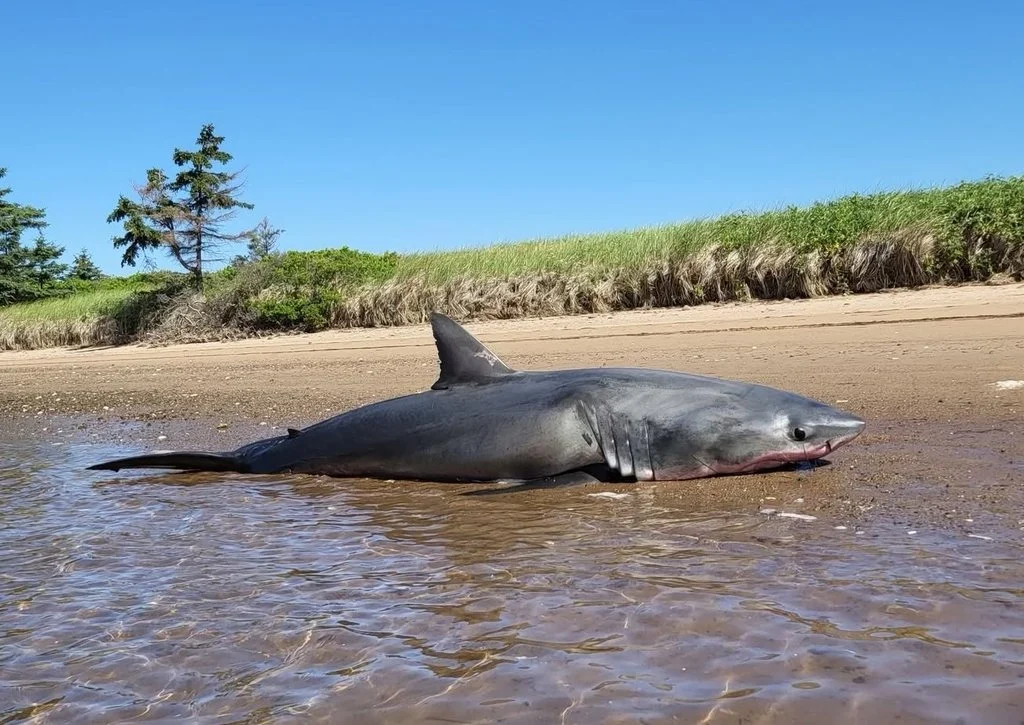
The discovery of a massive 580-kilogram male great white shark, measuring an imposing four meters in length, on a beach near Pictou, Nova Scotia, has initiated a comprehensive scientific inquiry into the cause of its death. The majestic predator, whose weight is comparable to that of a fully grown polar bear, was found last Friday, triggering an immediate response from marine researchers and conservationists. The Marine Animal Response Society (MARS), a Nova Scotia-based non-profit dedicated to marine animal welfare, swiftly mobilized its team to the site, where a meticulous necropsy was conducted over the weekend.
Unraveling the Mystery: Initial Findings and Investigation
Dr. Laura Bourque of the Canadian Wildlife Health Co-operative (CWHC) in Prince Edward Island led the initial examination. On Monday, MARS issued an online statement confirming that despite the thorough necropsy, no immediate or obvious cause of death could be determined. This lack of a clear conclusion underscores the complexities often encountered in marine mammal and fish pathology, necessitating more advanced diagnostic testing. The carcass’s relatively fresh condition proved crucial for the scientific team, enabling the collection of high-quality samples vital for subsequent laboratory analyses. MARS emphasized the profound importance of prompt reporting of marine animal strandings, stating, "The sooner an animal is reported, the more we can learn. Fresh examinations allow us to collect higher-quality samples, document findings more accurately, and gather valuable information about species that are rarely available for scientific study." This incident highlights the critical role of public vigilance and rapid scientific intervention in advancing understanding of these elusive creatures.
The investigation is now moving into a more intricate phase, involving specialized laboratory tests. Tissue samples, organ specimens, and other biological materials collected during the necropsy will undergo detailed histopathological, toxicological, and microbiological analyses. These tests aim to detect potential underlying health issues such as disease, parasitic infections, exposure to harmful toxins, or physical trauma not evident in the initial macroscopic examination. The CWHC, a national program dedicated to monitoring wildlife health, will be instrumental in processing these samples, which could take several weeks or even months to yield definitive results.
A Chronology of Discovery and Response
The sequence of events began on a Friday when local residents or beachcombers in the Pictou area first reported the presence of the deceased shark. The initial report quickly reached the Marine Animal Response Society, whose protocols for such large marine animal strandings were immediately activated. A team of trained responders, including veterinarians and marine biologists, was dispatched to the remote beach location. The logistical challenges of managing a four-meter, 580-kilogram specimen on a beach are considerable, often requiring specialized equipment and coordination with local authorities or community volunteers for safe access and handling.
Upon arrival, the MARS team secured the site and began preliminary assessments. Recognizing the scientific value of a fresh great white shark carcass, the decision was made to perform an on-site necropsy. This painstaking process, which took place throughout the weekend, involved a systematic external examination for signs of injury, entanglement, or unusual markings, followed by a detailed internal examination of organs, tissues, and stomach contents. Dr. Bourque, a seasoned wildlife veterinarian, meticulously documented all findings, ensuring that no potential clue was overlooked. The successful completion of the necropsy under challenging field conditions allowed for the preservation of critical evidence and the collection of numerous samples, which were then transported to the CWHC laboratory for further analysis. This rapid and coordinated response exemplifies the dedication of marine conservation groups in Canada.
Great White Sharks in Atlantic Canada: A Shifting Landscape
The presence of a great white shark in Nova Scotian waters is no longer as rare an occurrence as it once was, reflecting significant shifts in marine ecosystems and successful conservation efforts. Over the past decade, sightings of great white sharks have become notably more frequent across Atlantic Canada, a trend observed and documented by various marine research and monitoring organizations.

A primary factor contributing to this resurgence is the robust recovery of the North Atlantic great white shark population, a testament to decades of concerted conservation measures. Great white sharks (Carcharodon carcharias) have been a protected species in Canada since 2011 under the Species at Risk Act, and in the United States since 1994. These protections, which include bans on hunting and strict regulations on fishing practices that might incidentally catch sharks, have allowed the population to rebound from a drastic decline observed in the 1970s and 1980s. This recovery is a significant conservation success story, indicating the resilience of apex predators when given the necessary protections.
Beyond conservation, two major environmental and ecological factors are driving the increased presence of these sharks in Canadian waters:
-
Climate Change and Warmer Ocean Temperatures: Scientific evidence strongly suggests that climate change is leading to warmer ocean temperatures globally, and the North Atlantic is no exception. These warmer waters allow marine species, including great whites, to extend their geographic ranges northward and to spend longer periods in areas previously considered too cold. As their preferred temperature zones shift, so too do their migratory patterns, bringing them into Canadian coastal waters with greater frequency and for extended seasons. This expansion is not unique to great whites; many marine species are adapting their distribution in response to changing ocean conditions.
-
Abundant Food Supply: A thriving population of grey seals in Atlantic Canada provides an irresistible draw for great white sharks. Grey seals are a primary food source for great whites, particularly larger, mature individuals. Regions like Sable Island, a major breeding ground for grey seals, act as a natural magnet for these predators. The health and abundance of the grey seal population, itself a conservation success, has created an ample and readily available food source, effectively extending the great white’s hunting grounds into the Gulf of St. Lawrence and along the Nova Scotian coastline. This ecological balance underscores the intricate web of marine life and the critical role of apex predators in maintaining ecosystem health.
Organizations like OCEARCH, known for their shark tagging and tracking initiatives, have provided invaluable data illustrating the migratory patterns of great white sharks along the North American East Coast, with many individuals spending significant time in Canadian waters during warmer months. This data, combined with citizen science initiatives and increased public awareness, contributes to the perception and reality of more frequent sightings.
Expert Commentary and Official Responses
The Marine Animal Response Society, through its spokesperson, reiterated the critical importance of public engagement in marine animal conservation. "Every stranding, every sighting, provides a piece of the puzzle," a MARS representative might state. "The public are our eyes and ears on the coast, and their quick reporting allows us to respond effectively, gather data, and ultimately contribute to the scientific understanding and protection of these incredible animals." MARS emphasizes that while the death of such a magnificent creature is tragic, it represents an unparalleled opportunity for scientific learning.
From the Canadian Wildlife Health Co-operative, Dr. Laura Bourque or a CWHC spokesperson would likely emphasize the rigorous scientific process involved in determining the cause of death. "Diagnosing mortality in large marine animals like great white sharks is a complex undertaking," a CWHC statement might explain. "We are looking for a mosaic of clues – from microscopic tissue changes to environmental factors. The initial necropsy provides a snapshot, but the comprehensive lab work is where we hope to find the definitive answers. This collaboration between MARS and CWHC is vital for wildlife health surveillance in Canada."
The Department of Fisheries and Oceans (DFO) Canada, which oversees marine conservation and fisheries management, would likely acknowledge the ongoing research into great white shark populations and their movements. A DFO representative might state, "The DFO continues to monitor the health and distribution of all marine species, including species at risk like the great white shark. This incident provides valuable data that will contribute to our understanding of their ecology in Canadian waters and inform future conservation strategies." DFO often highlights the importance of respecting marine wildlife and maintaining safe distances, particularly with apex predators.
Marine biologists and shark experts from academic institutions would echo the sentiment of opportunity for research. Dr. Chris Harvey-Clark, a marine biologist specializing in sharks at Dalhousie University (or a similar institution), might comment, "A fresh great white shark carcass of this size is a scientific goldmine. It allows us to study internal organ health, potential disease vectors, diet through stomach contents, and even genetic markers that can tell us about population structure. Every data point helps us build a more complete picture of this species’ health and its role in our changing ocean." Such experts might also speculate on potential natural causes, such as age-related issues, undetected disease, or even a rare interaction with another large marine animal, though a full-grown great white has few natural predators.

Broader Impact and Implications: Coexistence and Public Safety
While the increased presence of great white sharks in Atlantic Canadian waters signals a success in conservation and a healthier ecosystem, it also prompts important discussions about human-wildlife coexistence and public safety. It is crucial to contextualize these sightings within historical data regarding shark encounters.
According to the St. Lawrence Shark Observatory, which meticulously tracks shark incidents in Canadian waters, fatal shark attacks are exceedingly rare. The observatory’s database, spanning back to 1691 with 30 recorded incidents, notes only one confirmed fatality: a July 1953 incident where a shark rammed a lobster boat, causing it to capsize and resulting in the drowning of a fisherman, though he was not bitten. Four other historical fatalities are classified as "plausible" but lack definitive evidence. The vast majority of the 24 other recorded shark encounters did not result in human injury. This historical data provides a crucial perspective, emphasizing that while sightings are increasing, direct harmful encounters remain extremely uncommon.
Despite the historical rarity, recent years have seen a few notable incidents that have heightened public awareness and concern in Nova Scotia:
-
August 2021, Margaree Island, Cape Breton: The RCMP reported that a 21-year-old woman allegedly sustained a shark bite while swimming near Margaree Island. She was airlifted to a hospital for stitches on her thigh. However, the St. Lawrence Shark Observatory’s Canadian Shark Attack Registry critically assessed this case. Citing a lack of photographic evidence, forensic analysis of the wound, or direct testimony from those involved to definitively identify the species, the registry classifies it as a "plausible shark bite involving a swimmer, with the balance of evidence strongly favouring a white shark." This cautious classification highlights the scientific rigor applied to such claims, demanding concrete evidence before definitive conclusions are drawn. Nevertheless, the incident served as a stark reminder of the potential for encounters.
-
October 2023, Port Medway, N.S.: An anonymous hunter reported that a shark had killed his dog while it was retrieving a sea duck close to shore near Port Medway. While this report also lacked official confirmation or detailed investigation, it contributed to the narrative of increasing interactions between humans, their pets, and marine predators in coastal areas.
These incidents, whether confirmed or plausible, underscore the need for public education and awareness campaigns, such as "Shark Smart" initiatives, which provide guidelines for safe swimming and recreational activities in areas where sharks may be present. These guidelines typically advise against swimming at dawn or dusk, avoiding areas with known seal populations, refraining from wearing shiny jewelry, and not swimming alone.
The death of the Pictou great white shark serves as a powerful, albeit somber, reminder of the dynamic nature of our marine environment. It offers scientists an invaluable opportunity to delve deeper into the biology, health, and migratory patterns of these apex predators. The findings from the ongoing analysis will not only shed light on this individual animal’s fate but also contribute to the broader scientific understanding of great white shark populations in the North Atlantic, their ecological role, and the long-term implications of a changing climate and successful conservation efforts for marine ecosystems and human-wildlife interactions along Canada’s coastlines.