admin
admin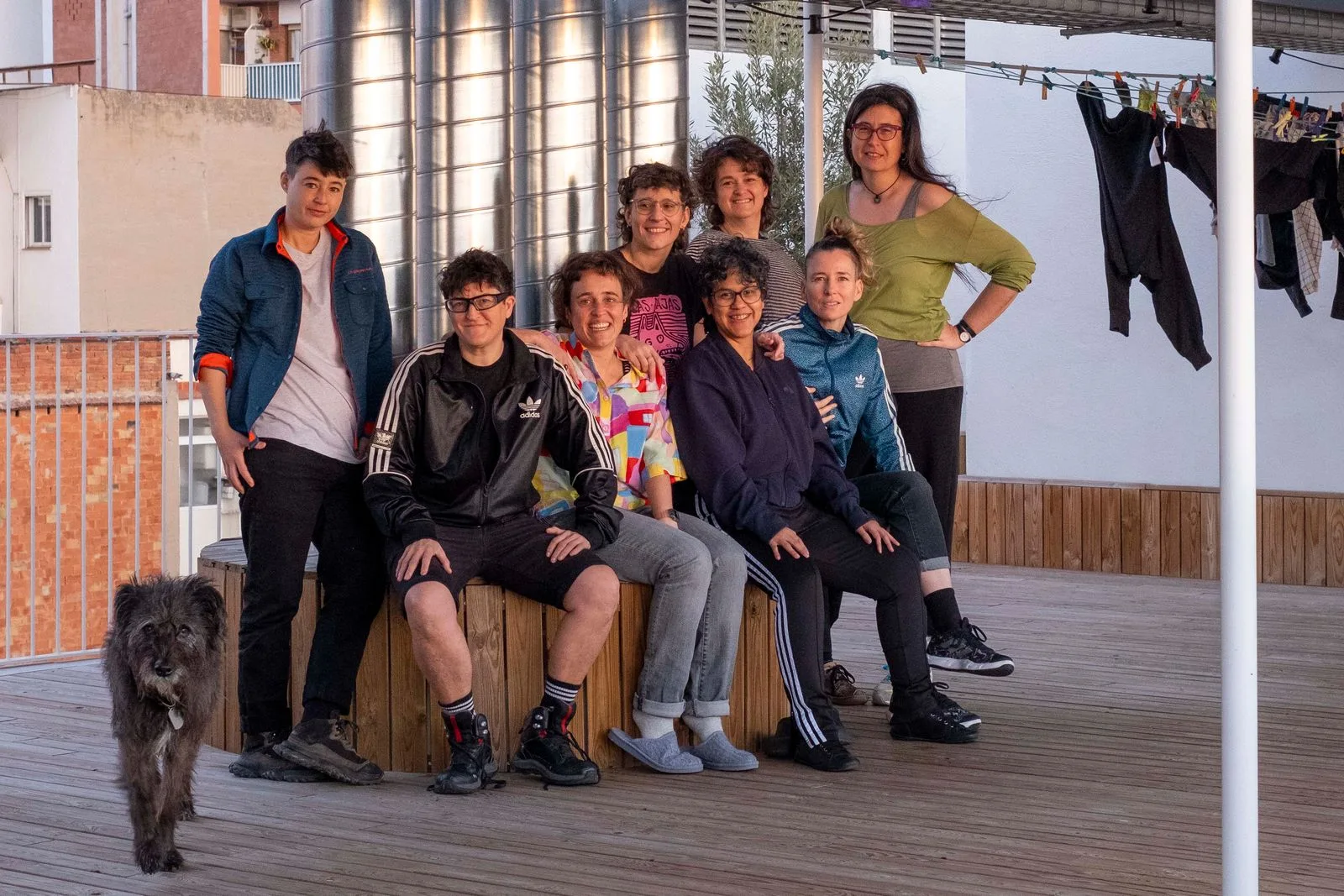
In the vibrant Gràcia district of Barcelona, amidst the historic charm and burgeoning urban pressures, La Morada stands as a testament to innovative communal living, where mutual aid and chosen family are not just ideals but daily realities. At any given moment, the scene at La Morada might involve one resident requesting assistance with groceries from a neighbor or extending an invitation for the entire building to partake in dinner leftovers. "There are always people going up and down from one apartment to another," affirms Silvia "Sfer" Fernández, a 48-year-old librarian, encapsulating the ceaseless flow of interaction within the cooperative. This unique housing model, described on its official website as a feminist cooperative, is home to 17 queer women and trans or gender-nonconforming adults across its 12 apartments, alongside two children and six beloved pets—three cats and three dogs—all contributing to a lively, interconnected ecosystem.
The Genesis of La Morada: A Vision for Collective Living
The establishment of La Morada is deeply rooted in a confluence of contemporary urban challenges and a historical tradition of social movements in Barcelona. The city, like many major European hubs, has grappled with escalating housing costs, gentrification, and a critical shortage of affordable and inclusive living spaces. For marginalized communities, particularly LGBTQ+ individuals, these challenges are often compounded by experiences of discrimination, a lack of safe environments, and the systemic erasure of non-traditional family structures.
The concept for La Morada began to coalesce around 2017-2018 among a group of individuals seeking an alternative to the speculative housing market and a desire to cultivate a living environment aligned with feminist and queer liberation principles. They envisioned a space that would prioritize collective well-being, sustainability, and mutual support over individual property ownership and profit. This vision was not merely about housing; it was about creating a resilient community, a "chosen family" that could offer emotional, practical, and economic support, countering the isolation often experienced in mainstream society.
The journey from concept to reality involved navigating complex legal and financial frameworks. Spain has seen a growing interest in housing cooperatives, particularly the "right-of-use" model (cooperativa de cesión de uso), which La Morada adopted. Unlike traditional ownership, residents do not own their individual apartments but rather acquire a right to use them indefinitely through a share in the cooperative, which collectively owns the entire building. This model significantly reduces entry costs, eliminates mortgage interest, and insulates residents from market fluctuations, ensuring long-term affordability and stability. The cooperative secured a building in Gràcia, a district known for its village-like atmosphere and strong community ties, an ideal location for their vision. The subsequent renovation and adaptation of the building to suit communal living, including the creation of shared spaces and accessibility features, spanned several years, culminating in residents moving in around 2020-2021.
A Tapestry of Support: Daily Life and Community Dynamics
Life at La Morada is characterized by an intricate web of mutual support and shared responsibilities, far exceeding the casual interactions typical of apartment buildings. The spontaneous requests for grocery assistance or the generous sharing of dinner leftovers, as described by Sfer Fernández, are emblematic of a deeper commitment to collective care. Beyond these everyday exchanges, the cooperative fosters a culture where members routinely assist with childcare, pet-sitting, and offering emotional solace during challenging times. Skill-sharing is also prevalent, with residents leveraging diverse professional and personal talents—from repairs and tech support to gardening and legal advice—for the benefit of the entire community.
Collective decision-making is central to La Morada’s operation. Regular meetings are held to discuss everything from maintenance issues and financial planning to social events and conflict resolution. This horizontal governance structure, rooted in feminist principles, ensures that every voice is heard, and decisions are made through consensus or democratic vote, reinforcing a sense of shared ownership and responsibility for the cooperative’s well-being. The physical layout of La Morada also facilitates this communal lifestyle. While each resident enjoys the privacy of their own apartment, shared amenities such as a common kitchen and dining area, laundry facilities, a garden, or a rooftop terrace provide natural gathering points, encouraging spontaneous interaction and planned collective activities. These spaces are intentionally designed to foster connection, allowing the residents to truly live as an extended family.
Beyond Walls: The Broader Context of Cooperative Housing
La Morada is not an isolated phenomenon but rather a vibrant example within a growing global movement towards cooperative housing, particularly in urban centers grappling with housing crises. The "right-of-use" model, prevalent in various European countries like Denmark, Germany, and Switzerland, and gaining traction in Spain, offers a powerful alternative to both speculative private ownership and traditional rental markets. Recent data from organizations like Housing Europe indicates a steady increase in cooperative housing initiatives across the continent, driven by a desire for affordability, community, and sustainability. In Catalonia, the social and cooperative housing sector has seen significant growth, with initiatives often supported by municipal governments eager to diversify housing options and combat gentrification.
Economically, housing cooperatives like La Morada offer significant benefits. By removing profit motives, they provide stable and genuinely affordable housing, shielding residents from volatile market rents and property values. Members typically pay an initial capital contribution and then a monthly fee that covers operational costs, maintenance, and collective services, which is often substantially lower than market rates for comparable housing. Environmentally, cooperative living often promotes a more sustainable lifestyle through shared resources, reduced individual consumption, and collective efforts towards energy efficiency and waste reduction. Socially, these models actively combat urban loneliness and isolation, fostering strong community bonds, improving mental well-being, and creating resilient networks of support. For the children growing up in La Morada, this environment offers an extended network of caregivers and diverse role models, enriching their development within a secure and loving community.
Addressing Specific Needs: Queer and Feminist Spaces
The intentional focus on creating a space for queer women and trans or gender-nonconforming adults is a critical aspect of La Morada’s mission and impact. Research consistently shows that LGBTQ+ individuals face disproportionately higher rates of housing discrimination, insecurity, and homelessness compared to their heterosexual and cisgender counterparts. Studies from organizations like the Williams Institute at UCLA School of Law highlight that LGBTQ+ youth are significantly more likely to experience homelessness, and adults often face challenges finding safe and affirming housing, particularly older LGBTQ+ individuals.
La Morada directly addresses these vulnerabilities by providing a sanctuary where residents can live authentically without fear of judgment, discrimination, or violence. It cultivates an environment of affirmation and belonging, which is crucial for psychological well-being and social integration. The concept of "chosen family" is particularly salient within LGBTQ+ communities, often serving as a vital support system when biological families may be unsupportive or absent. La Morada institutionalizes this concept, creating a formal structure for chosen family to thrive, offering emotional, practical, and spiritual support that might otherwise be lacking.
Furthermore, the cooperative’s foundational feminist principles permeate every aspect of its operation. This includes a commitment to egalitarianism, challenging patriarchal power structures, prioritizing care ethics, and ensuring inclusive decision-making processes. For residents who have historically experienced marginalization and disempowerment, living in a space where these values are actively upheld can be profoundly empowering and healing. It creates a micro-society that actively seeks to dismantle the very inequalities that exist in the broader world, offering a model for how a more equitable future could be constructed, one community at a time.
Official Recognition and Future Implications
The model exemplified by La Morada aligns well with Barcelona’s increasingly progressive municipal policies aimed at expanding social housing and promoting diverse housing models. The city council has actively supported the development of housing cooperatives and other non-speculative housing initiatives as a means to tackle the housing crisis and foster more inclusive urban development. Housing experts and urban planners frequently cite such cooperatives as crucial components of a resilient urban fabric, offering innovative solutions to housing affordability, social cohesion, and environmental sustainability. While specific official statements on La Morada itself might not be publicly available, the general policy direction in Barcelona indicates a supportive environment for such community-led projects.
The replicability of the La Morada model, while inspiring, comes with its own set of challenges. Securing initial funding, navigating complex legal frameworks for cooperative ownership, and assembling a cohesive group of individuals committed to collective living are significant hurdles. However, the success of La Morada demonstrates that these challenges are surmountable with dedication, clear vision, and supportive policy environments. Its existence serves as a powerful blueprint for other marginalized communities, whether based on gender identity, sexual orientation, ethnicity, age, or disability, who seek to create similar self-determined, supportive living arrangements. The long-term sustainability of such cooperatives relies on continued financial prudence, robust governance structures, and the enduring commitment of its members to the shared vision.
In conclusion, La Morada transcends the conventional definition of housing; it is a vibrant social experiment, a living manifesto for a more equitable and compassionate way of life. By integrating feminist and queer principles with the practicalities of cooperative living, it offers a powerful response to the alienation and insecurity often prevalent in contemporary urban environments. It stands as a testament to the power of community, resilience, and the unwavering belief that a better, more supportive home can be built, not just for oneself, but for an entire chosen family.