admin
admin
The culinary landscape of Los Angeles is a fiercely competitive arena, yet within this vibrant ecosystem, Apollonia’s Pizzeria has carved out a distinctive niche, evolving from a local "mom-and-pop" shop into a revered institution with a growing footprint. Founded in 2012 by Justin De Leon, the pizzeria has strategically refined its offerings, cultivated impactful partnerships, and recently expanded its operations, demonstrating a nuanced understanding of both culinary excellence and strategic business development. De Leon’s journey reflects a commitment to quality, community, and the subtle art of adaptation in a dynamic urban market.
The Genesis of a Neighborhood Gem: From Concept to Culinary Cornerstone
When Apollonia’s Pizzeria first opened its doors in 2012, its ambition was rooted in a straightforward, yet profound, vision: to establish a quintessential neighborhood pizzeria. De Leon, a native of the very Los Angeles community where he chose to launch his venture, imbued the project with personal significance. The initial concept embraced versatility, offering patrons the full spectrum of pizzeria experiences—from a quick grab-and-go slice to a full dine-in meal or convenient delivery. Early on, Apollonia’s distinguished itself through its ingredient selection, featuring "exotic sausages and fresh organic produce," a subtle nod to the burgeoning farm-to-table movement that was gaining traction in California. This emphasis on quality ingredients, even in a casual setting, set an early precedent for the pizzeria’s commitment to excellence.
Over the past decade, however, De Leon and his team embarked on a deliberate journey of refinement. Recognizing that sustained growth and consistency often hinge on operational efficiency, the focus shifted towards "simplifying and refining our menu, our process and our execution." This strategic streamlining is a common trajectory for successful eateries, allowing them to scale without compromising the quality that initially captivated their customer base. In a city like Los Angeles, where culinary trends shift rapidly and competition from diverse gastronomic offerings is intense, a clear, well-executed vision is paramount. The decision to distill their offerings was not about reducing quality, but rather enhancing it through focus and consistency, ensuring every pizza delivered the exceptional experience Apollonia’s aimed for.
Crafting the Perfect Pie: A Deep Dive into Apollonia’s Distinctive Pizza Styles
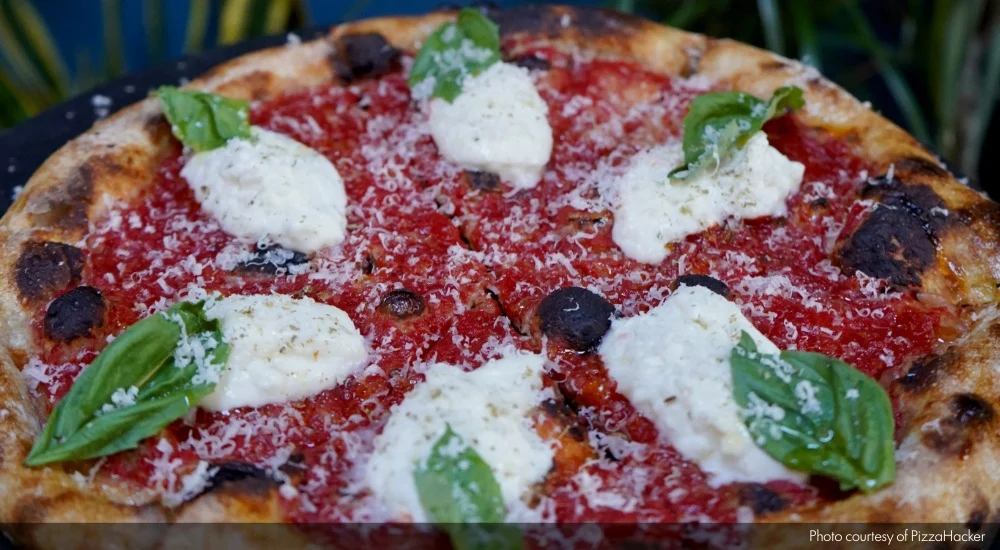
At the heart of Apollonia’s success lies its distinctive approach to pizza making, which masterfully blends traditional techniques with innovative interpretations. The foundation for both their round and square pizzas is a meticulously developed dough recipe. This dough, central to their identity, begins with a starter—a living culture of yeast and bacteria that imparts depth of flavor and a unique texture. It boasts a mid-70% hydration level, indicating a relatively wet dough that contributes to a tender crumb and crisp crust. A prolonged fermentation process, involving bulk fermentation followed by a 24- to 48-hour proof, is critical. This extended period allows enzymes to break down starches, developing complex flavors and improving digestibility, a hallmark of artisanal bread and pizza making.
Apollonia’s offers two primary styles, each drawing inspiration from distinct pizza traditions. Their round pizzas are "East Coast inspired: thin, crispy and foldable." This style, often associated with New York-Neapolitan traditions, emphasizes a delicate balance of chewiness and crispness, designed for the quintessential foldable slice experience. It speaks to a segment of the market that appreciates classic, unpretentious pizza.
In contrast, their square pizzas offer a contemporary twist on a beloved regional style. While "Detroit-inspired," they are crafted to be "much airier, with a crumb that’s closer to Roman-style or focaccia." This innovative hybrid approach marries the structural integrity and signature cheese "frico" crust of Detroit-style pizza—a caramelized, crispy cheese edge formed where the cheese meets the pan—with the lighter, more open texture characteristic of Roman pizza al taglio or Italian focaccia. Detroit-style pizza has seen a significant surge in popularity across the United States in recent years, celebrated for its thick, rectangular crust, generous toppings, and the aforementioned frico. By introducing an airier crumb, Apollonia’s elevates the experience, offering a lighter yet equally satisfying square pie that stands apart from more traditional, denser Detroit offerings. This dual approach to pizza styles allows Apollonia’s to cater to a broader range of preferences while showcasing their technical mastery and creative vision.
Forging Connections: The Power of Strategic Partnerships
Beyond the quality of its pizza, Apollonia’s has distinguished itself through a proactive and discerning approach to partnerships and collaborations. De Leon highlights that these connections have been instrumental in allowing Apollonia’s to "grow beyond the neighborhood pizzeria we set out to be." The partnerships mentioned, such as those with high-profile entities like Airbnb and the critically acclaimed Netflix series Chef’s Table, underscore the brand’s elevated standing and broad appeal. These collaborations are not merely transactional but are carefully selected to align with the pizzeria’s core values, brand identity, and the desired customer experience.
The decision-making process for these partnerships is deliberate, guided by the principle that "not every opportunity is the right fit." This selective approach is crucial for maintaining brand integrity and ensuring that collaborations genuinely enhance the business rather than diluting its message. For instance, a partnership with Chef’s Table, a show celebrated for its deep dives into culinary artistry, signals Apollonia’s commitment to high-quality ingredients and meticulous craftsmanship, resonating with a discerning, food-aware audience. Similarly, an association with Airbnb could introduce their unique pizza experience to a global network of travelers seeking authentic local experiences, further expanding their reach beyond immediate neighborhoods.
These collaborations offer multifaceted benefits. They provide invaluable marketing exposure, introducing Apollonia’s pizza to "new people" and opening "doors we never expected." This external validation and expanded visibility are particularly vital in Los Angeles, a city saturated with culinary options. Furthermore, these opportunities offer significant professional development for the staff, giving them the chance to "cook for different audiences and outside the four walls of our restaurant." Such experiences can boost morale, enhance skills, and reinforce a sense of pride and ownership among the team, contributing to a stronger, more adaptable workforce. In essence, Apollonia’s partnerships are a testament to strategic networking, transforming a local business into a brand recognized and respected across broader cultural and culinary spheres.
The Art of Visual Storytelling: Photography in the Digital Age
Justin De Leon’s background in photography offers a unique lens through which he views the presentation and marketing of his culinary creations. In an era dominated by visual content and social media, the ability to capture food appealingly is not merely an aesthetic pursuit but a critical business imperative. De Leon’s primary tip—"Don’t think, just shoot!"—speaks to an intuitive, in-the-moment approach that prioritizes authenticity over contrived perfection. He believes that "a lot of great photos are lost by overthinking them," suggesting that genuine moments of culinary artistry are often fleeting and best captured spontaneously. This philosophy aligns with current trends in food photography, where naturalness and candidness often resonate more deeply with audiences than overly staged shots.

His practical advice includes leveraging "window light," a simple yet highly effective technique for food photography. Natural light provides soft, even illumination that enhances textures and colors, making food look fresh and appetizing without the need for complex lighting setups. Furthermore, De Leon encourages photographers to "get in close and intimate." This approach allows viewers to appreciate the intricate details of the food—the crispness of the crust, the melted cheese, the vibrant toppings—which might be lost in wider shots. He cites the example of finding beauty in "scratches on a well-used hotel pan," illustrating that true photographic artistry lies in recognizing the narrative within ordinary elements. This attention to detail, he asserts, is not just for photography but is equally vital in "making great pizza, too."
This integration of a photographic eye into the restaurant business is a powerful asset. In a market where Instagram and other visual platforms serve as primary discovery tools for diners, stunning food photography can significantly amplify a restaurant’s reach and appeal. High-quality visuals can convey the quality, passion, and unique identity of Apollonia’s before a customer even tastes the pizza, driving engagement and attracting new patrons. De Leon’s dual expertise ensures that Apollonia’s not only creates exceptional pizza but also effectively communicates that excellence visually, a crucial component of modern brand building.
Strategic Expansion: The Crenshaw Boulevard Chapter
The decision to open a second location on Crenshaw Boulevard marks a significant milestone in Apollonia’s trajectory, illustrating a calculated move born from stability and serendipity. De Leon recounts that the expansion was not actively sought but rather emerged as an opportune moment. After 13 years of dedication, the original location had achieved a level of operational maturity where it no longer demanded his "day-to-day involvement," granting him a newfound "freedom." This autonomy is often a prerequisite for successful expansion, indicating that the core business is robust and capable of thriving independently.
The opportunity arose when a friend persistently encouraged him to consider a recently vacated space on Crenshaw Boulevard, a site that had previously housed two other pizzerias. Despite initial reluctance, De Leon was struck by the premises’ condition: "immaculate and truly turnkey." A turnkey operation, requiring minimal upfront renovation and immediate usability, significantly reduces the financial burden and logistical complexities typically associated with new restaurant openings. This factor, combined with a landlord "more eager to have us than we were to open a second location," created a uniquely favorable environment for expansion. Such enthusiasm from a landlord often translates into more flexible lease terms and a supportive partnership, mitigating some of the inherent risks of a new venture.
The strategic rationale extended beyond the favorable conditions of the property. De Leon identified the Crenshaw neighborhood as a "pizza desert," an area underserved by high-quality pizzerias and "hungry for great pizza." This insight into local market demand is critical for successful expansion. Opening in an area with unmet demand reduces direct competition and allows a new establishment to quickly establish itself as a go-to option. For Apollonia’s, this expansion brought their journey "full circle," allowing them to once again establish a "neighborhood pizzeria" within their own broader community. This echoes the original mission of the first location, reinforcing their commitment to community-centric dining. The Crenshaw opening wasn’t just about growth; it was about reaffirming their identity and fulfilling a genuine community need, positioning them in the "right place at the right time."
Broader Implications and Future Outlook
Apollonia’s Pizzeria’s journey from a humble neighborhood spot to a two-location institution, bolstered by high-profile partnerships, offers valuable insights into the contemporary restaurant industry. Its success underscores several key strategic elements: the importance of a well-defined culinary identity, the courage to simplify and refine operations, the strategic leveraging of brand partnerships, the critical role of visual marketing, and the astute timing of expansion into underserved markets.
The emphasis on a meticulously crafted dough, combining East Coast crispness with an innovative, airy Detroit-Roman square, showcases a willingness to evolve and differentiate in a crowded market. This culinary distinctiveness, paired with De Leon’s keen photographic eye, allows Apollonia’s to stand out both on the plate and on digital platforms, vital for attracting and retaining a diverse customer base in Los Angeles.
Furthermore, the selective approach to collaborations with entities like Airbnb and Chef’s Table exemplifies how independent businesses can strategically elevate their brand without compromising their core values. These partnerships extend reach, enhance credibility, and provide unique growth opportunities that transcend traditional marketing channels.
The Crenshaw Boulevard expansion serves as a case study in organic, demand-driven growth. By identifying an underserved market and capitalizing on a turnkey opportunity, Apollonia’s demonstrated a sustainable model for scaling. This thoughtful expansion, rooted in community need and operational readiness, rather than aggressive, unfocused growth, positions Apollonia’s for continued success.
As Apollonia’s Pizzeria continues to evolve, its narrative remains one of authenticity, culinary innovation, and community integration. Justin De Leon’s leadership illustrates that sustained success in the competitive culinary world is not merely about making good food, but about building a cohesive brand, fostering meaningful connections, and adapting strategically to an ever-changing landscape. The institution he has built serves as a testament to the enduring appeal of a quality neighborhood pizzeria, thoughtfully scaled to meet modern demands.