admin
admin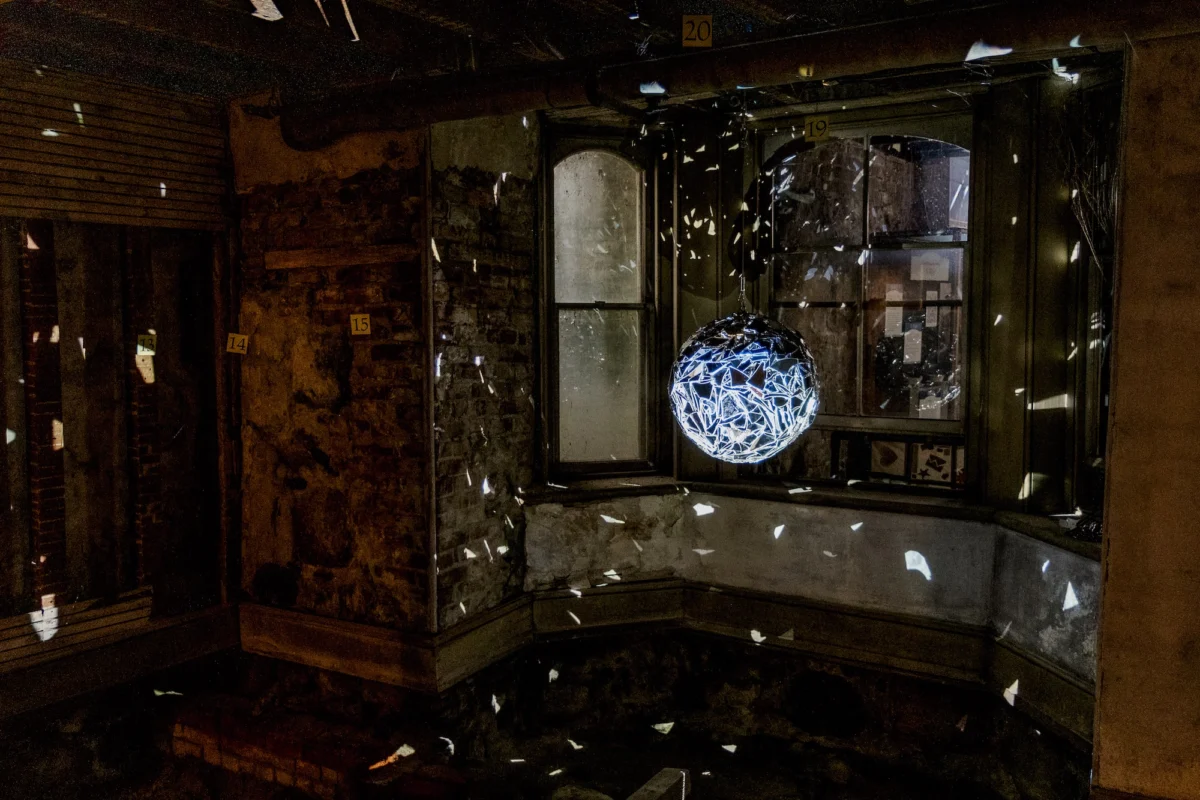
The historic corridors of Toronto’s Spadina Museum, an 1866 mansion that stands as a testament to the city’s colonial and industrial past, have been reimagined through the prism of contemporary interdisciplinary art. From August 26 through October 18, the museum hosts In Broken Light, a site-specific exhibition by artist Ry Van Der Hout. Curated by Adrien Sun Hall, the exhibition utilizes five distinct sculptural interventions to bridge the gap between the mansion’s rigid Victorian origins and contemporary explorations of identity, memory, and the "queer becoming."
By integrating photography, mirrors, and traditional stained-glass techniques into the fabric of the historic home, Van Der Hout challenges the traditional "frozen in time" approach of heritage sites. The exhibition does not merely place art within a room; it forces a dialogue between the physical remnants of the Austin family, who occupied the home for over a century, and the marginalized or overlooked narratives that have long resided in the shadows of the estate’s grand architecture.
The Methodology of Mending: Shattering as a Creative Act
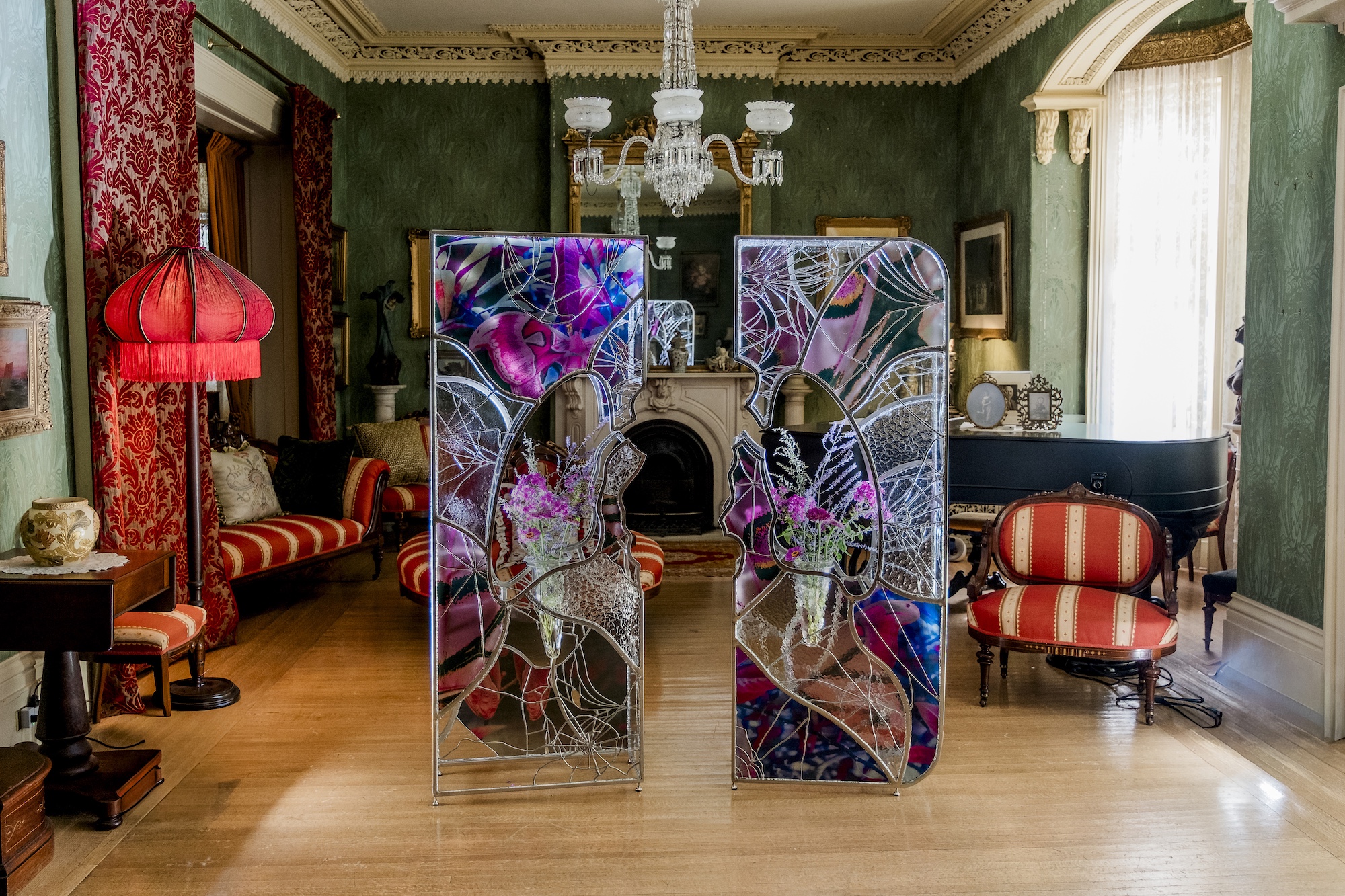
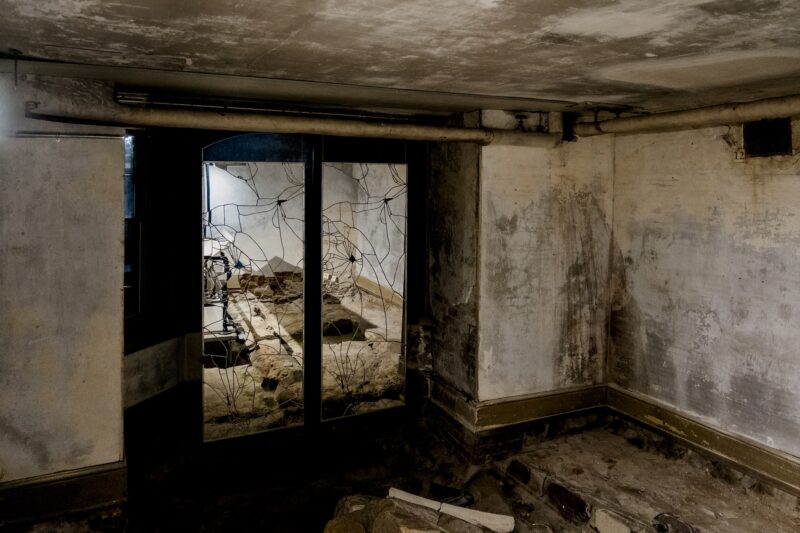
At the core of In Broken Light is a process of intentional destruction followed by meticulous restoration. Van Der Hout begins their practice by shattering mirrors and glass—an act typically associated with misfortune or finality. However, the artist then employs the traditional Tiffany stained-glass technique, a method popularized in the late 19th century, to solder the fragments back together. This technique involves wrapping the edges of glass pieces in copper foil before joining them with lead or tin solder, a labor-intensive process that results in intricate, web-like patterns.
According to curator Adrien Sun Hall, this process serves as a potent metaphor. "Ry Van Der Hout begins their sculptural practice with acts of intentional breaking, shattering glass and mirrors only to painstakingly solder them back together," Hall noted. "These intricately mended surfaces become metaphors for queer becoming and personal transformation. The fractures become apertures through which overlooked histories emerge."
By using a craft contemporary to the house’s most significant periods of expansion, Van Der Hout creates a material link between the past and the present. The mended fractures do not hide the damage; instead, they highlight the "scars" of the object, suggesting that identity is formed not by remaining whole, but by the way one integrates their various breaks and transitions.
Historical Context: The Legacy of Spadina Museum
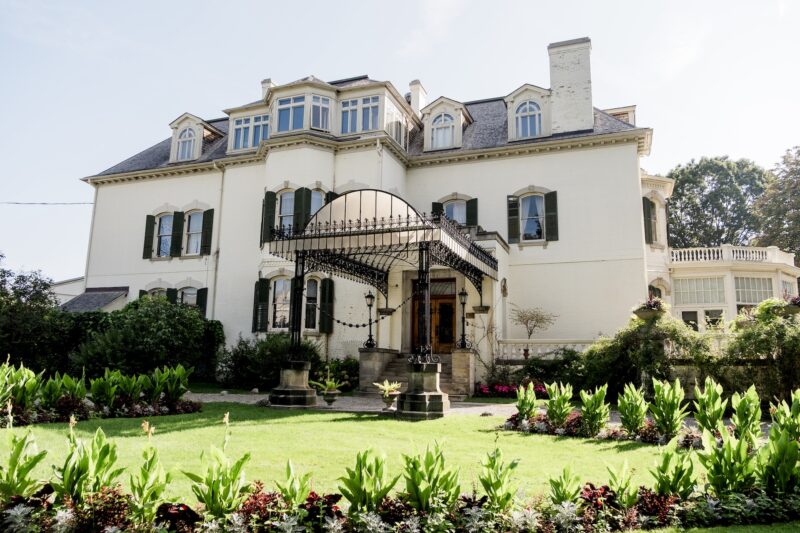
To understand the impact of In Broken Light, one must consider the historical weight of the venue. Spadina Museum, located atop a hill overlooking downtown Toronto, was the home of James Austin, the founder of the Dominion Bank and a prominent figure in 19th-century Canadian finance. The house underwent several major renovations, most notably in 1913, reflecting the evolving tastes and social standing of the Austin family through the Victorian, Edwardian, and Art Deco eras.
The museum today operates as a "period room" facility, where the domestic life of the upper class is preserved. However, like many colonial-era estates, the narratives typically highlighted are those of the wealthy owners. Van Der Hout’s work seeks to disrupt this focus by drawing on extensive research and consultations with historians, conservators, and descendants. The sculptures respond to the "stranger than fiction" stories of the house, including forbidden romances, the isolation of illness, and the invisible lives of the domestic staff who kept the estate running.
A Four-Story Journey: Key Installations
The exhibition is strategically placed across the four levels of the mansion, guiding visitors from the subterranean depths of the house to its highest, most secluded points.
The Basement: The Shattering
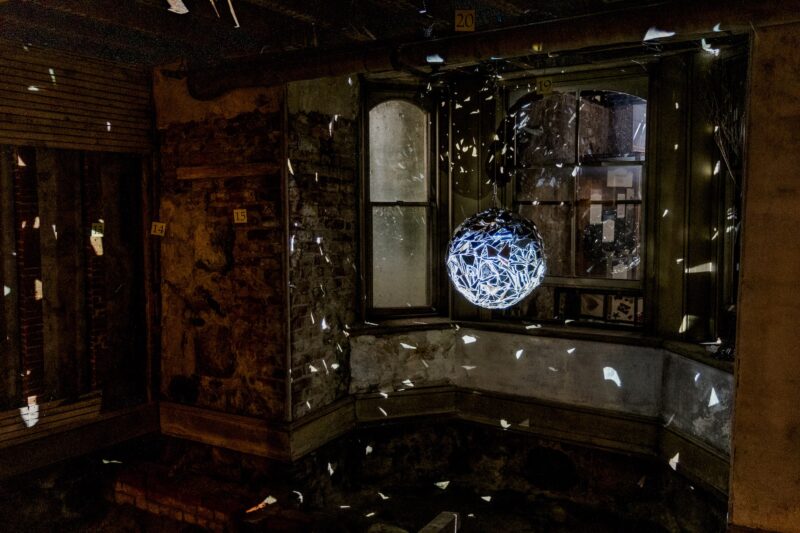
In the basement, which features a preserved archaeological dig site revealing the home’s original foundations, Van Der Hout has installed a work titled The Shattering. A fractured disco ball rotates slowly, accompanied by an audio track produced by NASA. The installation casts a kaleidoscopic mosaic of light onto the rough stone walls and infilled windows. This juxtaposition of a 1970s cultural icon—symbolic of queer liberation and nightlife—with the literal foundations of a 19th-century conservative household creates a temporal friction. The use of NASA audio expands the scope of the narrative from the domestic to the cosmic, suggesting that the "broken light" of human experience is part of a much larger, universal cycle of entropy and rebirth.
The Main Floors: Tiber and Orpheus Twice
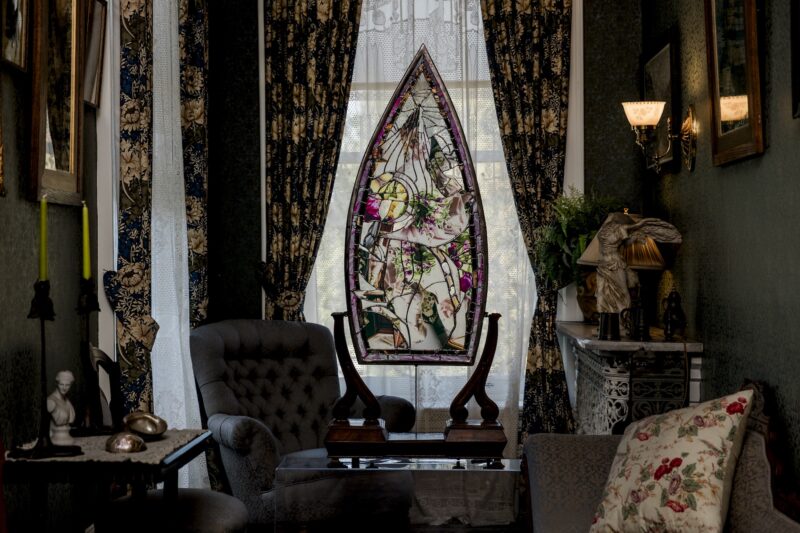
On the upper floors, where the Austin family entertained guests, the work Tiber takes center stage. This sculpture features a stained-glass rendering of photographs of Tiber, a contemporary historical interpreter at the museum. The piece is held within a reclaimed antique dressing-table mirror frame that Van Der Hout discovered in a dumpster near their studio. This "serendipitous" find anchors the work in the reality of discarded objects and reclaimed histories. It serves as a tribute to the individuals who currently maintain the museum’s legacy, blending the faces of the present with the furniture of the past.
The Third Floor: Open Wing Death
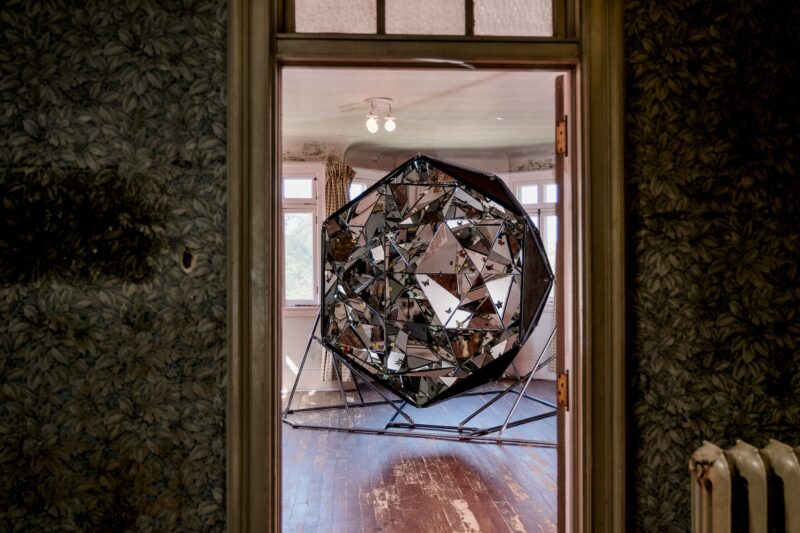
The exhibition’s largest and perhaps most poignant piece is Open Wing Death, a 12-foot-high ovoid geodesic dome. It is situated on the unrestored third floor, in a room added in 1913 specifically as a sunroom for a family member suffering from tuberculosis. At the time, sunlight and fresh air were the primary treatments for the "White Plague." Later, this space was repurposed as quarters for domestic staff.
The sculpture is dedicated to these staff members. The mirrored facets of the dome create a disorienting experience for the viewer; as one approaches the work, their own reflection is shattered and rearranged. This effect mirrors the experience of the domestic worker—someone who is present in the house but often invisible, or seen only through the lens of their utility.
Chronology of the Exhibition and Venue Development
The timeline of Spadina Museum’s evolution provides a backdrop for the exhibition’s themes of transformation:
- 1866: James Austin purchases the property and builds the initial structure.
- 1892-1913: Major expansions occur, including the addition of the third-floor sunroom and servant quarters.
- 1982: The Austin family deeds the house and its contents to the City of Toronto and the Ontario Heritage Foundation.
- 1984: Spadina Museum opens to the public as a heritage site.
- 2010: The museum undergoes a major interior restoration to reflect the 1920s and 30s.
- August 26, 2023: In Broken Light opens, marking a shift toward contemporary, inclusive storytelling.
Institutional Analysis: The Shift in Museum Curation
The hosting of In Broken Light reflects a broader trend within Toronto History Museums and global heritage institutions to "decolonize" and "queer" the museum space. For decades, historic houses were treated as shrines to the elite. However, current curatorial standards prioritize "Awakenings"—a term often used by Toronto’s cultural sector to describe the process of uncovering suppressed histories related to race, gender, and class.
Van Der Hout’s work serves as a bridge in this institutional transition. By using the aesthetic language of the past (stained glass, Victorian frames) to communicate contemporary themes (queer identity, domestic labor), the artist makes these "new" narratives accessible to a traditional museum-going public.
From a technical standpoint, the exhibition also highlights the challenges of site-specific installation in heritage environments. Conservators must ensure that contemporary works do not damage original wallpapers, floorings, or structural elements. The delicate balance achieved in In Broken Light demonstrates a sophisticated level of cooperation between the artist and the museum’s preservation team.
Broader Implications and Impact
The exhibition has prompted a variety of responses from the local community and art critics. Many observers note that the "brokenness" Van Der Hout explores is particularly resonant in a post-pandemic landscape, where social structures and personal identities have felt increasingly fractured.
The implications of the work extend beyond the walls of Spadina Museum. It suggests that the history of a city is not a fixed, linear path, but a collection of shards that can be reassembled in infinite ways. By placing a fractured disco ball in a Victorian basement or a geodesic dome in a TB ward, Van Der Hout asserts that "shattering isn’t the end of a story—it’s the beginning of a new narrative."
As Toronto continues to grapple with its identity as a rapidly modernizing metropolis with deep colonial roots, exhibitions like In Broken Light provide a necessary space for reflection. They remind the public that while the past is unchangeable, our way of seeing it—much like the light passing through Van Der Hout’s mended glass—is always subject to change.
In Broken Light remains on view at Spadina Museum through October 18. The museum is located at 285 Spadina Road, Toronto, and is accessible to the public during regular operating hours. Admission to the exhibition is typically included with museum entry, providing an opportunity for visitors to experience the intersection of 19th-century architecture and 21st-century sculptural innovation.