admin
A Legacy of Community Stewardship and Green Space Preservation
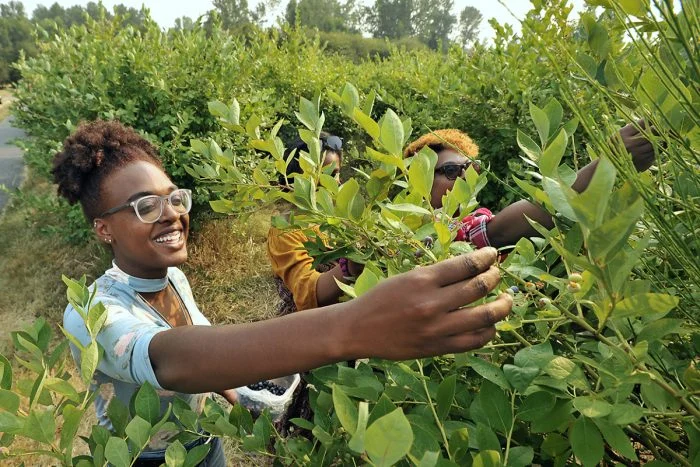
The transformation into a food forest is the latest chapter in a long history of community activism centered around the 23-acre parcel of land now known as Charlotte’s Blueberry Park. Located in Tacoma, Washington’s South End, a neighborhood characterized by its rich cultural diversity and significant socio-economic challenges, the park has served as a beacon of green space and local food production for decades. Its origins trace back to 1929, when the land was first farmed, eventually becoming the family-run Berg Blueberry Farm from 1952 to 1968. During this period, the farm supplied fresh berries to the local populace, embedding itself into the community’s fabric.
However, the land’s future was not always secure. In 1968, it was acquired by the Tacoma School District with plans to construct a new high school. This proposed development met with immediate and strong opposition from an organized and passionate neighborhood group. Their persistent advocacy successfully halted the school project, demonstrating an early commitment to preserving the land’s natural character and community value. The district eventually traded 23 acres of the northern section of the property to Parks Tacoma in 1994, intending to convert a portion into an elementary school, but neighbors again mobilized. They actively sought grants, developed strategic plans, and engaged in hands-on efforts to clear unwanted vegetation and protect the existing blueberry plants. Their collective action paid off, culminating in Parks Tacoma officially naming the site "Blueberry Park" in 1997, solidifying its status as a public recreational and agricultural asset.
Further testament to this enduring community spirit came in 2010 when the park was renamed Charlotte’s Blueberry Park. This renaming honored the late Charlotte Valbert, a tireless advocate and the founding member of the volunteer group Friends of Blueberry Park. Valbert’s unwavering dedication was instrumental in activating the park, transforming it from a mere patch of land into a cherished community asset. As Robb Krehbiel, a volunteer steward with the park, noted, "Her work really activated the park and made it an asset to the community." This foundation of grassroots protection and sustained volunteerism laid the groundwork for the ambitious food forest project.
Beyond its historical and recreational significance, Charlotte’s Blueberry Park provides critical ecological services. Its extensive wetlands play a crucial role in filtering pollutants, contributing to the health of the city’s drinking-water wells. The park’s diverse canopy of trees and other vegetation offers vital habitat for local wildlife, supports biodiversity, and helps mitigate the urban heat island effect, providing much-needed cooling to the surrounding residential areas. In 2018, the park expanded its community-focused offerings with the addition of a traditional community garden, allowing residents dedicated plots to cultivate their own vegetables, fruits, and flowers, with surplus produce often donated to South Tacoma residents and local food banks.
Addressing a Deepening Crisis: Food Insecurity in the South End

The creation of the food forest is a direct response to the escalating challenges of food access and security within Tacoma’s South End, an area officially recognized as a food desert. The neighborhood is one of Tacoma’s most racially and ethnically diverse, home to vibrant communities with roots spanning Mexico, Southeast Asia, and various parts of Africa. While this diversity enriches the cultural landscape, it also brings unique challenges related to food systems.
Conventional food access has long been a struggle. The situation was significantly exacerbated by the closure of a major Fred Meyer grocery store on Pacific Avenue in September 2025, with another Fred Meyer slated for closure in January 2027. These closures represent a substantial loss of retail grocery options for residents, particularly impactful in a neighborhood where public transportation infrastructure is often inadequate and private vehicle ownership is not universal. Rachel Kunze, who has worked extensively with Tacoma’s all-volunteer South End Neighborhood Council (SENC), vividly describes the geographical constraints: "The South End is a rectangle. I-5 wraps around the streets, and almost all of our grocery stores are in the front third of the rectangle. The back two-thirds of the population rely on one small Safeway and one tiny WinCo. It’s essentially a food desert." A food desert is defined by the USDA as an area with limited access to affordable and nutritious food, particularly for low-income populations. Such areas often lack supermarkets and grocery stores, relying instead on convenience stores and fast-food outlets that offer limited healthy options.
Compounding the issue of physical access is the difficulty many residents face in finding culturally familiar ingredients through standard grocery stores and food banks. Community consultations revealed a pervasive need for foods that resonate with the diverse culinary traditions of the neighborhood’s residents. As Robb Krehbiel articulated, "We have so many different cultures and nationalities in the area. We’re also a working-class neighborhood, so the increases in prices of almost everything hit us hard." This sentiment underscores how rising food costs, influenced by global events like new tariffs and the ongoing Iran war, disproportionately impact vulnerable communities.
Nationally, the scale of food insecurity is staggering, with an estimated 48 million Americans struggling to consistently put food on the table. The situation was further aggravated by policy changes in mid-2025, specifically the Republican budget bill passed in July, which resulted in over five million people losing critical food assistance provided through the Supplemental Nutrition Assistance Program (SNAP). These macro-level challenges magnify the local crisis in places like Tacoma’s South End, making community-based solutions like food forests increasingly vital. While the food forest is not intended to be a sole replacement for traditional grocery stores, it offers a crucial complementary pathway for residents to access nutritious foods that are both fresh and culturally relevant, while also fostering a deeper connection to their food sources and the local ecosystem.
Cultivating a Vision: Design, Diversity, and Community Collaboration
The idea for the food forest emerged as a proactive solution to not only address food insecurity but also to enhance the park’s year-round utility and safety. Vandalism and illicit drug use had unfortunately plagued the park, especially outside the busy blueberry picking season, leading organizers to seek ways to increase visitation and community engagement throughout the year. Kevin Johnson, community and special projects coordinator with Parks Tacoma, explained the strategic imperative: "We needed to find a way to make the park safer, bring more people in, and extend the seasonality of it."
The project gained significant momentum in fall 2024 when the SENC successfully applied for a Washington State Department of Natural Resources grant on behalf of Parks Tacoma. In March 2025, they were awarded $171,000, providing the crucial financial bedrock for the ambitious undertaking. With funding secured, the focus shifted to design and implementation, heavily emphasizing community input and permaculture principles.

Rachel Kunze of SENC spearheaded extensive community consultation efforts. She engaged with local organizations, circulated surveys, and directly connected with community gardeners, particularly those representing Mexican, Vietnamese, and Cambodian communities. The goal was twofold: identify culturally important foods that were difficult to source locally and determine which plants could thrive in Washington’s climate. This collaborative process fostered a "multicultural mind-meld," as Kunze described it, revealing commonalities and unique uses for various plants across different cultures. For instance, marigolds, while visually striking, hold significant cultural importance in both Indian and Mexican traditions, often used in culinary applications, medicinal remedies, or ceremonial practices. Similarly, different cultural groups might utilize different parts of the same plant – from roots to leaves to fruit – showcasing the diverse ways food connects to heritage.
The resulting food forest, meticulously designed using permaculture principles, is divided into three distinct sections to maximize both yield and cultural relevance. One section is dedicated to fruit and nut trees, including heritage apple varieties known for their resilience and historical significance. Another area focuses on foods native to the Pacific Northwest, promoting ecological integration and local biodiversity. The third section thoughtfully features subtropical produce, plants familiar and cherished by many community members from warmer climates, carefully selected for their potential to adapt to Washington’s cooler environment.
Today, the food forest boasts an impressive array of 69 fruit and nut trees, representing 27 different species. These include persimmons, pomegranates, various pear varieties, and even some guava, alongside 17 types of fruit shrubs like gooseberries. Additionally, it features 31 types of perennial vegetables and herbs, such as chives and mint, and a diverse selection of medicinal plants, creating a rich tapestry of edible and useful flora. Growing subtropical plants in a temperate climate like Washington’s presented a unique challenge, requiring extensive research and consultation. Johnson and his team worked closely with local nurseries and drew invaluable insights from the Beacon Food Forest, a renowned seven-acre community food forest in south Seattle, to identify resilient species and best cultivation practices.
A Growing Movement: Urban Food Forests as a Model
The edible forest in Tacoma is part of a burgeoning national movement. Over the past 10 to 15 years, food forests have been sprouting up in urban and suburban landscapes across the United States as communities seek innovative ways to combat hunger, foster environmental sustainability, and build social cohesion. Cities like Denver and Atlanta have established prominent food forests, providing free fruit and vegetables to residents while simultaneously greening the environment and enhancing local ecosystems. Seattle’s Beacon Food Forest, a pioneering project, served as a direct inspiration and practical guide for the Tacoma initiative, demonstrating the viability and long-term benefits of such large-scale, community-managed food systems.
These urban food forests operate on permaculture principles, mimicking natural ecosystems to create self-sustaining, productive landscapes. They are designed to be multi-layered, incorporating canopy trees, understory trees, shrubs, herbaceous plants, groundcover, and root crops, all working in harmony to produce food, improve soil health, conserve water, and provide habitat. This ecological approach stands in stark contrast to conventional monoculture agriculture, offering a more resilient and sustainable model for local food production.
For Tacoma’s South End, the food forest is more than just a source of food; it’s an educational living laboratory. While many plants are still young and the substantial harvests are anticipated in the coming years, herbs like chives and mint are already thriving, and strawberry plants are rapidly establishing themselves, promising abundant yields. Mac Capwell, a volunteer steward, enthusiastically noted, "Herbs like chives and mint are thriving already. And you’ll see lots of strawberry plants just waiting to take over in future years." This early success is crucial for demonstrating the potential and inspiring continued community engagement. Kevin Johnson envisions the forest as a vital educational space, especially for children living in high-density apartment areas without access to private yards. "People can take a few things and try them and learn about new foods as they interact with the space," he said. "In high-density apartment areas, kids don’t have a backyard, so this will be their backyard and a place for them to put their hands in the dirt." This hands-on learning experience is invaluable for fostering food literacy and reconnecting residents with the origins of their sustenance.

Challenges and the Path Forward
Despite the overwhelming enthusiasm and dedicated volunteer efforts, the food forest’s early days have not been without challenges, reflecting the inherent complexities of establishing a shared resource in a public space. Incidents of vandalism, including the theft of twelve mature trees, the disappearance of plant tags, and the discovery of drug paraphernalia in garden beds, have highlighted the need for sustained community vigilance and education.
These incidents underscore a broader societal challenge: cultivating a sense of collective ownership and responsibility for public assets. Kevin Johnson acknowledges that it will take time for the community to fully understand the food forest’s purpose and how to use it respectfully and responsibly. Concerns have also been voiced by some residents regarding the management of the forest, particularly how plants will be protected from harm and how access to its produce will be equitably distributed. As Rachel Kunze shared, "There has been a history of someone burning down things in the park, and a question of what if we put something in and that person destroys it?" These concerns reflect legitimate anxieties about protecting a vulnerable, shared resource.
The long-term success of the food forest hinges not only on the ecological health of its plants but also on the social ecology of the community—whether residents feel truly welcome, invested, and empowered to participate in its care and protection. Volunteerism remains central to the park’s upkeep, with work parties meeting monthly for weeding, pruning, and maintenance, complemented by weekly litter pickups organized by neighbors. Robb Krehbiel, a local resident and steward, embodies this commitment: "It’s important for me to give back to my neighborhood. The park is also such a gem in this part of Tacoma, which doesn’t have many green spaces." Expanding this ethos of stewardship across the wider community is critical.
Parks Tacoma and the dedicated volunteer stewards harbor ambitious plans for the future, including expanding the project’s acreage and further diversifying its plant species. The hope is that as the forest matures, its bounty will increase, drawing more people to the park, fostering a stronger sense of community, and ultimately making the South End a more food-secure and environmentally vibrant place. Just over a year since its inception, the Charlotte’s Blueberry Park food forest has already proven its worth as a dynamic space where neighbors can share knowledge, cultivate culturally significant foods, and collectively shape a resource that, through generations of advocacy, the community has fought tirelessly to preserve. It stands as a powerful testament to the potential of grassroots initiatives to address complex urban challenges and build a more resilient, equitable future.