admin
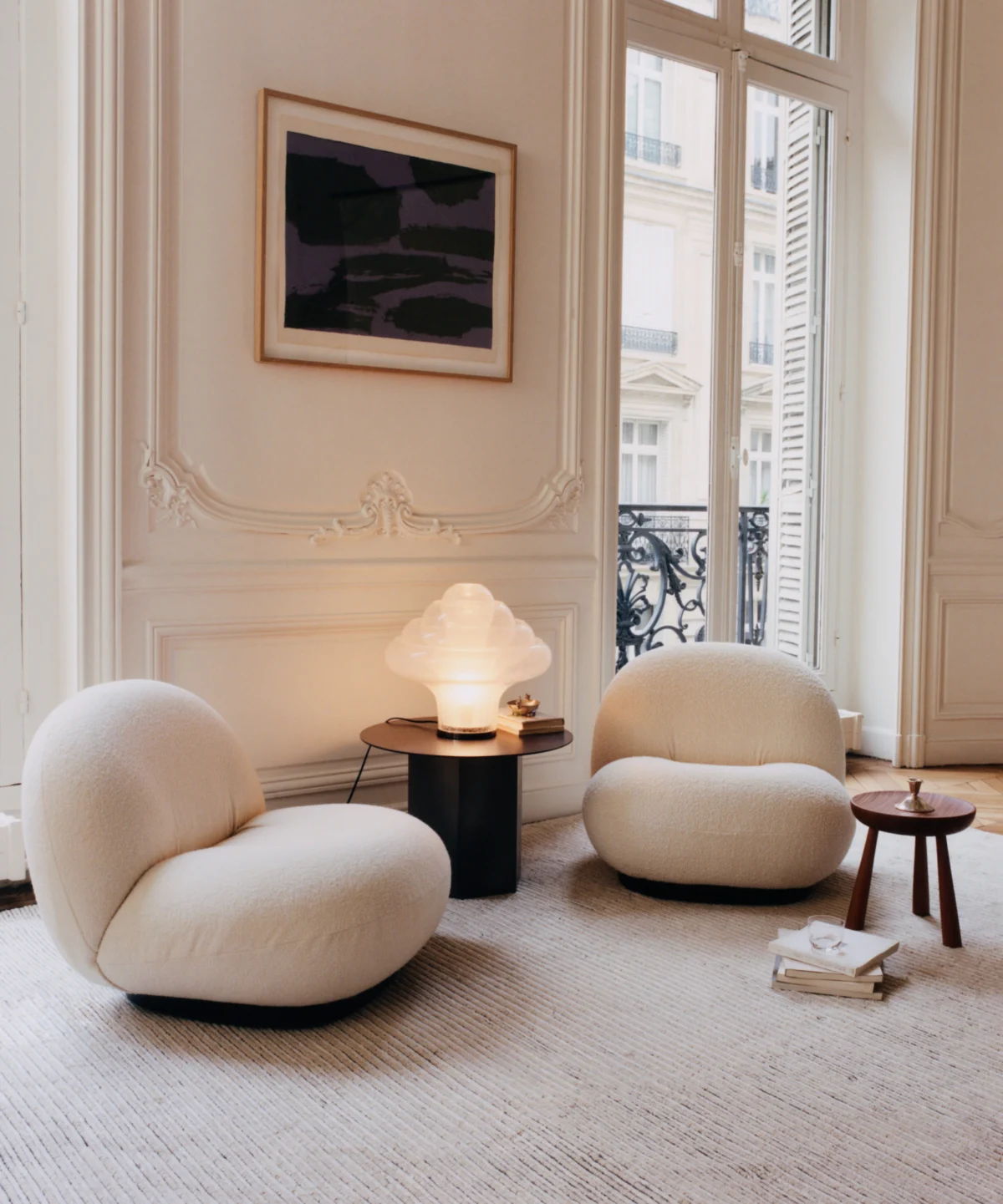
The global design community has witnessed a significant archival resurgence as the Danish design house Gubi officially announced the revival of the Lotus table lamp, a sculptural masterpiece originally conceived by the Italian glass maestro Carlo Nason in 1969. The reissue marks the return of a design that, despite its brief initial production run, garnered a fervent cult following among international collectors and historians. Originally cataloged as the LT305, the fixture is celebrated for its sophisticated intersection of traditional Murano glassblowing techniques and the forward-looking "Space Age" aesthetic that dominated the late 1960s.
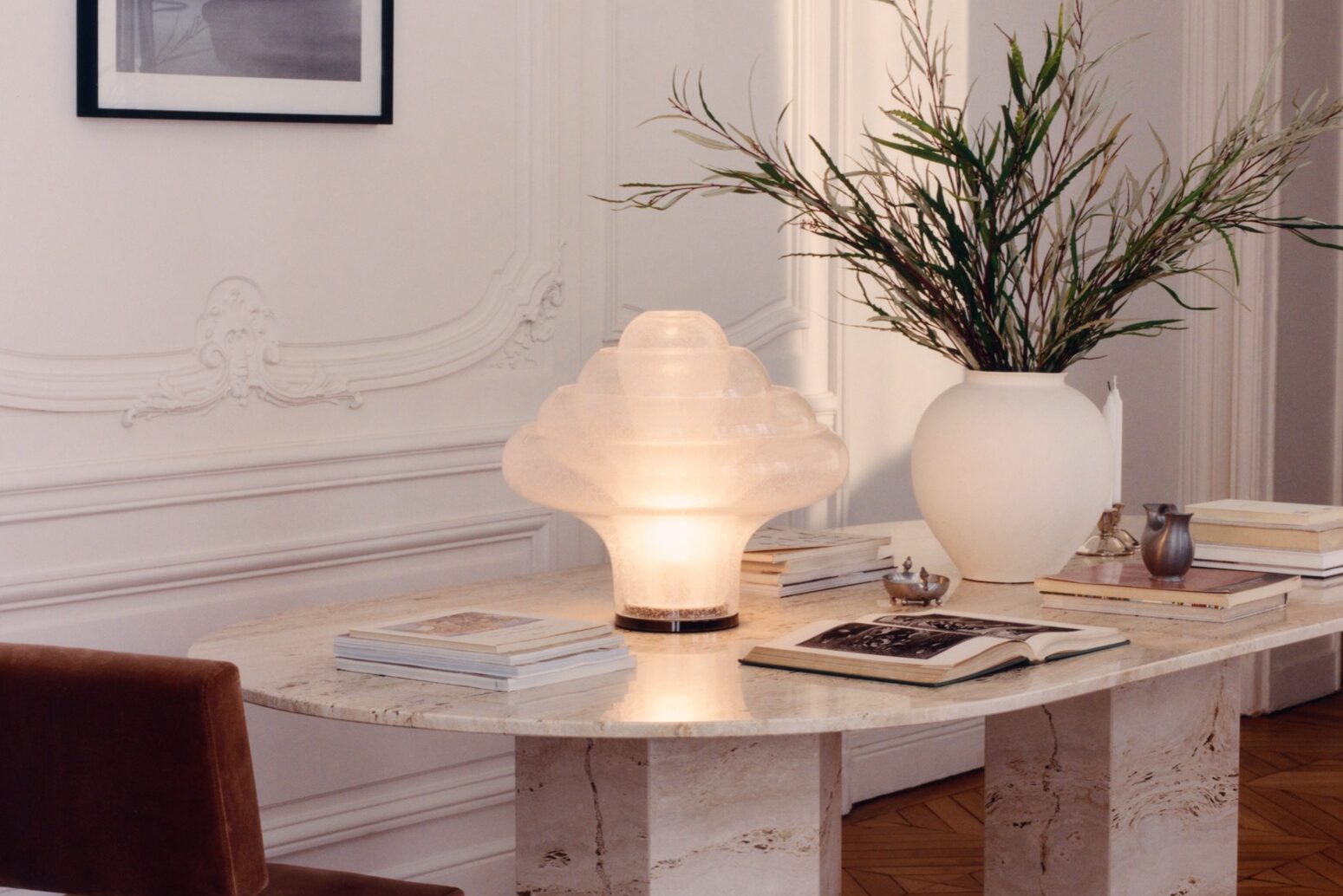
The decision to bring the Lotus back into production follows years of rising demand on the secondary vintage market, where original LT305 units have become increasingly rare and highly sought after at premium auctions. By collaborating closely with the Nason estate, Gubi has aimed to preserve the integrity of the original hand-crafted process while implementing subtle engineering upgrades to meet contemporary safety and functional standards.
Historical Context and the Murano Legacy
To understand the significance of the Lotus lamp, one must examine the lineage of its creator, Carlo Nason. Born into one of Murano’s oldest and most prestigious glassmaking families, Nason was heir to a tradition of artisanal excellence that stretched back centuries. However, the 1960s represented a period of profound transition for Italian design. While the traditional Murano industry was largely defined by ornate, multi-colored, and highly decorative chandeliers, Nason sought to pivot toward a more experimental and minimalist vocabulary.
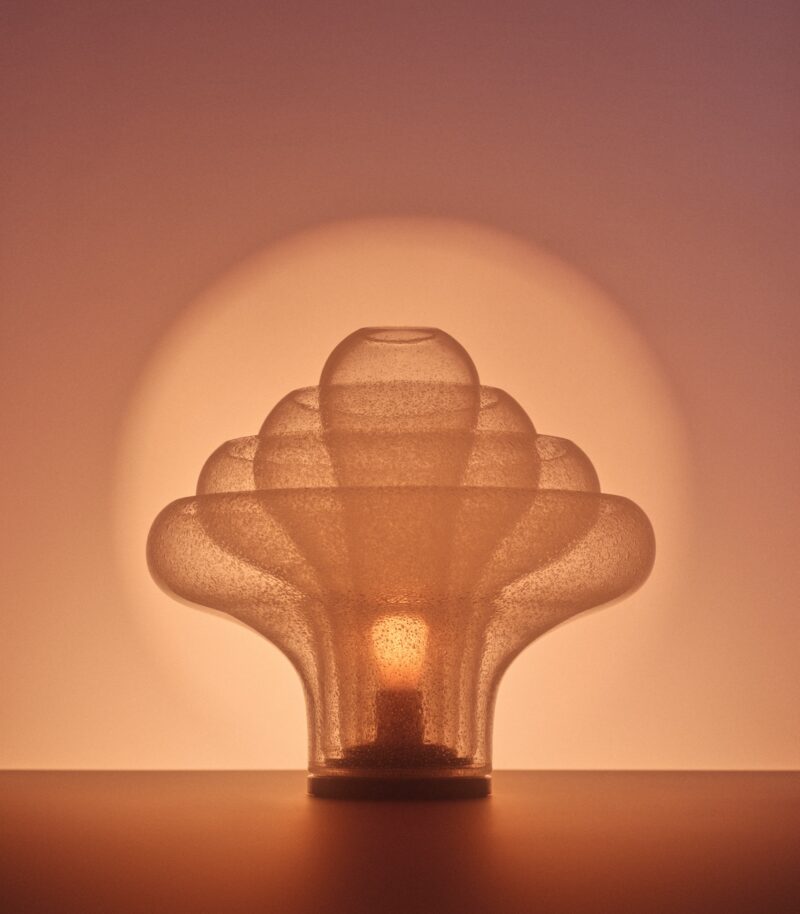
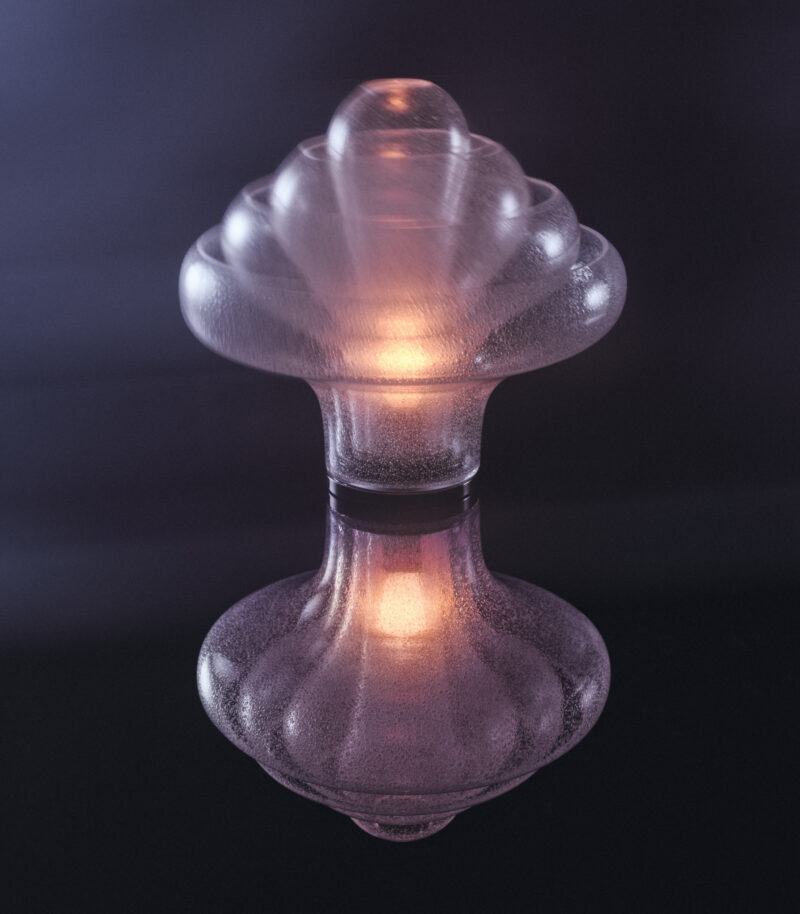
Influenced by the rapid industrialization of post-war Europe and the global fascination with lunar exploration, Nason’s work began to reflect the "Space Age" movement. This era was characterized by streamlined, organic shapes, the use of innovative materials, and a departure from the "clutter" of classical European decor. The LT305, designed in 1969, was the pinnacle of this philosophy. It utilized the transparency and weight of glass to create a form that appeared both grounded and ethereal—resembling a blooming flower while maintaining the sleekness of a satellite component.
Despite its artistic success, the lamp remained in production for only a short window during the early 1970s. Its complexity—specifically the requirement for four distinct mouth-blown layers—made it a difficult piece to mass-produce. Consequently, it slipped into the annals of "forgotten" design, only to be rediscovered decades later by interior designers and collectors who nicknamed it the "Lotus" due to its tiered, petal-like structure.
Technical Specifications and the Pulegoso Technique
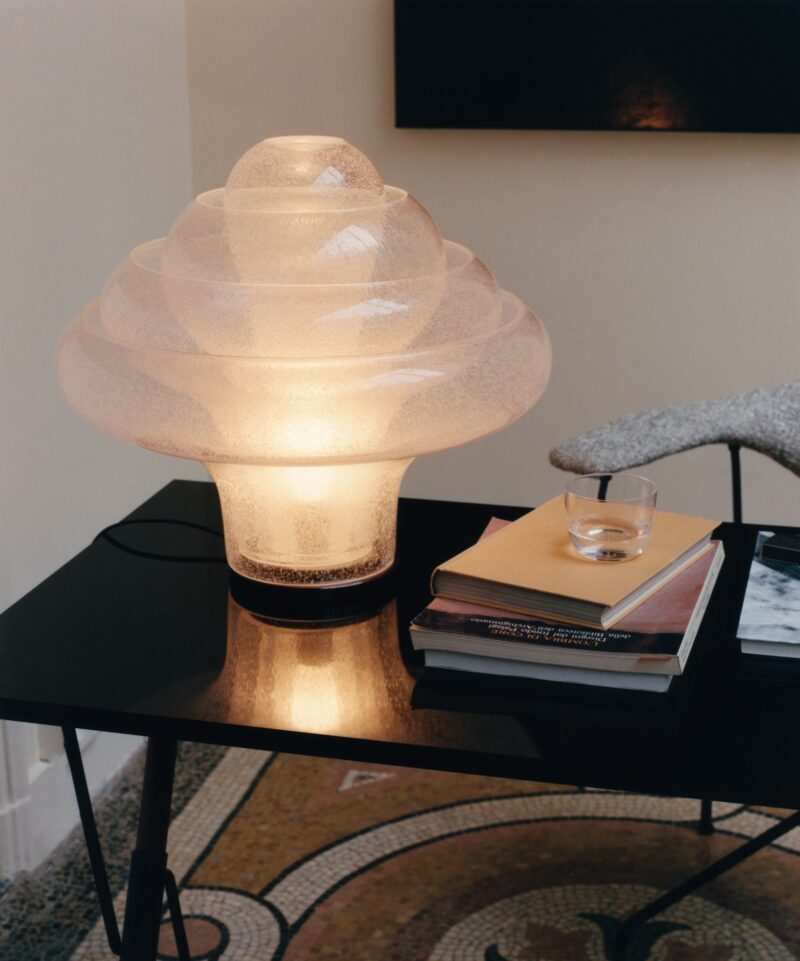
The defining characteristic of the Lotus lamp is its sophisticated construction, which relies on a nested arrangement of glass shades. The fixture is composed of four separate mouth-blown glass components, each slightly different in size and curvature, which are stacked vertically. This "architectural" stacking serves a dual purpose: it creates a visual depth that mimics the unfolding of a lotus flower and functions as a natural diffuser for the internal light source.
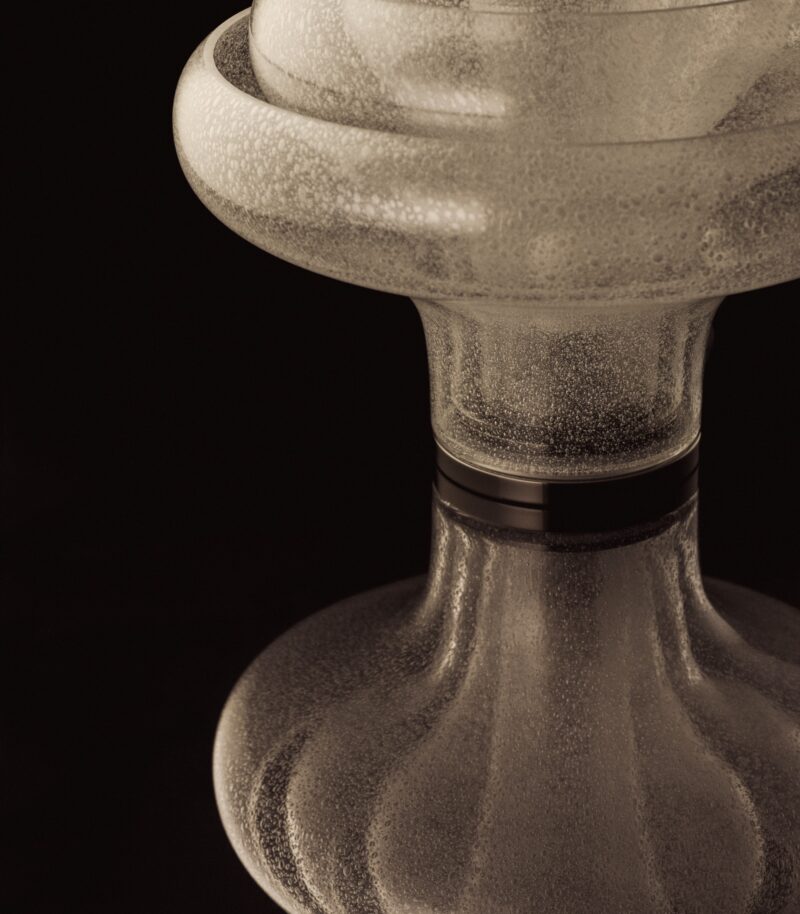
Central to the lamp’s unique visual texture is the "pulegoso" technique. Developed in the 1920s by the renowned glassmaker Napoleone Martinuzzi for Venini, pulegoso glass is characterized by thousands of tiny air bubbles trapped within the material. This is achieved by adding a substance, such as bicarbonate of soda, to the molten glass during the melting process. The resulting chemical reaction creates a foam-like texture that, once cooled, gives the glass a semi-opaque, pitted appearance.
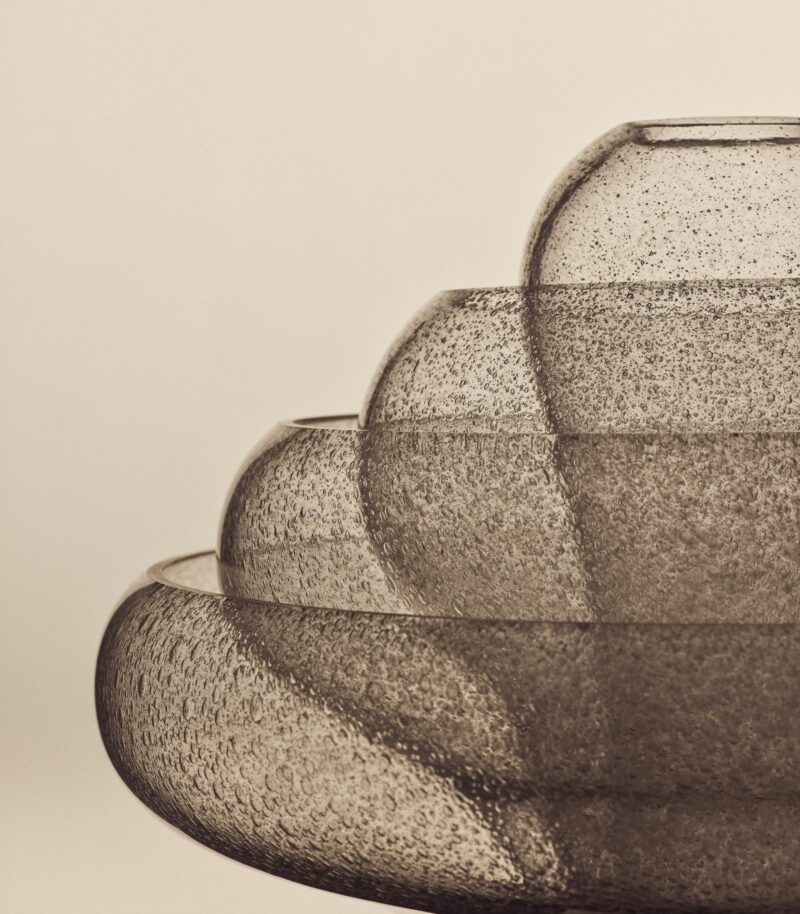
For the Lotus lamp, the pulegoso technique is instrumental in how the light is distributed. The bubbles scatter the light rays, eliminating the harsh glare often associated with clear glass fixtures. The central portion of the lamp, where the four layers overlap, becomes almost entirely opaque, hiding the bulb and the internal socket. Conversely, the outer edges, where the glass is thinner and layers do not overlap, exhibit a delicate translucency that creates a soft, ambient halo. This creates a "glow" rather than a "beam," a quality that Gubi’s design team identified as essential to preserve in the reissue.
Modern Refinements and Engineering Stability
While Gubi’s primary objective was historical fidelity, the brand recognized that 1960s manufacturing standards required modernization for the 21st-century consumer. The most significant update is found in the lamp’s internal skeleton. The original LT305 featured a base that was occasionally criticized by collectors for its lack of stability and the difficulty involved in changing the bulb without risking damage to the glass shades.
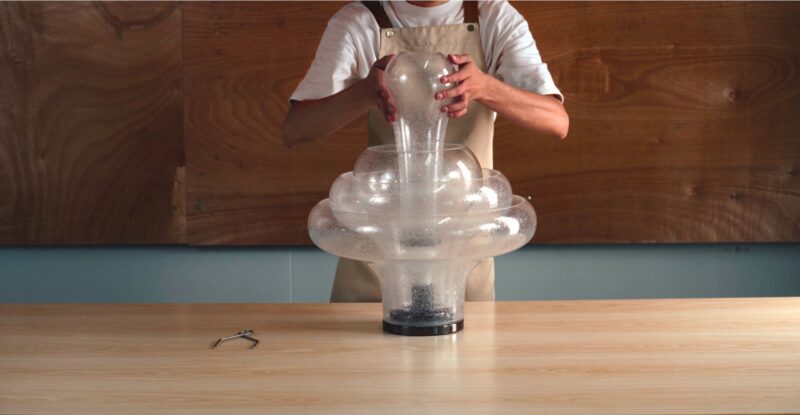
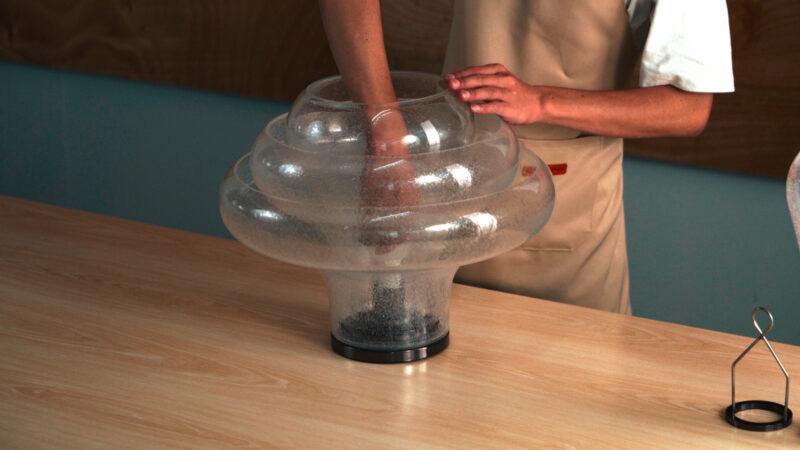
The revived Lotus features a re-engineered steel base that provides a lower center of gravity and a more secure locking mechanism for the four nested shades. This ensures that the glass remains perfectly aligned and stable even in high-traffic environments. Furthermore, the internal assembly has been modified to allow for easier disassembly. Users can now remove the glass layers more efficiently for cleaning or to replace the LED-compatible bulb, an improvement that Gubi CEO Marie Kristine Schmidt described as a "discreet enhancement" aimed at longevity and daily utility.
"Whenever we bring a design back into production, our starting point is to understand the original intention and preserve what makes it special," Schmidt stated. "The updated construction ensures that it works beautifully in everyday use without changing the aesthetic expression that Nason intended."
Collaborative Development and Designer Legacy
The revival of the Lotus lamp carries a poignant weight following the death of Carlo Nason earlier this year at the age of 89. Throughout the development of the reissue, Gubi worked in tandem with the designer’s son, Alberto Nason, who is himself a designer and a steward of his father’s archives.
Alberto Nason’s involvement was crucial in ensuring that the subtle nuances of the glass—such as the exact density of the pulegoso bubbles and the specific "scalloped" curvature of the edges—matched his father’s original vision. According to the Nason family, the reissue is not merely a commercial endeavor but a means of ensuring that Carlo’s contributions to Italian industrial design are recognized by a new generation of enthusiasts.
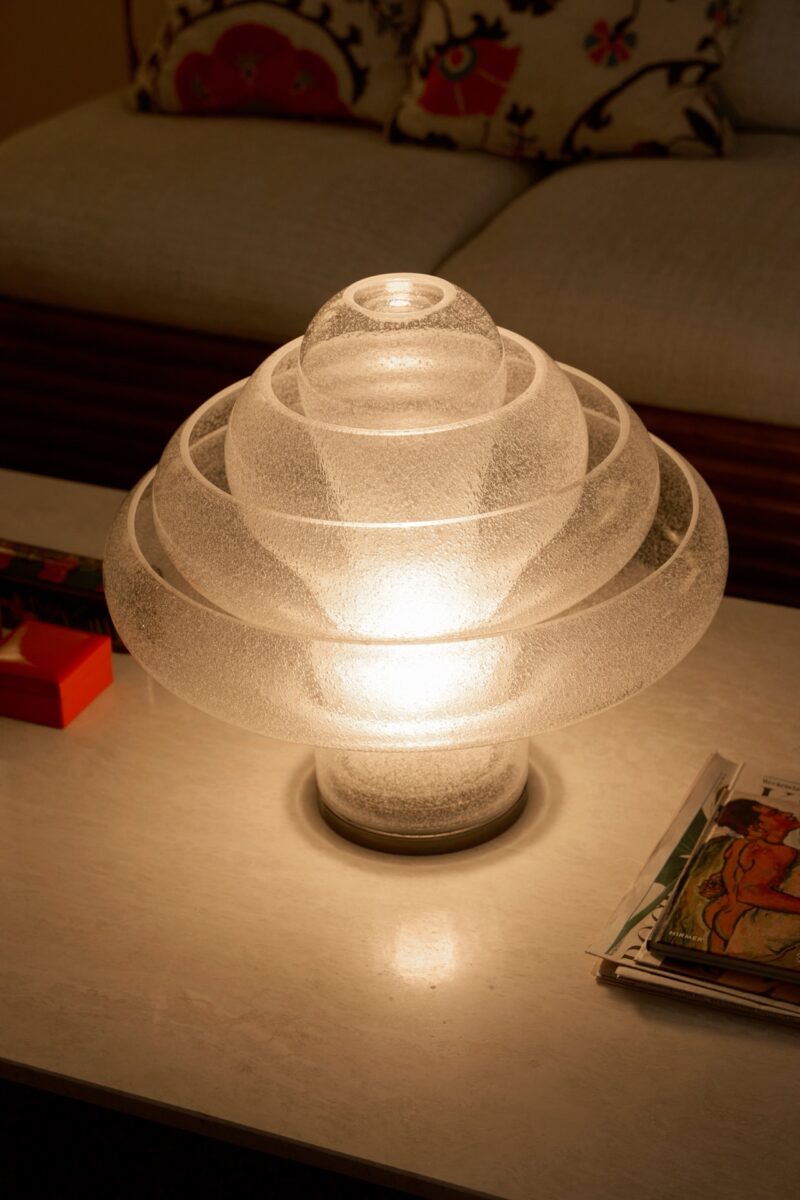
"The more you observe it, the more it unfolds, layer by layer," Alberto Nason remarked during the launch. "There is a quiet magic to it: a softness, a depth, a tactile presence that makes the light feel almost like a material in itself."
Market Implications and the Trend of "Archival Design"
The reintroduction of the Lotus lamp is reflective of a broader trend in the high-end furniture industry, often referred to as "archival design." Brands like Gubi, Vitra, and Cassina have increasingly turned toward their historical catalogs to find "lost" masterpieces that resonate with contemporary tastes for organic forms and artisanal craftsmanship.
From an economic perspective, reissues like the Lotus provide a more accessible entry point for design enthusiasts who might otherwise be priced out of the vintage auction market. While original 1969 LT305 lamps can command prices ranging from $3,000 to $7,000 depending on their condition and provenance, the Gubi reissue offers a brand-new, warranted alternative that maintains the same hand-blown Murano quality.
Furthermore, the revival highlights the enduring value of "slow design." In an era of mass-produced, flat-pack furniture, the Lotus stands as a counter-narrative. Because each of the four shades is mouth-blown by skilled artisans, no two lamps are identical. The natural variations in the distribution of bubbles and the thickness of the glass provide each unit with a unique "fingerprint," a quality that modern consumers increasingly value as they seek to personalize their living spaces.
Strategic Impact on the Gubi Collection
For Gubi, the Lotus lamp serves as a strategic addition to a portfolio that already includes legendary pieces such as the Grasshopper floor lamp by Greta Grossman and the Beetle Chair by GamFratesi. The brand has built its reputation on the ability to curate a cohesive collection that spans different decades and geographic origins.
Marie Kristine Schmidt emphasized that a design must "earn its place" in the collection. The Lotus was selected not just for its beauty, but for its "strong identity and distinct point of view." By incorporating a piece that represents the pinnacle of Italian glasswork, Gubi expands its material palette beyond the wood, steel, and upholstery that define much of Scandinavian design, offering a more Mediterranean-influenced warmth to its global audience.
Conclusion: A Design in Full Bloom
The return of the Lotus table lamp is a significant moment for the intersection of art and industry. It honors the late Carlo Nason’s ability to transcend his traditional roots and embrace the future, creating a piece that feels as relevant in a 2024 interior as it did in 1969. Through the preservation of the pulegoso technique and the nested glass construction, Gubi has successfully captured the "resilience" inherent in the lamp’s namesake flower.
As the design world continues to navigate the balance between digital innovation and physical craft, the Lotus serves as a reminder that some of the most compelling "new" ideas are those that have been waiting patiently in the archives to be rediscovered. Like the flower it is named for, the Lotus is once again in full bloom, ready to illuminate a new era of design history.