admin
A quiet revolution is stirring within America’s eastern forests, transforming a once-overlooked native tree, Carya cordiformis—the yellowbud hickory—into a promising cornerstone of a sustainable regional food system. From its widespread natural range spanning 33 states, this adaptable species is now being recognized for its potential as a source of a novel, nutritious cooking oil, championed by a growing network of farmers, scientists, and community volunteers. This burgeoning movement, spearheaded by initiatives like Bloom Farm in southeastern Pennsylvania, seeks to re-evaluate native species, build resilient agricultural infrastructure, and redefine local food culture.
The Foraging Initiative: A Community Effort Unearths Local Gold
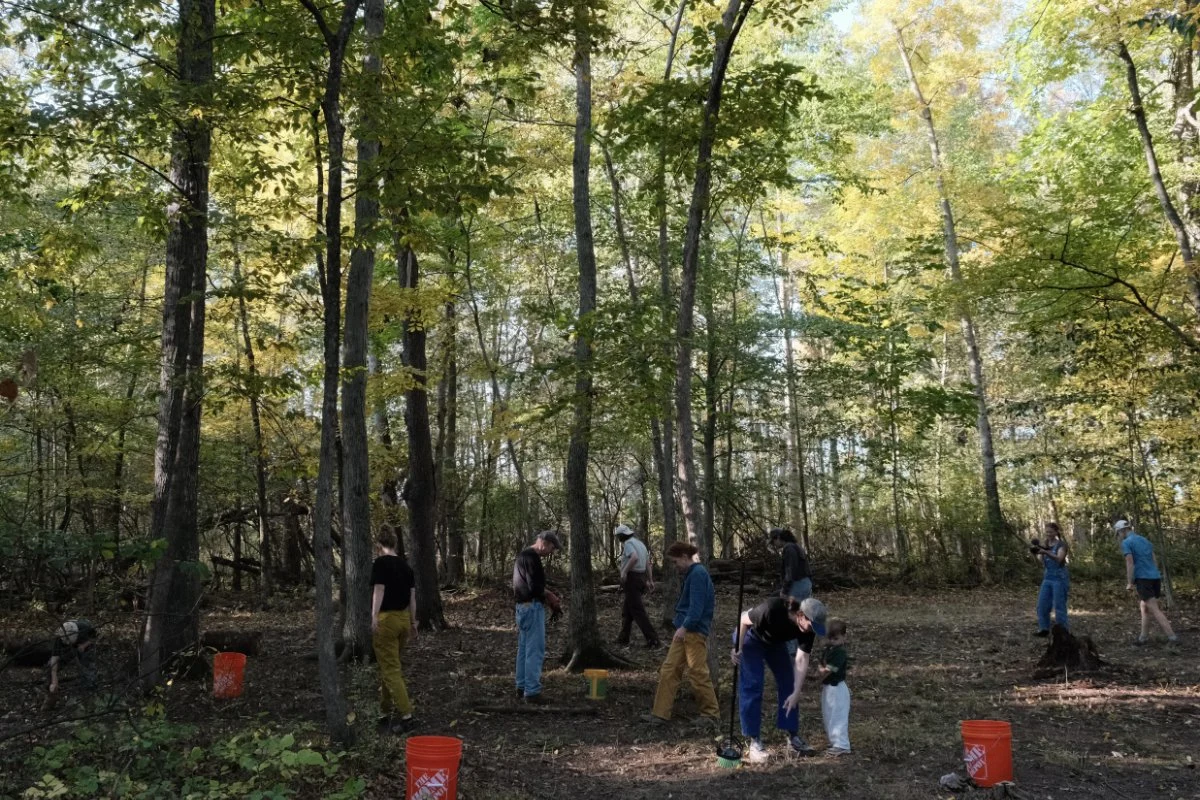
The crisp air of a late autumn afternoon in Berks County, Pennsylvania, is punctuated by the gentle thud of falling nuts. A group of approximately 15 volunteers, guided by the sounds, navigates past familiar shagbark hickories and gnarled roots, arriving at a grove strewn with nature’s bounty: dozens of yellowbud hickory nuts. These quarter-sized kernels, encased in dull, yellow-green husks, represent a tangible link to a forgotten culinary heritage. Armed with picking rakes, though many prefer the tactile satisfaction of inspecting each nut by hand, the volunteers meticulously collect the harvest, ensuring no curious weevils have breached the shells. Many participants, native to this region, express surprise and delight that these very nuts, once merely objects to be kicked or thrown during childhood play, are now destined to become the base of a new, regional cooking oil.
After a productive 45-minute foraging session, the accumulated haul is transported to a nearby parking lot, where the team from Bloom Farm awaits. The nuts are weighed, a crucial step in tracking yields, before being transported a few miles to a specialized processing facility. This community-driven foraging event, one of several planned for the season, not only contributes to the immediate supply of nuts but also fosters a deeper connection between residents and their local ecosystem, raising awareness about the potential of native forest resources.
From "Trash Tree" to Culinary Treasure: The Yellowbud’s Reawakening
For centuries, Carya cordiformis endured a largely dismissive reputation. Known interchangeably as yellowbud hickory, bitternut hickory, or, more pejoratively, a "trash tree," it lacked the coveted strong timber of oaks, the sweet sap of sugar maples, or the readily snackable qualities of pecans. Its nuts, characterized by their bitterness and high tannin content, served as effective natural deterrents, largely preventing human consumption.
However, this oversight represents a significant cultural amnesia. Indigenous populations, particularly the Lenape in what is now Pennsylvania, historically held the yellowbud in high regard. They utilized its robust wood for tools and ingeniously processed its nuts into a nourishing milk. These traditions, deeply embedded in a sustainable relationship with the land, were largely disrupted and eventually lost with the advent of European colonization in the 17th and 18th centuries. Early settlers, prioritizing European agricultural practices, viewed dense forests primarily as indicators of fertile ground to be cleared, rather than as sources of valuable crops in their own right. Consequently, the yellowbud hickory, along with many other native species, transitioned from a valued food source to a perceived nuisance.
All the while, the yellowbud thrived across vast swathes of the eastern United States. Its signature straight trunks, slender crowns, and compound leaves, which turn a striking golden yellow in autumn, are a common sight from Texas to Vermont. While preferring moist floodplain soils, its deep and expansive root system grants it remarkable resilience, allowing it to withstand dry conditions. It frequently coexists with oaks and other hickory varieties, such as the shagbark and mockernut, underscoring its widespread ecological integration.

The tide began to turn for this adaptable tree in the early 2000s, thanks to the pioneering efforts of wild harvester Sam Thayer in Wisconsin. Thayer’s critical insight was that the yellowbud nuts, despite their raw bitterness, possessed ideal characteristics for oil production. Crucially, their shells were notably thinner and easier to crack than those of other hickory species. Furthermore, the kernels boasted an impressive oil content, ranging from 70-75 percent by weight—a figure significantly higher than olives, which typically max out around 35 percent.
Upon pressing, Thayer discovered that the water-soluble tannins were effectively separated, yielding a mellow, bright-flavored oil with an impressive health profile. Initial nutritional testing indicates that yellowbud hickory nut oil is rich in heart-healthy monounsaturated fatty acids, similar to olive oil, and notably low in saturated fats (around 10 percent, compared to palm oil’s approximate 50 percent). Its relatively high smoke point, hovering around 400 degrees Fahrenheit, makes it suitable for various culinary applications, including sautéing, as well as for dressings or as a finishing oil. Many who taste it liken its nuanced flavor to a sophisticated blend of olive and avocado oils, with subtle notes of citrus, butter, and even licorice, highlighting a hidden culinary gem that has been "right under our feet for centuries."
Pioneering Cultivation: Yellowbud Farm and the Nursery Network
Jesse Marksohn is a pivotal figure in rooting a new future for the yellowbud. Through his wholesale nursery, Yellowbud Farm, based in Northfield, Massachusetts, he cultivates trees that align with the philosophy of Indigenous scholar Lyla June, advocating for humans to become a "keystone species"—working symbiotically with the land to obtain sustenance rather than against it.
Marksohn, inspired by his mentor Sam Thayer’s discoveries, now grows yellowbud hickories alongside other productive nut and fruit trees at his orchard. His team meticulously stewards over 100,000 trees at any given time, ensuring a healthy start without the use of chemical fungicides, herbicides, or insecticides. To date, Yellowbud Farm has supplied nearly 7,000 yellowbud hickory seedlings to production-oriented growers across the tree’s expansive native range, which includes much of the Mid-Atlantic, Midwest, and Southeast. Once established, these cultivated trees are expected to provide a consistent, low-input source of nuts, ready to be transformed into what many hope will become the next great regional cooking oil. This strategic distribution is crucial for scaling up production and creating a viable commercial market for the yellowbud.
Bloom Farm: Cultivating a Regenerative Future
Brian Nana-Sinkam, co-founder of Bloom Farm, embodies the pioneering spirit of this movement. His enthusiasm for the yellowbud is palpable; he jokingly refers to his habit of scanning the Oley Valley’s rolling hills for the distinctive canopy and leaves of the yellowbud while driving as "the agroforestry person’s texting and driving."
In 2024, Nana-Sinkam transitioned from a tech career in New York City, returning to his home state of Pennsylvania to reconnect with the land. He joined his older brother, Sam, who had acquired 60 acres in the agriculturally rich Oley region to establish Bloom Farm. Conceived as a regeneratively managed orchard and inn, Bloom Farm aims to offer an immersive experience in sustainable farming practices.
Within the farm’s orchard, young chestnut and yellowbud hickory saplings, currently two years old, grow in neat rows. This intentional planting is supported by companion crops and a rotating drove of sheep and chickens, forming a holistic agroforestry system. The long-term vision is for these compact saplings to mature into productive trees, yielding generous amounts of nuts for oil, flour, and other kitchen staples.

However, patience is paramount. "Since the yellowbud has never really been planted in an orchard context, the jury’s out as to how long it takes to bear [nuts]," Nana-Sinkam notes. Marksohn of Yellowbud Farm estimates that, with proper planting and care, these transplanted seedlings will require between five and seven years to produce a harvestable nut crop. During this waiting period, the Bloom team is actively engaged in learning about the yellowbud’s optimal growing conditions through community mapping projects and volunteer foraging events, leveraging wild populations as a natural laboratory.
Scientific Collaboration and Genetic Mapping
For the past two years, Bloom Farm has utilized wild yellowbud trees in the Oley Valley and surrounding Berks County as vital research subjects, serving as proxies for their young orchard saplings. Their meticulous scouting efforts identify healthy wild trees that exhibit resilience against pests and diseases throughout spring and summer. Come fall, these trees are monitored to identify the most prolific nut producers.
This ongoing process has led to the mapping of dozens of robust yellowbud trees, whose nuts are harvested weekly. This invaluable data extends beyond Bloom Farm’s immediate needs; it actively informs the design of future commercial hickory orchards and helps identify superior genetic strains that make these trees viable crops for farmers.
Richard Tegtmeier, an orchard scientist at the Rodale Institute—a nonprofit dedicated to advancing organic and regenerative agriculture—underscores the scientific importance of this collaboration. "Bloom is interested in the foraging aspect of it," Tegtmeier explains, "I’m interested in identifying new sources of good genetics and identifying which trees are producing the best quality nuts each year, even in unmanaged conditions."
Rodale Institute has partnered with Bloom to provide crucial technical expertise to their scouting initiative. This includes deploying drones to identify healthy stands from above and utilizing hyperspectral (light-sensing) tools to precisely measure the fatty acid profiles of foraged nuts. This comprehensive data is then fed back to breeders like Jesse Marksohn, enabling them to focus on developing resilient orchard varieties that can thrive without chemical intervention.
For Rodale, this initiative is an integral part of a broader effort to steward plants that are inherently well-suited to natural, organic systems. "That’s why we like chestnuts and hazelnuts and hickory nuts—because they’re already adapted for that," Tegtmeier states. "We can rethink the breeding process to keep them in those kinds of low-input systems, and breed for better yields and better nut quality."
The search for these "dendritic superstars" often leads to unexpected locations. Promising specimens have been discovered on horse farms, alongside busy highways, and even next to public swimming pools. A Bloom staff member, while watching his son play soccer, serendipitously spotted what has become their most vigorous producer to date, yielding over 200 pounds of nuts annually. Securing permission for harvesting has generally been straightforward; local towns have been amenable to picking on public property, and private landowners often grant access in exchange for clearing invasive brush around the trees. "Usually they’re excited about what we’re doing, and they’re very curious," Nana-Sinkam confirms, highlighting the community’s positive reception.

Building the Supply Chain: Community Sourcing and Processing
To augment Bloom Farm’s nut supply and broaden awareness of the yellowbud’s potential, Brian Nana-Sinkam leveraged his tech background to develop a website called Volunteer. The name itself is a clever double entendre, referring both to individuals who donate their time and to the tree seedlings that grow without human intervention. The site is currently being rolled out to a select group of users this season, with plans for a full launch in the near future. Once fully operational, local residents will be able to upload photos of nut trees (including hickories, chestnuts, and other species) near them, adding them to a digital map. Users will then have the option to either have a Bloom team member harvest the nuts or collect them themselves and sell them to Bloom for $5 per gallon, creating a direct economic incentive for community participation.
This November marks a significant milestone: Bloom Farm is selling its inaugural batch of yellowbud hickory oil, produced from this intricate patchwork of local, wild-harvested nuts.
The processing arm of this ambitious endeavor is Third Place Processing, a facility that uniquely blends the aesthetic of a modern brewery with the functional simplicity of a schoolhouse. Located a short drive from Bloom Farm in a converted vineyard, its bright A-frame room houses rows of specialized machinery, while a wooden sorting table bears the marks of its nascent history.
Bloom Farm secured FDA certification for Third Place Processing in January 2026, a crucial step for commercial production. Beyond hickory, the facility is equipped to process a variety of other nuts, pits, and seeds, including hazelnuts, chestnuts, pumpkin seeds, and even cherry pits. Since certification, Matthew Holt, the processing operations director, has meticulously honed his skills, transforming buckets of raw nuts into smooth, rich oil.
The yellowbud hickory oil extraction process begins with an inspection for fungus or rot, followed by several weeks of drying until the nuts reach an optimal moisture content of approximately 8 percent. They are then fed into a cracking machine to remove their thin shells. The kernels are subsequently run through an industrial oil press, which Nana-Sinkam and Holt acquired secondhand last Christmas—a fitting, though challenging, gift given the expense and scarcity of such specialized machinery (there is currently only one broker for these presses in the U.S.). After any remaining sediment is filtered out, the golden-hued oil is ready for packaging and sale.
The efficiency of the process is noteworthy: for every eight to ten gallons of yellowbuds processed, approximately one gallon of oil is yielded. The remaining "press cake," comprising fibrous nut meat and shells, is not wasted; it can be sold to farmers as animal feed or utilized for smoking meats, highlighting a zero-waste approach.
Nana-Sinkam has actively distributed oil samples to curious neighbors, visitors to Bloom Farm, and chefs in the surrounding area. The response has been overwhelmingly positive, driven by both intrigue in a locally produced cooking oil and appreciation for its distinctive flavor profile. A key component of the market rollout strategy involves collaborating with farm-to-table restaurants to integrate the oil into their menus, as Nana-Sinkam believes, "that’s how you change food culture."

Thanks in part to an Agricultural Innovation Grant from the Commonwealth of Pennsylvania, Third Place Processing will soon be able to operate multiple oil presses simultaneously. Some will be dedicated to their own production, while others will be leased to aspiring producers. Recognizing the scarcity of nut processing facilities across the U.S., the Bloom team emphasized the importance of making their infrastructure accessible to others. "We want 90 percent of what we process to be going to other people," Nana-Sinkam states. "We would love to be the processing infrastructure for our region, because that incentivizes more people to plant trees." This vision underscores a commitment to fostering a broader, collaborative regional nut industry.
Agroforestry Opportunities for Farmers: A Sustainable Path
The yellowbud hickory presents a compelling case for expanded agroforestry adoption across the Eastern U.S. Despite half of New England farms containing or being surrounded by forests, a Yale University report indicates that less than two percent of farmers in the region currently practice agroforestry, the intentional integration of trees into farming systems. Nana-Sinkam hopes that by opening new markets for perennial nuts, farmers will be encouraged to plant new trees on their land or to begin cultivating existing ones.
The yellowbud’s attributes make it an ideal candidate for agroforestry. Its canopy provides dappled shade, beneficial for livestock and understory plants, enhancing biodiversity and creating more comfortable grazing environments. The trees also offer crucial food and habitat for moths, bees, and other beneficial pollinators, supporting ecological health. Furthermore, its leaf litter is rich in calcium, which can significantly benefit certain soil types, improving soil structure and fertility.
From an economic perspective, nut trees represent a vital opportunity for farmers to diversify their income streams, particularly in an era where unpredictable weather patterns increasingly threaten the productivity of traditional annual crops. When implemented on a wide scale, agroforestry techniques such as silvopasture (integrating trees into livestock pastures) hold substantial potential to mitigate climate change by sequestering carbon, improving soil health, and reducing reliance on external inputs. Project Drawdown, a leading resource for climate solutions, identifies silvopasture as one of the most impactful land-use solutions for reducing atmospheric carbon.
Beyond farm-level benefits, the proliferation of markets for non-timber forest products, like hickory nuts, contributes to broader conservation goals. Walker Cammack, program director at Smokey House Center in Danby, Vermont, notes that increased economic value for forested lands makes them more likely to be protected from development pressures.
However, transitioning to an agroforestry model requires significant upfront investment in time and capital. The presence of a reliable, local processor willing to pay a steady price for nuts can substantially reduce this daunting barrier. Karam Sheban, a research assistant professor of agroforestry at the University of New Hampshire, emphasizes the critical role of aggregation. "When thinking about developing models for agroforestry, there’s a lot of talk around aggregation as being a really key intervention that has to happen to open up economic opportunities for growers," Sheban explains. "Step one is giving people information so they understand what the opportunities are."
Sheban’s prior work in community forestry with Rural Action in Appalachian Ohio demonstrated how robust aggregation infrastructure can successfully stimulate interest in tree crops, with regional processors paying for species like black walnuts and pawpaws. Nana-Sinkam envisions this model spreading throughout the Northeast, leading to a future where a diverse array of oils, flours, snack bars, and desserts are derived from locally sourced nuts, supported by robust networks of farmers, scientists, and foragers. "Our regional food culture should have a lot to do with nuts," he asserts, emphasizing the collaborative spirit: "Everyone is playing their part in this system that we’re trying to build."

Market Reception and Future Outlook
The initial market reception for yellowbud hickory oil has been overwhelmingly positive. The intrigue surrounding a locally produced, novel cooking oil, coupled with its distinctive and appealing flavor profile, has generated considerable enthusiasm among consumers and culinary professionals. Brian Nana-Sinkam’s strategic outreach to local chefs and farm-to-table restaurants is a deliberate effort to integrate the oil into the mainstream culinary landscape, recognizing that professional endorsement can significantly accelerate consumer adoption and appreciation.
The economic model being developed by Bloom Farm and Third Place Processing is designed for scalability and community benefit. By making processing infrastructure accessible to other producers, they are fostering a collaborative ecosystem rather than a competitive one. This approach aims to reduce the barriers to entry for new farmers interested in cultivating yellowbud hickories and other perennial nut crops. The Pennsylvania Agricultural Innovation Grant signifies governmental recognition of the economic and environmental potential of such ventures, providing crucial support for infrastructure development.
Looking ahead, the long-term implications are substantial. If successful, the yellowbud hickory movement could serve as a blueprint for revitalizing other native, undervalued tree crops, contributing to a more diversified and resilient agricultural system across the U.S. This shift towards perennial crops, integrated into agroforestry models, promises not only economic stability for farmers but also significant ecological benefits, including enhanced biodiversity, improved soil health, and increased carbon sequestration, directly addressing challenges posed by climate change. The re-establishment of native foodways also carries cultural significance, reconnecting communities with their land and heritage.
A Taste of the Future: Community and Connection
As the sun begins its descent, casting long shadows across the Oley Valley, the volunteers gather on the outskirts of the woods. Conversations, initially hesitant, now flow freely, spanning topics from trees and nuts to local happenings. Sandwiches and salads from a nearby restaurant are laid out, but the true centerpiece is the newly pressed yellowbud hickory oil. "Be sure to taste the fruits of your labor—or the nut oil of your labor, if you will," Nana-Sinkam says with a smile, pouring samples into small cups.
The group takes turns dunking hunks of sourdough into the oil, its color a deep, inviting honey. Tasters articulate a range of subtle notes: citrus, butter, and even a hint of licorice. Cas Castellano, a Pennsylvania native who learned of the foraging event online, describes the flavor as reminiscent of an uncooked macadamia nut. She admits that, growing up, she never paid much attention to yellowbud hickories. But now, she concludes, "I’m never going to unsee them; I’m never going to un-taste them." This sentiment encapsulates the profound impact of the yellowbud movement: transforming an overlooked native species into a celebrated culinary and ecological asset, fostering a renewed connection between people and their environment, one nut at a time. Nana-Sinkam has at least one more community foraging event planned before the trees cease dropping nuts later in November, before returning to the quiet, year-long work of tending the orchard, observing wild stands, and sharing knowledge within his growing network.