admin
admin
The landscape of the American craft beer industry is undergoing a fundamental shift as taprooms evolve from simple drinking holes into multifaceted hospitality destinations. In Mount Olive, North Carolina, Ryan Roberts, the owner of R&R Brewing, represents a growing cohort of entrepreneurs who are reevaluating the economic potential of their physical footprint. Having opened his doors in 2018, Roberts initially focused on the traditional brewery model: high-quality production paired with an inviting outdoor space for food trucks and local gatherings. However, he soon noticed a discrepancy between the foot traffic in his yard and the conversion rate of customers entering the brewery itself. Facing the fixed costs of property taxes and maintenance on underutilized land, Roberts began seeking ways to increase the "value of the dirt."
The solution arrived in late 2020 via a partnership with Harvest Hosts, a membership-based platform that connects self-contained RV travelers with unique overnight stays at farms, wineries, and breweries. For a minimal investment of approximately $60 in signage and the designation of flat ground for parking, R&R Brewing welcomed its first campers in December 2020. The results were immediate and measurable. Travelers, eager to avoid the sterile environment of big-box retail parking lots, became a "captive audience," often spending upwards of $80 per stay on pints, merchandise, and food. This pivot reflects a broader national trend where breweries are no longer relying solely on the novelty of local beer to drive revenue, instead opting to integrate outdoor hospitality to secure long-term financial sustainability.
The Evolution of the Brewery-Camping Intersection
A decade ago, the craft beer market operated under a "build it and they will come" philosophy. With fewer than 3,000 craft breweries operating in the United States in 2013, the presence of a local taproom was often enough to secure a steady stream of patrons. By 2023, that number had surged to over 9,500, leading to market saturation in many regions and a "plateauing" of traditional growth metrics. This increased competition has forced owners to innovate, seeking "blue ocean" strategies that differentiate their brand through experiential offerings.
The timeline of this transition accelerated significantly during the COVID-19 pandemic. As indoor gathering restrictions pushed consumers outside, the outdoor recreation economy saw a historic boom. According to data from the Bureau of Economic Analysis, the outdoor recreation economy accounted for $1.1 trillion in gross economic output in 2022, a figure bolstered by a massive influx of new campers. Simultaneously, national parks and traditional campgrounds became overwhelmed, with reservation systems often booking out months in advance. This lack of inventory created a vacuum that private landowners, particularly those in the craft beverage sector, were uniquely positioned to fill.
Platforms such as Hipcamp, The Dyrt, and Harvest Hosts have acted as the digital infrastructure for this movement. These services allow breweries to monetize their parking lots and back-acreage without the overhead of traditional hotel management. For the consumer, the appeal is twofold: a guaranteed, safe place to stay and immediate proximity to high-quality food and drink. Kevin Long, CEO of The Dyrt, notes that breweries are a primary draw for modern campers. The ability to consume craft alcohol and walk a few hundred feet to one’s sleeping quarters eliminates the logistical and safety concerns of driving, creating a seamless hospitality experience.
Strategic Land Use and Diverse Business Models
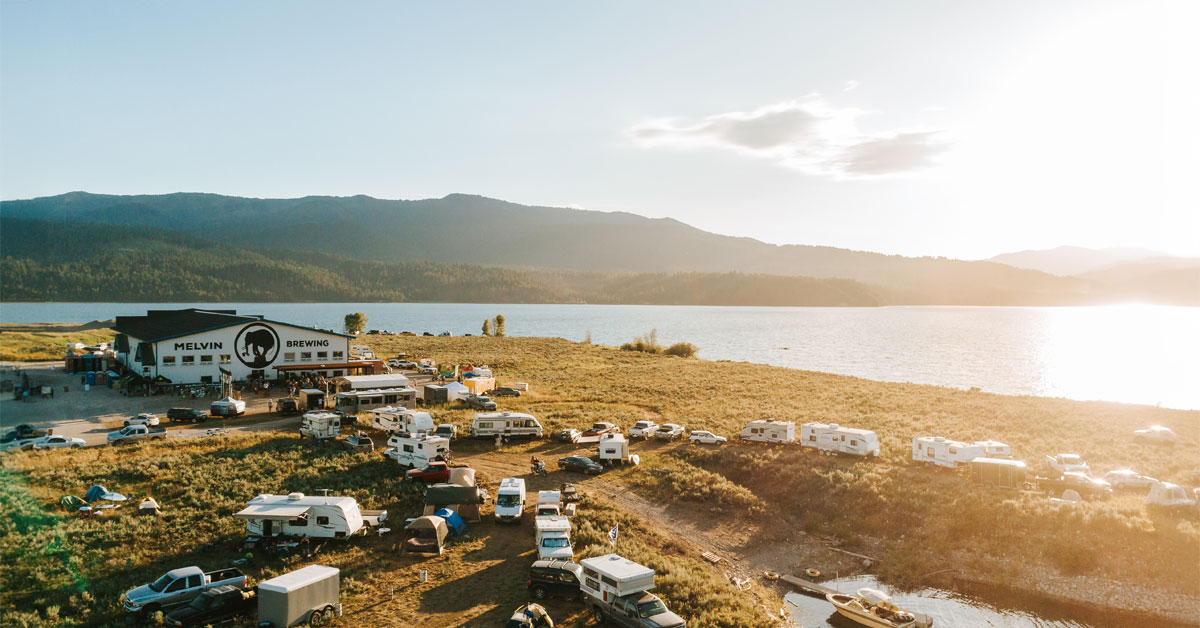
The implementation of camping facilities varies widely depending on a brewery’s geography and existing infrastructure. In Alpine, Wyoming, Melvin Brewing utilizes its proximity to the Palisades Reservoir and Bureau of Land Management (BLM) territory to offer a "wild" experience. Molly Reilly, Vice President of Marketing for Melvin’s parent company, Pure Madness Group, describes their model as "out of bounds." By offering no-frills, first-come, first-served dispersed camping, the brewery taps into the rugged, adventurous ethos of the Wyoming landscape. This strategy effectively turns the surrounding wilderness into an extension of the taproom, encouraging visitors to stay for multiple days.
Conversely, Golden Grove Farm & Brew in Piedmont, South Carolina, leverages its location near the heavily trafficked Interstate 85. With approximately 50,000 vehicles passing daily, co-founder Andrew Brown has focused on converting transient travelers into overnight guests. Situated on 100 acres that include an 18-hole disc golf course, the brewery is currently expanding its camping infrastructure. While the site currently offers limited powered spots, plans are underway to accommodate 20 additional campers with full hook-ups. Brown emphasizes that even non-drinking campers contribute to the bottom line through merchandise sales and food purchases, proving that the campground serves as a gateway to the brand’s entire ecosystem.
In Ohio, entrepreneur Doug Olsen has inverted the model by adding brewing operations to existing camping infrastructure. After purchasing Indian Lake Adventures in 2023, he launched Camp Brewing within the grounds the following year. This "vertical integration" of camping and brewing ensures a high occupancy rate for the campground while providing a steady flow of customers for the brewery. Olsen is currently expanding this concept to a second location, Adventure Trails in Bellefontaine, utilizing contract brewing to meet the high demand of both locals and tourists.
Operational Challenges and Regulatory Frameworks
While the integration of camping and brewing offers significant financial upside, it is not without operational complexities. Operating a campground and a brewery requires navigating two distinct sets of licensing, insurance, and staffing requirements. In many jurisdictions, zoning laws for "agritourism" or "outdoor recreation" must be meticulously followed to avoid legal friction with local municipalities.
A primary challenge involves the regulation of alcohol consumption across different zones of the property. At Camp Brewing in Ohio, for example, guests are permitted to bring their own beverages to their individual campsites, but strictly prohibited from bringing outside alcohol into the licensed taproom area. To bridge this gap and maximize sales, breweries are increasingly focusing on "to-go" packaging. Offerings such as "Pitch a Tent Pilsner" or "Roughin’ It Red Ale" are sold in growlers or cans specifically for consumption at the campsite, allowing the brewery to capture revenue even when the guest is not physically inside the taproom.
Insurance is another critical factor. Traditional brewery insurance policies may not cover the liabilities associated with overnight guests, such as fire hazards, slip-and-fall incidents in unlit areas, or medical emergencies. Owners must often secure supplemental policies or work with platforms like Harvest Hosts that provide certain levels of liability protection. Furthermore, staffing for a 24-hour camping operation differs significantly from the 8-to-10-hour shift of a standard taproom, requiring a different approach to site maintenance and guest services.
The Immersive Experience: Festivals and Agritourism
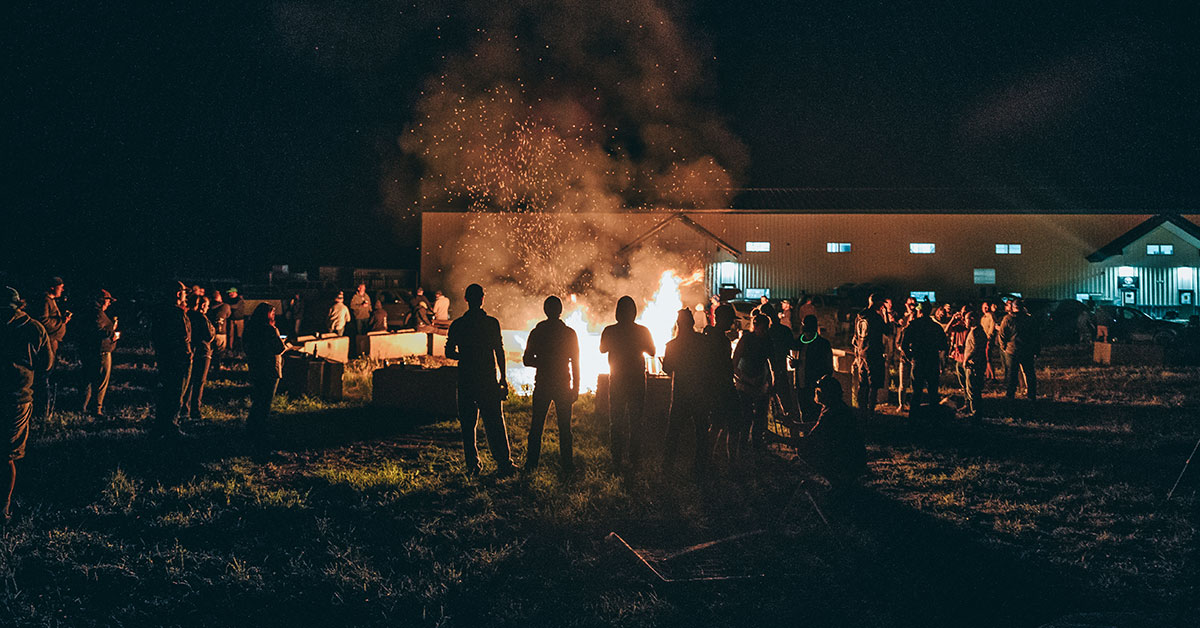
The trend toward brewery-based camping reaches its zenith during large-scale festivals and at agritourism-focused sites. For rural breweries, camping is often the only viable solution for hosting large crowds where local hotel inventory is non-existent. Brewery Ommegang in Cooperstown, New York, has long utilized its former hop farm grounds to host the "Belgium Comes to Cooperstown" festival. Although the 2024 event was recently canceled due to market conditions, the model remains a benchmark for the industry. Jordan Egbert, Brand Manager for Ommegang, highlights that the camping element—complete with communal breakfasts and "bottle shares"—fosters a level of brand loyalty that a standard festival cannot achieve.
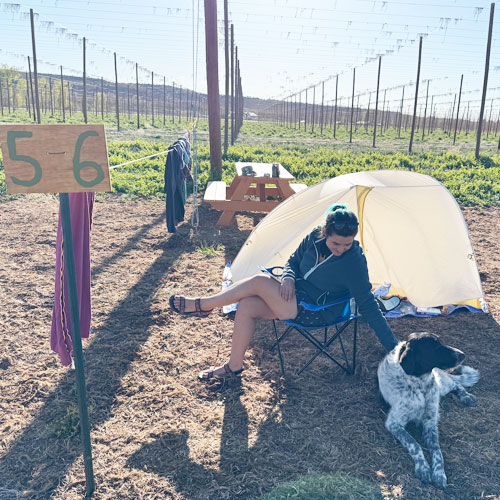
In Colorado, the Billy Goat Hop Farm in Montrose has taken a more educational approach. By opening the "Down at the Hopyard" campground, owners allow guests to sleep directly adjacent to the trellised hop bines. This "farm-to-glass" transparency provides an educational component, as guests learn about the agricultural origins of their beer while enjoying the final product. Audrey Gehlhausen, the farm’s president, views this as an essential marketing tool, grounding the consumer’s experience in the reality of production.
Even urban breweries are finding ways to participate. Mash Mechanix Brewing in Colorado Springs has converted its paved parking lot into a micro-campground. By reserving spaces for Sprinter vans and smaller rigs, co-owner Leif Anderson has tapped into the "van life" movement, providing a safe urban harbor for travelers who wish to explore local attractions like Pikes Peak while having a reliable base of operations.
Broader Economic Impact and Future Implications
The shift toward brewery-based camping represents a strategic response to a maturing market. By diversifying revenue streams, breweries are becoming more resilient to fluctuations in wholesale distribution and taproom foot traffic. The economic impact extends to the surrounding communities as well; campers staying at a brewery are likely to visit nearby gas stations, grocery stores, and other local attractions, effectively boosting rural and semi-rural tourism.
Industry analysts suggest that this trend is likely to continue as long as the "experience economy" remains a priority for younger consumers. Millennials and Gen Z drinkers are increasingly looking for "shareable" and unique experiences over simple product consumption. A brewery that offers a place to sleep under the stars, a disc golf course, and a fresh IPA provides a narrative that resonates in the digital age.
However, the recent cancellation of the Ommegang festival serves as a cautionary tale. As the market for "beer tourism" grows, it also becomes more susceptible to economic headwinds and shifting consumer preferences. Success in this space requires more than just a flat piece of land; it demands a high level of hospitality, careful regulatory navigation, and a deep understanding of the camping subculture. For owners like Ryan Roberts, Win Mitchell of Boothbay Craft Brewery, and others, the gamble on "dirt value" is paying off, transforming the humble brewery into a cornerstone of the modern American outdoor experience. As these two industries continue to merge, the definition of a "local brewery" will likely continue to expand, encompassing not just the beer in the glass, but the ground beneath the traveler’s feet.