admin
admin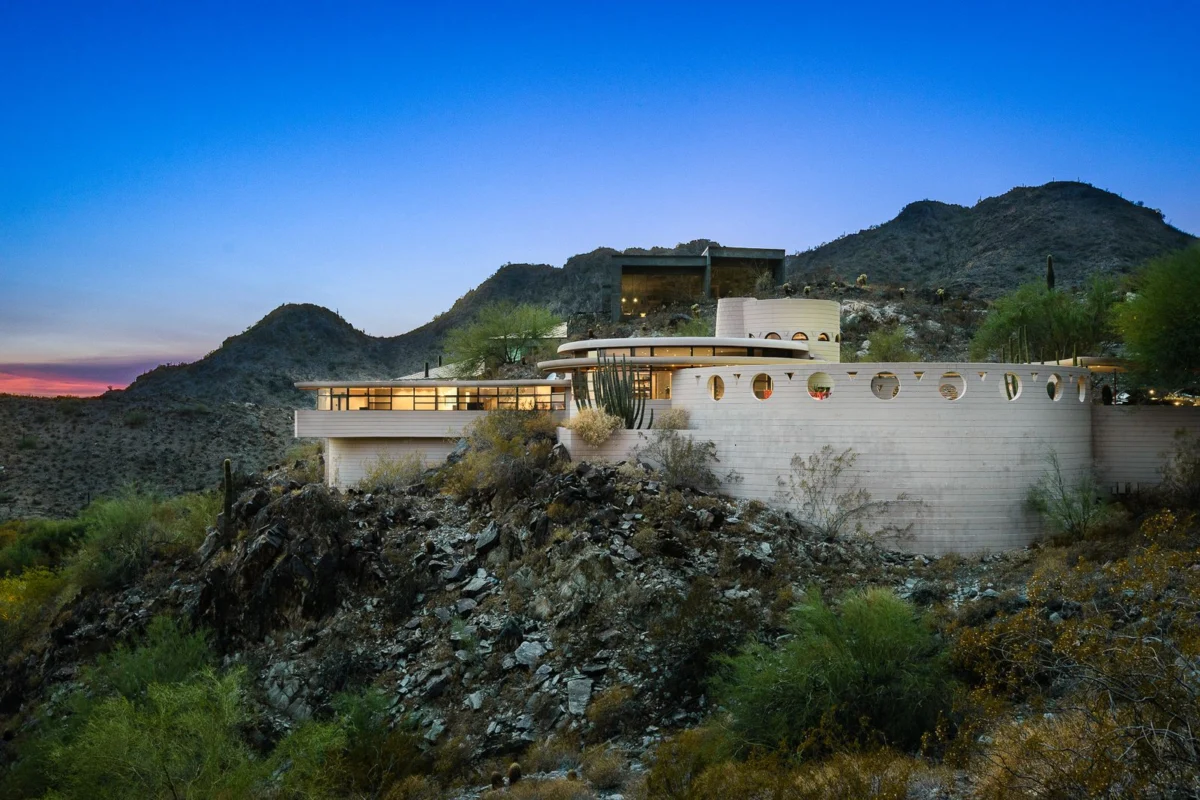
The iconic Circular Sun House, also known as the Norman Lykes House, Frank Lloyd Wright’s last residential design, has re-entered the market with an asking price of $8,800,000. Situated at 6836 North 36th Street in Phoenix, Arizona, this architectural marvel, completed in 1967, offers a rare opportunity to acquire a significant piece of American architectural history. The property spans 3,095 square feet, featuring three bedrooms and three bathrooms, set on a generous 1.32-acre lot that commands panoramic views of the desert landscape.
A Testament to Organic Architecture: Wright’s Enduring Vision
Frank Lloyd Wright, an undisputed titan of 20th-century architecture, left an indelible mark on the global built environment. His philosophy of "organic architecture" advocated for designs that were in harmony with humanity and its environment, integrating buildings, furnishings, and surroundings into a unified, coherent composition. Wright believed that buildings should grow naturally from their sites, mirroring the landscape and using indigenous materials. This vision is profoundly evident in the Circular Sun House, a posthumously completed work that encapsulates the zenith of his late-career experimentation with curvilinear forms. Though Wright passed away in 1959, he had completed the drawings for the Lykes House in 1959, just before his death, making it his final residential design. The construction, overseen by his apprentice and protégé, John Rattenbury, adhered meticulously to Wright’s original plans, ensuring the integrity of his vision. This careful execution by Rattenbury, who had a deep understanding of Wright’s principles, makes the house an authentic representation of the master’s intent.
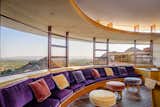
Wright’s connection to Arizona was profound, largely centered around Taliesin West, his winter home and architectural school in Scottsdale, established in 1937. The desert landscape deeply influenced his later works, inspiring designs that embraced natural light, open spaces, and materials that echoed the earth tones and textures of the Sonoran Desert. The Circular Sun House stands as a crowning achievement of this desert-inspired period, demonstrating Wright’s continuous evolution and his unwavering commitment to innovation even in his final years. It represents a mature synthesis of his architectural tenets, where form and function merge seamlessly with the natural world.

The Circular Sun House: Design and Historical Significance
Commissioned by Norman and Amy Lykes, the house was conceived as a dwelling perfectly integrated with the rugged topography of its hillside site. The agent’s description highlights this core principle: "Designed to blend in with the curves of the surrounding desert mountain, this masterpiece was the last home designed by Wright." The curvilinear design, a departure from the rectilinear forms often associated with his earlier Usonian homes, was a logical evolution for Wright, reflecting his fascination with natural, flowing shapes. This interest was famously expressed in his design for the Solomon R. Guggenheim Museum in New York City, completed in 1959, which shares a similar spiraling, organic geometry. The Circular Sun House translates this monumental public scale into an intimate residential setting, adapting the concept of a "continuous present" from the Guggenheim to a domestic sphere.
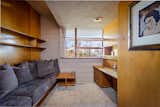
The home’s unique form is not merely aesthetic; it serves a practical purpose in the desert environment. The circular concrete block walls, a signature material of Wright’s later Arizona work, provide excellent insulation against the intense desert heat, while strategically placed openings capture cooling breezes and frame breathtaking views. The house’s elevated position offers a sanctuary from the bustle of the city below, providing uninterrupted vistas of the Phoenix mountains and the valley, reinforcing Wright’s belief in buildings that connect their inhabitants to the grandeur of nature. The completion of the house eight years after Wright’s passing, under the careful supervision of John Rattenbury, ensures that it remains an authentic embodiment of the architect’s final residential vision, cementing its place as a significant piece of architectural heritage.

Architectural Details and Interior Spaces
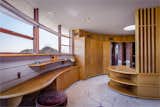
Upon entering the Circular Sun House, one is immediately struck by the seamless flow of its interior spaces, a hallmark of Wright’s design philosophy. The agent aptly notes that "the floor plan flows seamlessly from one space to another, and every room takes in unobstructed views." This fluidity is achieved through a series of interlocking circular and curvilinear forms, eliminating harsh corners and creating a sense of continuous movement and harmony. The open-plan living areas are designed for both grand entertaining and intimate family life, with carefully considered sightlines that draw the eye towards the magnificent outdoor scenery.
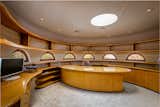
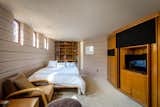
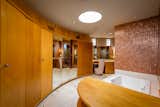
The interior palette is warm and inviting, dominated by the rich, golden hues of Philippine mahogany that clad the curved walls. This natural material not only adds a sense of luxury but also reflects the abundant natural light filtering in through the large windows and skylights, creating a dynamic interplay of light and shadow throughout the day. The mahogany, a material favored by Wright for its warmth and grain, reinforces the organic feel of the house, blurring the lines between the built environment and the natural landscape.

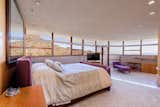
The residence comprises three well-appointed bedrooms and three full bathrooms, each designed with Wright’s meticulous attention to detail. The bedrooms, defined by the sweeping curved walls, offer private sanctuaries that maintain a connection to the overall design aesthetic. The inclusion of a library, which could easily be converted into a fourth bedroom, adds flexibility to the floor plan, catering to various lifestyle needs. Throughout the home, custom-designed built-in furniture and fixtures, often integral to Wright’s projects, further enhance the cohesive and integrated design. A particularly notable feature of this sale is that all of the home’s furniture is included, offering a complete, curated living experience as envisioned by the architect and subsequent careful stewards of the property. This inclusion elevates the offering from a mere house to a fully realized architectural environment, allowing a new owner to step directly into a piece of design history.
Exterior, Site Integration, and Location
The exterior of the Circular Sun House is as compelling as its interior, a masterpiece of landscape integration. Perched high in the hills above Palm Canyon in Phoenix, Arizona, the property boasts a commanding presence while simultaneously blending into its desert surroundings. The choice of site was crucial, allowing Wright to exploit the dramatic contours of the land and the breathtaking vistas. The house appears to embrace the mountain, its circular forms mirroring the natural curves and undulations of the terrain, rather than imposing upon it.
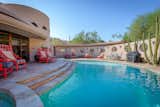
The 1.32-acre lot provides ample space for privacy and outdoor living, harmonizing with the architect’s vision of expansive, integrated environments. A key feature of the outdoor amenities is the crescent-shaped pool, a direct extension of the home’s curvilinear geometry. This pool is not merely an amenity but an artistic element, reflecting the desert sky and offering a serene oasis against the backdrop of the rugged landscape. Ample patios extend from the main living spaces, providing generous areas for outdoor entertaining, relaxation, and appreciating the Arizona climate. These outdoor zones are carefully designed to transition seamlessly from the interior, further dissolving the boundaries between indoor and outdoor living. The landscaping, thoughtfully curated to complement Wright’s aesthetic, utilizes native desert flora, enhancing the organic integration and minimizing water usage, a sustainable practice inherent in many of Wright’s designs. The panoramic views from the property are truly spectacular, encompassing vast expanses of the Sonoran Desert, distant mountains, and the glittering lights of Phoenix below, providing a constant connection to the natural majesty of the region.
Market Dynamics and Investment Value of Architectural Heritage
The re-listing of the Norman Lykes House at $8.8 million underscores the unique and robust market for historically significant architectural properties, particularly those by Frank Lloyd Wright. These homes are not just real estate; they are cultural artifacts and tangible investments in artistic legacy. Properties designed by Wright consistently command premium prices due to their rarity, architectural genius, and the enduring global appeal of his name. This house, being his last residential design, carries an additional layer of historical gravitas, making it exceptionally desirable for collectors, art patrons, and discerning investors.
Analysis of previous sales history for prominent Wright homes reveals a consistent upward trend in value, often outpacing the general luxury real estate market. These properties tend to attract a niche pool of highly qualified buyers who prioritize architectural integrity and historical significance over conventional luxury features. While the initial investment is substantial, the long-term appreciation potential is often robust, driven by scarcity and cultural importance. The challenges of owning such a property, including meticulous preservation and adherence to historical guidelines, are often offset by the prestige and unique lifestyle it offers. Furthermore, the inclusion of original or period-appropriate furniture in the sale significantly enhances the property’s value, presenting a turn-key architectural experience that preserves Wright’s holistic design vision. For many buyers, acquiring a fully furnished Wright home is akin to purchasing a living museum, where every element contributes to the architect’s artistic statement.

Preservation and Future Outlook for a Living Legacy
The sale of a property as significant as the Circular Sun House inevitably raises questions about its future stewardship and preservation. Given its status as a masterpiece of American architecture and Wright’s final residential design, potential buyers are often scrutinized for their commitment to maintaining its historical integrity. Architectural foundations and preservation societies frequently monitor the sales of such homes, advocating for covenants or easements that protect the property from insensitive modifications. For instance, the Frank Lloyd Wright Building Conservancy, a non-profit organization dedicated to the preservation of all Frank Lloyd Wright buildings, often plays an advisory role, connecting potential buyers with resources and expertise needed for proper maintenance and restoration.
The new owner of the Norman Lykes House will inherit not just a residence, but a living legacy, assuming the responsibility of safeguarding a piece of global architectural heritage. This involves ongoing maintenance in line with preservation best practices, which can include specialized contractors and materials to ensure that any work respects Wright’s original design and specifications. However, this responsibility also comes with immense prestige and the unique privilege of residing within a work of art. The house stands as a testament to Wright’s revolutionary ideas and his unwavering belief in architecture as a profound connection between humanity and nature. Its continued presence on the market and eventual sale ensures that the conversation around Wright’s legacy, organic architecture, and the intersection of art and living will persist, inspiring future generations of architects, designers, and homeowners alike. The Circular Sun House is more than a home; it is a profound statement about how we can live beautifully and harmoniously within our environment, a timeless message from one of history’s greatest architectural minds.