admin
admin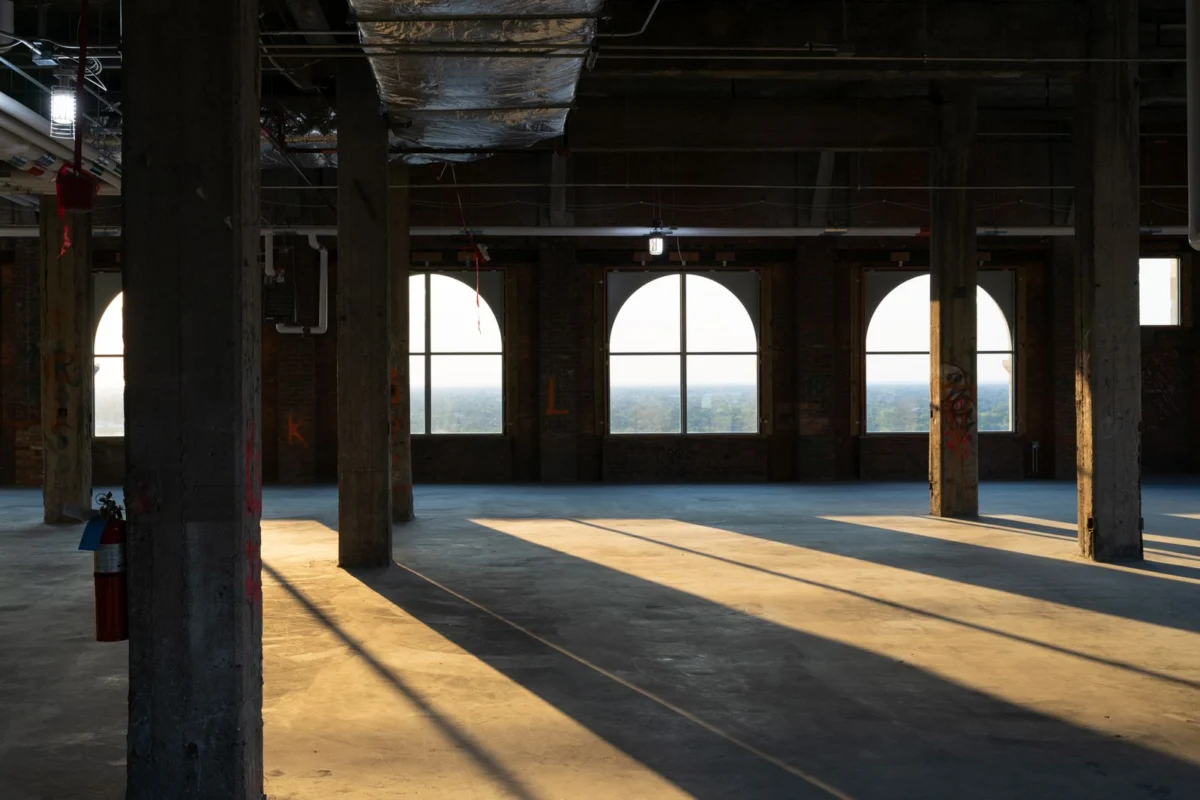
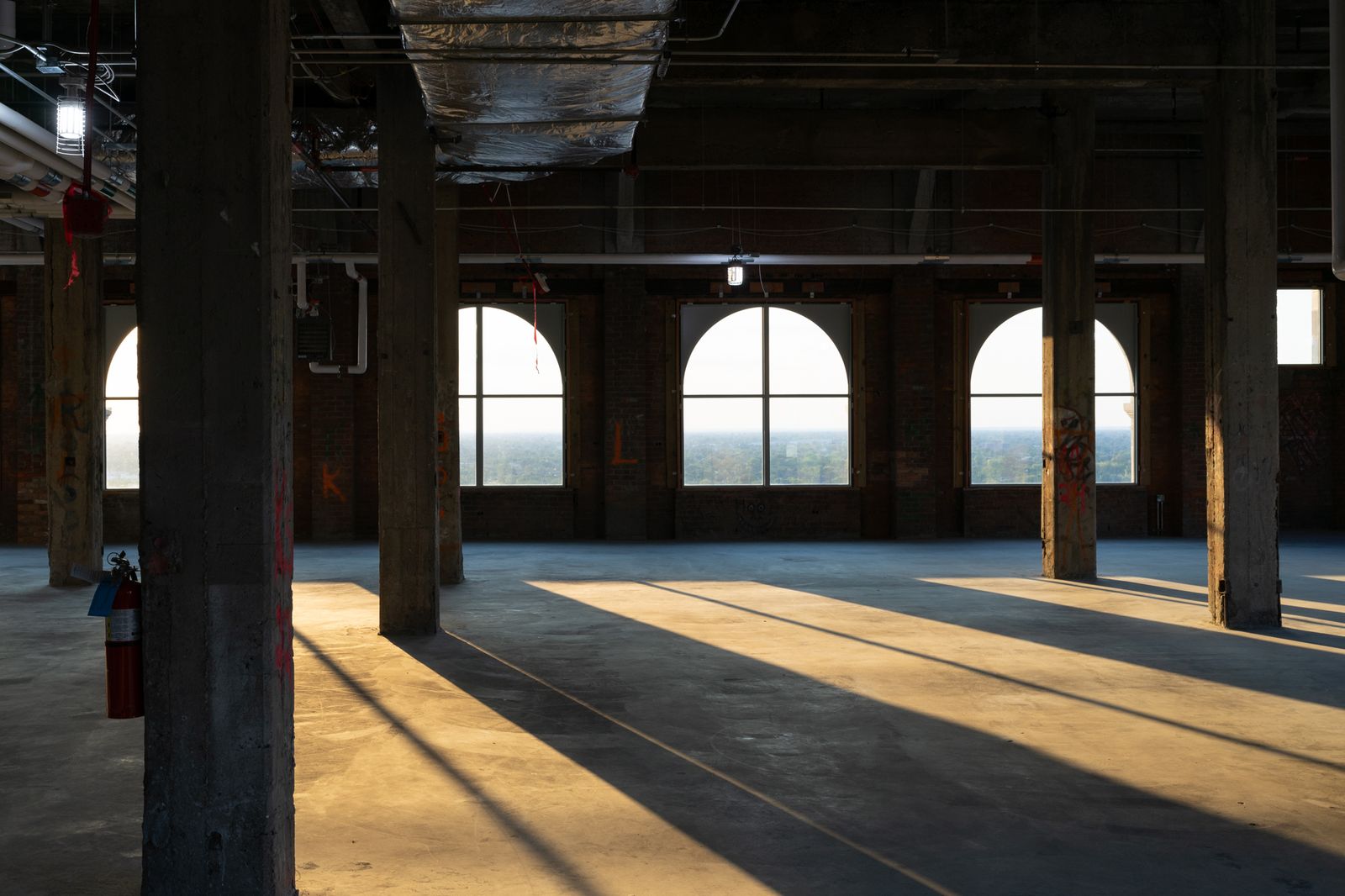
A late afternoon in September casts long, golden beams across the uppermost level of Detroit’s iconic Michigan Central Station. The vast space, once a symbol of the city’s profound decline, now lies stripped bare to its raw concrete subfloor, yet pillars still bear the faint marks of graffiti – a poignant echo of its recent past. Through newly glazed, arched windows, the nearly complete Gordie Howe International Bridge to Canada stretches majestically, while the downtown skyline glimmers with renewed vitality, punctuated by a new SHoP Architects tower catching the setting sun. This panoramic vista encapsulates a city in profound metamorphosis, where history and an audacious future converge.
The Phoenix Rises: Michigan Central Station’s Grand Rebirth
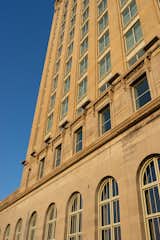
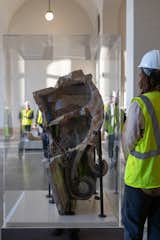
Eighteen floors below, a testament to this transformation unfolds. Michigan Central Station, a Beaux-Arts masterpiece opened in 1913, stood derelict for decades after its closure in 1988, a haunting monument to Detroit’s economic woes. Today, it has been reborn through a nearly $1 billion renovation spearheaded by Ford Motor Company. This monumental effort, spanning six years and over 1.7 million hours of work, has meticulously restored every finish, light fixture, and intricate detail to its original splendor. The ground floor even features a poignant gallery, displaying salvaged fragments of the building’s skin and bones in plexiglass exhibit cases, like relics in the sepulcher of a grand cathedral, honoring its tumultuous journey. This architectural resurrection is more than just a renovation; it serves as a powerful metaphor for Detroit itself—a city rising from the ashes, reclaiming its grandeur. The upper levels, envisioned to house a Nomad hotel by 2027, along with a vibrant tech and innovation hub, signal a forward-looking trajectory, aiming to anchor a new era of ingenuity in the heart of the city.
A Decade of Transformation: From Bankruptcy to Revival
The current vibrancy of Detroit stands in stark contrast to its condition just over a decade ago. In the early 2010s, the city was grappling with the aftermath of decades of decline. Financial mismanagement, disruptive shifts in the automotive industry, and a significant population exodus had left large swathes of the city in disrepair. Abandoned houses could be purchased for as little as $500, downtown areas felt largely deserted, and the crumbling remains of the Packard Automotive Plant, once the world’s largest abandoned factory, symbolized the extent of the urban decay. This precipitous decline culminated in Detroit declaring bankruptcy in 2013, the largest municipal bankruptcy in U.S. history. At its peak in the 1950s, Detroit boasted a population of 1.8 million; by the time of bankruptcy, it had plummeted to roughly 630,000.
However, the bankruptcy, while devastating, also marked a turning point. It forced a restructuring of the city’s finances and spurred a renewed focus on civic and economic revitalization. Public-private partnerships began to flourish, attracting significant investments. The acquisition of Michigan Central Station by Ford in 2018 was a landmark moment, signifying a major corporate commitment to the city’s future beyond traditional manufacturing. This period also saw a diversification of the city’s economy, with growth in sectors like tech, healthcare, and creative industries, slowly chipping away at its singular reliance on automotive manufacturing.
Cultivating Creativity: Detroit as a UNESCO City of Design
A pivotal moment in Detroit’s narrative of resurgence came in 2015 when it was designated a UNESCO City of Design. This international recognition validated the city’s deep-rooted design legacy, from its pioneering role in automotive design to its rich architectural heritage. Kiana Wenzell, co-executive director of Design Core Detroit and director of Detroit Month of Design, emphasizes the shift this brought about. "Since becoming a UNESCO City of Design, Detroit’s story has shifted toward one of resilience and creativity," Wenzell states. She notes a fundamental change from the early 2000s, when growth was primarily centered on "big attractions" like casinos and stadiums. "Now, we’re seeing a surge in cultural events, hospitality, and adaptive reuse—projects that feel more sustainable and community-driven."
The Detroit Month of Design, launched in 2011, serves as a dynamic platform, not anchored by a single trade show but rather a constellation of exhibitions, workshops, tours, and talks. This decentralized approach allows for a wide-ranging spotlight on Detroit’s profound design legacy, its recent transformation, and the diverse cohort of designers, architects, entrepreneurs, artists, and makers actively shaping its future. This focus on distributed creativity fosters a more inclusive and grassroots-driven revival. "Detroit’s creative community is hot like fire," Wenzell asserts, highlighting a strong spirit of collaboration that encourages experimentation, partnerships, and growing recognition both locally and globally. She adds, "What makes Detroit unique is its openness and accessibility. There’s room here to create and to fail, and a shared belief that design should reflect and improve the lives of everyone in our city." This ethos underscores a commitment to equitable development, a crucial aspect of Detroit’s ongoing evolution.

Voices of Revival: Designers, Entrepreneurs, and Architects on the Frontlines
The story of Detroit’s transformation is best told through the experiences of those actively building its future. Their perspectives offer a nuanced view of the progress, challenges, and aspirations defining this unique urban narrative.
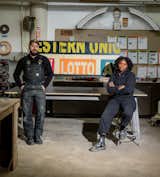
Bo Shepherd, Designer and Co-founder of Woodward Throwbacks
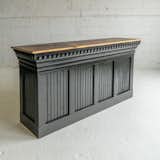
Bo Shepherd, who moved to Detroit from the East Coast seventeen years ago to work as a car designer, vividly recalls the city’s earlier atmosphere. "Back then, Detroit felt dark and mysterious, but also alive," she recounts. "There was this creative tension and raw beauty everywhere. The architecture, the abandoned buildings, the history—you could tell there was a story worth learning and being part of." This raw beauty became the foundation of her work. As she and her partner, Kyle Dubay, explored the city by bike, they began salvaging abandoned objects—old doors, broken tables, raw wood—to craft furniture for their apartment. This evolved into Woodward Throwbacks, launched in 2014, a design studio that gives new life to salvaged materials sourced directly from Detroit. "What’s always stuck with me is the texture of those materials—the natural patina that can’t be replicated," Shepherd notes. "Every layer of paint, every dent, tells a story. Highlighting that history and giving it a new purpose became part of our artistic practice."
Woodward Throwbacks’ work grew in tandem with the city’s construction boom. They forged partnerships with demolition crews, homeowners, and contractors engaged in rehabilitating old properties, extending their services beyond custom furniture to include interior design and real estate development. Shepherd views the renovation of homes and historic structures as one of the most significant transformations. "Detroit was once the richest city in the world, and you can see that legacy in its architecture," she says. "When people invest their time, money, and care into restoring those spaces, it shows a real respect for the city’s history. There’s a growing pride in Detroit’s identity, and you can feel that energy in every neighborhood that’s being revived." She attributes this moment to "a mix of creative energy, small business growth, and local pride. There’s a sense of ownership and collaboration that feels genuinely homegrown." However, Shepherd acknowledges the dual impact of growth: "Rising property values, the risk of displacement, and gentrification are very real conversations here." Her hope is for more creative individuals to not just visit but to "actually live and build here, because that’s what keeps Detroit authentic."

Bilge Nur Saltik, Designer and Educator
Bilge Nur Saltik, a designer, maker, and educator originally from Turkey, has called Metro Detroit home for the past decade. With a background in product design from the Royal College of Art in London and as a co-founder of the women-led studio Form & Seek, her work explores the intersection of craft and technology, spanning ceramics, glass, and 3D printing. Saltik was drawn to Detroit’s "incredibly strong and driven" creative community, characterized by "a real sense of purpose and collaboration." She embraces the local adage: "Detroit is big enough for the world to know, but small enough for you to be known in it." This captures the unique blend of expansive creativity and deep personal connection she experiences.
Saltik arrived when many buildings were abandoned, witnessing their gradual transformation into vibrant studios, galleries, and venues. She believes the current growth wave is more "grounded and sustainable" than previous cycles, driven by "local creatives, small businesses, and grassroots organizations who are deeply invested in the city’s future." She adds, "The city’s industrial heritage has shaped a culture of experimentation, where people are unafraid to work with their hands, test materials, and build from the ground up." Yet, like Shepherd, Saltik highlights the pressing issues of affordability and accessibility. "Rents developers expect for newly renovated spaces often don’t align with what artists, designers, or even galleries can sustain." Her ultimate wish for Detroit is "to stay a little weird—to keep its edge, its curiosity, and its openness to the unexpected," preserving the experimental spirit that makes it distinct.

Chelsea Hyduk, Architect
Architect Chelsea Hyduk, a Detroit native, returned to her hometown from New York City, where she worked at SHoP Architects, to establish her own practice and build a home for her growing family. She was drawn by the city’s informal and collaborative design community and the palpable opportunity for individual agency. "There aren’t really the ‘big firms’—especially in the architecture world—that cities like New York boast, so you can see people making jobs and positions for themselves," Hyduk explains. "There’s a sense of authenticity that comes with this. As someone who works for myself, I feel wholeheartedly that I can stick to my values and desires and evolve them as I grow and change."
Hyduk’s commitment extends to community building; her family home incorporates public green space and a pedestrian pathway, and she co-founded a nonprofit neighborhood Block Club to drive local infrastructure improvements like pocket parks. Her recent projects include designing the interior of Detroit’s Saturn Coffee shop, located in a 1920s Albert Kahn building, and a music studio for DJ and producer Roni Amitai, demonstrating a commitment to thoughtful, context-specific design. Hyduk emphasizes that "growth in Detroit should be measured not just in new buildings, but in how well design serves the people who already call this city home." She stresses that architects and designers must "think creatively and locally, working with what already exists and engaging directly with communities to shape spaces that reflect Detroit’s character and, in some ways, its scrappiness."
Cyndia Robinson, Entrepreneur and Founder of Cure Nailhouse
For Cyndia Robinson, a Detroit local, the nail salon was a cherished space of "bonding, storytelling, and expression" during her childhood. Upon returning home after college, she was disheartened by the disappearance of many local salons and beauty schools, critical institutions for Black women in Detroit. "That was hard to witness," she reflects, "especially in a city like Detroit, where Black culture is everywhere, and where Black women have led beauty, style, and innovation for generations. That moment of disconnect inspired me to create something new."
In 2018, Robinson founded Cure Nailhouse in the Sugar Hill Arts District of midtown Detroit. It is more than a nail studio; it’s an artist residency, a learning space, and a cultural hub—her "response to erasure, my commitment to community, and my belief that nail artistry deserves to be seen, respected, and invested in as a legitimate form of fine art." The space, designed by Duett Interiors, blends familiarity with modern aesthetics, featuring Zieta Plopp stools, a metal bar for events, and distinct zones like the bright nail stations and the soothing, earth-toned "Soak Room." Designer Tiffany Thompson aimed to create a "gender-neutral" space where "everyone feels comfortable and inspired by design."
Robinson encapsulates her venture as "my love letter to Detroit, to the women who raised me, and to the beauty that Black women create every day." She acknowledges the complexity of the city’s transformation: "There are beautiful moments of growth, creativity, and collaboration happening across neighborhoods and industries, but there is also tension around access, ownership, and representation." For many lifelong Black Detroiters, she observes, the current development can feel like "a fight to hold space in the midst of rapid development and gentrification." Robinson firmly believes that "growth must be intentional," advocating for development that does not come at the cost of community. "We need to ensure that as the city transforms, it creates pathways for inclusion, equity, and representation," she urges, emphasizing the need to "center the voices of legacy Detroiters, making sure affordable housing and small businesses remain top priorities, and protecting the cultural legacy that makes this city unique." She concludes, "It is not a blank canvas or a comeback story. Detroit has always been here, shaping culture and pushing boundaries, even when it was being overlooked or underestimated."
Challenges and the Path Forward: Ensuring Inclusive Growth

Detroit’s revival, while remarkable, is not without its complexities. The very success that attracts investment and new residents also brings the challenge of gentrification and rising property values, potentially displacing long-standing residents and small businesses. The median home price in Detroit has seen significant increases in recent years, a positive indicator of recovery but also a concern for affordability. While initiatives for affordable housing are in place, the demand often outstrips supply, and the economic realities for artists and smaller enterprises remain precarious.
Ensuring that the benefits of revitalization are broadly shared across all communities, particularly Detroit’s predominantly Black population, is a critical ongoing task. This requires sustained efforts in community engagement, equitable development policies, and investment in historically underserved neighborhoods. Programs that support local entrepreneurship, preserve cultural heritage, and create pathways for local residents to participate in the new economy are vital to prevent the creation of a two-tiered city. The emphasis on "community-driven" and "sustainable" projects, as highlighted by Design Core Detroit, is a positive sign, indicating a conscious effort to learn from past mistakes and build a more resilient and inclusive future.

Broader Implications and Future Outlook
Detroit’s journey offers a compelling case study in urban resilience and revitalization. Its transformation from the largest municipal bankruptcy to a thriving hub of design, innovation, and culture provides valuable lessons for other post-industrial cities grappling with similar challenges. The deliberate focus on adaptive reuse, leveraging existing architectural assets rather than wholesale demolition, demonstrates a sustainable approach to urban development that respects history while embracing the future.

The construction of the Gordie Howe International Bridge, projected to significantly boost trade and economic activity between the U.S. and Canada, will further integrate Detroit into a broader global economy, diversifying its economic base beyond its traditional automotive roots. The SHoP Architects tower on the former Hudson’s site symbolizes the return of large-scale, modern development to the downtown core, signaling renewed confidence from major investors.
However, the ultimate success of Detroit’s resurgence will not solely be measured by new skyscrapers or investment figures. It will depend on its ability to foster an inclusive environment where its rich cultural legacy is protected, and where long-term residents, artists, and entrepreneurs can thrive without fear of displacement. The voices of designers like Bo Shepherd, Bilge Nur Saltik, Chelsea Hyduk, and Cyndia Robinson underscore a shared commitment to a Detroit that is not just rebuilt, but fundamentally reimagined – a city that maintains its unique "scrappiness" and "weirdness" while leading the way in equitable and community-centric urban design. Detroit’s story is one of enduring spirit, a testament to the power of human ingenuity and collective will to forge a new destiny, one beam of golden light at a time.