admin
admin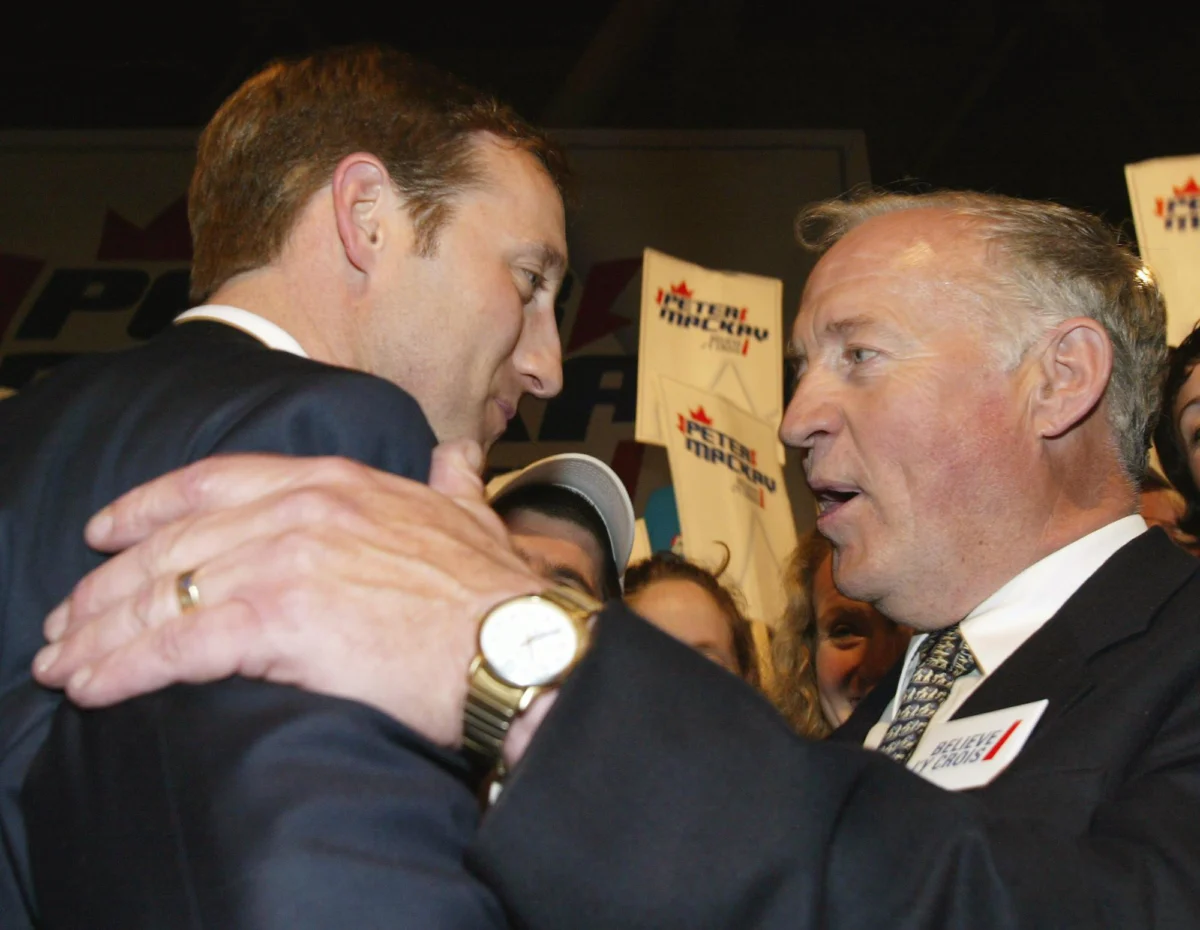
Elmer MacKay, a distinguished figure in Canadian politics and a longtime Member of Parliament for Nova Scotia’s Central Nova riding, has passed away at the age of 89. MacKay, whose political career spanned critical periods under prime ministers Joe Clark and Brian Mulroney, was remembered by family, colleagues, and constituents as a dedicated public servant, a man of profound integrity, and a tireless advocate for his home province. His death marks the end of an era for a family deeply entrenched in Canadian political life, with his son, Peter MacKay, following in his footsteps to also serve Central Nova and hold federal cabinet portfolios.
A Pillar of Progressive Conservative Politics
Born in Lorne, Nova Scotia, Elmer MacKay’s journey into public service began after a career in law and forestry. He earned his law degree from Dalhousie University, a foundation that would serve him well in the rigorous environment of federal politics. His entry into the House of Commons came in 1971, following a by-election victory in the riding of Central Nova. This initial win set the stage for a remarkable career characterized by a steadfast commitment to his constituents and a pragmatic approach to governance.
MacKay first held the Central Nova seat until 1983. During this period, he became known for his diligent work on behalf of Nova Scotians and for his growing influence within the Progressive Conservative Party. His first foray into the federal cabinet came under Prime Minister Joe Clark, where he served as Solicitor General of Canada. This role placed him at the heart of the nation’s justice and security apparatus, overseeing agencies like the RCMP and Correctional Service Canada. His tenure as Solicitor General showcased his meticulous nature and his commitment to upholding the rule of law.
The Pivotal Resignation: A Strategic Move for Mulroney
One of the most defining moments of Elmer MacKay’s political career, and a testament to his strategic acumen and party loyalty, occurred in 1983. Following Brian Mulroney’s victory in the Progressive Conservative leadership race, Mulroney, then a corporate lawyer and not an elected MP, needed a seat in Parliament to effectively lead the party from within the House of Commons. In a move that underscored his dedication to party unity and long-term vision, MacKay voluntarily resigned his Central Nova seat. This act of political selflessness allowed Mulroney to run in a subsequent by-election and secure his entry into Parliament, paving the way for his eventual landslide victory in the 1984 federal election.
This decision, while temporarily removing MacKay from Parliament, ultimately solidified his standing within the party and demonstrated a rare willingness to prioritize the collective good over personal ambition. Political analysts at the time recognized the significance of MacKay’s sacrifice, viewing it as a crucial step in the Mulroney era’s ascendancy. It highlighted the deep bonds of trust and loyalty that characterized the Progressive Conservative caucus during that transformative period.
Return to Parliament and Cabinet Leadership

MacKay’s temporary absence from the House of Commons was short-lived. True to his commitment and following Mulroney’s successful entry into Parliament, MacKay ran again in the 1984 federal election, which saw the Progressive Conservatives sweep to a historic majority government. He successfully reclaimed the Central Nova seat, demonstrating his enduring popularity and strong local support.
With the PC Party in power, Elmer MacKay was once again called upon to serve in cabinet, this time under Prime Minister Brian Mulroney. His second stint in cabinet was marked by a series of significant and diverse portfolios. He served as Minister of National Revenue, a crucial economic role responsible for the administration of Canada’s tax system. Later, he took on the challenging role of Minister for the Atlantic Canada Opportunities Agency (ACOA). This portfolio was particularly close to his heart, as it directly addressed the economic development needs of his beloved Atlantic region. Under his leadership, ACOA played a vital role in fostering small and medium-sized enterprises, promoting innovation, and supporting community development projects across Atlantic Canada, aiming to reduce regional disparities and stimulate economic growth.
His final cabinet post was as Minister of Public Works, a portfolio responsible for vast federal infrastructure projects and real estate holdings. In this capacity, MacKay oversaw significant government operations and capital investments, further cementing his reputation as a capable and hands-on administrator. He stepped down from cabinet in 1993 and chose not to seek re-election in the upcoming federal election that year, concluding a distinguished career spanning over two decades in federal politics.
A Legacy of Community and Connectivity
Beyond his formal roles, Elmer MacKay was widely celebrated for his unwavering devotion to his constituents and his tireless efforts to improve infrastructure and connectivity in Atlantic Canada. His son, Peter MacKay, captured this sentiment in a poignant post on X, noting that "His was an extraordinary life, collecting legions of friends leaving a legacy of hard work & public service." Peter MacKay also highlighted his father’s diverse interests, stating, "He loved the forest, poetry, sport, law & good debate, the Yankees & especially his family. Deeply missed & alive in our hearts. Sleep well Pop, you earned your rest."
One of MacKay’s most enduring legacies is his instrumental role in advocating for critical infrastructure projects that transformed the East Coast. He was a vocal proponent for the construction of the Confederation Bridge, connecting Prince Edward Island to mainland New Brunswick, a project that fundamentally altered transportation and economic dynamics in the region. Furthermore, he tirelessly championed continuous ferry service between Woods Islands and Pictou, recognizing the vital link it provided for communities and commerce. These efforts underscored his deep understanding of regional needs and his commitment to practical solutions that enhanced the lives of Atlantic Canadians.
Tributes Pour in from Across the Political Spectrum
News of MacKay’s passing prompted a wave of tributes from current and former political leaders, underscoring the respect and admiration he commanded across party lines.
Nova Scotia Premier Tim Houston, himself a Progressive Conservative MLA for Pictou East, hailed MacKay as "one of Pictou County’s greatest representatives." Houston emphasized MacKay’s enduring connection to his roots, noting, "Elmer kept his name and number in the phone book so you could always get ahold of him. Over the years, our MLA offices would often hear from Elmer if he was talking to a person he thought we might be able to help." This anecdote speaks volumes about MacKay’s accessibility and his genuine desire to assist ordinary citizens, a hallmark of effective constituent representation. Houston concluded, "He was a great person who was always eager to help people."

Federal Conservative Party Leader Pierre Poilievre also offered a heartfelt tribute on X, describing MacKay as a "wonderful friend and mentor." Poilievre recounted personal stories that painted a vivid picture of MacKay’s character, including how he would anonymously show up "at the homes of the less fortunate right before Christmas with a bundle of gifts and a fresh turkey for supper, never publicizing his generosity." This quiet philanthropy revealed a man whose public service was deeply rooted in compassion and a desire to make a tangible difference in people’s lives, far from the glare of political spotlights.
Poilievre further praised MacKay’s unwavering dedication to the East Coast, reaffirming his pivotal role in pushing for the Confederation Bridge and ensuring continuous ferry service. In a particularly poignant reflection, Poilievre shared a recent conversation with MacKay after hearing he had fallen and hurt his hip. "I called him up, and he was sharp as a tack. He told his favourite jokes and defiantly recited Barton’s ballad: ‘I am hurt, but I am not slain; I’ll lay me down and bleed awhile, and then rise and fight again.’" This quote perfectly encapsulates MacKay’s resilient spirit and his enduring zest for life, even in the face of adversity. Poilievre concluded by acknowledging MacKay’s profound love for his family: "I know he loved and was immensely proud of his 5 children and many grandchildren, who form the greatest part of his precious legacy."
The MacKay Political Dynasty and Broader Impact
Elmer MacKay’s passing also brings into focus the unique aspect of political dynasties in Canadian public life. His son, Peter MacKay, not only followed him into the Central Nova seat but also achieved significant cabinet roles, including Minister of Foreign Affairs, Minister of National Defence, and Minister of Justice and Attorney General of Canada. This multi-generational commitment to public service from the MacKay family speaks to a deep-seated tradition of civic engagement and a profound connection to the communities they represented. Their combined tenure represents decades of dedicated advocacy for Nova Scotia and Atlantic Canada at the federal level.
MacKay’s career spanned a period of significant political transformation in Canada, from the challenging minority government of Joe Clark to the dominant majority of Brian Mulroney. His ability to navigate these shifts, serve in diverse ministerial roles, and maintain strong constituent support underscores his political skill and adaptability. He was a bridge-builder, both literally with his advocacy for the Confederation Bridge, and figuratively, through his ability to connect with people from all walks of life.
His commitment to keeping his phone number public and his willingness to personally intervene for constituents exemplify a style of politics that prioritized direct engagement and community responsiveness. In an increasingly polarized political landscape, MacKay’s legacy serves as a reminder of the enduring value of grassroots representation and the importance of a personal touch in public service.
Elmer MacKay’s extraordinary life, marked by unwavering dedication to his family, his community, and his country, leaves an indelible mark on Canadian political history. His contributions to regional development, his ethical approach to governance, and his profound personal integrity will be remembered by generations of Canadians, particularly those in his beloved Central Nova. He earned his rest, leaving behind a legacy that continues to inspire.