admin
admin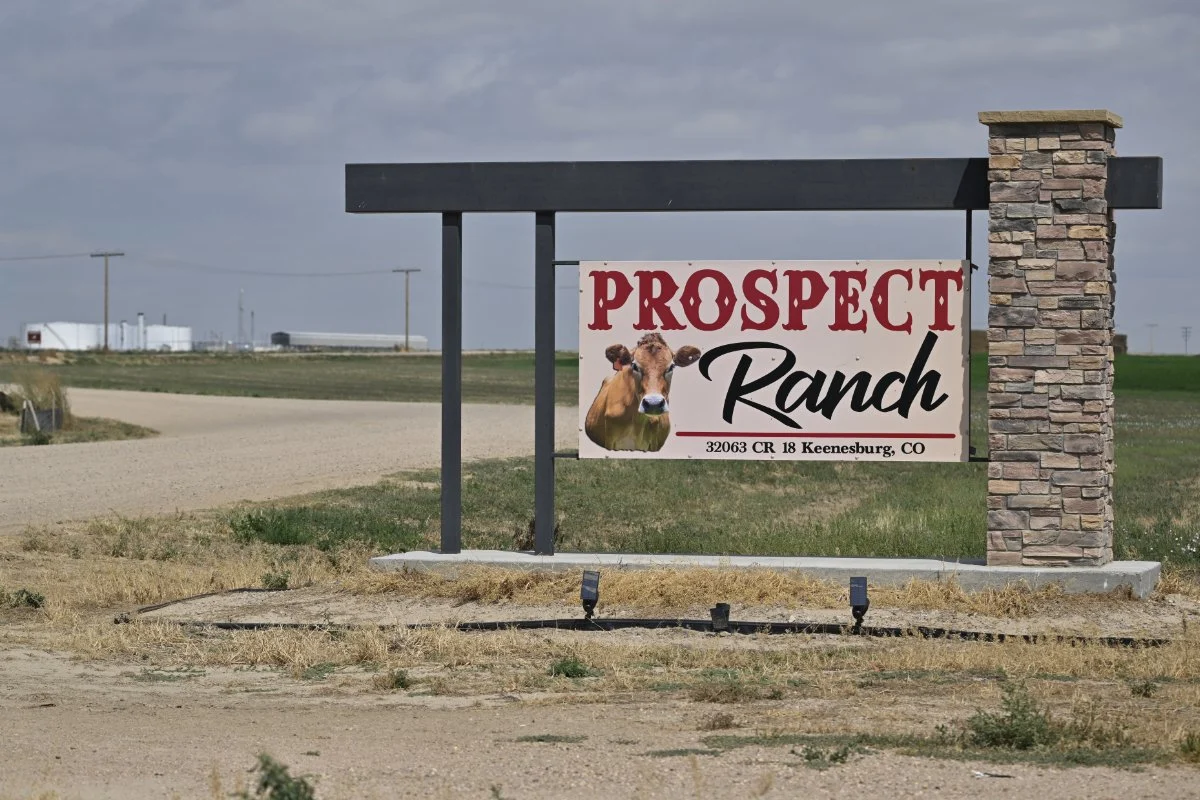
Safety experts across the nation are sounding urgent alarms, warning that severe cutbacks in the number of federal inspectors and broader budgetary constraints within the Occupational Safety and Health Administration (OSHA) could precipitate a sharp increase in farmworker deaths and injuries. This concerning trend is exacerbated by a landscape of diminishing protections for agricultural laborers, many of whom are foreign-born and vulnerable, leaving them exposed to inherently hazardous working conditions within an increasingly consolidated industry.
The grim predictions follow a devastating incident on August 20, 2025, when six workers tragically lost their lives at Prospect Valley Dairy in Keenesburg, Colorado. The catastrophe unfolded when two employees attempted to repair a manure management system in an enclosed underground pump room. A pipe disconnected during their efforts, unleashing a torrent of manure water and hydrogen sulfide, a lethal gas produced by decomposing organic matter. The initial two workers were quickly overcome and suffocated by the toxic fumes. In a desperate attempt to rescue their colleagues, four more workers entered the confined space, only to be similarly incapacitated and succumb to the deadly gas.
Emergency responders, including an EMT, arrived on the scene and quickly recognized the extreme danger. A 45-minute 911 call reviewed by Colorado Public Radio detailed the harrowing situation, with an EMT informing the operator that accessing the unconscious workers, trapped 12 feet deep in the pit, was impossible due to the overwhelming risk of gas exposure. Tragically, approximately 25 minutes into the call, the EMT rescinded the request for a rescue helicopter, instead advising that a coroner be dispatched. "It was terribly tragic and also completely preventable. It’s well known that manure pits are dangerous confined spaces," remarked Jordan Barab, a former deputy assistant secretary at OSHA and author of the workplace safety blog, Confined Space.
Nearly a year after the incident, the families of four of the deceased have initiated a wrongful death lawsuit, alleging that Prospect Valley Dairy and HD Builders LLC were fully aware of a faulty manure-management system and that the fatalities were entirely avoidable. They seek damages under Colorado’s wrongful death statutes, a legal battle that underscores the systemic failures in worker protection. Civil Eats’ attempts to reach Arend Bos, the owner of Prospect Valley Dairy, for comment were unsuccessful.
A Decades-Long Battle for Safety in Agriculture
The agricultural sector has long been recognized as one of the most perilous industries for workers in the United States. Hazards are pervasive, ranging from manure pit drownings and asphyxiation—common workplace fatalities, as documented in reports like the Purdue University’s Summary of U.S. Agricultural Confined Space-related Injuries and Fatalities Report—to animal attacks, entanglement in heavy machinery, and suffocation in grain bins or hay piles. Civil Eats’ prior investigative series, "Injured and Invisible," highlighted in 2022, detailed how these dangers disproportionately affect a largely vulnerable workforce.
OSHA, established in 1970 with the explicit mandate to ensure safe and healthy working conditions, is tasked with setting safety standards, providing training, conducting inspections, and investigating workplace incidents. However, its capacity to fulfill this mission, particularly within agriculture, has been consistently challenged. Under President Donald Trump’s second administration, the agency has reportedly faced unprecedented budget and staffing reductions, intensified by the directives of the newly formed Department of Government Efficiency (DOGE). This deregulation-focused approach has sparked profound concern among former government officials and safety experts, who fear an already underregulated industry is becoming even more dangerous.
OSHA’s Crippled Capacity: A Deep Dive into Declining Resources
The current state of OSHA’s resources paints a stark picture of an agency stretched to its limits. The number of OSHA inspectors is at an all-time low. A January report from the Office of Inspector General revealed a 13 percent drop in federal OSHA inspectors from February 2024 to June 2025. When combined with state inspectors, the total force stands at approximately 1,720 individuals. This meager contingent is responsible for overseeing the health and safety of an estimated 144 million workers across 11.6 million worksites in a multitude of industries. This translates to each inspector being responsible for the well-being of roughly 84,000 workers, spread across an average of 6,700 workplaces.
Such severe understaffing drastically limits OSHA’s ability to conduct proactive inspections, forcing the agency into a predominantly reactive role. "With fewer inspectors, OSHA becomes much more reactive than proactive," Barab explained, emphasizing that interventions often only occur after severe injuries or fatalities have already taken place. The odds of a random inspection have plummeted to such an extent that it would now take an estimated 191 years for the agency to inspect every workplace under its jurisdiction just once. This figure represents a significant increase from the 165-year estimate reported by Civil Eats in 2022, underscoring the accelerating decline in oversight capacity.
Moreover, a long-standing budget rider, first attached to OSHA’s appropriations in 1976, continues to exempt farms with fewer than 10 employees from routine inspections, enforcement actions, and penalties. This exemption, often justified as a protection for "small family farms," effectively leaves a significant portion of the agricultural workforce with little to no federal oversight. The National Institute for Occupational Safety and Health (NIOSH), a critical research arm for worker health and safety, has also reportedly seen its funding and research capacity severely curtailed, further eroding the scientific basis for preventive measures.
The Perilous Realities of Modern Agriculture
The incident at Prospect Valley Dairy is a chilling illustration of the inherent hazards prevalent in modern animal agriculture facilities. These risks are projected to intensify as safety training resources dwindle and inspection capacities continue to shrink. The agricultural landscape itself is undergoing a dramatic transformation: while the "myth of the small family farm" persists, as Barab points out, the reality is that the industry is rapidly consolidating into massive operations.
Data from the U.S. Department of Agriculture (USDA) indicates a profound shift. From 2002 to 2022, the number of farms with 1,000 or more cows surged by 60 percent, while mid-sized operations (100 to 199 cows) contracted by 62 percent. This consolidation means fewer, larger farms manage vastly increased numbers of animals and, consequently, immense quantities of waste. At Prospect Valley Dairy, workers were tasked with managing the excrement of over 6,000 cows, generating an astonishing 62,500 to 112,500 gallons of manure daily—enough to fill an Olympic-sized swimming pool in just six to ten days. Such concentrated animal feeding operations (CAFOs) create environments that are noisy, rich in pathogens, and laden with manure, exponentially increasing the risk of injury from animals, equipment, and the toxic byproducts of their waste.
The Economic Imperative: Non-Compliance as a Cost-Saving Measure
The weakening of OSHA’s enforcement capabilities creates a perverse incentive for employers. For many companies, the cost of non-compliance, particularly when the likelihood of detection is minimal, may be perceived as cheaper than investing in robust safety measures and training. Debbie Berkowitz, a fellow at Georgetown University’s Kalmanovitz Initiative for Labor and the Working Poor and a former senior OSHA official, highlights that inspectors often prioritize construction sites due to their accessibility and prevalence, leaving farms largely uninspected. "OSHA doesn’t have to travel hours to a farm," she noted.

Following the Prospect Valley Dairy tragedy, OSHA issued citations to Prospect Ranch LLC (operating as Prospect Valley Dairy) and High Plains Robotics, a division of Fiske, Inc., which provided maintenance services. HD Builders LLC, whose employees were also present but unharmed, received citations as well. The citations against Prospect Ranch LLC and Fiske specifically noted failures to protect workers from atmospheric hazards and to provide adequate safety education regarding toxins. Berkowitz emphasized the gravity of this oversight: "They have to educate workers about chemical hazards and the measures needed to protect them when working in and around manure. They didn’t do that." She added that the violations were not even classified as the most severe type.
The policy research center Good Jobs First reported a alarming trend in the first nine months of 2025, noting a 66 percent decrease in average penalties compared to the same periods over the previous 17 years. Health and safety penalties specifically dropped by 47 percent, and enforcement cases declined by 35 percent. Even in catastrophic incidents like Prospect Valley Dairy, penalties appear to be less stringent than historically observed. Prospect Ranch LLC was initially proposed a fine of $132,406 but ultimately received a fine of approximately $85,000 for six violations—all of which it is currently contesting.
Barab expressed surprise that the violations were classified as "serious" rather than "willful," a designation applied when there is a clear disregard for worker safety or outright neglect. "Willful" violations carry significantly higher penalties, potentially exceeding $150,000 per violation. In a February letter to Department of Labor officials, six Democratic U.S. Senators highlighted a 42 percent decrease in "willful violations" found during inspections in 2025 compared to 2024. The senators concluded, "[T]his reduction in findings of willful violations indicates that OSHA inspectors may be being encouraged to issue citations for lesser violations, allowing employers who commit serious safety violations to avoid facing proportional consequences."
The Vulnerable Workforce and the Chilling Effect of Immigration Policies
The workers who undertake the grueling jobs in animal agriculture, like those at Prospect Valley Dairy, are often driven by the imperative to provide for their families. Many are foreign-born, and a significant portion live on-site, tying their housing directly to their employment. Will Lambek, a staff member at Vermont-based Migrant Justice, a grassroots organization advocating for economic justice and human rights, explained that this creates an acute vulnerability: "The workers are literally sleeping next to or right above the cows that they’re milking." The fear of retaliation for speaking up about safety concerns is amplified, as it could mean not only losing a job but also losing a home.
Trump-era immigration enforcement policies, including increased raids targeting farmworkers, have further compounded this vulnerability. Lambek noted a "chilling effect" where workers are hesitant to report unsafe conditions for fear of deportation. "When workers speak up about abuses happening or urge employers to address chronic health and safety issues, they’re branded as troublemakers, and they’re run off the farm," he stated. This climate of fear contributes to significant underreporting of incidents. One analysis claims that over 80 percent of nonfatal injuries and illnesses on animal farms are not reported to OSHA, obscuring the true scale of the problem.
Despite this underreporting, agriculture remains one of the most fatal industries in which to work, consistently ranking high on lists of dangerous occupations published by the Bureau of Labor Statistics. The increasing concentration of animals in CAFOs means workers face greater exposure to pathogens, noise, and the sheer physical risks associated with managing thousands of large animals in confined spaces.
"Big Ag Rules the Roost": The Persistent Obstacle to Reform
Reflecting on the Prospect Valley Dairy incident, Berkowitz expressed confidence that the OSHA office in Denver performed to the best of its ability given its limited resources, but "it must have broken their heart that they didn’t have more tools that they could use to hold these employers accountable for what happened." She reiterated that OSHA’s effectiveness is fundamentally constrained by its staffing levels, which are at "the lowest number of inspectors in the history of the agency."
A major impediment to improving farmworker safety is the pervasive lack of specific agricultural safety standards. While hundreds of standards govern general industry and even other hazardous sectors like slaughterhouses, agriculture benefits from only a handful. The critical confined-space standard, for instance, which dictates rigorous safety protocols for entering enclosed areas "not necessarily designed for people" but "large enough for workers to enter"—like the pump room at Prospect Valley Dairy—does not apply to agriculture. This exemption persists despite the well-known dangers of air quality in manure storage facilities. "If a slaughterhouse worker goes underground to fix a pipe, the confined-space standard dictates what they need to do to ensure safety, including testing the atmosphere and having a buddy," Berkowitz explained. "But because of the agricultural industry’s efforts to prevent regulation, agricultural workers are exempt from this standard and many more." When it comes to worker protections on farms, she asserted, "Big Ag rules the roost."
The 1976 OSHA rider, initially intended to shield small farms from perceived "onerous government oversight," is a testament to the enduring power of the agricultural lobby. Berkowitz noted, "No party, Democrat or Republican, wants to take it on, because the backlash would be so strong—‘You’re against small farms.’ But that’s just not true. We’re about saving lives."
Advocacy and the Urgent Need for Federal Action
Amidst these systemic challenges, some advocacy groups are actively working to counteract the influence of large agribusiness and secure greater protections for workers. In Vermont, Migrant Justice pioneered the "Milk with Dignity" program, which Lambek describes as a worker-driven initiative "to address systemic human rights violations and improve labor and housing conditions" in the dairy industry. This model, inspired by the Coalition of Immokalee Workers’ successful Fair Food Program, aims to enforce human rights standards through direct agreements with corporations. However, even in Vermont, 80 percent of dairy workers remain outside this program, lacking its protections.
For comprehensive transformation, federal-level action is deemed essential. Lambek emphasized the need for improvements "on all fronts," advocating for more forceful federal enforcement of labor laws and the closure of critical agricultural worker loopholes. While programs like Milk with Dignity offer vital protections, he acknowledged they "are protecting workers’ rights in a way that federal enforcement has really never been able to do."
The roadmap for enhancing agricultural worker protections is clear to experts like Berkowitz: extend the same safety standards and enforcement mechanisms that apply to workers in other industries, such as factories and slaughterhouses, to the agricultural sector. "If you talk to any OSHA inspector who’s ever gone on a farm to do an inspection, the first thing they’ll tell you is we need more standards to cover agriculture," she stated.
The year 2025 marked 55 years since OSHA was signed into law, a milestone overshadowed by the agency’s current state. With the lowest staffing and inspector count in U.S. history, and agriculture remaining one of the most fatal yet least regulated industries, the future for farmworkers appears increasingly bleak. "It’s now going to get much more dire for ag workers," Berkowitz warned, concluding that "the Trump administration and Republicans are set on essentially emaciating the only worker protections workers have." The human cost of these policy choices, as tragically demonstrated at Prospect Valley Dairy, is profound and potentially devastating.