admin
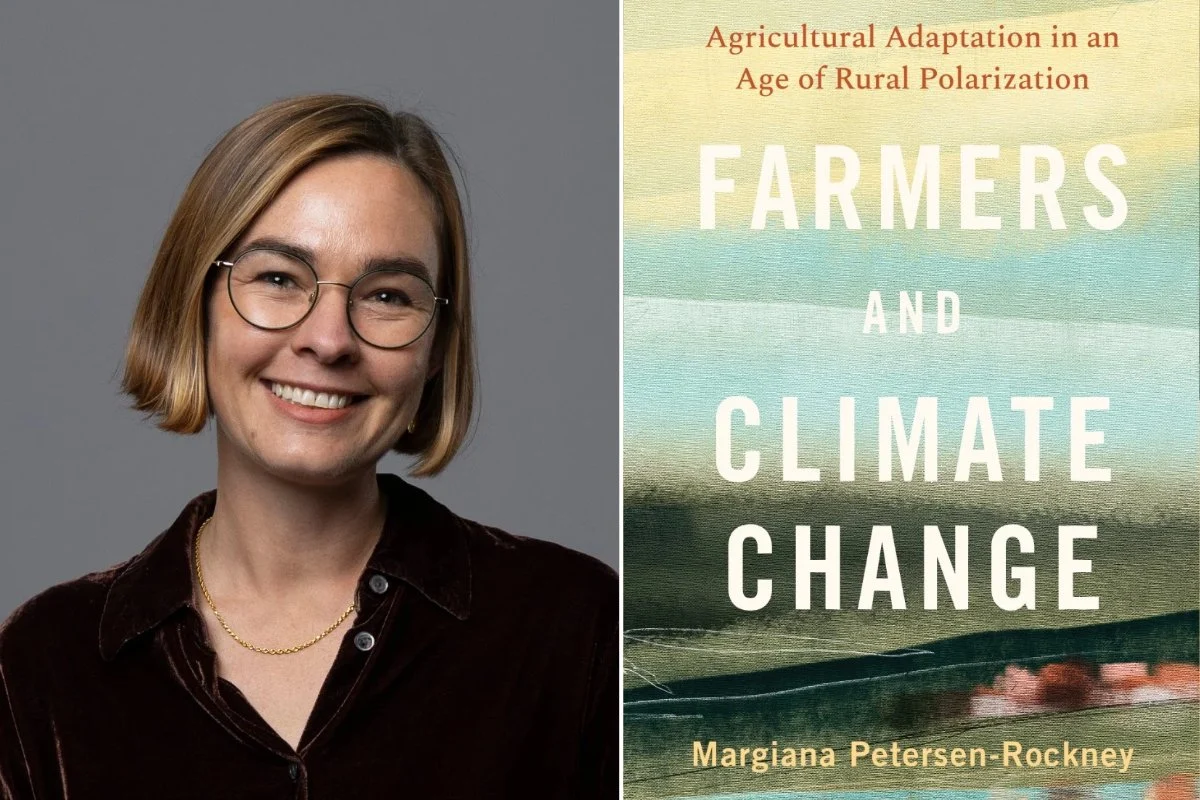
A profound paradox lies at the heart of America’s rural communities: farmers, often the first to feel the brunt of climate change, frequently find themselves unable to openly discuss or adapt to it without risking their vital social connections. This intricate dynamic is meticulously explored in Farmers and Climate Change: Agricultural Adaptation in an Age of Rural Polarization, the new book by political ecologist Petersen-Rockney. Her work, based on nearly a decade of research in Northern California’s Siskiyou County, unearths the unspoken truths and complex adaptations unfolding across the nation’s agricultural landscapes.
Petersen-Rockney, who was homeschooled in the Northeast, recounts a childhood admonition that shaped her understanding of this dilemma: "My mom told me as a kid, ‘We don’t talk to our fellow farmers about climate change.’" This directive stemmed from a deep-seated fear that acknowledging the changing climate could sever the critical bonds of mutual reliance within farming communities. Neighbors depended on each other for everything from shared labor during harvest to borrowing essential equipment, and the perceived ideological divide around climate change threatened this fundamental social infrastructure. For farmers, losing these connections could mean losing their livelihood.
The Silent Adaptation: A Deep Dive into Rural America’s Climate Conundrum
The prevailing discourse surrounding farmers and climate change has largely centered on whether individuals "believe" in climate science. Petersen-Rockney argues that this approach is fundamentally flawed and has led to ineffective policies. Her research reveals that farmers are, in fact, actively adapting to new environmental conditions, regardless of whether they explicitly label their actions as a response to "climate change." They are experiencing unprecedented droughts, destructive wildfires, and erratic storms—events that demand immediate and practical responses. The challenge, therefore, is not a lack of adaptation, but the societal and political pressures that prevent open acknowledgment and collective action.
This disconnect is particularly acute in politically conservative rural areas where climate change has become a highly politicized topic. To be seen as "believing" in climate change can lead to ostracization, jeopardizing not only social standing but also access to crucial institutional support. The U.S. Department of Agriculture (USDA), for instance, channels significant taxpayer funds to farmers through low-interest loans, cost-share grants for infrastructure improvements, and disaster relief payments. Decisions on these allocations are often made at the county level by committees composed of local farmers, who may represent a culturally and politically dominant group. If a farmer is perceived as a "weirdo hippie" for openly discussing climate change, they risk having their applications denied, even if technically eligible for aid. This institutional dynamic further reinforces the culture of silence.
Siskiyou County: A Microcosm of Western Agricultural Strain
Petersen-Rockney’s intensive research in Siskiyou County offers a poignant lens through which to understand these broader national trends. Located in Northern California, Siskiyou is characterized as one of the state’s largest, least populated, most rural, whitest, poorest, and most conservative counties. It presents a stark contrast to the large-scale agribusiness dominating California’s Central Valley, instead featuring more "family farms" where ownership, management, and labor are primarily within a family unit, making it more akin to agricultural regions in Montana or the Midwest.
Her initial visit in late November 2016, immediately following a contentious presidential election, underscored the palpable tensions. While residents openly discussed dramatic shifts in their environment—increased droughts, intensifying wildfires like the devastating McKinney Fire of 2022 that destroyed the Klamath River Community Hall, and severe storms—the term "climate change" remained largely unspoken. Petersen-Rockney recalls numerous conversations where farmers, after extensive assurances of anonymity, would confide: "Well, of course I know the climate is changing, but don’t tell my neighbors, because I’ll be ostracized." This private acknowledgment coupled with public reticence highlights the deep social cost of speaking out.
A Century of Water and Land: Historical Context of Conflict
The current agricultural landscape in Siskiyou County, and indeed much of the American West, is deeply shaped by historical government policies. For over a century, federal initiatives like the Homestead Act of 1862 and subsequent federal irrigation projects in the early 20th century provided free land and reliable water access, primarily benefiting white male settlers. These policies facilitated the expansion of agriculture, transforming arid lands into productive farms and ranches. For generations, farmers in these regions came to view readily available water as an inherent right, a foundational element of their livelihood and a promise delivered by the state.
However, the 21st century has brought a paradigm shift. Government agencies, particularly in California, have begun to manage water resources for purposes beyond solely agriculture. This includes safeguarding imperiled fish species such as salmon and the endemic C’waam and Koptu suckers in the Upper Klamath Basin. These species are not only ecologically vital but also culturally significant to indigenous communities. This shift in water allocation, driven by environmental conservation mandates and species protection laws like the Endangered Species Act, often means reduced water deliveries to farms, especially during periods of drought.
Navigating Scarcity: State Regulation and Political Fault Lines
Today, state regulation of resource extraction unfolds against a backdrop of intensifying climate-induced drought. The stark reality is that there simply isn’t enough water to satisfy all demands. When state authorities implement water cutoffs or curtailments, many farmers perceive this as the government "taking" what was once reliably supplied. This perception often ignites deep-seated anti-government resentment, which is readily capitalized upon by far-right politicians. These figures often frame environmental regulations as an overreach by a bureaucratic state, deliberately undermining rural communities for urban or environmentalist agendas. This narrative further entrenches political divisions and makes open, collaborative discussions about climate adaptation even more challenging.

The economic implications of water scarcity are devastating. Reduced water allocations can lead to significant crop losses, reduced livestock capacity, and increased operational costs as farmers explore alternative, often more expensive, water sources or drastically alter their production practices. For many family farms already operating on thin margins, these impacts can be existential, forcing some out of business and accelerating the consolidation of agricultural land into larger, corporate entities.
Farmers on the Front Lines: Diverse Responses to a Changing Climate
Despite these immense pressures, Petersen-Rockney’s research reveals that farmers in Siskiyou County are far from monolithic in their responses. They are navigating a complex world shaped by climate crisis, state regulation, and ascendant corporate power in agriculture through dramatically different approaches.
One dominant pathway, culturally normative for the past century, is the "get big or get out" model. Many farm families continue to pursue this strategy, believing that scaling up is the only viable path to survival. This involves borrowing heavily to purchase more land, invest in large-scale irrigation infrastructure, and specialize in a few commodity crops like export alfalfa, hay production, or beef cattle. The hope is that by achieving sufficient scale, they can withstand thin profit margins and provide their children or grandchildren with the option to continue farming. However, this often leads to a vicious cycle of debt, requiring ever-increasing production to service financial obligations, making them vulnerable to market fluctuations and environmental shocks.
In contrast, Petersen-Rockney also encountered farm families adopting alternative strategies for survival. This trend is particularly noticeable among young women returning to their family farms to take over from fathers or grandfathers. These farmers often embrace diversification, downscaling the amount of land in production, and focusing on ecological management. Their approach prioritizes fostering biodiversity within the farm landscape to enhance flexibility and resilience. By building healthier soils, improving water retention, and integrating diverse crops and livestock, they aim to create systems that are more resistant to droughts, pests, and market volatility, ultimately moving towards a more sustainable and resilient future.
The Unspoken Truth: Social Fabric and Economic Realities
The unspoken truth about climate change in rural communities is not just about individual belief, but about the very social fabric and economic realities of these areas. The fear of ostracism is not an abstract concept; it is a tangible threat to the systems of mutual aid that are the bedrock of rural life. When a neighbor helps put up hay, brands cattle, or lends a piece of equipment, it’s not just a transaction; it’s an affirmation of community and interdependence. Publicly endorsing climate change, which is often framed as an urban, liberal agenda, can mark a farmer as an outsider, jeopardizing these essential relationships.
Furthermore, the institutional structures of agricultural support, particularly through the USDA, amplify this pressure. As Petersen-Rockney highlights, the county-level committees that approve loans and grants are often composed of farmers from the "culturally and politically dominant group." This structure means that those who deviate from the perceived norm, including on climate issues, could face tangible economic disadvantages, losing access to critical funding that could enable them to adapt or even stay afloat during challenging times. This system inadvertently reinforces conformity and discourages innovation that might be perceived as politically charged.
Implications for American Agriculture and Policy
Petersen-Rockney’s findings carry significant implications for the future of American agriculture and the formulation of effective climate policy. Her work underscores the need to move beyond simplistic "belief" metrics and instead focus on understanding the practical adaptations farmers are already implementing. Policies that fail to acknowledge the social and institutional barriers to open climate discourse are destined to fall short.
To foster resilience, policymakers must engage with rural communities on their terms, recognizing their historical grievances regarding government intervention and seeking solutions that resonate with their values and practical needs. This could involve supporting diversified farming systems, investing in localized infrastructure that promotes ecological health, and reforming USDA programs to ensure equitable access to resources, irrespective of a farmer’s political leanings on climate change. Acknowledging the diversity of approaches, from large-scale commodity production to smaller, ecologically integrated farms, is crucial for developing a comprehensive and effective strategy for agricultural adaptation.
Moving Beyond "Belief": A Path Towards Resilient Futures
The challenges faced by farmers in places like Siskiyou County—water scarcity, extreme weather, economic pressures, and political polarization—are not isolated incidents but symptoms of a larger, evolving crisis. Petersen-Rockney’s book offers a vital contribution by illuminating the complex interplay of environmental change, historical policy, social cohesion, and political identity within rural America.
By focusing on how farmers are actually adapting, regardless of their public rhetoric, her research provides a path forward. It suggests that genuine progress on climate resilience in agriculture will require fostering environments where farmers feel secure enough to discuss their experiences, share innovative solutions, and access support without fear of social or economic reprisal. This means building bridges of understanding, recognizing the inherent wisdom and ingenuity within agricultural communities, and crafting policies that support a resilient, diverse, and sustainable food system for the future. The silence around climate change in rural America is not a sign of inaction, but a testament to the profound social and political hurdles that must be overcome to build a truly adaptive agricultural landscape.