Jia Lissa
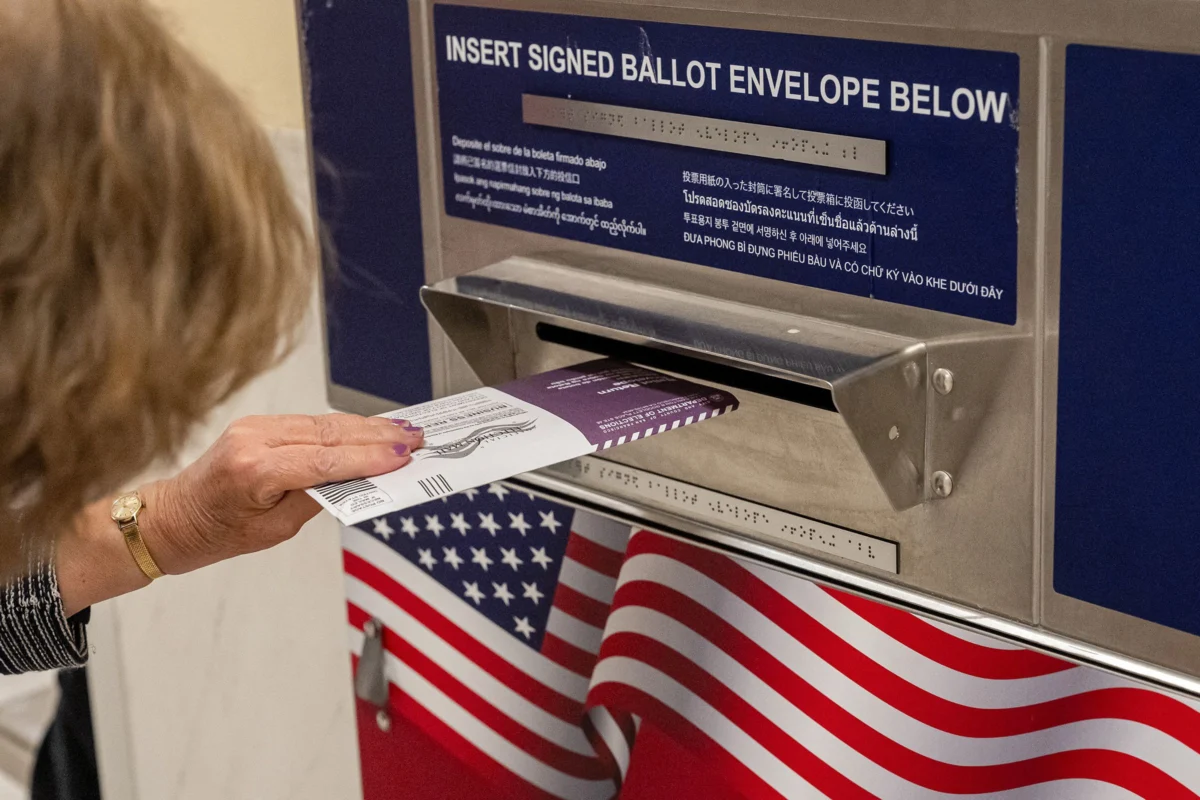
As polls opened across the United States for a critical election, scattered logistical issues, ranging from severe weather impacts to technical malfunctions with voting equipment, were immediately met with a torrent of unsubstantiated claims of widespread voter fraud. Within hours of voting commencing on the East Coast, a network of prominent Republican strategists, pro-Trump influencers, and conservative media figures began propagating narratives of systemic malfeasance, leveraging minor and common election day problems to fuel a broader distrust in the electoral process.
Early Incidents and the Rapid Spread of Disinformation
The day’s events began unfolding with a series of isolated but disruptive incidents across various states. In Florida’s Space Coast, severe flooding necessitated the relocation of approximately 20 polling places, a pragmatic response to natural disaster. Concurrently, Arizona’s Maricopa County, a frequent target of election conspiracy theories, experienced brief power outages, likely due to weekend storms, leading to the temporary closure of several voting centers. In Pennsylvania, Luzerne County reported a missing scanner box, a localized equipment issue. These events, while inconvenient for voters and election officials, represent typical logistical challenges encountered during large-scale elections.
However, even as these issues were being addressed locally, the digital landscape was already ablaze with accusations. Republican strategist and pro-Trump influencer Joey Mannarino, for instance, took to X (formerly Twitter) at 9:02 am EST to declare, "MASSIVE AMOUNTS OF VOTER FRAUD BEING REPORTED ALL OVER THE COUNTRY!" He offered no supporting evidence for this sweeping assertion, adding, "The Democrats are stealing our country right out from under us!" This immediate leap from localized operational hitches to allegations of orchestrated theft exemplifies a pattern observed in recent election cycles, where minor disruptions are swiftly weaponized to undermine faith in democratic outcomes.
The Westchester County Debacle: A Microcosm of Larger Challenges
Perhaps the most significant and rapidly weaponized incident occurred in Westchester County, New York, where voting in a hotly contested House race between incumbent Republican Representative Mike Lawler and Democratic challenger Cait Conley hit a major roadblock. Early Tuesday morning, numerous voting machines across the county stopped accepting paper ballots. This malfunction quickly became a focal point for election conspiracy theorists.
Chronology of the Westchester Incident and Official Responses:
- Early Morning (Polls Open): Reports surface of ballot scanners failing to accept paper ballots in various polling places across Westchester County.
- Initial Official Statement (Approx. 2 hours after polls opened): The Westchester County Board of Elections released a statement initially attributing the fault to "the thickness of the paper ballots." This explanation, while seemingly mundane, quickly became a point of contention and further fueled speculation.
- Revised Official Statement (Approx. 20 minutes later): County officials issued an updated statement, notably removing the specific reference to "thickness" and instead blaming a more general "issue involving paper ballots." This revision, intended perhaps to be more accurate or less specific, paradoxically created an impression of uncertainty and further amplified distrust among those already predisposed to suspicion.
- County Executive’s Strong Reaction: Westchester County Executive Ken Jenkins swiftly condemned the situation, calling it "unacceptable." In a separate online statement, Jenkins pledged to "convene a bipartisan team to conduct a thorough review of the decisions and failures that led to this debacle, determine where accountability lies and ensure that this never happens again." His strong stance underscored the severity of the operational failure and the commitment to rectify it.
- New York State Intervention and Clarification (Later in the day): New York State officials provided crucial clarity, announcing that the root cause of the widespread machine failures was "outdated programming." This meant that most machines in the county were unable to recognize and process the specific Election Day ballots. Critically, officials emphasized that the issue had only caused ballots to be rejected, not tabulated incorrectly. Voters were reassured that "every valid vote will be counted," with the immediate priority being to restore scanning capability at polling locations and bring additional machines online.
Despite these official clarifications and reassurances, the initial confusion and the subsequent technical explanation did little to stem the tide of conspiratorial narratives.
The Echo Chamber of Allegations: Influencers and Politicians Weigh In
The Westchester incident, alongside other minor glitches, served as immediate fodder for a well-established network of conservative commentators, pro-Trump figures, and Republican politicians. These individuals, often commanding vast online audiences, quickly framed these isolated problems as evidence of a coordinated effort to manipulate the election.
- Claudia Tenney’s Accusation: Representative Claudia Tenney of New York, who has a history of backing efforts to challenge election results, quickly jumped into the fray. "No surprise," Tenney wrote, "The Democrats in NY will do anything and everything to cheat." This statement, lacking any specific evidence, was shared by conservative broadcaster Mark Levin to his 5 million followers, significantly broadening its reach.
- MAGA World’s Unified Voice: Other prominent figures from the "MAGA-world" echoed these sentiments. Katie Miller, married to former White House deputy chief of staff Stephen Miller, declared, "This is how the Left steals elections." Liz Harrington, former spokesperson for Donald Trump, called for banning voting machines and prosecuting those who use them "to cheat."
- Laura Loomer’s Sweeping Claims: MAGA influencer Laura Loomer asserted, "Democrats are already trying to steal the election in New York today." She also extended her claims to other states, writing on her "Loomer Unleashed" account, "The Democrats are already cheating," in response to the Maricopa County power outages.
- The "Maricopa Method": Rogan O’Handley, known online as DC Draino, described the Westchester events as the "Maricopa Method of stealing," directly linking the current issues to past unfounded conspiracy theories surrounding Arizona’s election administration. He also boosted unproven claims about "Democrat shenanigans" in Florida’s Broward County, which experienced quickly resolved technical difficulties.
- Kari Lake’s Continued Allegations: Kari Lake, a prominent election denier and former gubernatorial candidate in Arizona, also amplified conspiracy theories regarding Westchester and Maricopa Counties. Lake has consistently and baselessly claimed that her 2022 Arizona gubernatorial race and her 2024 Senate race were rigged, further entrenching the narrative of systemic fraud.
- Phillip Buchanan’s Cynicism: Phillip Buchanan, known as "Catturd," a pro-Trump influencer, cynically remarked, "Every. Single. Election. It’s always somthing [sic]," when sharing Lawler’s post urging voters to stay in line. This comment, while seemingly innocuous, reinforces the idea that election problems are not random but part of an ongoing, predictable pattern of malfeasance.
The Digital Deluge: How Misinformation Spreads
The speed and volume of these conspiratorial posts were significant. The Center for an Informed Public at the University of Washington, which actively tracks online rumors about elections, reported that posts on X concerning the malfunctioning machines in Westchester County, "often with a conspiratorial framing," were appearing at a rate of approximately 150 times a minute just after 10 am EST. This data underscores the efficiency with which unverified or misleading information can proliferate across social media platforms, rapidly shaping public perception before official explanations can gain traction.
The Republican National Committee (RNC) also weighed in, posting on X that, in conjunction with Democrats, it was "seeking a joint court order to require central tabulation of ballots at the County Board of Elections." This move indicates an official party response to the technical issues, aiming to ensure transparency and accountability in the ballot counting process, even as individual party members and influencers propagated broader fraud claims.
The Presidential Figure’s Divergent Focus
Amidst this flurry of localized election issues and the rapid spread of fraud allegations, former President Donald Trump, typically a vocal commentator on electoral matters, maintained a somewhat divergent focus for much of the morning. On his Truth Social platform, Trump spent the better part of the day complaining that his recent announcement—which he claimed was a joke—to rename the Lincoln Memorial Reflecting Pool to "The Trump Reflecting Pool" had been taken seriously. While he eventually posted about Representative Lawler’s race, his comments notably omitted any mention of the ballot scanner issues that had become a flashpoint for his supporters, indicating either a strategic silence or a preoccupation with other perceived grievances.
Broader Implications for Election Integrity and Democracy
This Election Day scenario highlights several critical challenges facing democratic processes in the current political climate.
- Normalization of Disbelief: The immediate and widespread accusations of fraud, even in the face of minor, resolvable issues, contribute to a normalization of disbelief in legitimate election outcomes. This "priming" of the electorate, as noted by observers, conditions voters to view any operational hiccup as evidence of a rigged system.
- Erosion of Public Trust: When influential figures consistently frame routine logistical problems as deliberate sabotage, it systematically erodes public trust in election administration and the integrity of the democratic process itself. This erosion can lead to decreased voter participation, increased political polarization, and a weakening of democratic institutions.
- Burden on Election Officials: Local and state election officials are placed under immense pressure. Not only must they swiftly address technical and logistical challenges on Election Day, but they also face the daunting task of simultaneously combating a torrent of misinformation and defending the integrity of their work against unfounded accusations.
- The Role of Social Media: Social media platforms, particularly X, continue to serve as powerful accelerators for the dissemination of election-related misinformation. The speed at which these narratives spread, often amplified by algorithms and large follower counts, outpaces the ability of official sources to provide accurate, timely counter-information.
- Distinction Between Malfunction and Malfeasance: It is crucial for a healthy democracy to distinguish between genuine operational malfunctions, which are common in any large-scale logistical undertaking, and deliberate malfeasance or fraud. The consistent conflation of the two, often without evidence, poses a significant threat to the stability of electoral systems.
As the election day progresses and votes are tabulated, the narrative surrounding these early incidents will continue to evolve. However, the events of this morning underscore the persistent vulnerability of the electoral process to rapid, unsubstantiated claims of fraud, and the ongoing challenge for officials, media, and the public to uphold factual accuracy and maintain confidence in democratic outcomes.