Jia Lissa
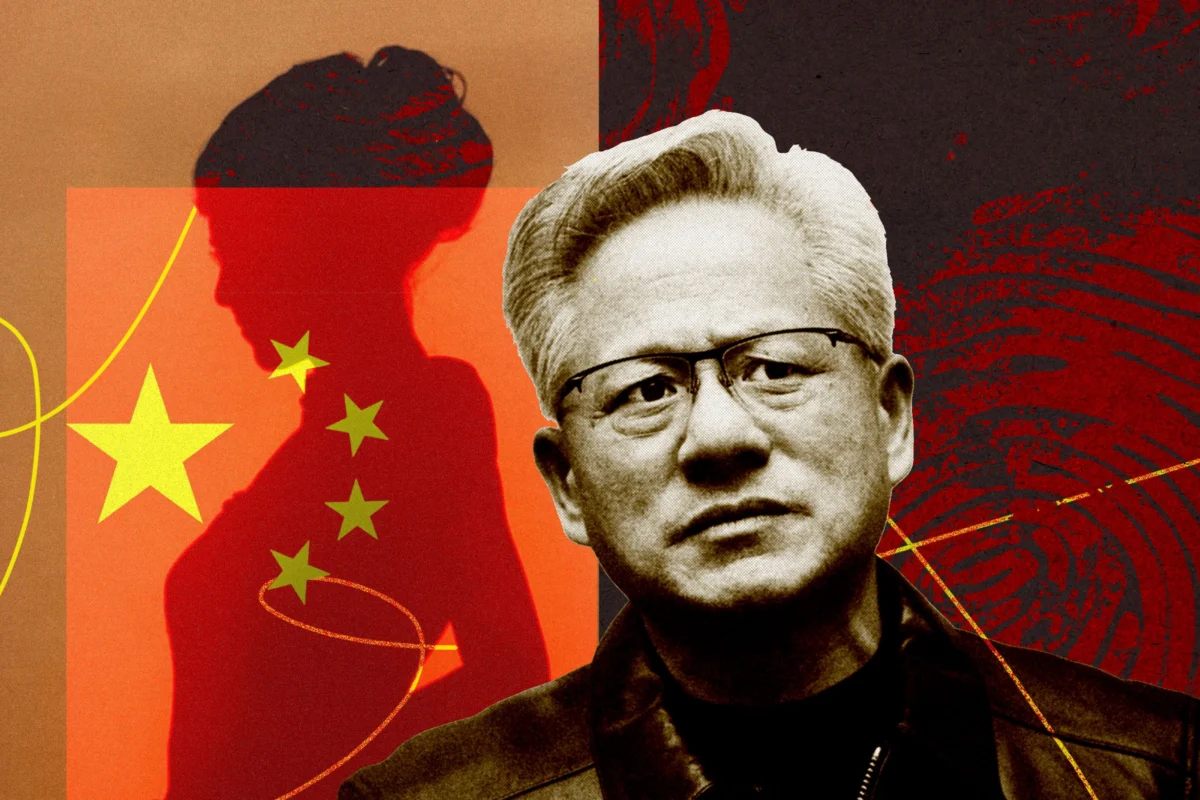
A seismic event has reverberated through the upper echelons of global technology and national security, casting a long shadow over Nvidia, the undisputed titan of artificial intelligence (AI) chips, and its charismatic CEO, Jensen Huang. At the heart of this unfolding drama lies a deeply troubling allegation: Huang, a centibillionaire and a pivotal figure in the 21st century’s most geopolitically consequential industry, was reportedly targeted by a sophisticated Chinese "honeypot" operation. This scandal, a volatile cocktail of alleged infidelity, international espionage, the intricate dynamics of the Trump administration, and the multi-trillion-dollar AI industry, has triggered investigations, stock market instability, and profound questions about corporate vulnerability and national security.
The Allegations Unfold: A High-Profile Target
The narrative began to unravel just before Halloween, when a meticulously reported story by The New York Times, bearing six bylines, brought the startling allegations to public light. Between 2024 and 2025, Jensen Huang allegedly engaged in an affair with Alice Huang (no relation), then an executive at Megaspeed, a Singapore-based cloud provider. US intelligence agencies, including the CIA and FBI, subsequently issued stark warnings to top US officials, identifying Alice Huang as a suspected asset of Chinese intelligence, specifically reporting to China’s Ministry of State Security (MSS).
This revelation immediately triggered a crisis within Nvidia. The company’s board promptly initiated its own internal investigation, asserting in initial statements that they had "no reason to believe that either national security or Nvidia secrets were compromised." However, this reassurance has done little to quell concerns among investors, policymakers, and cybersecurity experts, who point to the immense strategic value of Nvidia’s intellectual property and its central role in the global AI race. The sheer prominence of Jensen Huang and Nvidia makes the company an unparalleled target for foreign intelligence operations seeking to gain an edge in critical technologies.
China, through its foreign ministry, swiftly dismissed the accusations as "groundless speculation," "slander and smearing," maintaining its consistent stance against allegations of state-sponsored espionage. Yet, reports from both The New York Times and the Financial Times underscored US intelligence officials’ conviction that Alice Huang, also known as Huang Le, was indeed reporting to Beijing’s primary civilian intelligence agency. Megaspeed, in a statement posted on LinkedIn, denied any wrongdoing, stating that US authorities had found "no evidence of any violations concerning the illicit transfer of chips or any illegal activities" related to the broader concerns about chip diversion. It is crucial to note that Alice Huang is believed to have operated as an "asset"—an external individual aiding an intelligence agency, potentially for financial gain or other motivations—rather than a formally employed officer of Chinese intelligence, having previously worked as a Chinese state journalist.
The "Honeypot" Tactic: A Classic Espionage Playbook
For decades, counterintelligence briefings for government workers, military officers, and intelligence personnel have drilled in a specific, almost jocular, warning: "If she’s a 10 and you’re a 5, she’s a spy!" Or, as the US Army’s Counterintelligence Command humorously, yet pointedly, reminded personnel on Valentine’s Day: "It doesn’t take a mathematician to figure out ‘10 + 5 = honeytrap.’" The underlying message is unambiguous: an unusually alluring individual showing sudden interest in an otherwise ordinary person’s life likely harbors ulterior motives.
This classic "honeypot" or "honey trap" strategy involves positioning an attractive operative to seduce or develop a compromising relationship with a key target. It’s a notoriously effective and well-established tactic in the annals of intelligence, designed to extract sensitive information, influence decision-making, or even facilitate blackmail. China has been repeatedly accused of deploying such tactics as a core component of its aggressive economic and military development strategy, which openly prioritizes the acquisition of foreign technology and intellectual property. French officials, among others, have explicitly warned about Chinese honeypots since at least 2011, citing cases like a pharmaceutical researcher who was allegedly seduced and subsequently blackmailed by a Chinese intelligence operation.
Nvidia’s Pivotal Role in the AI Landscape
Jensen Huang is far from an "ordinary" individual. As the visionary CEO of Nvidia, he presides over a company that has become synonymous with the AI revolution. Nvidia’s graphics processing units (GPUs) are the indispensable engines powering everything from advanced scientific research and data centers to generative AI models and autonomous vehicles. The company’s market capitalization has soared, at times making it the world’s second-most valuable company, reflecting its unparalleled dominance in a technology deemed critical for future economic prosperity and national security.
This strategic importance makes Nvidia, and by extension its leadership, an irresistible target for foreign intelligence agencies, particularly those of rival superpowers. The United States, under both the Biden and Trump administrations, has increasingly viewed advanced semiconductor technology as a battleground in its geopolitical competition with China. Export controls enacted by the Biden administration have sharply limited the sale of cutting-edge AI chips to China, explicitly aimed at slowing Beijing’s advancements in AI and military modernization. Nvidia, however, has actively sought to navigate these restrictions, developing modified chips for the Chinese market and engaging in extensive lobbying efforts to influence US policy.
The Trump Administration Connection: Lobbying, Denials, and Emerging Questions
The scandal takes on an additional layer of complexity with its entanglement with the Trump administration. Jensen Huang had cultivated a uniquely close professional relationship with then-President Donald Trump. Huang had been a vocal proponent for loosening Biden-era export controls on advanced chips to China, lobbying intensely on the issue. These efforts seemingly bore fruit, as the Trump administration reportedly relaxed several restrictions. Further evidence of this close bond includes Huang’s reported donation of $25 million to Trump’s "ballroom project" and a notable incident earlier this year where Trump’s Air Force One made a special stop in Alaska to pick up Huang, who then joined a delegation of tech leaders, including Elon Musk and Tim Cook, on a trip to Beijing. Huang also attended a White House state dinner for Chinese President Xi Jinping and Trump, who later awarded him a National Medal of Science.
On Monday, following the initial reports, Donald Trump publicly denied any prior knowledge of Alice Huang’s potential espionage. "I didn’t hear about it then, but a lot of people have heard about it, and Jensen totally denies that," Trump stated at a press conference. He recounted asking Huang directly: "Did you have any idea that she was a spy?" to which Huang allegedly replied, "I had no idea that she was a spy."
However, Trump’s denials were immediately challenged. On Tuesday, The New York Times reported that then-Secretary of State Marco Rubio had, in fact, briefed Trump in May, specifically about the intelligence concerns surrounding Alice Huang and Jensen Huang’s relationship. This briefing occurred just before Jensen Huang joined the President on Air Force One for the trip to China, suggesting a significant discrepancy in Trump’s account. This revelation invokes the classic Watergate maxim: "What did the president know and when did he know it?" The veracity of Trump’s claims is now a focal point for potential congressional investigations. Intelligence officials reportedly believe Rubio also helped craft a classified memo within the administration warning officials about Jensen Huang’s potentially compromising relationship.
China’s Broader Espionage Strategy and Silicon Valley Vulnerability
The alleged operation targeting Jensen Huang is not an isolated incident but rather fits into a broader, aggressive pattern of Chinese economic and technological espionage. Beijing has long elevated intellectual property theft to a core pillar of its national strategy, systematically targeting advanced technologies across various sectors. Historical examples range from the designs of US fighter jets and advanced solar panels to proprietary commercial paint recipes.
Silicon Valley, as the global epicenter of technological innovation, has been a key focus for Chinese intelligence for over two decades. Operatives have spent years cultivating relationships with politicians, executives, and researchers. A notable case involved Fang Fang, a Chinese national who spent years attempting to cozy up to Bay Area politicians, including then-US Representative Eric Swalwell. While intelligence officials believed her to be an operative, no charges were ever brought.
The pervasive nature of this threat has led to extreme precautions. US business executives traveling to China have become accustomed to using "burner" phones and computers, leaving their primary devices at home to prevent the installation of spyware or malware. In 2012, then-Defense Secretary Leon Panetta and his team were advised to take extraordinary measures, including showering in the dark, during his first trip to China, due to concerns about sophisticated hotel room bugging. More recently, the US government explicitly banned personnel working in China and Hong Kong from engaging in romantic or sexual relationships with Chinese citizens, a direct response to the persistent threat of honeypots. Furthermore, US officials, in conjunction with allies from the Five Eyes security alliance, have issued warnings about China’s increasingly sophisticated "LinkedIn espionage," where business-focused social media platforms are leveraged to recruit unwitting executives and build intelligence networks.
Megaspeed and the Troubling Chip Diversion Concerns
Alice Huang’s employer, Megaspeed, is not merely a peripheral entity in this saga. It is described as a major player in cloud services within the Pacific region, heavily reliant on the advanced computer chips that are Nvidia’s core business. This commercial relationship adds another layer of complexity and potential conflict of interest.
Concerns about Megaspeed’s activities have reportedly circulated for at least a year prior to the current scandal. The US government was reportedly worried that Megaspeed might be diverting advanced chips to Chinese intelligence agencies or military entities, an allegation that carries massive implications for the global AI arms race. Bloomberg recently reported that Megaspeed’s subsidiaries have purchased billions of dollars worth of Nvidia chips. Critically, an audit requested by the US government last year allegedly found that Megaspeed could not initially account for approximately 50,000 chips it had purchased, raising significant red flags about their ultimate destination and end-use. Such a diversion, if proven, would not only undermine US export controls but could directly contribute to China’s military and AI development efforts.
Corporate Governance, Crisis Management, and Reputational Damage
Jensen Huang now finds himself in an unenviable position, facing a trifecta of difficult questions. Is he merely naive, unaware that his paramour might have been a foreign intelligence asset? Was he recklessly disregarding his own reputation, his fiduciary responsibility to Nvidia shareholders, and the technological security of the United States? Or, in the most damning scenario, was he a witting accomplice to actions that could undermine US national security?
Regardless of the ultimate truth, the immediate consequences for Nvidia are severe. Shareholders, who have enjoyed an approximate 600 percent surge in Nvidia’s stock over the past five years, witnessing its ascent to become one of the world’s most valuable companies, have now endured a significant downturn. In the past month alone, the stock has plummeted by a quarter, wiping out billions in market value. The financial fallout appears to be just beginning, with looming lawsuits, including those initiated by its own shareholders, alleging breaches of fiduciary duty or failure to disclose material risks.
The company’s response, including the hiring of Risa Heller’s crisis communications firm in 2025—a firm renowned for handling public sex scandals—suggests a proactive, yet telling, recognition of the gravity of the situation. Jensen Huang has been publicly linked to the Megaspeed executive since at least 2024, and Alice Huang’s husband, Kang Weigh, reportedly knew Jensen Huang since the 2010s, indicating a longer-standing connection that further complicates the narrative.
Broader Implications and Looming Investigations
The scandal’s repercussions extend far beyond Nvidia’s balance sheet. The newly Democratic Congress is expected to launch rigorous inquiries into the Trump administration’s handling of intelligence. Critical questions will be posed: When exactly were the president and other top officials briefed about this intelligence threat? What specific communications, if any, were made to Nvidia and to whom within the company? And, crucially, should US intelligence agencies have taken more aggressive steps to block Alice Huang from having access to Nvidia and its CEO?
The implication that Trump knew about these concerns for nearly a year and potentially did nothing to mitigate the risk would constitute one of the most significant counterintelligence failures of the past decade. Historically, "honeypot" scandals have led to severe consequences, including imprisonment. Just last year, a former adviser was arrested in a similar plot involving China, and though acquitted of economic espionage, he was convicted for making false statements to investigators.
In the current corporate climate, tolerance for CEO misbehavior, particularly involving inappropriate relationships that violate company standards, has shrunk dramatically. Recent years have seen high-profile resignations or forced departures of CEOs from companies as diverse as Nestlé, Kohl’s, BP, NBCUniversal, and Norfolk Southern due to such transgressions. If Jensen Huang were any other CEO at any other company, the known facts of this scandal would likely be sufficient to trigger his removal.
However, with Trump still in office and the political calendar rapidly advancing toward November, the full scope and impact of this scandal remain uncertain. It is unclear if this will even rank as the biggest scandal of the month in an already turbulent political landscape, yet its profound implications for national security, technological dominance, and corporate integrity suggest it unequivocally should. The fusion of high-stakes AI competition, alleged espionage, and political maneuvering creates a narrative that promises to dominate headlines and shape policy for the foreseeable future.