admin
In Iowa’s heartland, a region synonymous with vast expanses of commodity agriculture, a quiet battle unfolded on a narrow strip of city-owned land in Des Moines, drawing national attention to the evolving discourse around urban food production and individual autonomy. Allison Stuart, a mother of six and a long-time resident, found herself at the center of a contentious debate after city officials ordered the removal of her thriving vegetable garden from the public right-of-way bordering her historic 1898 home. This incident, culminating in the garden’s reluctant dismantling in late October, has illuminated deeper questions about food security, municipal land use policies, and the burgeoning "right-to-garden" movement sweeping across the United States.
A Seed Planted, A Community Nurtured: The Genesis of the Curbside Garden
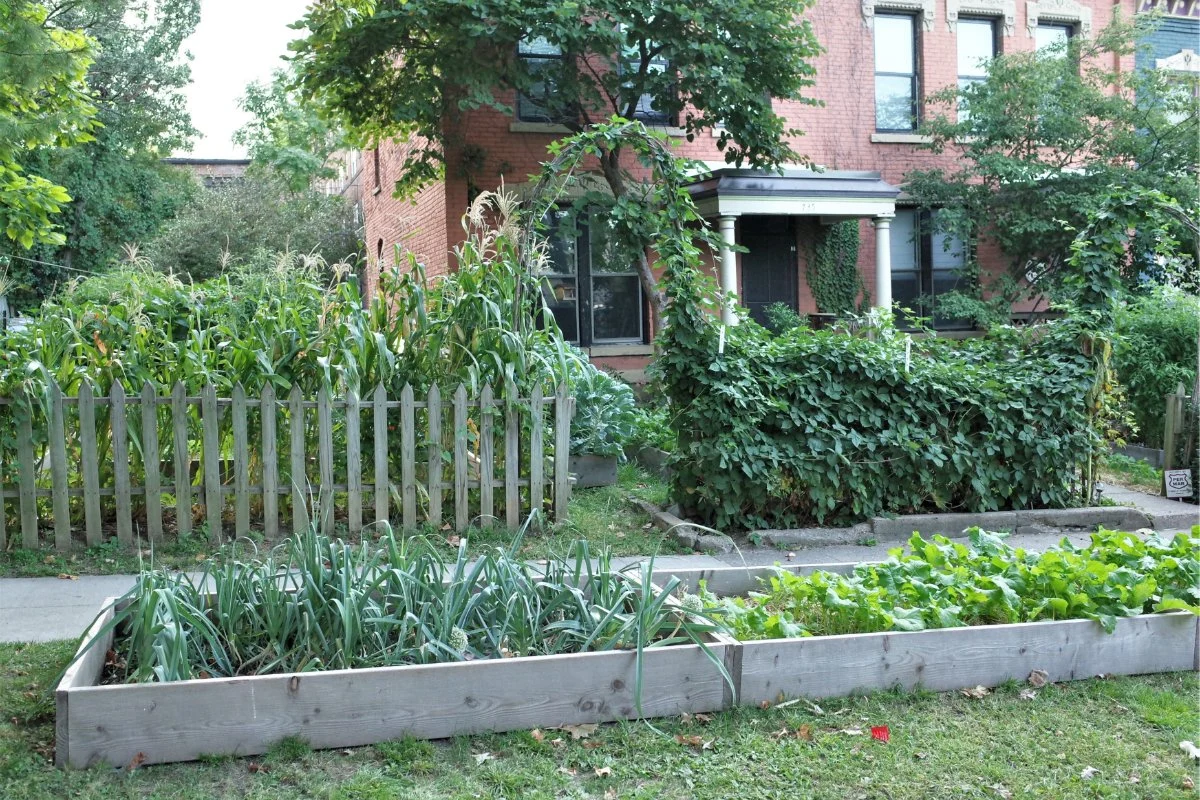
For 15 years, Allison Stuart has cultivated a vibrant ecosystem of broccoli, onions, tomatoes, and other produce around her Des Moines residence. Her passion for gardening extended beyond her private property, embracing the city-owned strip between her sidewalk and the curb, a common practice for many homeowners who maintain these areas. The utility of these spaces, often overlooked or simply adorned with ornamental plants, transformed for Stuart and her neighbors following an unexpected event two years prior. A severe storm toppled a large tree near the street, exposing an 11-foot-wide patch of land to abundant sunshine—a golden opportunity for cultivation.
Seizing this newfound potential, Stuart expanded her gardening efforts onto this municipal land, not just for her family but as a communal venture. She invited neighbors, many of whom lacked access to fresh produce due to financial constraints or limited personal space, to join her in tending the vegetable beds. "The Earth is super generous, and so that strip of land, because that tree fell, gave not just me but several of my neighbors access to fresh food that they would not have afforded this year," Stuart reflected. For her own family, particularly her six children, the garden served as a vital tool for promoting healthy eating habits. "Kids will really love a vegetable if they can pick it off the plant themselves," she explained, recalling scenes of her children "under a cherry tomato plant, stuffing their faces." This initiative, born of a desire for fresh food and community engagement, inadvertently ignited a citywide discussion that transcended mere horticulture.
The City’s Intervention: A Timeline of Enforcement

The tranquil act of community gardening took an abrupt turn when Des Moines officials intervened, initiating a formal case against Stuart’s curbside garden.
- May 15, 2026: Des Moines officials opened a case regarding Stuart’s garden, specifically targeting the vegetable seedlings emerging from three scrap-wood-framed beds on the city-owned strip near the parking curb. This marked the official beginning of the city’s scrutiny.
- June 4, 2026: Stuart received an official citation from the city, demanding the immediate removal of what was controversially described as "trash" garden beds. The directive, if followed, would have led to the destruction of the young, growing plants. This action came as a shock to Stuart, who believed she was operating within an understanding of urban gardening supported by past city initiatives.
- Summer 2026: Devastated but resolute, Stuart launched an online petition on Change.org, rallying public support under the banner of "Protect Our Right to Garden on Property Easements." The petition quickly garnered significant traction, accumulating over 860 signatures from concerned citizens who championed the right to grow food on public easements. This demonstrated considerable community backing for her cause.
- August 19, 2026: A city hearing was convened to address Stuart’s case. The outcome provided a temporary reprieve: Stuart’s garden was permitted to remain through the growing season, but with a strict deadline for removal set for November 2. This allowed the plants to mature but ultimately enforced the city’s stance.
- October 2026: Several days ahead of the mandated deadline, Allison Stuart, facing the inevitable, dismantled her beloved curbside garden. The act of tearing up the flourishing beds was a poignant symbol of the unresolved tension between municipal regulations and individual initiatives for local food production.
This sequence of events brought to the forefront the complexities of urban planning, property rights, and community needs, particularly within a state deeply entrenched in conventional agriculture.
The Right to Garden: A National Movement Meets Local Policy
Allison Stuart’s struggle in Des Moines is not an isolated incident but rather a localized manifestation of a broader, growing national movement: the "right-to-garden" movement. This grassroots effort emerged in response to numerous city and county ordinances across the United States that restrict residents from cultivating edible plants on their properties, often specifically targeting front-yard gardens or structures like hoop houses. Proponents of these restrictions frequently cite concerns about aesthetics, property values, and perceived "messiness," which they argue can detract from neighborhood character.
However, the backlash against such prohibitive policies has been significant. Advocates for the right to garden argue that these ordinances infringe upon fundamental freedoms, limit access to healthy food, and stifle community resilience. The movement has seen legislative successes in several states, with Illinois and Florida notably passing "right-to-garden" laws that explicitly protect residents’ ability to grow food on their residential property, challenging the traditional legal frameworks that often prioritize ornamental landscaping over food production. These state-level protections aim to empower citizens, recognizing the vital role home and community gardens play in fostering food security and promoting sustainable living. Stuart’s petition, echoing these sentiments, highlights a desire for similar protections in Iowa, particularly concerning public easements, which are often maintained by homeowners but technically owned by the city.
Iowa’s Agricultural Paradox: Commodity Crops vs. Local Food Needs

Des Moines, situated squarely within the American Corn Belt, exists in a unique agricultural paradox. The state of Iowa is globally renowned for its immense production of corn and soybeans, forming the bedrock of industrial agriculture and commodity monocrops. This system, while economically powerful, often leaves little room for diverse local food systems and can contribute to environmental challenges. Stuart and her allies pointedly highlighted this contrast, questioning why, in a state facing significant environmental and social challenges linked to industrial farming, the city would prioritize ornamental flowers over nutrient-rich vegetables on public land.
Iowa’s agricultural practices have come under increasing scrutiny for their environmental impact. Stuart specifically referenced the high cancer rates linked to nitrate contamination in Iowa’s water, a direct consequence of agricultural runoff from conventional farming. "In Iowa, we are putting so many chemicals on our food right now that we can’t drink our water," she asserted, challenging the city’s emphasis on potential "dust" on tomatoes as a health risk. "What’s unsafe is the way that our corporate farming is working, so don’t come here and tell me that some dust is going to get on my tomato, and the city’s going to be liable for that." This perspective frames the local gardening effort as a counter-narrative to industrial food systems.
Furthermore, the debate unfolded against a backdrop of escalating food insecurity and soaring grocery prices. Reports from organizations like WHO13 News indicated that Iowa food pantries were preparing for increased demand, highlighting a growing crisis that makes fresh, affordable food increasingly inaccessible for many families. In 2023, data from Feeding America estimated that 1 in 9 Iowans, including 1 in 7 children, faced food insecurity, figures that have likely fluctuated amidst economic pressures. In this context, the simple act of growing food on a public strip transforms from a personal hobby into a critical community resource, directly addressing immediate needs. Stuart noted that her garden provided access to fresh food for neighbors who "would not have afforded this year," underscoring the tangible benefits of her initiative in mitigating local food deserts.
The City’s Formal Stance: Safety, Aesthetics, and Liability
City Engineer Steve Naber articulated the municipal government’s position, asserting that Des Moines city code has historically prohibited the cultivation of anything beyond grass, naturally occurring plants, and city-planted trees on border areas. This long-standing policy was formalized and made explicit in a June 2025 city ordinance, which updated right-of-way rules to allow certain decorative landscaping features, edging, and mulch. Since 2019, the code had permitted specific ornamental plants, such as daylilies, hostas, and zinnias, up to 36 inches high. The 2025 "Neighborhood Flower Program" even specified 19 types of flowers for residents to plant in these curbside strips, providing young seedlings in springtime trays.
Naber’s opposition to unfettered edible plants in the rights-of-way stems from a range of concerns he deems critical for public health, safety, and accessibility across Des Moines’ 900 miles of streets. His arguments included:

- Public Safety: Overgrowth from vegetable gardens, particularly taller varieties or structures, could potentially block drivers’ views at intersections, leading to traffic hazards. This is a common concern in urban planning, where clear sightlines are crucial.
- Accessibility: Plantings, especially those with rigid borders or metal stakes, could impede the path for pedestrians, particularly elderly residents or those with mobility challenges transitioning from a parked car to the sidewalk. Naber cited an instance of a garden with "a wood border and metal stakes, which are hazards in and of themselves," highlighting potential physical obstructions.
- Utility and Emergency Access: Gardens could slow down or interfere with access to crucial underground utility lines (water, gas, electricity) or emergency services (fire, ambulance) during critical situations, where rapid response is paramount.
- Liability: The city expressed concerns about potential legal liability should someone be injured by a garden structure or if food grown near a curb became contaminated by vehicular pollutants, leading to illness. Naber acknowledged the "ridicule" from growers regarding the health risks of "fallen tomatoes" but maintained, "I know, in my 25-plus years in municipal engineering, the more you allow in the right of way, the more things that happen," emphasizing a cautious, preventative approach to public space management.
- Environmental Health Concerns: Naber also raised doubts about the healthfulness of food grown in close proximity to a curb, where engine exhaust, dust, and tar from passing vehicles could potentially contaminate edible crops. While scientific studies on the direct impact of roadside pollution on garden produce vary, the city’s stance reflects a precautionary principle.
These concerns underscore a fundamental tension between the city’s mandate to ensure public safety and infrastructure maintenance, and residents’ desire for greater control over public spaces for community benefit.
A Disconnect in City Planning: Urban Farming Initiatives vs. Restrictive Ordinances
Ironically, Des Moines has, over the past five years, actively explored and promoted strategies to bolster urban farming, food security, and climate change adaptation. In 2021, the city’s own Food Security Task Force formally recommended amending municipal code to explicitly allow right-of-way food crops. Furthermore, the city’s new FEED DSM online toolkit, designed to guide residents on urban agriculture, even listed the parking strip as an approved location for growing food. Stuart herself stated she had initially planted edible crops along her sidewalk strips in alignment with these very recommendations. This stark contradiction—between official city recommendations encouraging urban food production and an enforcement action against a resident doing precisely that—highlights a significant disconnect within Des Moines’ governmental apparatus.
City Council member Carl Voss, himself a gardener who grows garlic, prize-winning green beans, and rhubarb on his property, expressed surprise at the ban. "We didn’t see this coming," he admitted, noting that the prohibitive change originated from the city’s engineering department rather than the Food Sustainability Advisory Committee, where such policy discussions might be more expected. Voss, an advocate for urban gardening, questioned the priorities: "Urban gardening is a good thing, right? If you grow your own plants, you can make butter crunch lettuce look pretty good in the front yard." His comments suggest a lack of interdepartmental communication or a divergence in priorities among different city entities.
Some residents, like former Iowa state representative Ed Fallon and his wife Kathy Byrnes, viewed the ban with suspicion, suggesting it favored a "manicured aesthetic" potentially aligned with gentrification rather than genuine community needs. Fallon and Byrnes operate Birds & Bees Urban Farm around their 1885 rowhouse, harvesting approximately 100 pounds of food annually from four beds along their public right-of-way without having received any complaints from the city. They are seasoned activists, having successfully organized a protest against proposed restrictions on backyard chicken coops in 2024, rallying scores of residents outside City Hall. Fallon’s confident declaration, "We always win these fights," encapsulates the resilient spirit of local food advocates and points to a history of successful community engagement against perceived overreach by municipal authorities.
Pavement, Policy, and Precedents: How Other Cities Manage Easement Gardens

The controversy in Des Moines highlights a broader inconsistency in how American municipalities address the use of public easements, often referred to by various names such as "boulevard," "street terrace," "planting strip," or "parkway." This lack of standardized terminology reflects a diversity of approaches to regulating these spaces.
Many progressive cities across the nation have adopted policies that explicitly permit or even encourage the cultivation of edible plants on public rights-of-way, recognizing their value for food security and urban greening:
- Minneapolis, Minnesota: This city allows vegetables to flourish on what it terms the "boulevard," demonstrating a commitment to integrating urban agriculture into its public spaces. Their regulations often include guidelines on plant height and maintenance to ensure safety.
- Madison, Wisconsin: Madison permits both vegetables and raised beds on its "street terraces," albeit with specific height restrictions (e.g., maximum 24-30 inches for plants and beds) to address safety and accessibility concerns.
- Seattle, Washington: Known for its innovative urban planning, Seattle offers free permits to residents who wish to grow food on their "planting strips," actively promoting community food initiatives while ensuring compliance with a set of design and maintenance standards.
- Los Angeles, California: Even in a sprawling metropolis, the "parkway" in Los Angeles can be used to cultivate edible plants, provided they comply with established landscaping guidelines, balancing agricultural use with urban aesthetics and practical considerations like water conservation.
These examples illustrate that cities can devise regulatory frameworks that accommodate edible gardens while still addressing concerns about public safety and access. The key often lies in clear guidelines, transparent permit processes, and active community engagement to define acceptable practices. However, Des Moines City Engineer Steve Naber expressed skepticism about the city’s ability to regulate such gardens effectively, citing a multi-million dollar budget shortfall. He pointed out that cities like Minneapolis dedicate staff to manage curbside-garden permits, a resource Des Moines currently lacks. This financial constraint presents a practical hurdle for implementing a more flexible policy without additional resources or a re-prioritization of existing ones.
Looking Ahead: The Future of Food in Des Moines’ Public Spaces
For now, the Des Moines City Council has referred the contentious issue of food gardens in