admin
Amidst a heightened national immigration crackdown, an urban farm in Chicago serves as a vital nexus for refugees, seamlessly weaving together cultural heritage and food security in a manner largely unmet by conventional local markets. This initiative provides not just sustenance, but a profound sense of belonging and economic independence for individuals uprooted from their homelands.
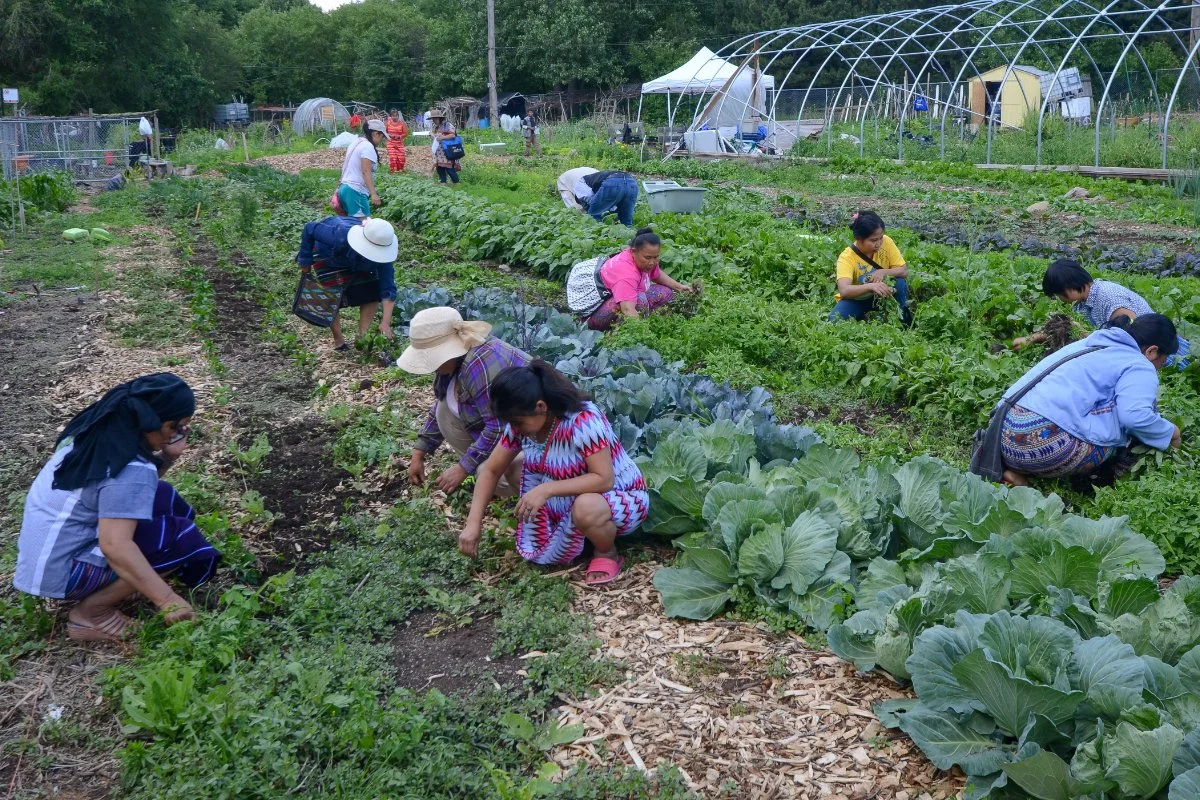
On a brisk early autumn day, the air at Global Gardens in Chicago’s Albany Park neighborhood hums with quiet activity. Rehena, originally from Myanmar, navigates her long, narrow garden plot, a vibrant tapestry of greens, while holding a red umbrella against the intermittent rain. Her hands, accustomed to the soil, deftly point out familiar market staples like lettuce, chard, kale, zucchini, and broccoli. Yet, it is the less common, culturally significant crops that truly highlight the farm’s unique offering: prickly cucumbers, leafy water spinach, aromatic mizuna, and the fragrant holy and Thai basils. These are vegetables and herbs rarely found in mainstream American grocery stores, providing a direct link to the culinary traditions of her past.
Rehena and her husband, Shorif, dedicate several days each week to their two dense plots, each measuring a modest 3-by-125 feet. These parcels are more than just land; they are lifelines within the vibrant community of refugee farmers at Global Gardens. The produce harvested here not only supplements their income, providing crucial funds for household essentials, but also enriches the daily meals for their five children. The couple, like many others at the farm, requested their full names be withheld, a poignant reflection of the pervasive fear instilled by the current administration’s intensified immigration enforcement policies. "It reminds us a lot of our memories with our farmland vegetables," Shorif shares, his voice carrying the weight of past loss and the joy of present renewal. "Now, we are here enjoying our lives, doing the farm. Growing things can make us happy."
A Mosaic of Global Cultures Rooted in Local Soil
Global Gardens, a 14-year-old operation, is a microcosm of global displacement and resilience. Three-quarters of its nearly 300 farmers hail from Myanmar, a nation grappling with over 100 languages and ethnicities, and a protracted civil war that has displaced millions. These individuals are joined by refugees from a diverse array of countries, including Burundi, Afghanistan, Cambodia, Bhutan, Ethiopia, the Republic of Congo, the Democratic Republic of Congo, and Ukraine. This rich tapestry of backgrounds underscores the farm’s role as a haven, a place where individuals from disparate traumatic experiences find common ground in the soil.
The psychological impact of such a space cannot be overstated. In an era marked by federal authorities sowing fear among Chicago’s extensive immigrant and refugee communities, Global Gardens stands as an unwavering beacon of trust, safety, and community. Here, refugees are empowered to cultivate food for their families, often leveraging agricultural skills honed over generations in their native lands. This reconnection to agrarian practices is not merely vocational; it is deeply therapeutic, fostering a sense of purpose and continuity that can be profoundly healing for those who have lost so much.

Economic Empowerment and Food Security Initiatives
While the majority of Global Gardens’ farmers cultivate produce for personal consumption, a vital segment—nine farmers and their families—operate larger plots specifically for market sales. Their harvests find their way to nearby farmers’ markets and community-supported agriculture (CSA) subscriptions, generating essential income. Leftover produce, rather than going to waste, is generously donated to local food pantries and rescue organizations, further integrating the farm into the broader community’s food security network.
The economic contribution of Global Gardens is substantial for its participants. Last season, Rehena and Shorif earned $4,579 from their farmers’ market sales, a sum predominantly allocated to purchasing rice and other household necessities. "It’s a great help for our family because the rent is so high," Rehena emphasizes, highlighting the tangible financial relief provided by the farm. Collectively, the market farmers at Global Gardens are projected to earn over $100,000 in 2026, according to Executive Director Haley LeRand. This revenue stream is particularly significant given that refugees often face considerable barriers to employment, including language differences, lack of credential recognition, and discrimination.
Beyond direct income, the farm provides free land, water, utilities, and seeds to its farmers, alleviating significant upfront costs. Its operations are sustained by local grants and the crucial partnership with the Chicago Park District, which provides the land, ensuring a degree of stability amidst fluctuating circumstances.
Emily Parker, resettlement services senior manager at RefugeeOne, a non-profit dedicated to helping refugees establish new lives in Chicago, underscores the multifaceted value of the initiative. "What is particularly valuable is that farming can be more than simply a job for someone who has recently arrived in Chicago," Parker explains. "For people who grew food in their home countries, it can be a way to use an existing skill, maintain a connection to familiar foods and traditions, and build a sense of community and economic independence here."
The impact extends beyond the farm’s immediate community. The produce supplied to the non-profit Common Pantry fills a critical gap, offering culturally relevant items that traditional vendors often cannot provide. Morgan Crull, the pantry’s food programs manager, notes, "Guests say that the products are the freshest you can find anywhere," a testament to the quality and care invested by the farmers. This access to fresh, diverse produce not only improves nutrition but also encourages recipients to explore new recipes, fostering culinary adventurousness within the wider community.
From Training to Empowerment: A Shift in Philosophy

The organization’s legal name, Global Gardens Refugee Training Farm, reflects its foundational approach under founder Linda Seyler. However, Executive Director Haley LeRand clarifies that the operational philosophy has evolved. The focus has shifted from explicit "training" to providing infrastructure and support that facilitates growers’ existing, often extensive, agricultural expertise. "We’re translating or uplifting their knowledge to a new environment because they already have generations worth of farming knowledge," LeRand states. This subtle yet significant shift acknowledges and respects the deep-seated wisdom and skills that refugees bring, empowering them as experts rather than novices.
Global Gardens is strategically located in Albany Park, a mere 10-minute drive from West Ridge, both neighborhoods known for their high concentrations of immigrant and refugee populations in Chicago. This proximity is a double-edged sword, however, as these areas have also become targets for federal immigration enforcement.
The Shadow of Immigration Enforcement and Unwavering Resilience
The past year has seen a disturbing intensification of federal immigration raids in Chicago, casting a pall of fear over immigrant communities. While federal agents have not directly targeted Global Gardens, the pervasive threat looms large. In October 2025, residents of Albany Park protested the presence of federal agents, who responded with tear gas. This incident was not isolated; protests continued throughout 2026, marked by a high school student walkout in February and June demonstrations following the use of a taser by federal agents during a detention incident.
These events highlight the precarious existence of many in the community. The majority of Global Gardens’ growers hold green cards, yet a palpable apprehension exists. Some hesitate to speak openly or be photographed, fearing unwanted attention from immigration authorities. Others, like Shorif, exhibit a profound resilience born from unimaginable past traumas. "We have suffered a lot of things," Shorif recounts, including forced labor. "We experienced a lot of things you cannot even imagine."
Shorif’s personal journey encapsulates the profound resilience of the refugee community. His family, Rohingya Muslims from Rakhine State, Myanmar, were forced to flee their ancestral farm in 2012 when violence consumed their home. This pre-dated the 2021 civil war, which has further displaced over 3.5 million people and continues to devastate the nation. After their initial escape, Shorif, Rehena, and their young son spent a dozen years in Malaysia, moving between temporary apartments, yearning for the agrarian lifestyle they had lost as their family grew to include another daughter and three more sons.
Their fortunes changed in the spring of 2024 when the family secured refugee status with the United Nations and resettled in Chicago with the assistance of the Ethiopian Community Association of Chicago. Soon after their arrival, Shorif learned about Global Gardens from a new friend, Armand, a fellow grower and refugee from the Republic of Congo. The farm quickly became a magnet, drawing in more of Shorif’s friends from the Rohingya community. "Since Shorif and his wife came here, suddenly a lot of Rohingya people want gardens, which I love," LeRand observes, noting the ripple effect of hope and opportunity.

Despite the joy of cultivating new roots, Rehena deeply misses her siblings in Myanmar, who continue to grapple with trauma and escalating shortages of food and medicine. Yet, she finds solace and strength in the Global Gardens community. "The people are so good here," she affirms, "and they help us in many respects."
A "Third Space" for Cultural Exchange and Healing
Global Gardens transcends its role as a mere farm; it has evolved into a vibrant "third space" – a communal hub distinct from home and work, where cultural exchange and social bonds flourish. Growers regularly host outdoor cooking classes, sharing traditional meals from their homelands with visitors and fellow farmers. This offers a rare opportunity, for instance, to savor authentic Burmese cuisine, which is conspicuously absent from Chicago’s restaurant scene.
Beyond culinary lessons, the farm hosts a semi-regular summer concert series featuring international music artists, complemented by food prepared by the growers. The annual Fall Harvest Fest also draws a wide array of outside visitors, fostering cross-cultural understanding and appreciation. One dedicated gardener routinely brings groups of 10 or more new refugees to the farm, facilitating cooking, eating, and socializing – an essential component of integration. LeRand envisions Global Gardens as an inviting space, equipped with outdoor tables, a washing station, and a cooler, where new arrivals can find comfort and familiarity.
"These are people who had acres and acres of land, so their entire days revolved around land and food, yet they became completely divorced from that [here]," LeRand reflects. "I sort of see this as a coming home. They come here at sunrise." This sentiment resonates deeply with individuals like Ka Nay Moo, 40, a Karen ethnic group member from Myanmar. After fleeing her country, she spent a decade in a Thai refugee camp, where space was severely restricted. Yet, inspired by her parents’ farming traditions, she cultivated beets and other vegetables, foraging for mushrooms and wild mustard greens in the forest. Arriving in Chicago in 2010, Ka Nay Moo found her way to Global Gardens through the Burmese diaspora. "I just came here to relax and chill and meet up with others," she says, emphasizing the social and emotional sanctuary the farm provides.
The next generation also finds purpose here. Eh Klu Paw, 19, a market grower, arrives at Global Gardens on an electric scooter. Born in a Thai refugee camp, he barely recalls it, having arrived in Chicago as a toddler with eight relatives in 2010. The recent immigration crackdown, however, has touched his family. "She kept telling me to carry my ID, carry my green card," he recounts of his mother’s anxieties. Despite these concerns, Eh Klu Paw has embraced his growing responsibilities, taking over market duties like harvesting, packing, and sales from his parents.
Eh Klu Paw expresses pride in Global Gardens’ commitment to sustainable practices, shunning synthetic fertilizers and pesticides. The community’s ingenuity is evident in their use of repurposed materials—wood pallets and old fence boards transformed into shade structures and trellises for tomatoes and bottle gourds. Farmers utilize entire plants, minimizing waste, and cultivate nutritious greens often regarded as weeds, such as amaranth. Water spinach, which Eh Klu Paw stir-fries, is his favorite crop. "My friends think it’s cool," he says of his farming role. "Sometimes they ask me like, ‘Yo, can you give me some vegetables?’ I get to feed people. I think that’s important."

Broader Implications and a Model for Urban Resilience
Global Gardens exemplifies a powerful model for urban resilience, cultural preservation, and refugee integration. In a rapidly urbanizing world, where immigrant populations often struggle with food access, employment, and mental health challenges, initiatives like this offer holistic solutions. By providing a tangible connection to their past and a pathway to self-sufficiency in their present, Global Gardens not only nourishes bodies but also nurtures spirits.
The farm’s success, despite the looming shadow of immigration enforcement, underscores the deep human need for connection to land, culture, and community. It challenges conventional notions of urban development, demonstrating how green spaces can be more than aesthetic amenities; they can be vital social infrastructure. The demand for plots and CSA subscriptions, coupled with the consistent economic output and community engagement, points to the profound impact and scalability of such models.
As cities worldwide grapple with growing refugee populations and food insecurity, Global Gardens offers a compelling blueprint. It is a testament to the enduring human spirit, proving that even in the most challenging circumstances, hope can be cultivated, and new homes can be built, one seed at a time.