admin
admin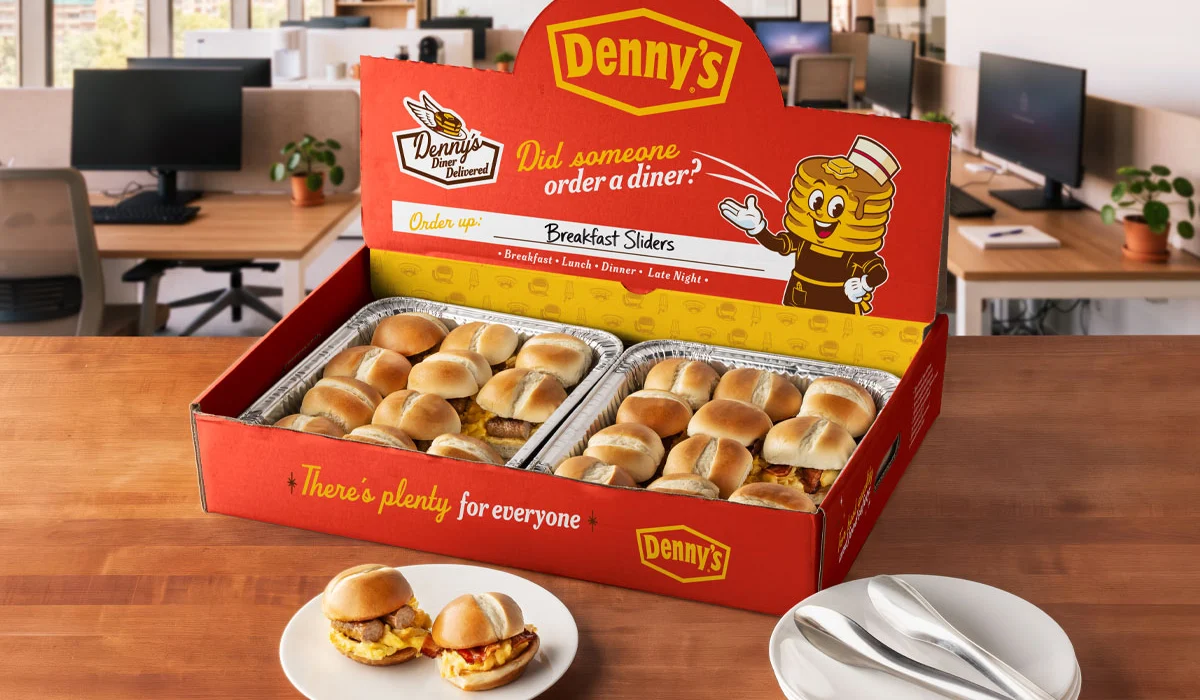
Denny’s Corporation, the iconic American diner chain, has unveiled an aggressive new strategy to penetrate the lucrative off-premises catering market, setting a performance benchmark of $100,000 in catering sales per restaurant by its second year of operation. This initiative, led by CEO Chris Bode, represents a fundamental shift in the brand’s revenue model as it seeks to close a substantial competitive gap and leverage its established equity in the breakfast daypart. Currently, the brand’s catering revenue stands at a modest $1.5 million annually, a figure that pales in comparison to the approximately $150 million generated by two of its primary competitors in the same space. By modernizing its approach and implementing a standardized national platform, Denny’s aims to transform catering from a peripheral service into a core driver of incremental growth and franchisee profitability.
The catering push is not an isolated experiment but a central pillar of "Project Grand Slam," a comprehensive, multi-year revitalization plan designed to elevate Denny’s average unit volume (AUV) from its current $2 million to a target of $2.5 million. To achieve this, the company is focusing on operational excellence, technological integration, and a refined menu that caters specifically to corporate and group needs. With over 400 locations already integrated into a revamped national catering platform and a goal of reaching 1,000 units by the end of September 2024, the brand is moving at a rapid pace to secure its share of the estimated $600 million breakfast catering market located within a 15-mile radius of its domestic stores.
Bridging the Competitive Gap and the ezCater Partnership
The decision to lean heavily into catering stems from a data-driven realization of untapped potential. According to CEO Chris Bode, the $1.5 million earned by Denny’s last year in catering sales is a fraction of what is achievable. The brand’s internal analysis, bolstered by data from ezCater—the leading nationwide marketplace for corporate catering—indicates a massive demand for breakfast-oriented group meals. ezCater’s market research suggests that the breakfast sector is one of the fastest-growing segments in corporate dining, yet it remains underserved by major national brands.
To capture this demand, Denny’s has entered into a strategic partnership with ezCater to provide a seamless ordering interface for both franchisees and customers. This platform allows Denny’s to tap into a pre-existing network of corporate clients who are frequently searching for reliable, high-volume breakfast options. Bode noted that ezCater was particularly eager to partner with Denny’s because the platform lacked a dominant breakfast-focused brand. While Denny’s is widely recognized for its "Grand Slam" breakfast, the challenge has been translating that diner-table experience into a portable, high-quality catering format.
The financial targets for this rollout are clear: Denny’s expects participating units to reach $50,000 in catering sales by the end of 2026, with that figure doubling to $100,000 per unit in the subsequent year. If even a small percentage of the identified $600 million market opportunity is captured, management believes these targets are well within reach.
Operational Strategy and Margin Optimization
One of the most compelling aspects of the Denny’s catering model is its efficiency regarding labor and overhead. Because catering orders are typically placed at least 24 hours in advance and the demand is spread throughout the morning and early afternoon, the program has not required significant additions to the existing workforce. Most orders are fulfilled during the traditional work week when restaurant capacity is higher than during peak weekend brunch hours.
Current data from the initial 400-store rollout shows that the average catering order is approximately $350. These high-ticket transactions offer "pretty significant" margins, according to Bode, because they utilize existing kitchen infrastructure and staff during non-peak moments. The only operational adjustment typically required involves managing unusually large orders, which may necessitate a manager reallocating hours or adjusting prep schedules within a 24-hour window.
The menu has been meticulously redesigned to ensure food quality remains high during transport. The catering selection includes:
- Breakfast Buffets: Large-scale setups featuring eggs, bacon, sausage, and hash browns.
- Individually Packaged Meals: Designed for the modern "grab-and-go" corporate environment.
- Handhelds: Breakfast sandwiches and wraps that are easy to consume in meeting settings.
- Lunch Spreads: Sandwiches, salads, and burgers to capture mid-day business.
- Desserts and Beverages: Including the brand’s new coffee lineup and upcoming frappe offerings.
Learning from Past Challenges: A New Standard for Franchisees
This is not Denny’s first attempt at catering, but the company is taking a much more disciplined approach than in years past. Previous efforts failed largely due to a lack of specialized packaging, insufficient training, and a lack of standardized education for staff. To avoid repeating these mistakes, the corporate office has instituted strict prerequisites for any franchisee wishing to join the ezCater platform.
Denny’s has launched a rigorous e-learning initiative through its corporate training platform. Management teams and above-store leaders are required to complete modules and webinars covering:
- Packaging Integrity: Ensuring food arrives hot and visually appealing.
- Profitability Analysis: Understanding the specific food cost and labor metrics of large-scale orders.
- Algorithm Optimization: Learning how to maintain high ratings on ezCater to ensure the restaurant remains visible to top-tier corporate clients.
- Execution Standards: Meeting strict timelines for order readiness.
Bode has been vocal about the fact that not every restaurant is currently eligible to participate. Approximately 20 percent of the system may be held back until they meet specific operational benchmarks. "We’ve told certain franchise groups you can’t play because we don’t believe operationally they’re going to do a good enough job," Bode stated, emphasizing that a single poor catering experience can damage the brand’s reputation across the entire platform.
The Broader Context: Project Grand Slam and Brand Evolution
The catering initiative is a vital component of the broader "Project Grand Slam" strategy, which seeks to modernize the legacy brand for a new generation of consumers. Beyond off-premises sales, this strategy includes:
- Systemwide Remodels: An investment in the physical appearance of restaurants to improve the guest experience and drive foot traffic.
- Bottom-Quintile Focus: A dedicated effort to improve the performance of the lowest-performing 20 percent of stores through better staffing, maintenance, and facility cleanliness.
- Technology Upgrades: Enhancing the Denny’s loyalty app to provide a frictionless ordering experience and better data collection for personalized marketing.
- Menu Innovation: The introduction of value-driven platforms like the $9.99 Triple Play combo and premium beverage additions like frappes.
A key goal of the catering program is "customer conversion." By introducing Denny’s products to corporate employees who might not otherwise visit a diner, the brand hopes to build awareness and drive those individuals into their restaurants for traditional sit-down meals. Bode views catering as a gateway to engaging a new demographic, particularly those who may have shifted their breakfast habits toward newer "AM eateries" or boutique breakfast cafes.
Analysis of Market Implications and Industry Trends
Denny’s move into catering reflects a wider trend in the casual dining industry, where brands are increasingly looking for "incremental" revenue streams that do not require building new physical locations. In an era of high construction costs and interest rates, maximizing the output of existing kitchens is the most efficient path to growth.
The rise of competitors like First Watch and Snooze an A.M. Eatery has challenged legacy brands like Denny’s and IHOP. These newer players have captured a younger, more affluent demographic by focusing on "lifestyle" breakfast and brunch. By professionalizing its catering and improving its physical assets, Denny’s is attempting to reclaim its status as the "legacy brand that evolves."
Furthermore, the focus on "home meal replacements" for the holiday season—such as Thanksgiving and Christmas—suggests that Denny’s is looking to compete with grocery store prepared-food sections and other casual dining chains like Cracker Barrel, which have long dominated the holiday catering space. If Denny’s can successfully stand up its home meal replacement program by the 2024 holiday season, it could provide a significant fourth-quarter sales boost.
Chronology of the Catering Rollout
- Late 2023: Internal development of the "Project Grand Slam" framework begins, identifying catering as a primary growth lever.
- Early 2024: Denny’s begins testing the revamped catering menu and packaging in select corporate and franchise markets.
- Q2 2024: The partnership with ezCater is formalized, and the first 400 restaurants go live on the national platform.
- September 2024: Target date for 1,000 restaurants to be active on the catering platform.
- Q4 2024: Anticipated launch of holiday meal replacement offerings to capture seasonal group dining demand.
- Year-End 2026: Target for all participating units to reach an average of $50,000 in annual catering sales.
- Year-End 2027: Target for units to reach the $100,000 annual catering sales milestone.
As Denny’s continues its transition from a traditional 24-hour diner to a multi-channel food provider, the success of its catering program will serve as a bellwether for the brand’s overall health. By leveraging its breakfast heritage and enforcing high operational standards, the chain is betting that its "Grand Slam" can win over the corporate boardroom just as effectively as it has the American breakfast table for over 70 years. CEO Chris Bode remains confident: "The opportunity is real. It’s out there."