admin
admin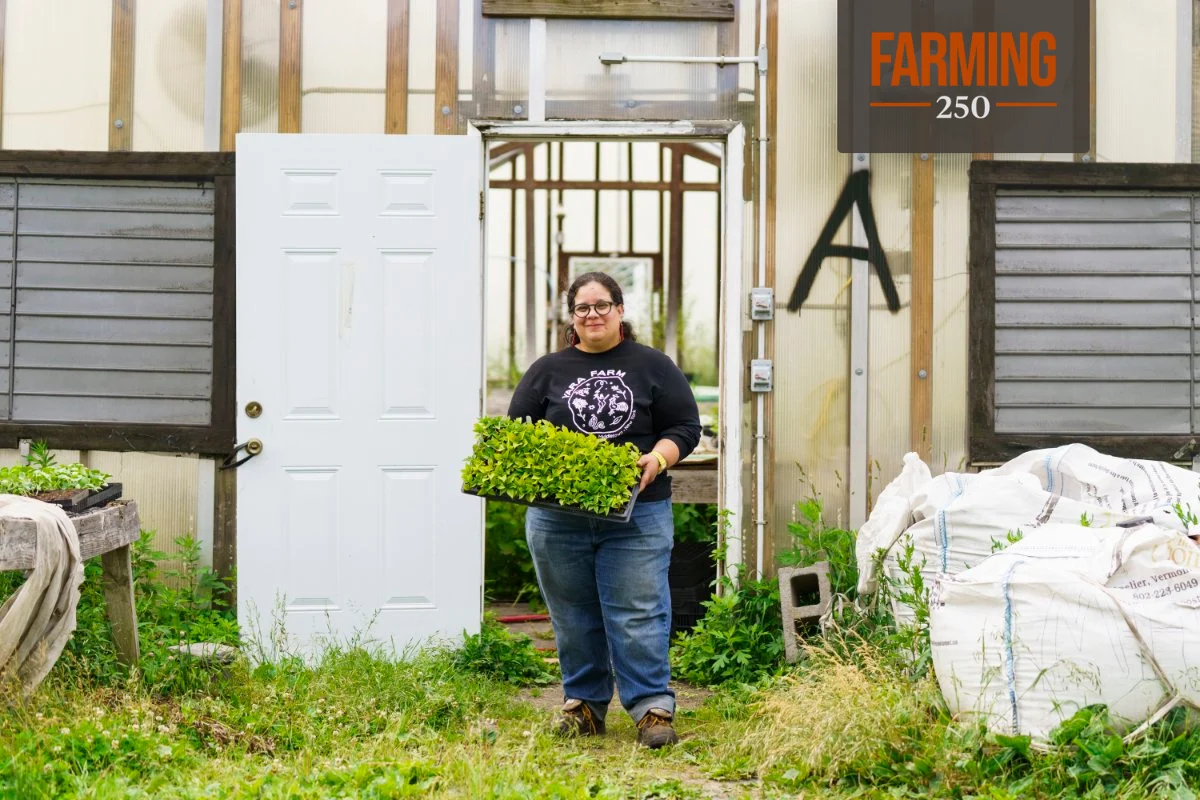
In a powerful convergence of agricultural expertise, social justice advocacy, and community empowerment, Gabriela Pereyra and Karen "Mama K" Washington are spearheading a transformative movement within New York’s food system. As Director of Operations at the Chester Agricultural Center and co-owner of Yara Farm, Pereyra brings a wealth of international experience to the forefront. Alongside her, Washington, a venerated farmer and food justice activist, co-founded the BIPOC Queer Expressway (BQE), an initiative boldly redefining who grows our food and who benefits from it. This collaborative effort, deeply rooted in principles of equity and representation, is not merely about producing food; it is about cultivating a future where all communities, especially those historically marginalized, have access to healthy, culturally relevant sustenance and feel safe and empowered within agricultural spaces.
The Genesis of a Movement: From Global Roots to Local Land
Gabriela Pereyra’s journey into agriculture began far from New York’s verdant valleys, in the rich soils of her native Venezuela. As an undergraduate student, she immersed herself in the realities of small-scale farming, working directly with cultivators of cocoa, rice, and white corn. This foundational experience ignited a passion for sustainable agricultural practices and a deep understanding of the intricate challenges faced by farmers. Driven by a desire to deepen her knowledge and impact, Pereyra pursued advanced education, securing a prestigious scholarship to study agricultural systems in Germany. It was during her doctoral studies, while striving to overcome insecurities about her English proficiency, that a serendipitous connection formed. Her efforts to improve her language skills led her to a New Yorker, a relationship that blossomed over thirteen years into a marriage and a shared life vision.
After completing her education, Pereyra dedicated herself to supporting underserved agricultural communities. She traveled extensively throughout the Northeast, providing crucial assistance to Black, Indigenous, and People of Color (BIPOC) farmers struggling to access essential resources such as land, capital, and markets. These systemic barriers, often legacies of historical discrimination and economic inequality, disproportionately affect farmers of color, hindering their ability to thrive and contribute to local food economies. According to a 2022 report by the U.S. Department of Agriculture, BIPOC farmers continue to face significant challenges in securing loans, acquiring prime farmland, and connecting to lucrative markets, often due to historical prejudices and lack of institutional support.
The global COVID-19 pandemic served as a pivotal moment, profoundly impacting urban centers like Queens, New York, where Pereyra and her spouse resided in a small apartment. The stark realities of food insecurity and the vulnerabilities of industrial food supply chains became painfully evident. This crisis, coupled with Pereyra’s extensive experience supporting farmers, galvanized her and her spouse to seek their own land. In what Pereyra describes as "absolute luck," they discovered a remarkable opportunity: 27 acres of raw land in Chester, New York, which had lain fallow for an estimated 30 to 40 years. The property’s previous owner, whose husband had tragically passed away during the pandemic, found it too painful to continue farming but harbored a profound desire for the land to continue its productive legacy, preserving a shared dream. This acquisition marked the birth of Yara Farm, a testament to resilience, passion, and the transformative power of land stewardship.

Karen Washington and the Vision of the BIPOC Queer Expressway
Complementing Pereyra’s operational acumen is the profound vision and unwavering advocacy of Karen Washington, affectionately known as "Mama K." A prominent farmer, revered food justice activist, and co-owner of Rise & Root Farm, Washington has dedicated decades to dismantling systemic inequities within the food system. Her influential work includes co-founding Black Urban Growers (BUGs), a national organization committed to building networks and community support for Black farmers and food advocates. Washington’s deep understanding of the challenges faced by marginalized communities, particularly in urban environments like the Bronx where she grew up, informs the core mission of the BIPOC Queer Expressway.
The BQE, co-founded by Washington, represents a deliberate and powerful reclamation of identity and space. Its name, a clever and symbolic twist on New York City’s Brooklyn Queens Expressway, stands for BIPOC Queer Expressway. This nomenclature is not merely a play on words; it is a declaration of purpose. "When people think of farmers, they think of a white male," Washington states, articulating the pervasive stereotype that obscures the diverse realities of agricultural labor and ownership. She emphasizes that much of the food flowing into communities of color often lacks the faces of those it serves. The BQE was conceived to directly challenge this visual and systemic erasure.
The initiative’s inclusive framework embraces a broad spectrum of identities: "Each of us falls into that category: be it Black, Asian, Latina, straight, or queer, it all fits into that category. We are inclusive and diverse in that, and that’s why the name came up," Washington explains. This inclusivity is central to the BQE’s mission, aiming to foster authentic representation and ensure that the individuals growing food for diverse communities are themselves representative of those communities. By creating a platform where BIPOC and queer farmers are visible, celebrated, and economically supported, the BQE seeks to cultivate a food system that genuinely reflects and nourishes all its participants.
Operationalizing Empowerment: The BQE Model and Community Impact
The BQE’s operational strategy is built on a foundation of strategic partnerships and leveraging existing programs to maximize its impact. A crucial catalyst for its growth was the Nourish New York program. Launched in response to the pandemic, Nourish New York aims to connect surplus farm products with food-insecure populations through food banks and emergency food providers, while simultaneously supporting New York farmers. In 2024, the BQE effectively harnessed this funding mechanism, which served as the "beginning of community-based organizations having the money to purchase from us." This direct financial pipeline allowed local community organizations, often serving low-income and underserved populations, to procure fresh, high-quality produce directly from BQE-affiliated farmers.

As demand from these community partners surged in 2024, the BQE evolved its model, transitioning from individual farm sales to an aggregation system. Under the expert oversight of Gabriela Pereyra, the Chester Agricultural Center became the central hub for this aggregation. This allowed the BQE to gather produce from various member farms, including Yara Farm and Rise & Root Farm, and distribute it efficiently to its network of community-based organizations. This collective approach not only streamlines logistics but also strengthens the economic viability of smaller farms by creating larger, more consistent market opportunities. The aggregation model underscores the BQE’s commitment to collaborative economics, ensuring that the benefits of market access are distributed across a wider network of diverse farmers.
A cornerstone of the BQE’s impact is its ability to directly address the deeply ingrained perceptions surrounding organic food, particularly within communities of color. Karen Washington, drawing from her experiences in the Bronx, highlights the "elitist tag" often associated with the term "organic." "In people’s mind, it’s elitist, it’s white people food, it’s expensive food," she observes. This perception, rooted in historical disparities in access and marketing, creates a barrier to healthy eating in neighborhoods where fast food and processed options are often more readily available and aggressively promoted.
The BQE actively works to dismantle this barrier by providing certified organic produce—as exemplified by Rise & Root Farm—directly to these communities. Moreover, they invite community members to visit their farms, offering a transparent and empowering experience. "They can see exactly where the food is being grown," Washington emphasizes. This direct engagement fosters trust and educates consumers, allowing them to witness firsthand that farmers who "look like us" are growing nourishing, organic food that is both accessible and affordable. This shift in narrative is profound, challenging the notion that healthy eating is a privilege and affirming it as a right. It empowers individuals to reclaim their food choices, moving away from "the fast food, the processed food, the junk food that we have been so used to, and have been dumped in our neighborhoods."
Broader Implications: Food Sovereignty, Economic Justice, and Safe Spaces
The work of the BIPOC Queer Expressway extends far beyond the transactional exchange of food; it is fundamentally about advancing food sovereignty, economic justice, and the creation of truly inclusive spaces within agriculture.
Historically, communities of color, particularly those in urban areas, have been subjected to redlining policies and discriminatory urban planning, leading to the proliferation of food deserts—neighborhoods with limited access to affordable, nutritious food. The BQE directly counters this legacy by establishing equitable food pathways, ensuring that fresh, healthy produce reaches the very communities that have been systematically denied it. By empowering local farmers of color to grow and distribute food within their own communities, the BQE strengthens local food systems and fosters self-determination, a core tenet of food sovereignty.

Economically, the BQE provides a vital lifeline for small-scale, diverse farms that often struggle to compete in mainstream markets. By consolidating demand through community partnerships and facilitating aggregation, it creates stable revenue streams for farmers who might otherwise face significant financial precarity. This model not only supports individual farmers but also injects capital directly into marginalized communities, fostering economic resilience and local wealth creation. It represents a tangible step towards rectifying the historical economic disadvantages faced by BIPOC farmers, who, for generations, have been denied equitable access to land, loans, and markets. Data consistently show that farmers of color operate on significantly less land and earn lower revenues compared to their white counterparts, highlighting the urgent need for initiatives like the BQE.
Perhaps one of the most profound implications of the BQE’s work lies in its commitment to cultivating safety and belonging. As Washington poignantly states, "it isn’t only about who gets seen. It’s about who gets to feel safe being seen." Farming spaces, like many sectors, have not always been welcoming or safe for queer individuals, and especially for queer people of color. The BQE intentionally carves out an affirming environment, demonstrating that agriculture can be a space of acceptance, identity, and community. This visibility is crucial for inspiring the next generation. "Building something like BQE means younger farmers coming up behind us get to see there’s already a place for them," Washington concludes. This psychological and social impact cannot be overstated; by creating visible role models and supportive networks, the BQE is actively shaping a future where diverse identities are not only tolerated but celebrated and empowered within the agricultural landscape.
The Future of Equitable Agriculture
The BIPOC Queer Expressway, under the guidance of Gabriela Pereyra and Karen Washington, stands as a beacon of hope and a working model for a more just and equitable food system. Its success demonstrates the power of intentional community building, strategic partnerships, and unwavering commitment to social justice. The vision for the future includes not only the continued growth and expansion of the BQE within New York but also the potential for replication of its model in other regions facing similar challenges.
Achieving this future will require ongoing policy support, sustained funding from programs like Nourish New York, and increased consumer awareness and demand for ethically sourced, locally grown food from diverse farmers. The legacy being forged by Pereyra and Washington is one of profound transformation: challenging deeply entrenched stereotypes, dismantling systemic barriers, and cultivating not just healthy food, but also healthy, inclusive communities. Their work ensures that the faces of those who feed us reflect the rich tapestry of our society, and that the promise of food sovereignty and economic empowerment becomes a reality for all.