admin
admin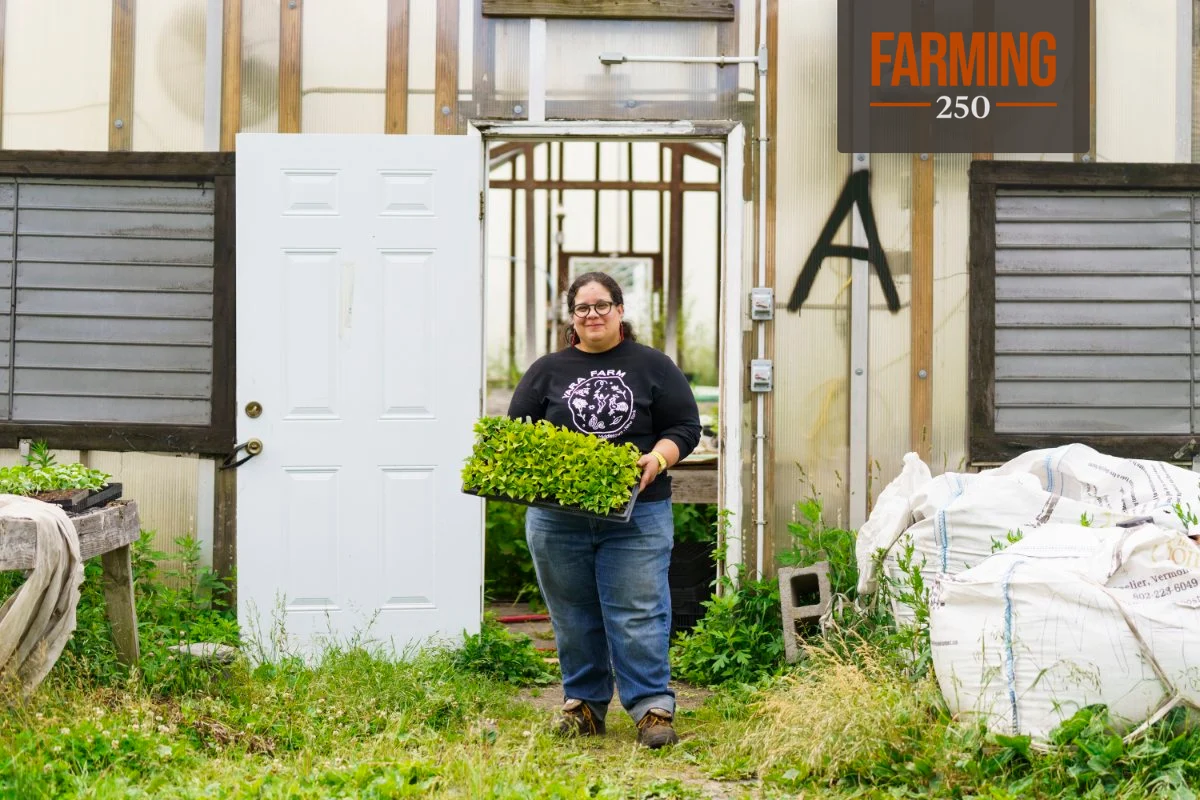
The landscape of American agriculture is undergoing a profound transformation, driven by individuals and organizations committed to fostering equity, sustainability, and community empowerment. At the forefront of this movement are leaders like Gabriela Pereyra, Director of Operations at the Chester Agricultural Center, and Karen "Mama K" Washington, a renowned farmer and co-founder of the innovative BIPOC Queer Expressway (BQE). Their collaborative efforts are not only challenging long-held perceptions of who a farmer is but also actively dismantling systemic barriers that have historically marginalized Black, Indigenous, and People of Color (BIPOC) and queer individuals within the food system. Through strategic partnerships, direct community engagement, and a steadfast commitment to authentic representation, the BQE is forging new pathways for food access, economic opportunity, and a more inclusive agricultural future.
The Genesis of a Movement: Gabriela Pereyra’s Path to Purpose
Gabriela Pereyra’s journey into agriculture is a testament to global experience and an unwavering dedication to food systems. Her roots in farming extend back to her native Venezuela, where, during her undergraduate studies, she worked directly with small-scale farmers cultivating vital crops such as cocoa, rice, and white corn. This foundational experience instilled in her a deep understanding of the intricacies of food production and the socio-economic realities faced by those who feed communities. Recognizing the need for further education to amplify her impact, Pereyra pursued advanced studies, earning a scholarship to delve into agricultural systems in Germany for her Ph.D.
It was during her doctoral research that a serendipitous connection broadened her horizons beyond academia. Struggling with English proficiency, Pereyra began conversing with a New Yorker, a relationship that blossomed over thirteen years into a marriage. This personal connection would eventually bring her to the United States, and crucially, to a new chapter in her agricultural career. Four years ago, Pereyra and her wife embarked on a shared farming venture, a decision catalyzed by unforeseen circumstances and a shared vision.
A New York Story: From Urban Roots to Rural Revival
Pereyra’s wife, a native of Queens, New York, grew up in a starkly different environment from the agricultural landscapes of Venezuela or Germany. Her upbringing in a redlined neighborhood meant a childhood devoid of direct exposure to farming, where food staples were sourced from local markets and often purchased with food stamps. This urban experience, common in many underserved communities, highlights the profound disconnect between consumers and the origins of their food, a gap that the BQE would later strive to bridge.
The onset of the COVID-19 pandemic served as a pivotal moment for the couple. Confined to a small apartment in Queens, the realities of urban living during a global health crisis underscored the urgency of food security and access to open spaces. Prior to the pandemic, Pereyra had been actively engaged in traveling across the Northeast, leveraging her expertise to assist farmers, particularly BIPOC individuals, in navigating the complex challenges of securing land, capital, and market access. The pandemic intensified these challenges, especially for marginalized communities, and solidified Pereyra’s resolve to create tangible solutions. It was in this context that she convinced her wife to embark on a search for land, a decision that would lay the groundwork for their significant contributions to the agricultural equity movement.
Their search for land culminated in an extraordinary stroke of luck. They acquired 27 acres of raw land, untouched by farming for an estimated 30 to 40 years. The previous owner, whose husband tragically passed away during the COVID-19 pandemic, found the prospect of continuing their agricultural dream too painful. Yet, she held a profound desire for the land to remain productive, to honor the vision she and her late husband once shared. This fortuitous acquisition provided the physical foundation for what would become Yara Farm and a critical hub for the expanding network of the Chester Agricultural Center and the BQE.

Karen "Mama K" Washington: A Pioneer in Food Justice
Alongside Gabriela Pereyra stands Karen "Mama K" Washington, a formidable figure whose name is synonymous with food justice and community activism. Washington is a farmer, co-owner of Rise & Root Farm, and a co-founder of the influential Black Urban Growers (BUGs), an organization dedicated to supporting and promoting Black farmers. Her extensive work centers on land access, food sovereignty, and empowering communities to cultivate their own sustenance. Washington’s advocacy stems from a deep understanding of the systemic inequities embedded within the food system, particularly as they impact communities of color.
Washington’s insights into the stereotypical image of a farmer—often perceived as a white male—were a primary driver behind the creation of the BIPOC Queer Expressway. She eloquently articulates the problem: "When people think of farmers, they think of a white male, and a lot of the food that goes into communities of color—they don’t have our faces." This lack of representation is not merely an aesthetic concern; it reflects a deeper systemic issue where the individuals who produce food often bear little resemblance to the communities they serve, particularly in marginalized urban areas.
The Birth and Vision of the BIPOC Queer Expressway (BQE)
In 2024, Karen "Mama K" Washington formally established the BIPOC Queer Expressway (BQE), an initiative born from the urgent need to address this representational and systemic gap. The name itself is a powerful reclaiming of a familiar urban landmark, the Brooklyn Queens Expressway, transforming it into a symbol of inclusive connectivity. The BQE, in its new iteration, proudly stands for Black, Indigenous, People of Color, and Queer. This deliberate naming strategy underscores its foundational principle: to create an inclusive and diverse network where farmers of all identities within these categories feel seen, valued, and empowered. As Washington explains, "Each of us falls into that category: be it Black, Asian, Latina, straight, or queer, it all fits into that category. We are inclusive and diverse in that, and that’s why the name came up."
The BQE’s mission is multifaceted: to authentically represent BIPOC and queer farmers, to ensure their visibility within the broader agricultural landscape, and critically, to facilitate the flow of culturally relevant, healthy food back into the communities that look like them. This authentic representation builds trust and fosters a sense of ownership over the food supply chain, directly challenging the historical disenfranchisement of these communities.
Overcoming Systemic Barriers: Land, Capital, and Markets
The challenges faced by BIPOC and queer farmers are well-documented and deeply entrenched in historical injustices. Data from organizations like the USDA’s Census of Agriculture consistently reveal disparities in land ownership, access to capital, and market opportunities for farmers of color. Historically, discriminatory lending practices, land loss due to systemic racism, and a lack of generational wealth have prevented many BIPOC individuals from entering or sustaining farming operations. Similarly, queer farmers often face discrimination and a lack of safe, affirming spaces within traditionally conservative agricultural sectors.
The BQE directly addresses these systemic barriers. By aggregating produce through the Chester Agricultural Center, the initiative creates a collective strength that individual small farms often lack. This aggregation model allows smaller, independent BIPOC and queer farmers to meet larger demand from institutional buyers and community organizations, thereby securing more stable and profitable market access. This approach not only provides economic stability for participating farmers but also diversifies the food supply chain, making it more resilient and equitable.

The Power of Partnership: Nourish New York and Community Engagement
A significant catalyst for the BQE’s growth and impact has been its strategic partnerships, notably leveraging funding from the Nourish New York program. Launched in 2020 during the height of the pandemic, Nourish New York was a state initiative designed to connect surplus farm products with food-insecure populations across New York State, primarily through food banks and community-based organizations. This program provided a critical lifeline for farmers facing market disruptions and simultaneously addressed the escalating food insecurity in vulnerable communities.
For the BQE, Nourish New York funding was instrumental. It marked "the beginning of community-based organizations having the money to purchase from us." This financial support allowed community organizations, which often serve the very neighborhoods targeted by the BQE, to directly procure fresh, locally grown produce from BIPOC and queer farmers. In 2024, as demand from these community partners surged, the BQE, operating through the Chester Agricultural Center, began actively reaching out to other farmers to aggregate more produce, effectively expanding its network and impact.
These partnerships are built on a foundation of shared identity and trust. Community organizations actively seek out the BQE because, as Washington emphasizes, "we are Black, we are people of color." This alignment ensures that the food being distributed is not only fresh and often certified organic, but also delivered with cultural understanding and respect. The BQE goes further by inviting clientele to visit participating farms, like Karen Washington’s certified organic farm, allowing them to witness firsthand where their food is grown. This transparency fosters community connection, educates consumers, and builds confidence in the quality and source of their food.
Redefining "Organic" and Challenging Perceptions
A critical aspect of the BQE’s work involves challenging ingrained perceptions about food, particularly the term "organic." In many communities of color, particularly those that have experienced economic marginalization and historical disinvestment, "organic" often carries an elitist connotation. As Karen Washington, drawing from her experience growing up in the Bronx, points out, "When you say ‘organic,’ it has an elitist tag to it. In people’s mind, it’s elitist, it’s white people food, it’s expensive food." This perception is not unfounded, as organic products have historically been priced higher and marketed towards affluent consumers, creating an accessibility barrier for lower-income households.
The BQE directly confronts this stereotype by demonstrating that organic, nourishing food can be grown by and for communities of color, and that it doesn’t have to be prohibitively expensive. The initiative fosters a paradigm shift, prompting questions like, "Wait a second, you mean to tell me that there are farmers that look like us that are growing organic food that is nourishing, and it’s not expensive, and we can eat that? It’s not the fast food, the processed food, the junk food that we have been so used to, and have been dumped in our neighborhoods?" This re-education is vital for addressing health disparities linked to poor nutrition in these communities, offering a viable and culturally affirming alternative to the processed foods that are often disproportionately available.
Cultivating Safety and Representation in Agriculture
Beyond the economic and nutritional benefits, the BQE is fundamentally about creating safe and inclusive spaces within agriculture. Farming, historically and presently, has not always been welcoming to queer individuals, and even less so to queer people of color. Rural areas, where much farming takes place, can be isolating and sometimes hostile environments for LGBTQ+ individuals. The BQE directly addresses this by building a visible, supportive network.

"It isn’t only about who gets seen," Washington asserts. "It’s about who gets to feel safe being seen." This emphasis on safety and belonging is crucial for attracting and retaining new generations of farmers from marginalized backgrounds. By establishing an organization explicitly for BIPOC and queer individuals, the BQE sends a clear message: "There’s already a place for them." This proactive creation of community and affirmation ensures that younger farmers coming up behind them have role models, mentors, and a supportive infrastructure, paving the way for a more diverse and equitable agricultural workforce.
Broader Implications for Food Sovereignty and Equity
The work of Gabriela Pereyra, Karen Washington, the Chester Agricultural Center, and the BIPOC Queer Expressway has far-reaching implications for the broader food system and the ongoing struggle for food sovereignty. Food sovereignty, the right of peoples to healthy and culturally appropriate food produced through ecologically sound and sustainable methods, and their right to define their own food and agriculture systems, is a core principle underpinning the BQE’s mission. By empowering BIPOC and queer farmers, the initiative strengthens local food economies, reduces reliance on distant and often exploitative industrial agriculture, and builds community resilience.
Furthermore, the BQE serves as a powerful model for other regions seeking to address agricultural inequities. Its success demonstrates that targeted support, community-led initiatives, and intentional efforts to dismantle systemic barriers can yield significant positive outcomes. The aggregation model, the focus on direct community partnerships, and the commitment to authentic representation offer a blueprint for creating more just and sustainable food systems nationwide. It highlights the importance of not just providing food, but providing food in a way that respects the dignity, culture, and agency of both the producers and consumers.
Conclusion: A Model for Inclusive Agricultural Futures
The collaborative efforts spearheaded by Gabriela Pereyra and Karen "Mama K" Washington represent a vital and inspiring chapter in the evolution of American agriculture. Through the Chester Agricultural Center and the pioneering BIPOC Queer Expressway, they are not merely growing food; they are cultivating community, fostering economic justice, and challenging deeply ingrained biases. By creating safe, inclusive spaces and empowering marginalized farmers, the BQE is redefining what it means to be a farmer and who gets to participate in the critical work of feeding the nation. Their work stands as a testament to the power of collective action and the enduring belief that a more equitable, sustainable, and representative food system is not just an ideal, but an achievable reality. As the BQE continues to expand its reach and impact, it offers a hopeful vision for an agricultural future where every farmer, regardless of their background, can thrive, and every community has access to nourishing, culturally appropriate food.